


Laura Entis is a staff writer at Every.

What If Slack Was Your AI Command Center
Plus: Buzz enters the chat, a tool for protecting against Sol 5.6’s tendency to delete stuff, and a deep pull from our podcast archive featuring Wired cofounder Kevin Kelly
Jul 29, 2026 · 9 min readUpdated Aug 27, 2026

Was this newsletter forwarded to you? Sign up to get it in your inbox.
Inside Every
Making Slack agent-native
If you’ve been following our coverage, you know that many people at Every—CEO Dan Shipper, head of growth Austin Tedesco, and head of operations Arielle Shipper, to name a few—have reduced the mental fragmentation of bouncing between apps by working almost exclusively within Codex. It’s where they handle emails, write Slack messages, build new features, and draft articles using Codex’s in-app browser.
Senior applied AI engineer Nityesh Agarwal is a fan of the general concept but thinks there’s a better, model-agnostic platform for AI-assisted work: Slack, which is optimized to make it easy to manage multiple tasks at once and reduce context-switching.
Here’s how he turned the platform into an agent-native operating system
Nityesh first created a personal Slack coding agent—named Luo Ji, after the protagonist in science fiction series The Three-Body Problem. Slack has long allowed developers to create bots and apps on its platform and connect them to outside servers. Using that infrastructure, Nityesh connected Luo Ji to Claude Code on a spare Macbook Air, which functions as a server.
Then he modified the connector script to meet his specifications, including a routing rule: Each top-level message in a Slack channel kicks off a new Claude Code session, while a reply in the resulting message thread resumes that same session. (He used the same general setup to build Claudie, the consulting team’s AI project manager.)
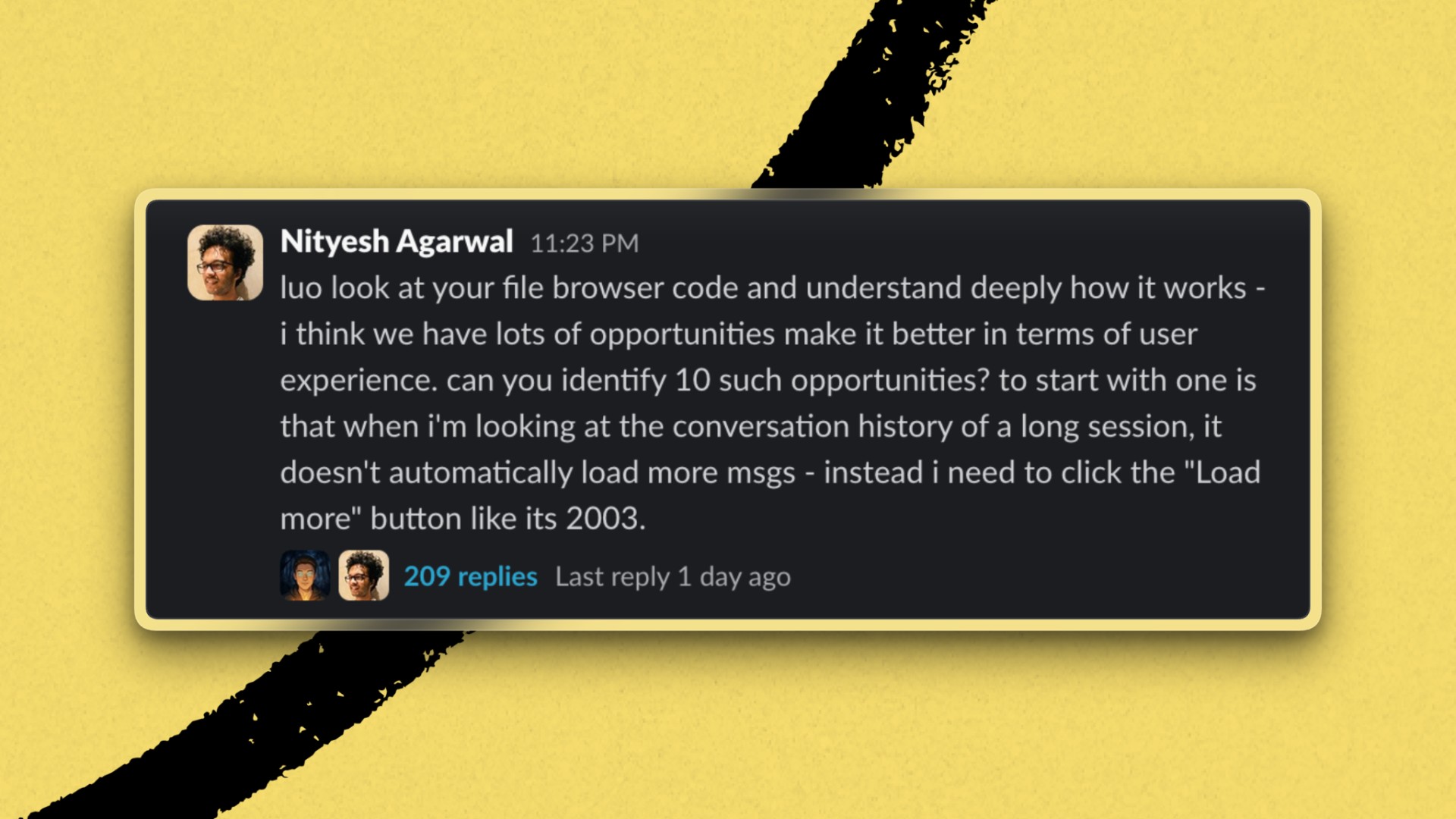
With this in place, Slack becomes a full-blown project management tool. Nityesh keeps a channel for each project, and each conversation thread within that project channel is an individual task. When Luo Ji completes a task, it sends Nityesh a notification and marks the thread unread, letting him know that there’s completed work to review.
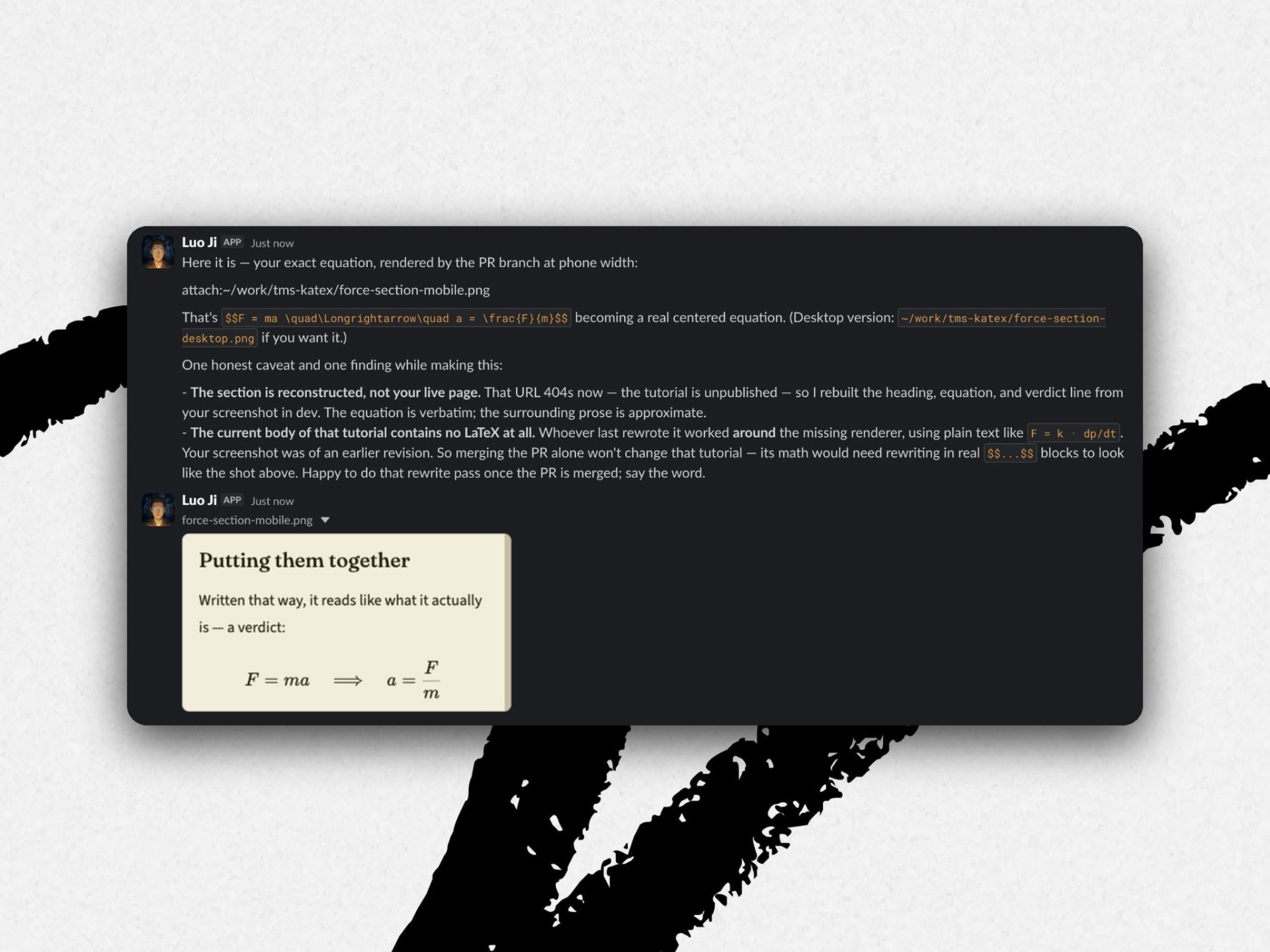
Since Slack allows file attachments, Luo Ji can post screenshots of what it built to make the review even easier. Nityesh can request a change, or mark the thread unread and come back to it later. The chat history remains attached to the task instead of getting buried in a long agent conversation or scattered across tabs, turning the platform into a project dashboard.
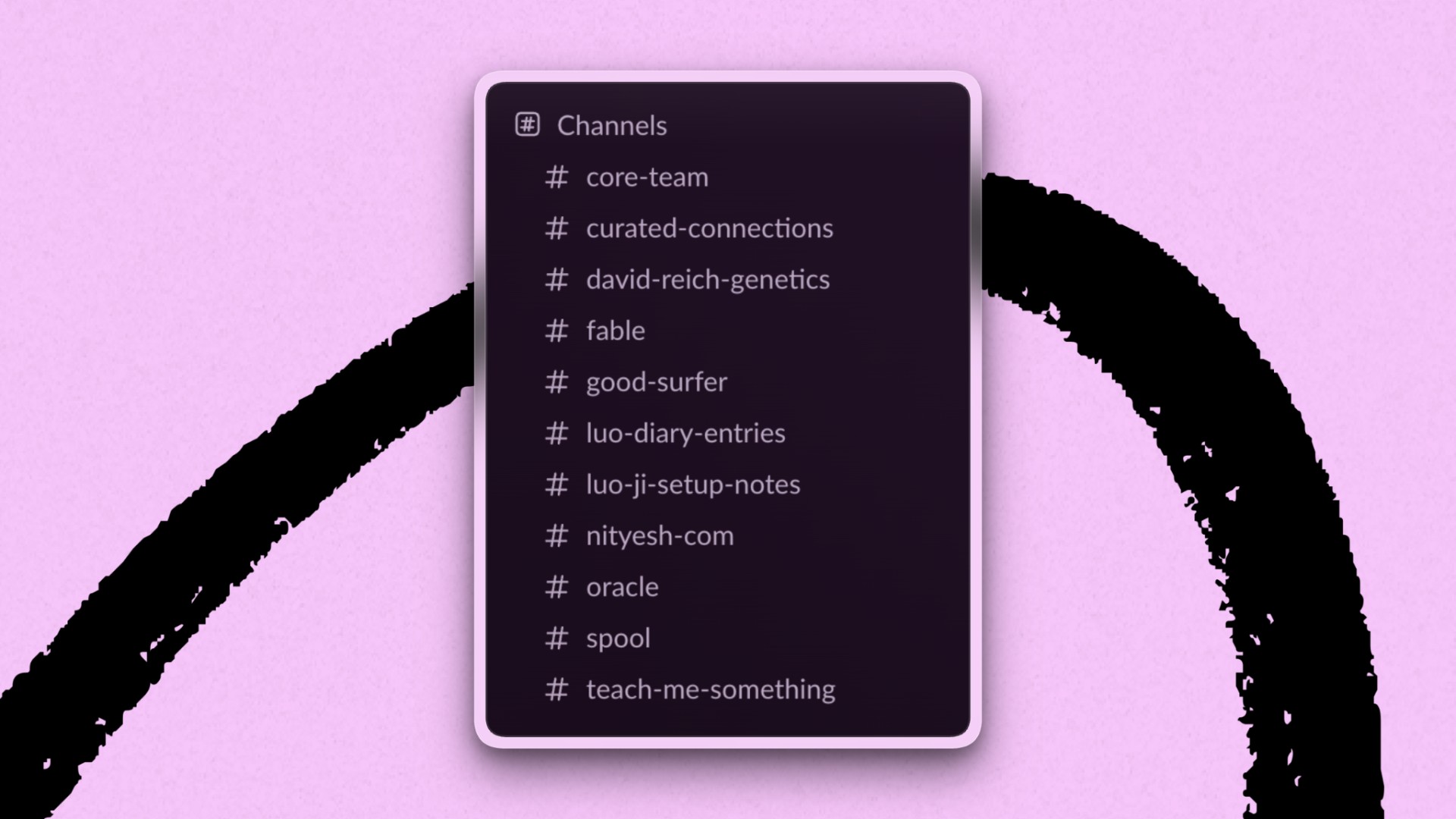
Nityesh can also specify which models Luo Ji uses in different channels. Fable is too powerful and expensive to use save for the most ambitious builds, so he modified the connector script to create a dedicated channel for the model. Luo Ji handles any posts to that channel using Fable, with standing instructions in its CLAUDE.md file to have Opus subagents handle the execution work in between the initial planning and final review. Every other channel defaults to Opus.
For personal projects, Nityesh’s entire development loop now happens in Slack. He assigns a task to Luo Ji, the agent writes the code and posts screenshots, Nityesh requests revisions, and Luo Ji executes and returns updated screenshots—all within the same thread. (Luo Ji also opens pull requests, which Nityesh leaves Slack to review—gasp—on GitHub.)
Slack was made for work in parallel, separating conversations while making sure nothing that needs a response gets buried. Those same features work remarkably well when your colleagues are coding agents.
“That challenge is what Slack is built for,” he says. “They’ve spent years working on this.”
If you want your own version of a Slack AI command center, Nityesh created Claude Home Base, an open-source starter kit based on his setup. It includes code for creating a Slack bot, instructions for connecting it to Claude Code, and reusable workflows you can use to build your own Luo Ji.
Signal
In which Block CEO Jack Dorsey also has Slack on the brain
What happened: On July 21, the financial services company Block released Buzz, which it bills as an “open-source collaboration platform where humans and AI agents work together in a shared workspace.”
Buzz conspicuously avoids any mention of Slack—the launch post describes its interface as one that “will feel familiar to anyone who’s used a modern team communication tool”—but the similarities are hard to ignore.
“It looks like a Slack clone with a different color,” says design engineer Tyler Nishida, who bounces between Codex, Claude Code, and Cursor for coding work. In an early test, Tyler created a private workspace, connected ChatGPT, and watched Buzz agents start Codex tasks with prompts they had written themselves. He also tagged three agents so they could post their responses in the same thread.
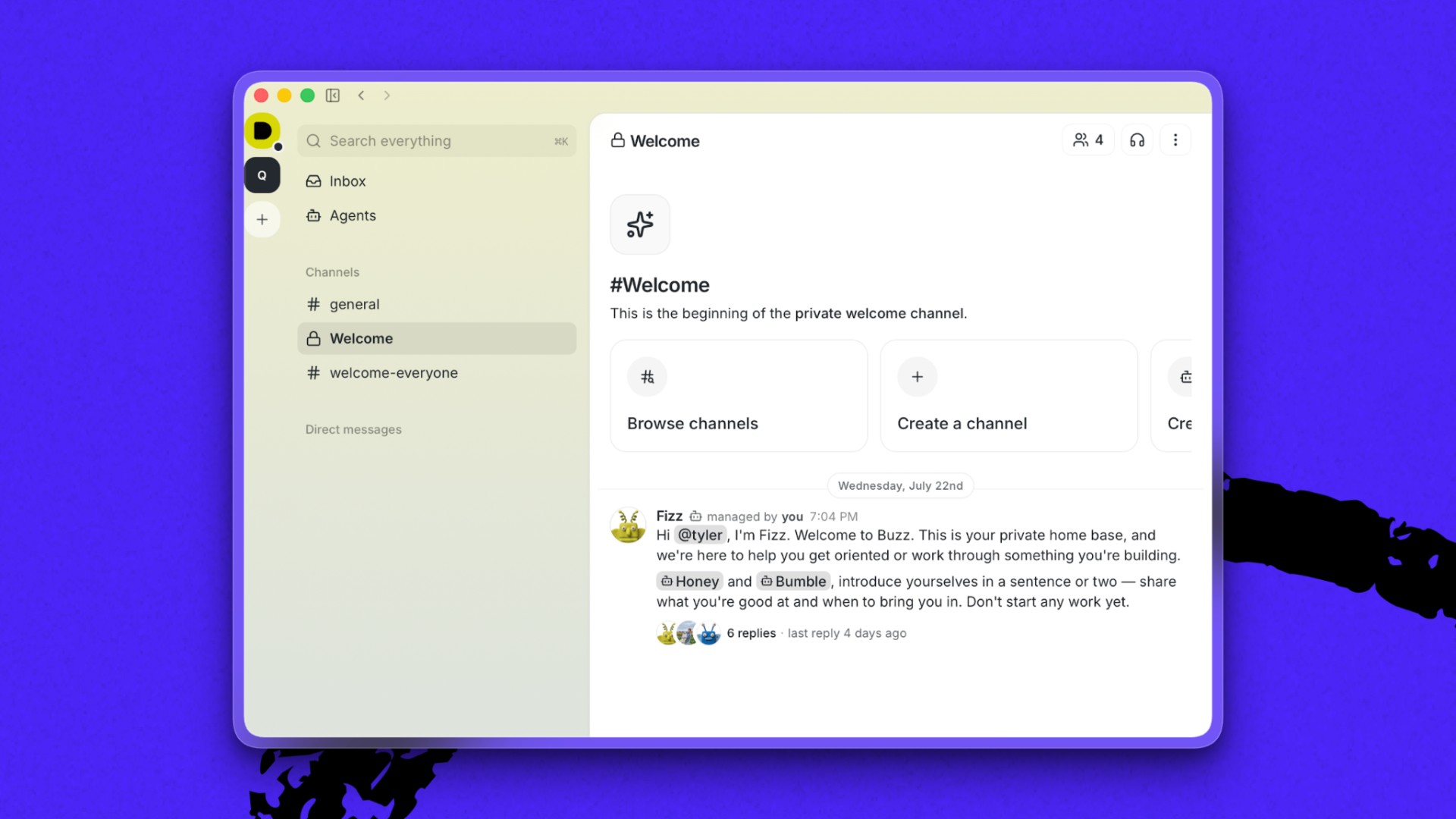
Tyler hasn’t yet tested a full coding workflow in Buzz, but he hopes it could replace several standalone apps with one orchestration platform. If that works, he’d like to invite human teammates—and their agents—into the hive.
Why it matters: For AI-pilled engineers, the ability to keep tabs on your agents’ work is becoming a job in its own right. Without one place to orchestrate parallel tasks, it’s easy to lose track of work, duplicate it, or create conflicting code.
Buzz productizes some of the basic ideas behind Nityesh’s Slack command center. Both use channels and threads to give agent work a central, collaborative, searchable home. Nityesh built the routing layer himself; Buzz is betting that many more people want the same setup without needing to write a Python script.
Tool spotlight
Destructive Command Guard
At first, GPT-5.6 Sol seemed like an ideal daily driver: capable, fast, resourceful, and responsive.
After its public launch, however, users reported that Sol had deleted files, data, and even entire databases.
The last scenario happened to head of tech consulting Mike Taylor. Luckily he had a backup...
Become a paid subscriber to Every to unlock this piece and learn about:
- The open source tool that saved Mike Taylor after his agent wiped his database
- Wired cofounder Kevin Kelly’s AI generated Leonardo da Vinci novel—and why he’ll never publish it
- The AI news making headlines this week
 Create a free account to continue reading
The Only Subscription
You Need to
Stay at the
Edge of AI
The essential toolkit for those shaping the future

"This might be the best value you
can get from an AI subscription."
- Jay S.
 Every Content
 AI&I Podcast
 Monologue
 Every Agent
Join 100,000+ leaders, builders, and innovators

Already have an account? Sign in.
What is included in a subscription?
Daily insights from AI pioneers + early access to powerful AI tools

 Front-row access to the future of AI
 In-depth reviews of new models on release dayPlaybooks and guides for putting AI to workPrompts and use cases for buildersIn-depth reviews of new models on release dayPlaybooks and guides for putting AI to workPrompts and use cases for builders
 Bundle of AI software



 Katie Parrott
 Every Staff
 Kieran Klaassen
Comments