





We are hosting a day-long Claude Code for Absolute Beginners course on April 14. If you have used Claude Code for an hour or less, or not at all, I’ll get you set up, help you build your first app with Claude Code, and start automating your routine tasks.—Mike Taylor
A CEO told us recently that he’d been hoping to skip the part where AI wasn’t very good. He figured he’d jump in once the technology matured past the clunky, overpromising phase because carving out hours to learn a new category of technology felt untenable with all of his other responsibilities.
That wait-and-see posture made sense for a while. It doesn’t anymore. When Anthropic released industry-specific plugins for its Cowork tool in February 2026 for legal and financial services roles, the S&P 500 software index fell nearly nine percent over a few days. Executives who haven’t touched the tools themselves are now making high-stakes decisions about something they don’t understand firsthand.
The problem is what they default to. When a leadership team hasn’t used AI themselves, they treat it like any other software purchase: Evaluate, buy, and plug in. They ask, “Which platform?” and “How does it integrate?” Those are the right questions for most technology. They’re the wrong questions for AI.
AI tools like Claude and Cowork aren’t products that slot into your tech stack and deliver value on day one. They’re more like a new kind of employee—one that can do enormous amounts of work, but only if you tell it exactly what to do and check whether the output is right. That’s a fundamentally different adoption decision, and one that’s hard to make unless they have experienced the tool’s capabilities firsthand.
More executives seem to be waking up to this, as we’ve recently started receiving inbound requests from executives at companies like Thumbtack, and Headway to attend their executive offsites and walk them through using Claude Code to build real projects. Our conversations with executives had always been about training their teams, and the rapid progress in AI has made them want to get in on the action, too. We’re finding skills they’ve already built as leaders are the skills AI demands—it’s just a case of getting into the habit of applying them.
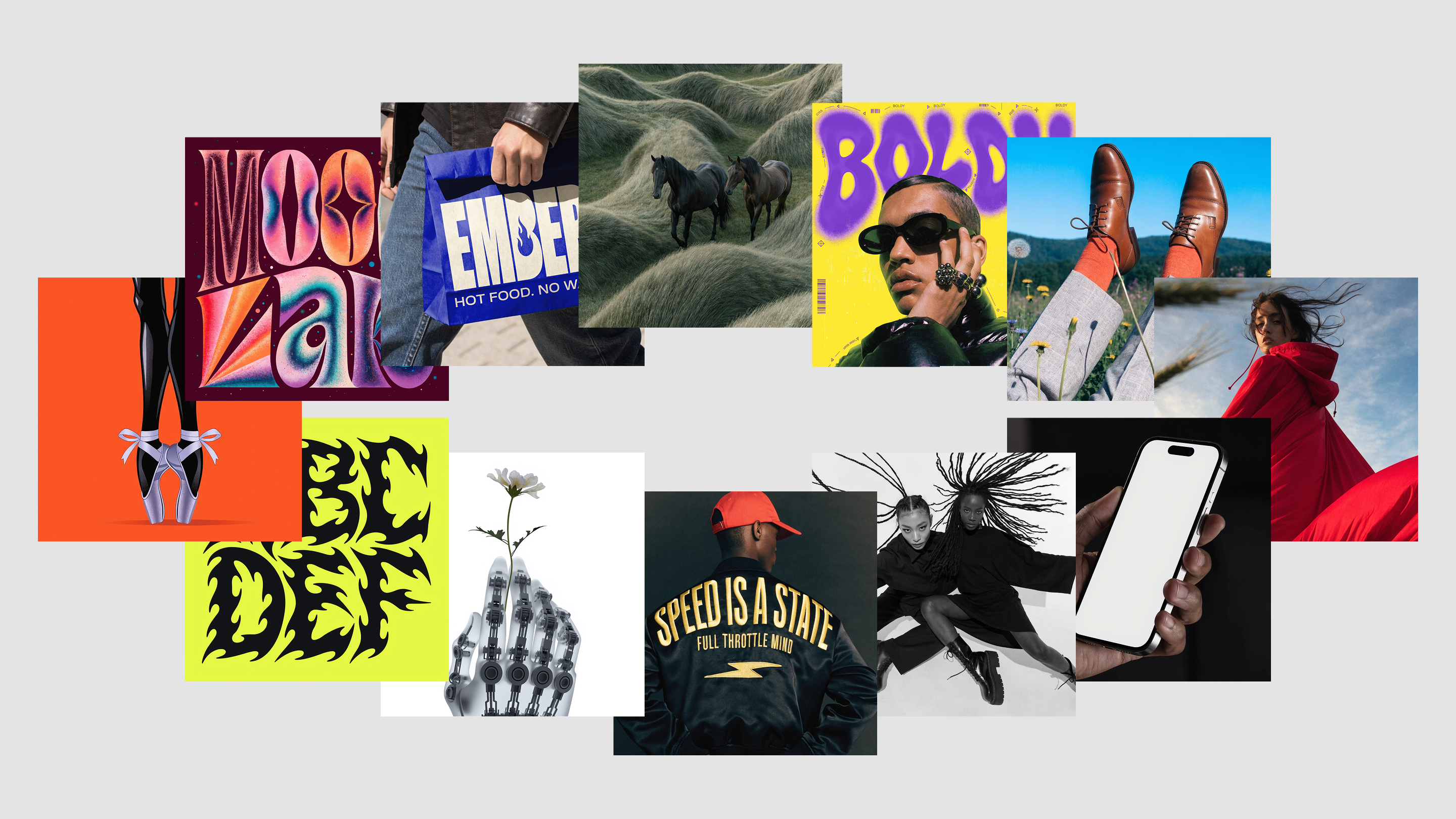
Good prompts don’t guarantee good design
Your prompt might be excellent, but most AI image generators follow instructions without aesthetic judgment. Recraft V4 is different. It combines exceptional prompt accuracy with visual taste. Create photorealistic mockups, native vector logos, or editorial layouts—production-ready on first pass. Crisp text in any language. Composition that holds up. Design teams at Ogilvy, HubSpot, and Airbus already use it.
Executives realize AI is like managing people
Firsthand experience matters so much because AI, when you actually use it, doesn’t feel like software. It feels like managing people. This is what we’ve found surprises the executives we’ve worked with the most—the fact that the work feels familiar.
Think about what it takes to manage people well. You need to know what the goal is, break work into pieces, assign those pieces to the right people, and check the output without micromanaging. You need the judgment to notice when something looks right on the surface but doesn’t hold up—the kind of pattern recognition that comes from years of making mistakes and learning from them.
Managing AI is the same work. When you use a tool like Claude Cowork, you’re running 10 threads at once—building dashboards, summarizing your inbox, and reviewing documents—each tackling a different task. Your job is to delegate clearly, check the output, and apply the judgment that the AI doesn’t have. Did it pull the right data? Does this analysis match what I know about the market? Is the logic sound, or did it take a shortcut that looks plausible but isn’t?
This is why the “evaluate and buy” approach to AI tools fails. You can’t evaluate an employee by reading their resume. You have to work with them.
Codifying what your best people know
Once executives realize that the management skills AI demands—delegation, quality control, knowing what “good” looks like—it becomes clear that these are skills they’ve spent their careers building. A junior employee might be faster at writing prompts. But a senior leader who has spent 20 years learning what works in their industry can push these tools further, because the leader has context that the model doesn’t.
This helps executives shift from thinking about the productivity out of each person to thinking about how they can achieve greater scale with the same resources. Instead of asking, “How do we make individuals faster?”, they post a more interesting question: “How do we take what our best people know and make it available to the whole organization?”
Every organization runs on knowledge that isn’t written down—how your best salesperson reads a room, how your editor knows a draft isn’t ready, how your head of product distinguishes a feature request worth building from one worth ignoring. This is your company’s most valuable asset, but it’s also fragile. It leaves when people leave. It takes years for new hires to absorb. It’s why growing an organization has always meant accepting some dilution in the quality of work.
AI changes this equation. You can write down how your company makes a specific decision—a set of criteria, a decision framework, and the non-obvious judgment calls—and save it as a skill the AI follows every time it works on that kind of task.
For example, we’ve worked with hedge funds to turn their investment philosophy into a screening tool that can be applied to all new opportunities by encoding it as a Claude skill. We built one of the world’s largest media companies a Claude skill that captures their brand voice and that they can feed copy through. This is something that Every’s own editorial team has also done.
But none of this works unless someone can describe what good looks like, and that’s a job for the senior people who know.
A chief people officer at one of our offsites had spent years developing an instinct for spotting patterns in unwanted attrition. She knew what to look for—she just didn’t have time to look. In the session, she built a tool that connected her company’s applicant tracking system to internal survey data and ran that analysis for her. She told the room the output was better than what she was able to produce by hand, the equivalent of about three hours of manual work she would have needed to do every week. She shared her results in Slack, and immediately got excited responses from her team—they didn’t realize something like this was possible with AI.
Five things to do this quarter
If you’ve been waiting for the right moment to get hands-on, the tools are ready. Here’s where to start:
- Suspend disbelief. There’s plenty to be skeptical about AI, but skepticism as your starting posture could cost you the benefits. Assume that a tool works and go looking for where it breaks. Learning where the AI fails firsthand will help you figure out where to focus.
- Get your hands dirty. Shopify CEO Tobi Lütke is contributing more code than ever while running a public company. Every CEO Dan Shipper shipped a production app between meetings. The only way to build intuition for these tools is daily use. There’s too much noise to rely on secondhand opinions. If someone recommends a tool, get them to show you how they use it. If they can’t, move on.
- Be a fair evaluator of AI. Define what good looks like, measure it consistently, and you get a clear picture of what AI handles, what humans are essential for, and where to delegate tasks. Pro tip: Tell Claude to build you an evaluation of the prompt (or skill) you want it to run. It will create synthetic tests for the prompt, ask you to pick your preferred outputs, and voila, you have a better prompt.
- Hire for taste. AI has made execution cheaper, so the relative value of good judgment has gone up. Encourage the people on your team to explain why they like something, defend a point of view, and navigate nuance. Strong opinions formed from experience are worth more than implementation skill.
- Treat your company like a file system. Every new AI session is a first day on the job—it knows nothing until you tell it. If your documents are stale and your workflows aren’t mapped, AI won’t work for you. Focus on what you control: documentation, evaluation metrics, and well-tested skills. Those make any model effective, even if you swap providers in a year.
Executives who pushed the AI can down the road should find comfort in the fact that it’s easier than ever to use AI to write great prompts, build skills, and get real value. The companies that started this six months ago have already turned what their best people know into something the whole organization can use. That is becoming an even greater advantage every week. And it starts with the people at the top opening the tools.
Natalia Quintero is the head of consulting at Every. You can follow her on X at @NataliaZarina and on LinkedIn. Mike Taylor is the head of tech consulting at Every and a co-author of Prompt Engineering for Generative AI (O’Reilly).
To read more essays like this, subscribe to Every, and follow us on X at @every and on LinkedIn.
We do AI training, adoption, and innovation for companies. Work with us to bring AI into your organization.
Help us scale the only subscription you need to stay at the edge of AI. Explore open roles at Every.
The Only Subscription
You Need to
Stay at the
Edge of AI
The essential toolkit for those shaping the future

"This might be the best value you
can get from an AI subscription."
- Jay S.
 Every Content
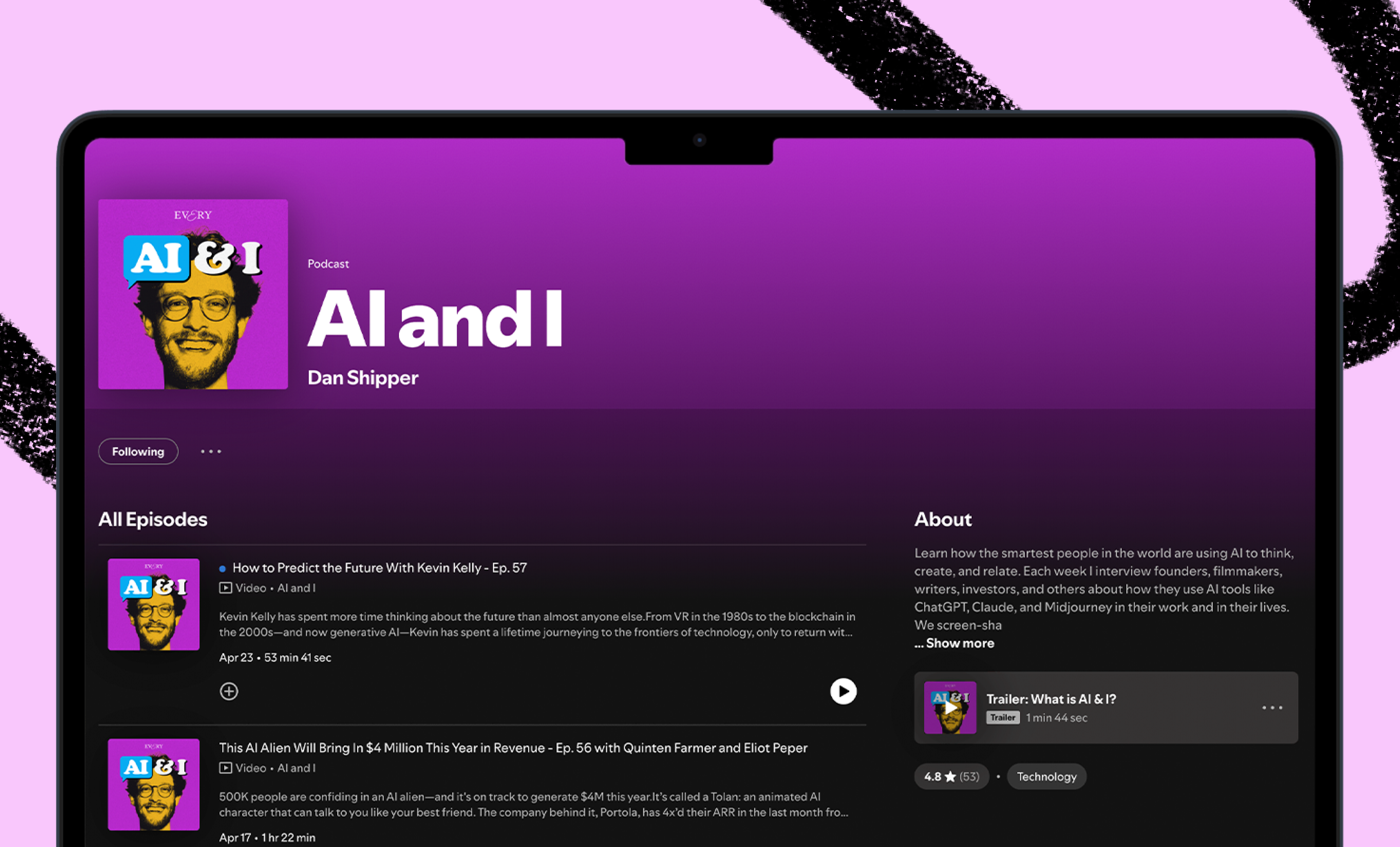
 AI&I Podcast
 Monologue
 Cora
Cora
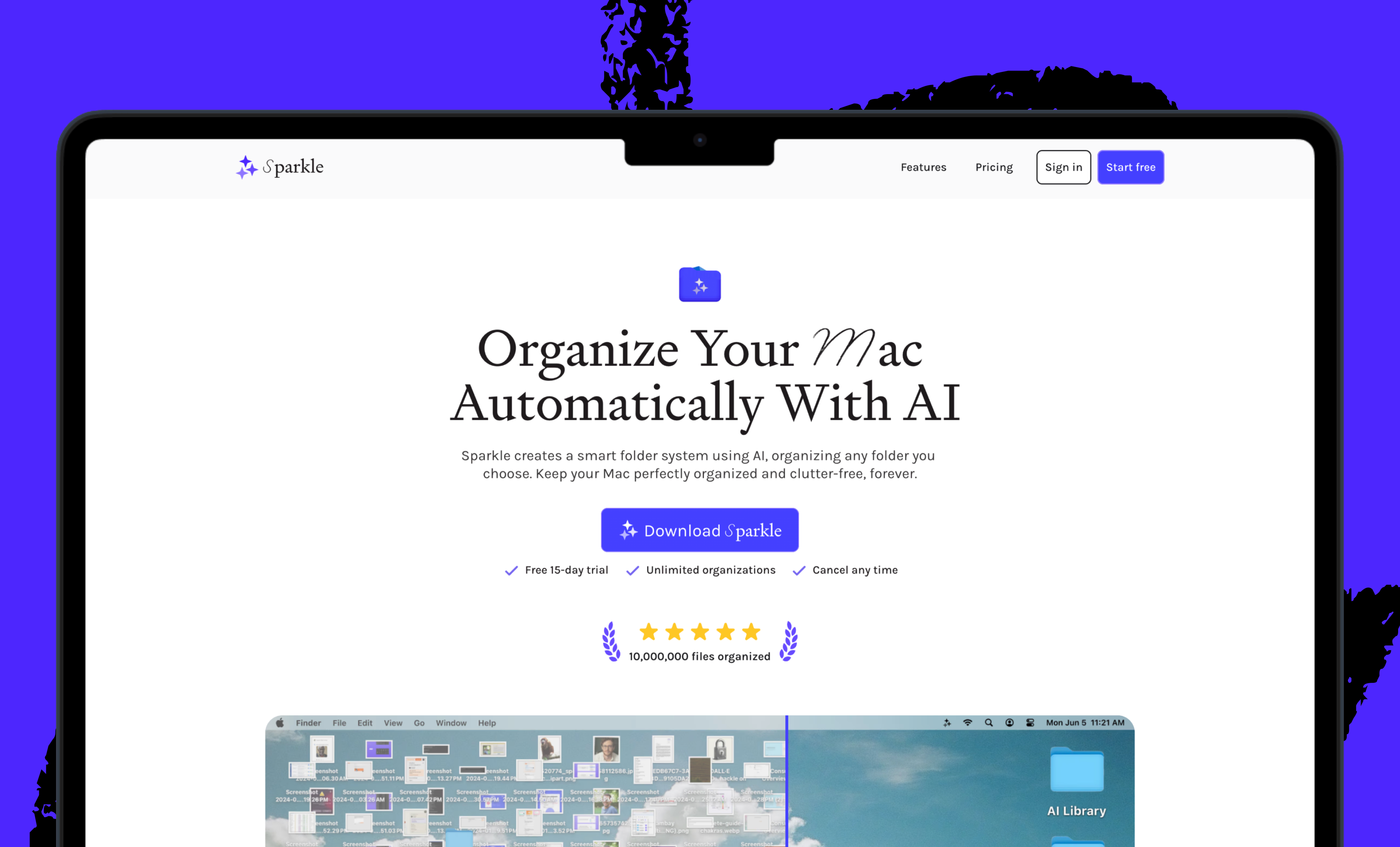
 Sparkle
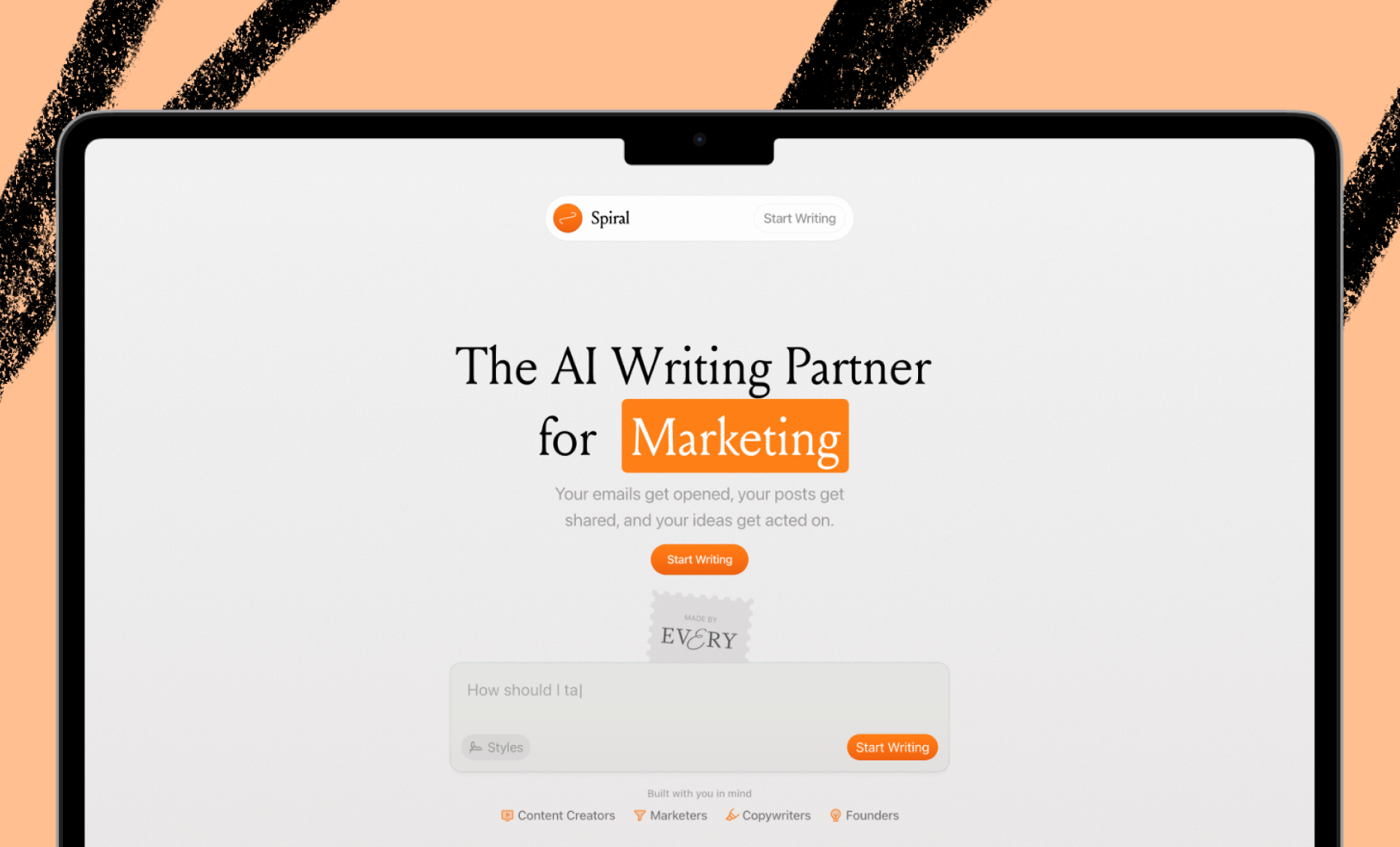
 Spiral
Join 100,000+ leaders, builders, and innovators

Email address

Already have an account? Sign in
What is included in a subscription?
Daily insights from AI pioneers + early access to powerful AI tools
 Front-row access to the future of AI
 In-depth reviews of new models on release day
Playbooks and guides for putting AI to work
Prompts and use cases for builders
In-depth reviews of new models on release day
Playbooks and guides for putting AI to work
Prompts and use cases for builders
In-depth reviews of new models on release day
Playbooks and guides for putting AI to work
Prompts and use cases for builders
In-depth reviews of new models on release day
Playbooks and guides for putting AI to work
Prompts and use cases for builders
 Bundle of AI software




 Reviews of new AI models on release day
Comments
Don't have an account? Sign up!