

.40.24.png)
Kate Lee is the editor in chief and general manager at Every.
This Is How the Every Editorial Team Uses AI
We’re publishing our editorial guidelines, plus the workflows our writers, editors, and producers have built around them
Feb 23, 2026 · 10 min readUpdated Aug 31, 2026

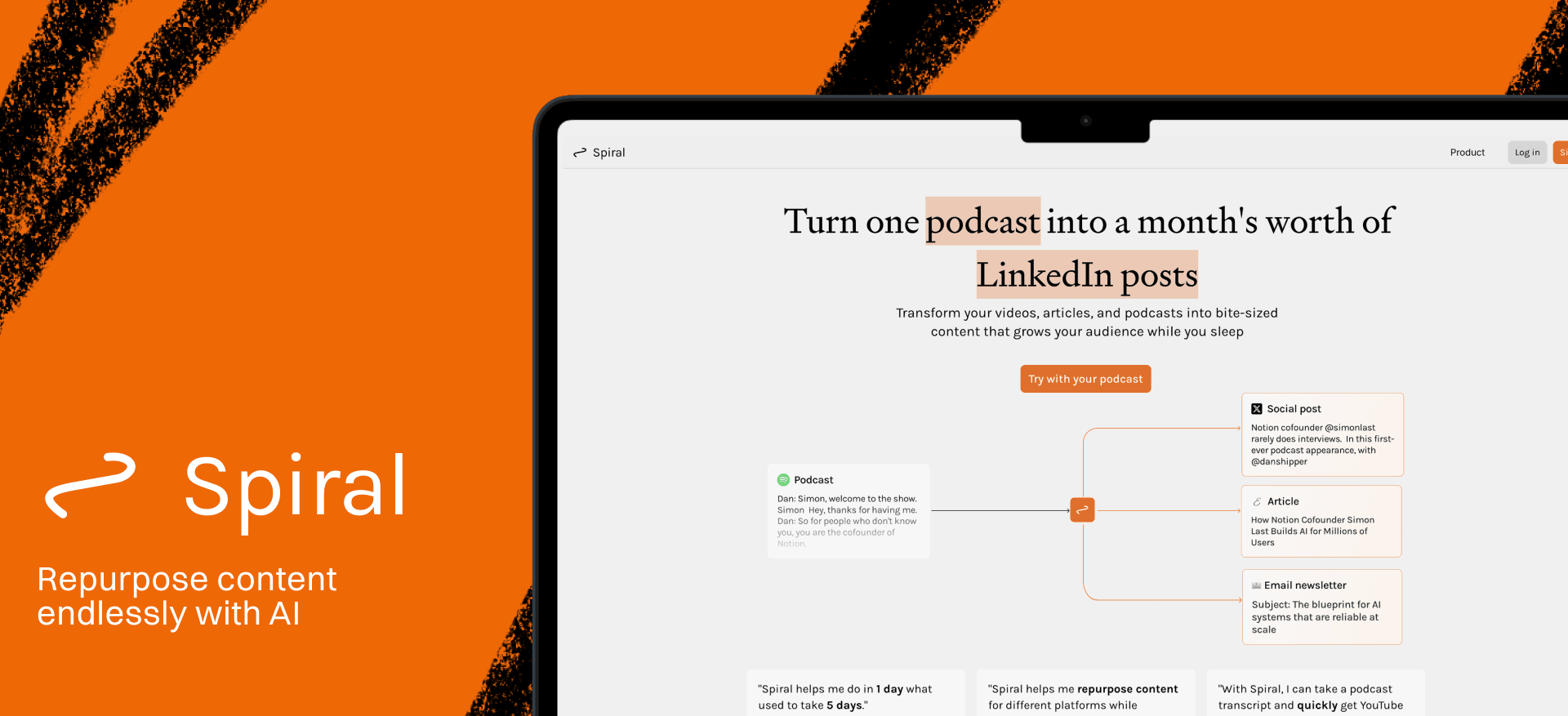
TL;DR: We’re hosting a live workshop on writing with AI this Friday, co-hosted by Katie Parrott, staff writer and AI editorial lead at Every, and me. Katie will introduce her full process for writing with AI, cover why writing with AI is fundamentally different from coding with AI, and demo the tools she uses daily, including Claude projects, custom Skills, and Spiral. Ahead of the workshop, we’re sharing a deeper look at Every’s philosophy of writing with AI and our team’s workflows. Register for the event.
Was this newsletter forwarded to you? Sign up to get it in your inbox.
Today, Every is publishing our editorial guidelines. AI is woven into how we produce written and visual content for our subscribers, both as a tool to make us more efficient and as a creative partner. We want to be transparent about how that works, and we hope these guidelines can serve as a model for other AI-native publications figuring out their own approach.
The guidelines outline our mission, how AI fits into it, who we write for, and our commitment to editorial independence. But workflows are personal. Every person on our team—writer, editor, video podcast producer, social media specialist—has developed their own way of working with AI. Below, we share how.
Become a paid subscriber to Every to unlock this piece and learn about:
- Why Every’s staff writer Katie Parrott says AI-native writing made her more rigorous, not less
- The specific patterns Every’s editor in chief Kate Lee catches with a custom-built skill
- The skill editor Jack Cheng built to find the gaps between what Every CEO Dan Shipper has written and what he’s said everywhere else
This app that might actually make you love meetings
Meetings aren’t the problem. The challenge is everything that comes after them.
With Granola, the AI Notepad for people with back-to-back meetings, you can avoid context switching, the cognitive load of remembering what you promised… and the stress of knowing something important slipped through.
Meetings are no longer about scrambling to keep up. With Granola, they are about connection. They lead somewhere. Take notes the way you always have. Granola works in the background, turning conversations into clear summaries, action items, and next steps. Before, during, or after a meeting, you can chat with your notes to quickly understand what needs to happen, write follow-ups, or share context with others.
Download Granola for free and use it in your next meeting using the code EVERY.
Thanks to our Sponsor: Granola
This app that might actually make you love meetings
Meetings aren’t the problem. The challenge is everything that comes after them.
With Granola, the AI Notepad for people with back-to-back meetings, you can avoid context switching, the cognitive load of remembering what you promised… and the stress of knowing something important slipped through.
Meetings are no longer about scrambling to keep up. With Granola, they are about connection. They lead somewhere. Take notes the way you always have. Granola works in the background, turning conversations into clear summaries, action items, and next steps. Before, during, or after a meeting, you can chat with your notes to quickly understand what needs to happen, write follow-ups, or share context with others.
Download Granola for free and use it in your next meeting using the code EVERY.
 Create a free account to continue reading
The Only Subscription
You Need to
Stay at the
Edge of AI
The essential toolkit for those shaping the future

"This might be the best value you
can get from an AI subscription."
- Jay S.
 Every Content
 AI&I Podcast
 Monologue
 Every Agent
Join 100,000+ leaders, builders, and innovators

Already have an account? Sign in.
What is included in a subscription?
Daily insights from AI pioneers + early access to powerful AI tools

 Front-row access to the future of AI
 In-depth reviews of new models on release dayPlaybooks and guides for putting AI to workPrompts and use cases for buildersIn-depth reviews of new models on release dayPlaybooks and guides for putting AI to workPrompts and use cases for builders
 Bundle of AI software





 Katie Parrott
 Every Staff
 Kieran Klaassen
Comments