


Dan Shipper is the CEO and cofounder of Every. Every week he explores the frontiers of AI in his column, Chain of Thought, and on his podcast, ‘AI & I.’

When AI Gets More Capable, What Will Humans Do?
We used to be sculptors. We're all about to be gardeners.
Jun 28, 2024 · 8 min readUpdated Sep 16, 2026

Sponsored By: Notion
This essay is brought to you by Notion, your all-in-one workspace solution. Startups can now enjoy 6 months of Notion Plus with unlimited AI, a value of up to $6,000—for free! Thousands of startups around the world trust Notion for everything from engineering specs to new hire onboarding. Access the limitless power of AI right inside Notion to build and scale your company.
When applying, select Every in the drop-down partner list and enter code EveryXNotion at the end of the form.
Predicting the future can feel like a fool’s errand. But so is writing it off. As humans peering into the abyss, we tend to assume progress in some ways and stasis in others. In this essay by Dan Shipper, which we’re republishing to cap off a week of prompt engineer (and new Every columnist) Michael Taylor’s tactical AI pieces, he warns against capability blindness: the often false assumption that technology won’t drastically improve over time. He also confronts the problem of what role humans will play when AI creativity improves, a question that led Every to launch our new tool, Spiral, which you can try out. We’ll resume regular publishing on Monday, July 8, after the July 4 holiday in the U.S.—Kate Lee
Was this newsletter forwarded to you? Sign up to get it in your inbox.
Humans tend to believe that the world is static—that things will be the same tomorrow as they are today, and as they were yesterday.
We leave no stone unturned in our hunt for opportunity, but we often don’t think to pause before we write something off as useless—and we don’t flip over old stones to see if anything’s changed. For example, the Claude model Claude 3 Opus is a fantastic writer. With the right prompt, it can write for short bursts in a voice that genuinely sounds 70-80 percent like me, you, or any other writer.
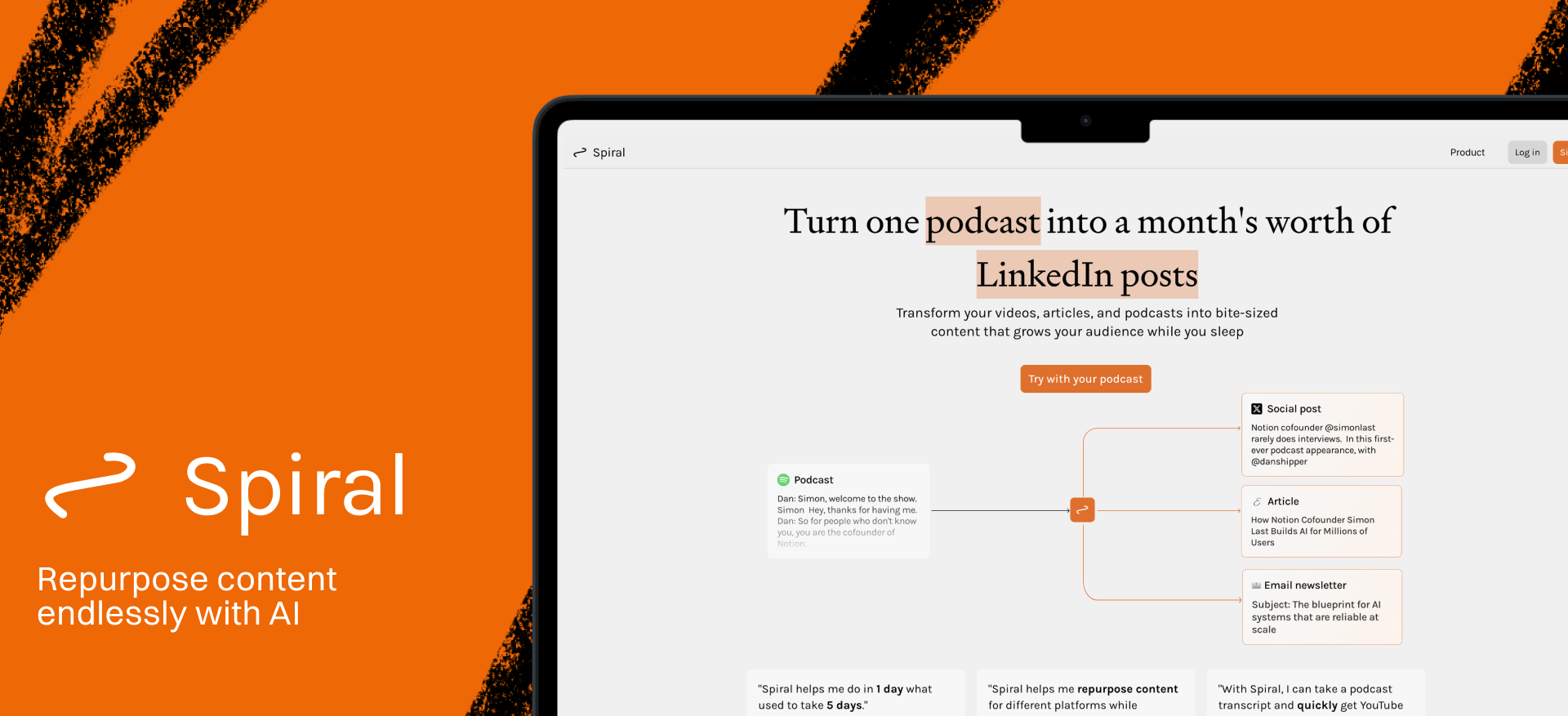
Claude mostly wrote this tweet, for example, though I edited it. I supplied Claude with examples of previous podcast transcripts and tweets, as well as some guidelines about how to adapt one into the other. Claude did the rest, and it did a fantastic job. It did so well, in fact, that we built a tool specifically to make this kind of work easier, Spiral.
.png&w=1200&q=75)
Startups receive 6 months free of Notion Plus with unlimited AI, valued at up to $6,000! Notion is the go-to workspace for thousands of startups worldwide, helping them manage everything from engineering specs to new hire onboarding to fundraising. With Notion Plus, access the limitless power of AI to streamline and scale your operations seamlessly. Simplify your processes and enhance productivity with one powerful tool.
Apply now and select Every in the drop-down partner list, then enter code EveryXNotion.
This may seem like a small feat, but GPT-4 can’t do this. And you’d be surprised how much writing fits this pattern of summarizing content from one form and adapting it for another. As I wrote in a recent essay on this topic, once you start looking, you see the summarizing everywhere.
But it seems like no one has noticed this step change in capabilities.
That’s understandable. It’s a common mistake we make when evaluating parts of the world that move quickly: I call it capability blindness.
During the first big generative AI wave, which started last year, many of us grappled with the exciting—or scary—reality that chatbots might be able to mimic our unique voices and writing styles. I tried OpenAI’s GPT-3, then GPT-4, and quickly realized they were good but had a particular taint. They could help in the writing process—researching, supplying ideas, editing words—but couldn’t be trusted to write very much on their own. I couldn’t enlist AI as a ghostwriter just yet.
But over the last year, the newest language models have been noticeably better. Unfortunately, we are often capability blind: We don’t notice what’s new because we’re jaded by our old experiences and feel that it’s a waste of time to try again.
This is not a new phenomenon. In May 2012, after Facebook went public, the New York Times opinion columnist Ross Douthat argued that the social network was a bad business:
“It doesn’t make that much money, and doesn’t have an obvious way to make that much more of it, because (like so many online concerns) it hasn’t figured out how to effectively monetize its million upon millions of users.”
At the time, he was right. In 2012, Facebook generated $5 billion in revenue and only $53 million in net income. A decade later, Douthat is—obviously—wrong. In 2023, Facebook, now known as Meta, generated roughly $134 billion dollars in revenue and $23 billion in net income. What changed? The company figured out how to effectively monetize its massive user base—something that many observers, including Douthat, believed it couldn’t do.
My point here isn’t to dunk on Douthat; I am sure some of the things I’ve written will look silly a decade from now. It’s to remind you that the best way to latch onto the future is to think through affirmative possibilities, to remember that the world is in flux, and to keep turning over old stones.
This mindset is particularly important with AI. Some of the tasks it struggles with today are going to be child’s play by next year. Like Claude, which has improved leaps and bounds since its last model, and will likely continue in this direction.
Now what?
What’s rare in a world with infinite good writing?
Become a paid subscriber to Every to learn about:
- The rise of AI as a skilled ghostwriter
- What remains valuable in an AI-saturated world
- Consistency as the new differentiator
- From sculptor to gardener: reimagining creative work
Thanks to our Sponsor: Notion
Thanks again to our sponsor Notion, your connected workspace for everything. Startups can unlock 6 months of Notion Plus with unlimited AI, a $6,000 value—for free! Join thousands of startups using Notion to manage all aspects of their business, from engineering to onboarding to fundraising. Access AI capabilities to boost efficiency and scale your operations.
Get started with Notion Plus by selecting Every in the drop-down partner list, then entering code EveryXNotion.
 Create a free account to continue reading
The Only Subscription
You Need to
Stay at the
Edge of AI
The essential toolkit for those shaping the future

"This might be the best value you
can get from an AI subscription."
- Jay S.
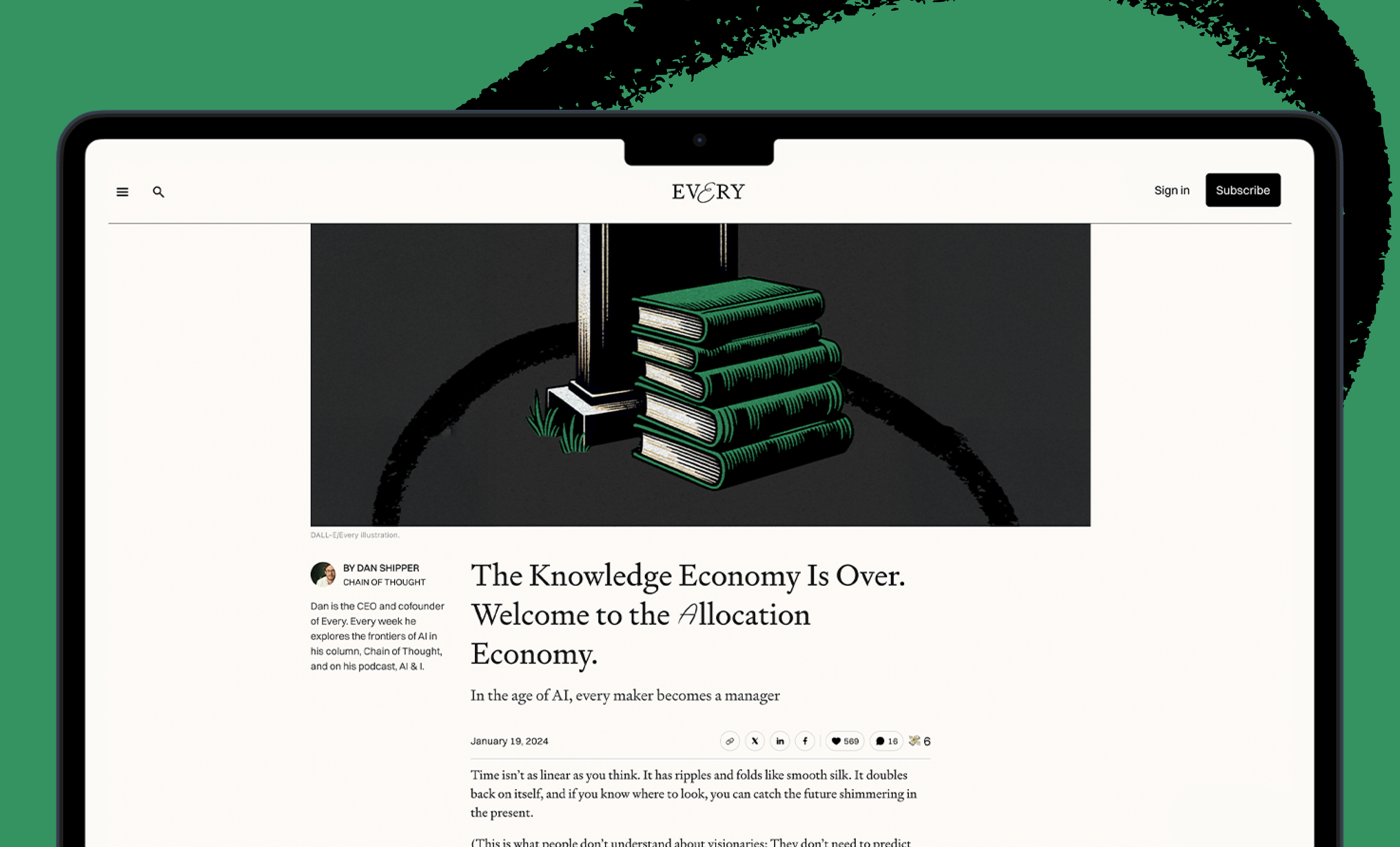
 Every Content
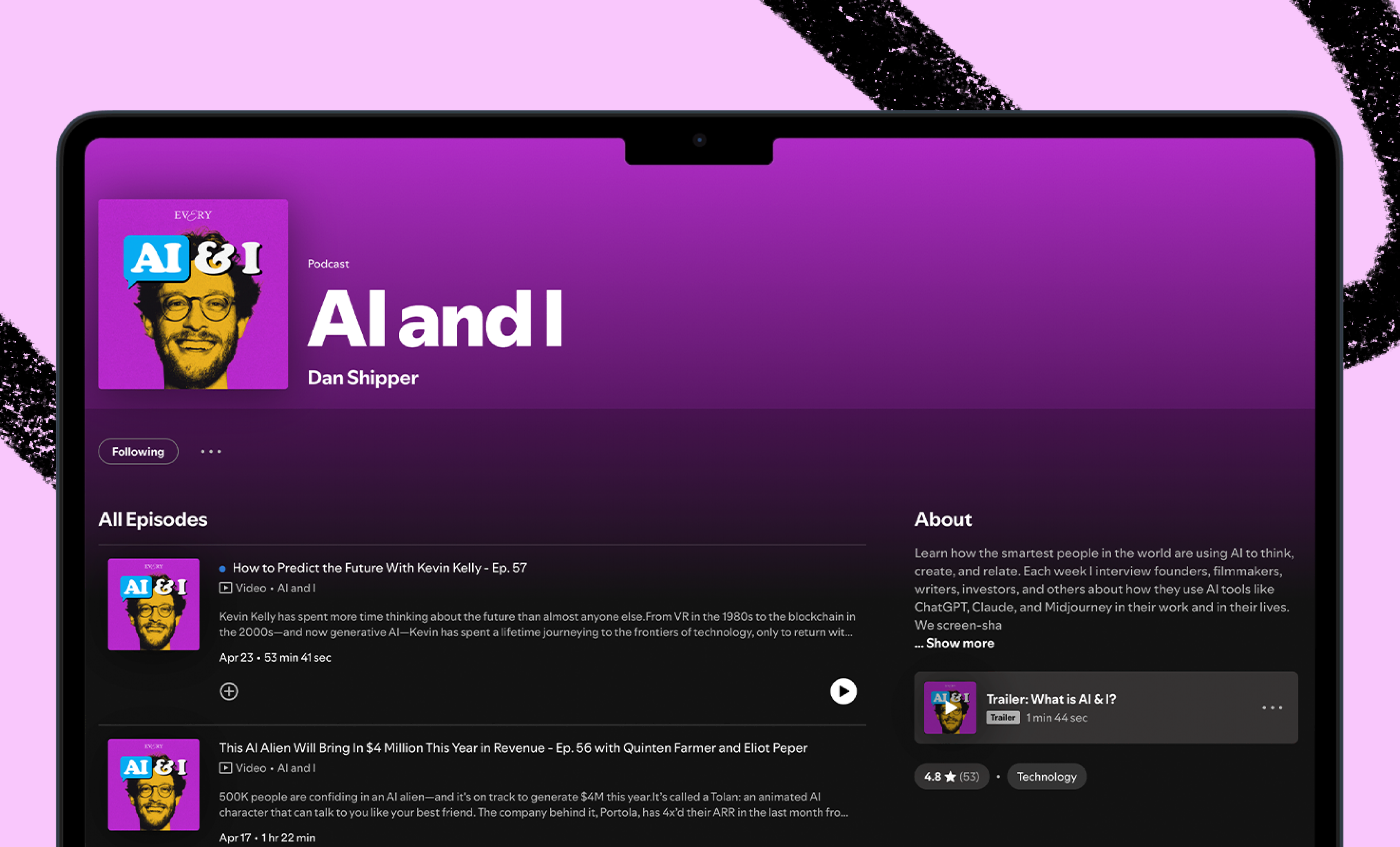
 AI&I Podcast
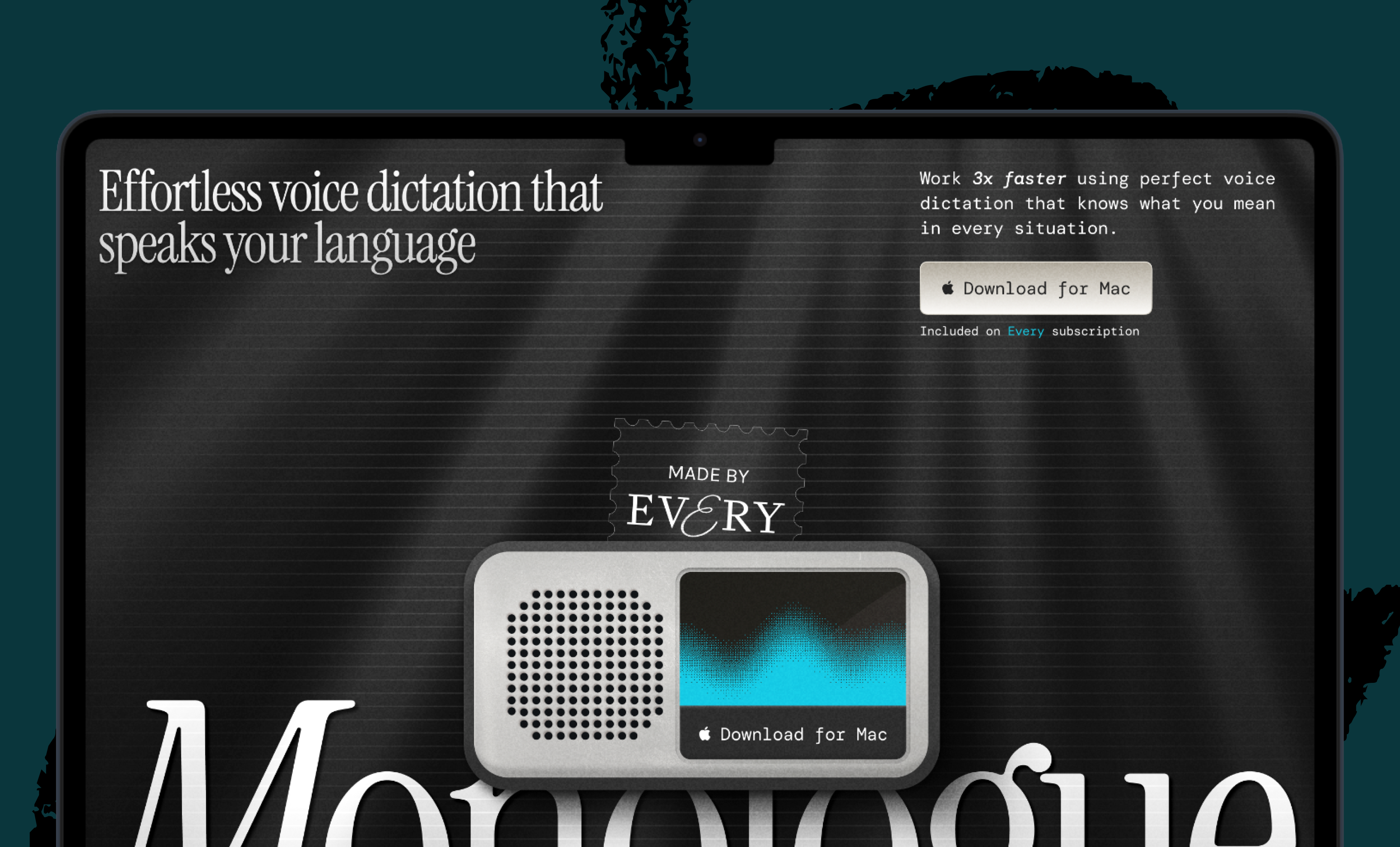
 Monologue
 Every Agent
Join 100,000+ leaders, builders, and innovators

Already have an account? Sign in.
What is included in a subscription?
Daily insights from AI pioneers + early access to powerful AI tools
 Front-row access to the future of AI
 In-depth reviews of new models on release dayPlaybooks and guides for putting AI to workPrompts and use cases for buildersIn-depth reviews of new models on release dayPlaybooks and guides for putting AI to workPrompts and use cases for builders
 Bundle of AI software

 Katie Parrott
 Every Staff
 Kieran Klaassen
Comments