


Laura Entis is a staff writer at Every.

AI Everywhere, All at Once
Fable 5 versus all other models, a Fable prompt starter pack, and an inside look at Apple’s developer conference
Jun 11, 2026 · 8 min readUpdated Oct 8, 2026

Anthropic’s Mythos-level Fable 5 is here, which means we’re experimenting with how to get the most of the super-capable, token-hungry model. Today, four Every team members share their approaches, plus we package eight Fable workflows into prompts you can test out for yourself. Elsewhere, Monologue general manager Naveen Naidu reports from the ground at Apple’s developer conference on why Siri is—wait for it—finally good, and head of platform Willie Williams argues the one thing even the most powerful LLMs can’t do is vibe.
Was this newsletter forwarded to you? Sign up to get it in your inbox.
Inside Every
Fable 5 versus everything else
Anytime there’s a major new model release, there’s pressure to reconsider your AI setup. Or, if you’ve just come out of a meditation retreat, maybe your entire life.
Should you swap out your preferred model for the newest arrival? Is the new model sufficiently better to make the switch if you don’t like the harness?
Fable 5 has thrown the Every team into a new round of existential questioning. It’s an obvious first choice for certain projects—those that are large, complex, and
delegable—and an arguably worse, too-expensive fit for others.
After a week of testing the model, most of us at Every have settled into a two-prong approach: Fire up Fable for ambitious assignments, let it do its thing, and reach for your favored coding agent for smaller-scale, iterative tasks.
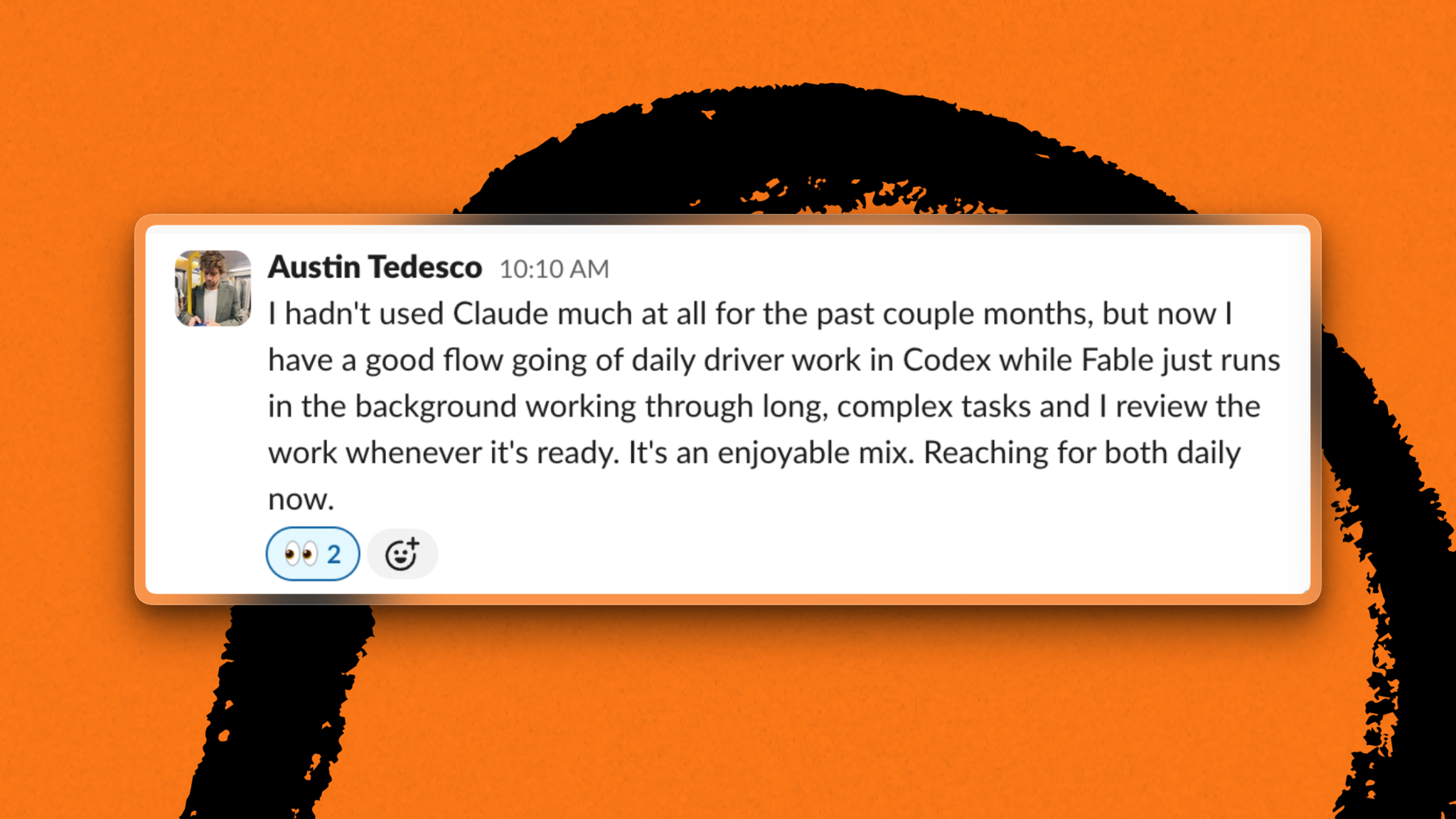
Head of growth Austin Tedesco’s breakdown: Fable 5 demands “a very different way of approaching knowledge work,” one that requires fine-tuning exactly what outcomes you want from the model, what information it needs to execute, and trusting it enough to sit back and let it cook.
Throw out the old playbook
The software development lifecycle wasn’t designed for agentic AI—and it shows. Tools, decisions, and the relationship with code itself are shifting faster than any playbook accounts for.
Meet Command Line, Microsoft’s new blog straight from their technical teams, sharing what they’re building, how they’re operating, and what they’re learning along the way. From articles like why the industry keeps confusing AI capability with AI reality to how they’re designing agent-first devices from scratch, Command Line is written by builders, for builders.
So far, Austin’s reserved Fable 5 for “rocket launcher” projects that can run for four-plus hours, like building an NBA front office simulation game, or researching and executing growth experiments overnight. With the model, he typically uses compound engineering’s LFG flow, which has the agent brainstorm, plan, work, review, and repeat.
The Codex app remains his daily driver. Austin has a setup where, when a meeting ends, Codex retrieves the action items, decides whether it can handle any of them on its own, and, if so, starts a new thread to do the work. He also uses Codex with the Spiral MCP for drafting Every’s social copy, internal strategy documents, and most same-day tasks.
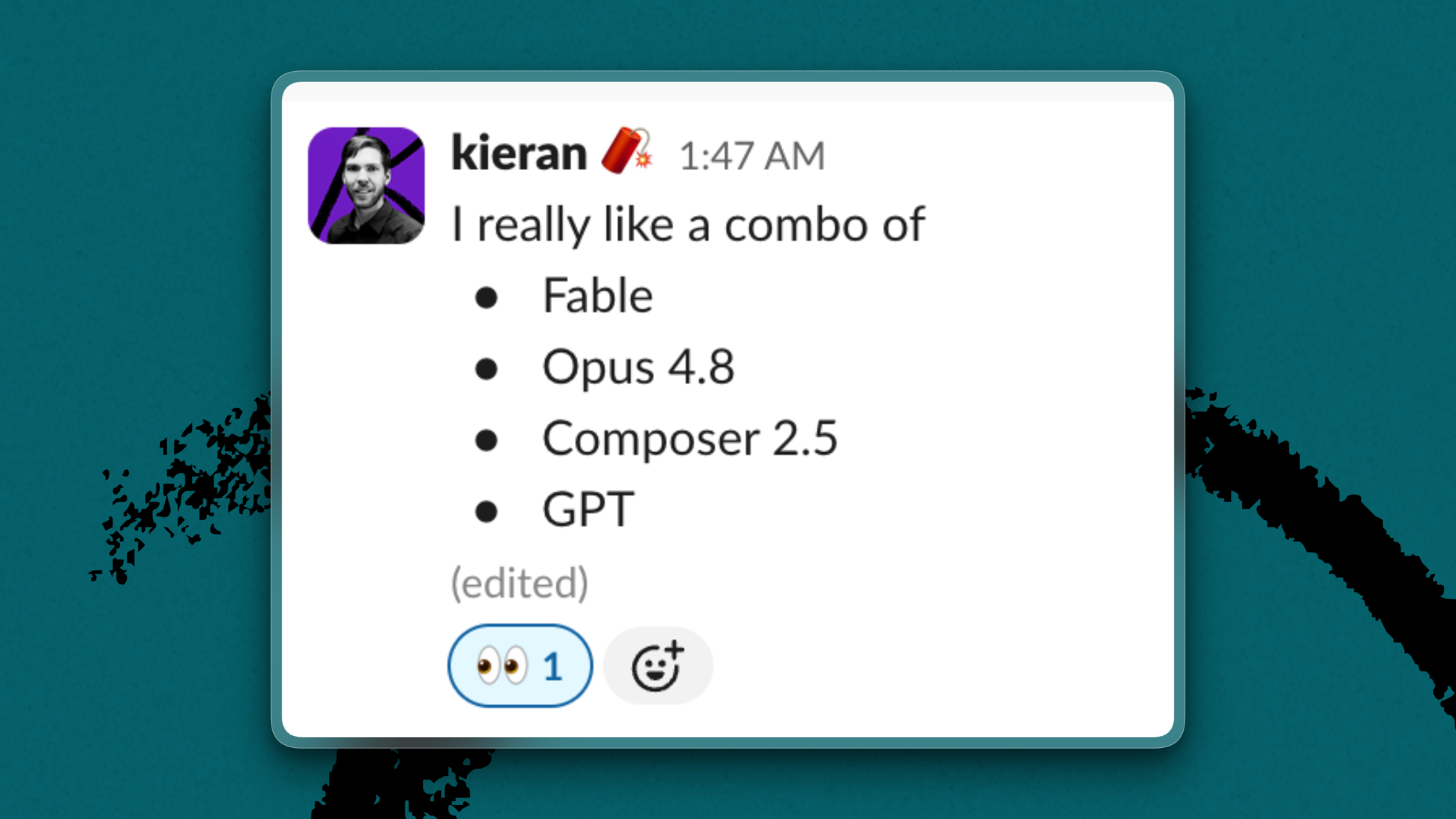
Cora general manager Kieran Klaassen’s breakdown: The way Kieran likes to work—an “AI sandwich” in which he sets the task, the machine executes, and he reviews the results—is the ideal setup for Fable 5. His process hasn’t changed, but Fable 5’s superior abilities on complex, multi-step assignments means the setup works a lot better than it used to.
Fable 5 has become Kieran’s default for the middle of the sandwich. For the “bread” stages, he usually works in Cursor, where he brainstorms and polishes. And for smaller independent tasks he can assign to an agent and review later, he uses Codex CLI, Claude Code CLI, or Cursor managed agents.
Head of platform Willie Williams’s breakdown: Willie is still working out his setup. Fable crushes other models on Every’s Senior Engineer benchmark, but it’s too slow and token-hungry to be a good collaborator. “Do I take the downside of a slightly less capable model, knowing that when we go to the iteration portion of the relationship, it’s more enjoyable to iterate with?”
For now, the Codex app is still where he does most of his daily work. He has spent a lot of time building his setup inside the app: “I can have one thread talk to another thread that talks to another thread—it makes for a nice workflow where I always know what’s going on.”
He plans to test Fable 5’s limits with tasks he’d give a senior engineer, such as reviewing a full codebase alongside a long list of product tickets and looking for an elegant fix that could solve several complaints at once.
Head of tech consulting Mike Taylor’s breakdown: The second there is a superior model, Mike reorganizes his workflow around it. Mike plans to put Fable 5 through its paces with tasks built around ambitious loops, such as having it write a technical book section by section from a table of contents, checking each section against editorial guidelines before continuing. “I will still use Codex, but mostly out of obligation that I should try all the different things,” he says. “If I weren’t working at a company where we need to have an opinion on these things, and thus need to try everything, I would probably just be using Fable.” (An AI early adopter, Mike is happy to shell out for access to the best new models—he already pays for his own Claude Max plan for personal projects.)
One giant caveat: Mike discovered, and alerted the rest of the consulting team, that Fable cannot be used for work done on behalf of the team’s clients. Consulting work often includes confidential information, and Fable’s model environment may retain context beyond a specific task, violating existing NDAs.
A Fable prompt starter pack
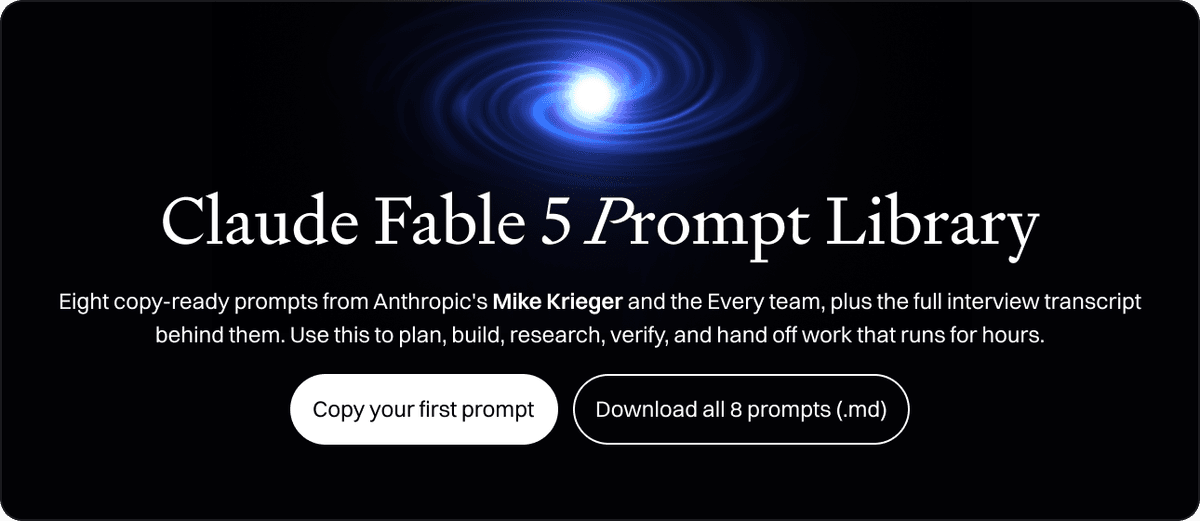
We put eight of our best Fable workflows into a copy-ready prompt library, including:
- Four prompts inspired by Anthropic Labs head Mike Krieger
- Four workflows tested by the Every team
- The full transcript from Dan Shipper’s interview with Mike with insider Fable tips
- Easy downloads to share with your agent
To learn more, join us tomorrow at 12 ET for our Fable 5 Camp.
Signal
An Apple AI comeback?
For years, Apple has been...
Become a paid subscriber to Every to unlock this piece and learn about:
- The demo that made one of Every’s engineers change his mind about Apple
- The design tool that Every’s team uses to make high-quality custom graphics for articles
- Why LLMs still can’t do vibes
Thanks to our Sponsor:
Throw out the old playbook
The software development lifecycle wasn’t designed for agentic AI—and it shows. Tools, decisions, and the relationship with code itself are shifting faster than any playbook accounts for.
Meet Command Line, Microsoft’s new blog straight from their technical teams, sharing what they’re building, how they’re operating, and what they’re learning along the way. From articles like why the industry keeps confusing AI capability with AI reality to how they’re designing agent-first devices from scratch, Command Line is written by builders, for builders.
 Create a free account to continue reading
The Only Subscription
You Need to
Stay at the
Edge of AI
The essential toolkit for those shaping the future

"This might be the best value you
can get from an AI subscription."
- Jay S.
 Every Content
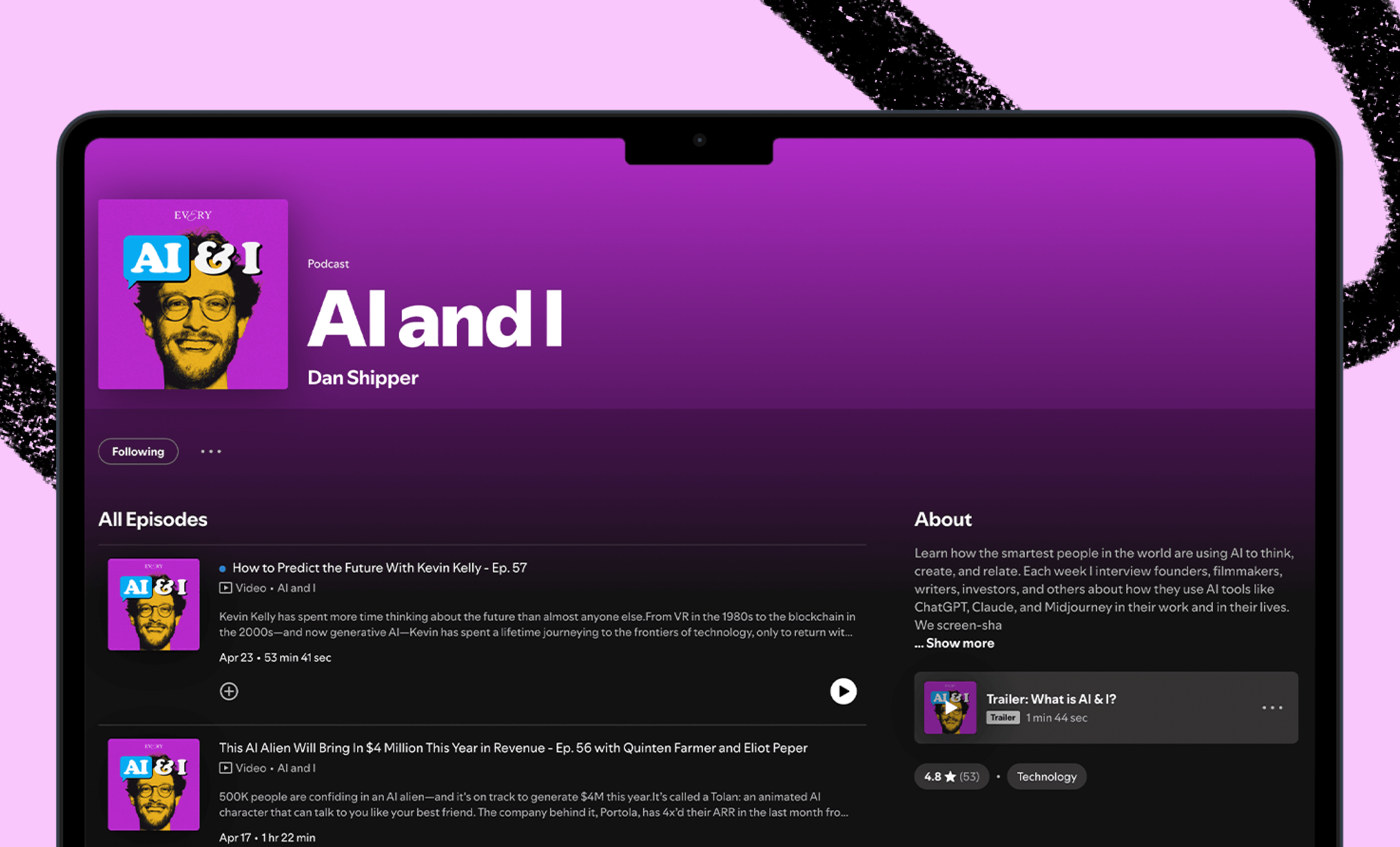
 AI&I Podcast
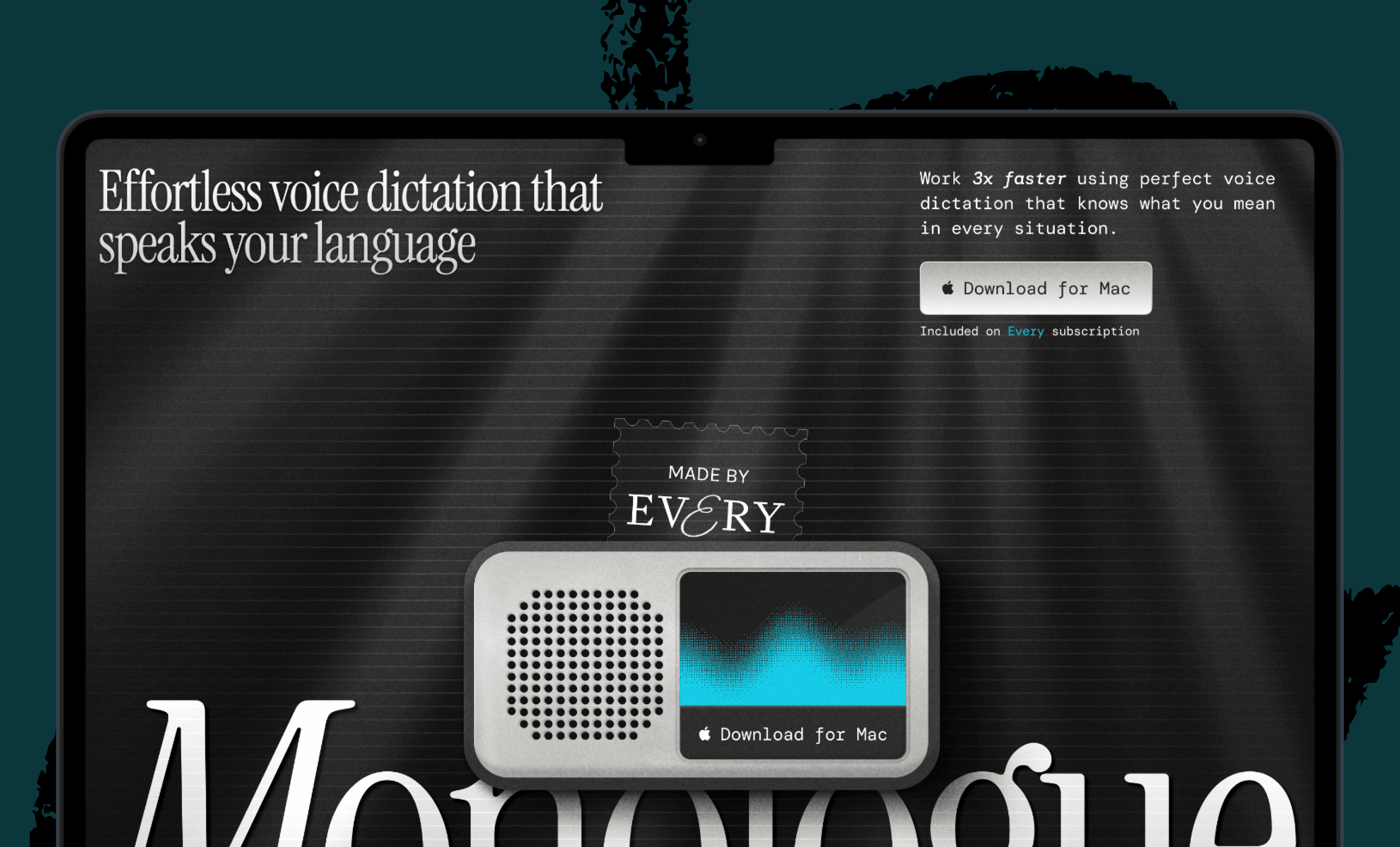
 Monologue
 Every Agent
Join 100,000+ leaders, builders, and innovators

Already have an account? Sign in.
What is included in a subscription?
Daily insights from AI pioneers + early access to powerful AI tools
 Front-row access to the future of AI
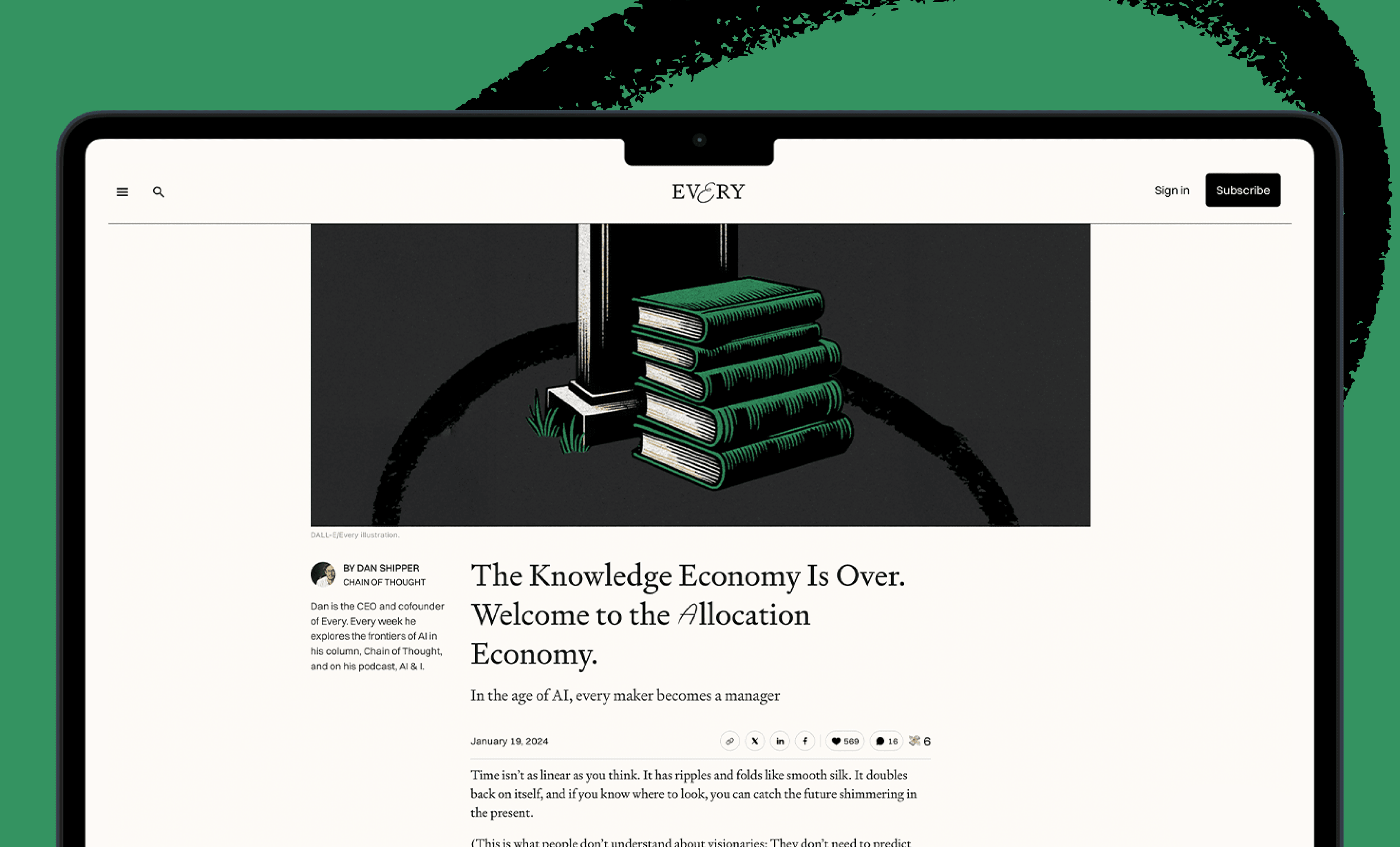
 In-depth reviews of new models on release dayPlaybooks and guides for putting AI to workPrompts and use cases for buildersIn-depth reviews of new models on release dayPlaybooks and guides for putting AI to workPrompts and use cases for builders
 Bundle of AI software





 Katie Parrott
 Every Staff
 Kieran Klaassen
Comments