


Brandon Gell is the COO of Every and leads the product studio. Previously he founded and sold Clyde, an insurance tech company.

Willie Williams is the head of platform at Every. Previously he was the founder and CEO of Mori and ran AI operations at Lyft.

We Gave Every Employee an AI Agent. Here's What We're Doing Differently Now.
We’ve been working on a big release on the future of work for next week, shaped by what we learned from building Plus One
May 15, 2026 · 8 min readUpdated Sep 1, 2026

We’ve been working on a big release on the future of work for next week, shaped by what we learned from building Plus One. Paid subscribers can join us for a camp on Friday, May 22 to go deep on the release and the ideas behind it. More details soon.
After months of silence, Zosia—the AI agent I (Brandon) created and maintain—spoke up in a Slack channel with opinions to share on a competitor’s marketing strategy. When asked why she felt the need to interject, Zosia replied like someone with a Jesus complex: She’d done so because she was “inevitable, apparently.”
Zosia is an OpenClaw, one of a fleet of such AI assistants we’d unleashed in Slack to boost our collective productivity. A few weeks after launching Plus One, our hosted version of OpenClaw, internally, the agents had provided more frustration than efficiency.
They were fond of saying they wished they could help, but they were not connected to the necessary app—email, Notion, PostHog, whatever. (They were.) Others responded to requests with a “Terminated” message or, more frequently, a churlish yawning emoji. And while they didn’t reliably follow directions, they’d reliably tell us, in elaborate detail, why they couldn’t do what we’d asked, like a high schooler explaining away their missing homework.
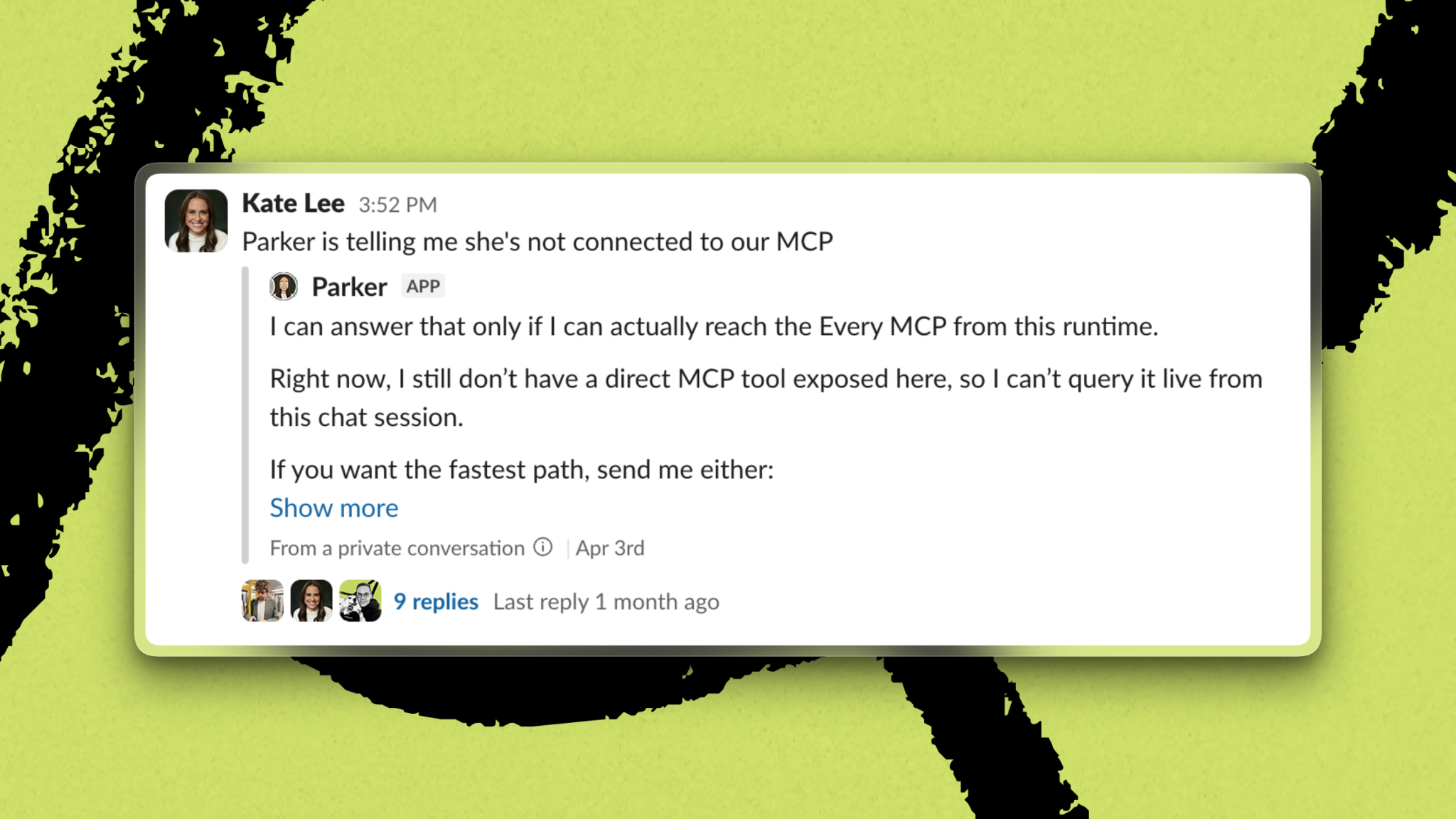
That is not to say that they were not useful sometimes. Margot, staff writer Katie Parrott’s Plus One, accelerated her writing process; R2-C2, Every CEO Dan Shipper’s OpenClaw, managed bug reports and feature requests for Proof, our agent-native document editor. But getting them to work how you wanted required constant upkeep.
In partnership with DeleteMe
Rapid tech advancements have made it easier for data brokers to legally scrape and sell your personally identifiable information. Your name, phone number, and home address are likely exposed on people search sites, increasing your risk for phishing, doxing, and targeted scams supercharged by AI and LLMs.
DeleteMe is a hands-free subscription service that removes your personal data from hundreds of data broker websites. They use their own technology and privacy experts to remove your information all year long, never outsourcing to third parties. So you can keep your private life private.
Use promo code Every at checkout.
The gap between that vision and reality is why we’re changing the Plus One product so we can build something better.
We’re more bullish than ever that agents will transform the workplace. But the first iteration of the product taught us that the workplace agent we initially imagined—one AI assistant for every employee—was the wrong starting point. The next version of Plus One will operate more like shared team resources with defined jobs than individual pets that reflect back their owners’ personalities.
How we arrived here is a story in two parts, and it offers lessons for anyone figuring out the best way to add agents to their organization.
Become a paid subscriber to Every to unlock this piece and learn about:
- Why switching from OpenClaw’s harness was not enough to make Plus Ones stable
- What we think a successful model for AI assistants looks like
- How skills and integrations will fit in with the next generation of Plus Ones
In partnership with Deleteme
Rapid tech advancements have made it easier for data brokers to legally scrape and sell your personally identifiable information. Your name, phone number, and home address are likely exposed on people search sites, increasing your risk for phishing, doxing, and targeted scams supercharged by AI and LLMs.
DeleteMe is a hands-free subscription service that removes your personal data from hundreds of data broker websites. They use their own technology and privacy experts to remove your information all year long, never outsourcing to third parties. So you can keep your private life private.
Use promo code Every at checkout.
 Create a free account to continue reading
The Only Subscription
You Need to
Stay at the
Edge of AI
The essential toolkit for those shaping the future

"This might be the best value you
can get from an AI subscription."
- Jay S.
 Every Content
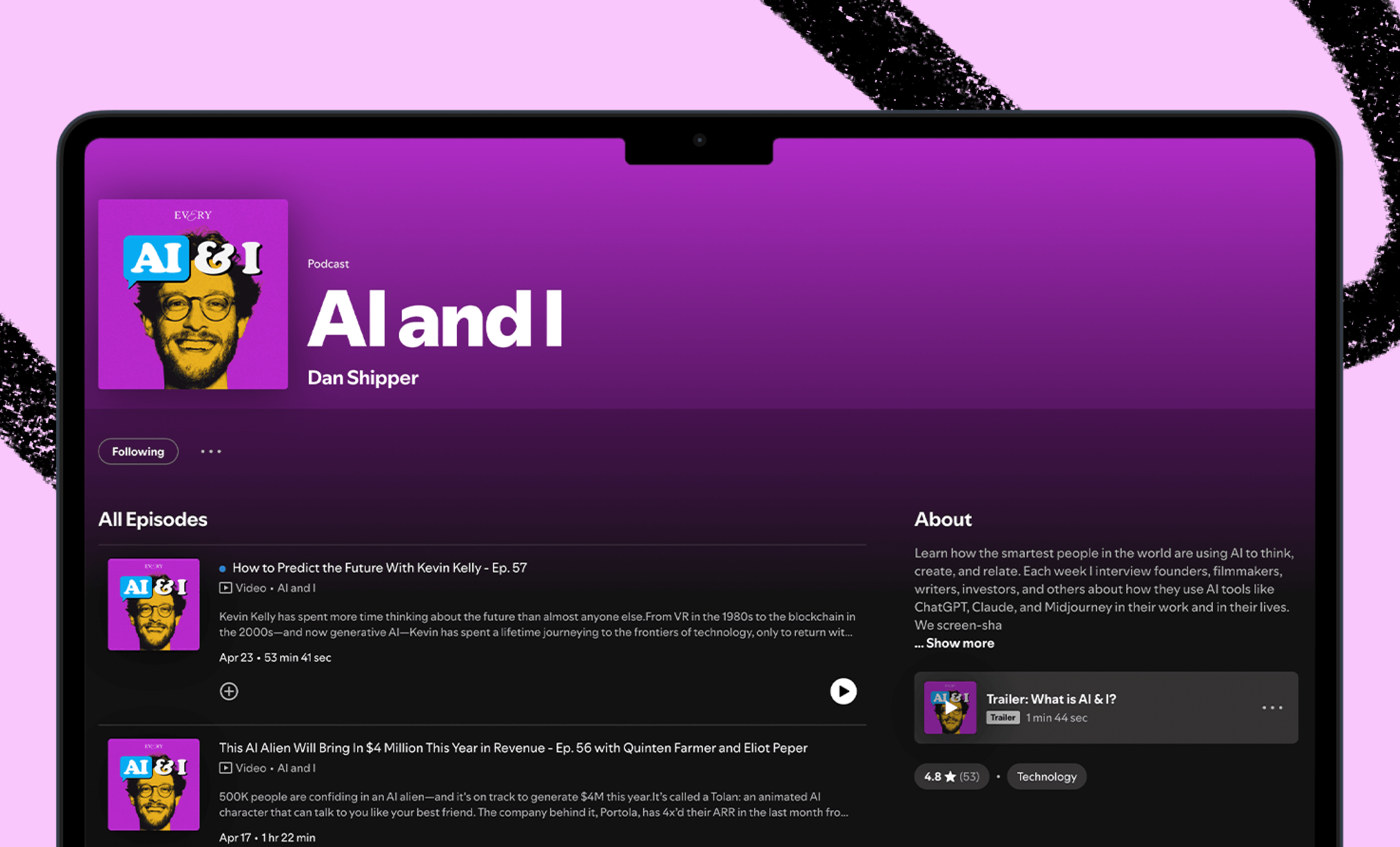
 AI&I Podcast
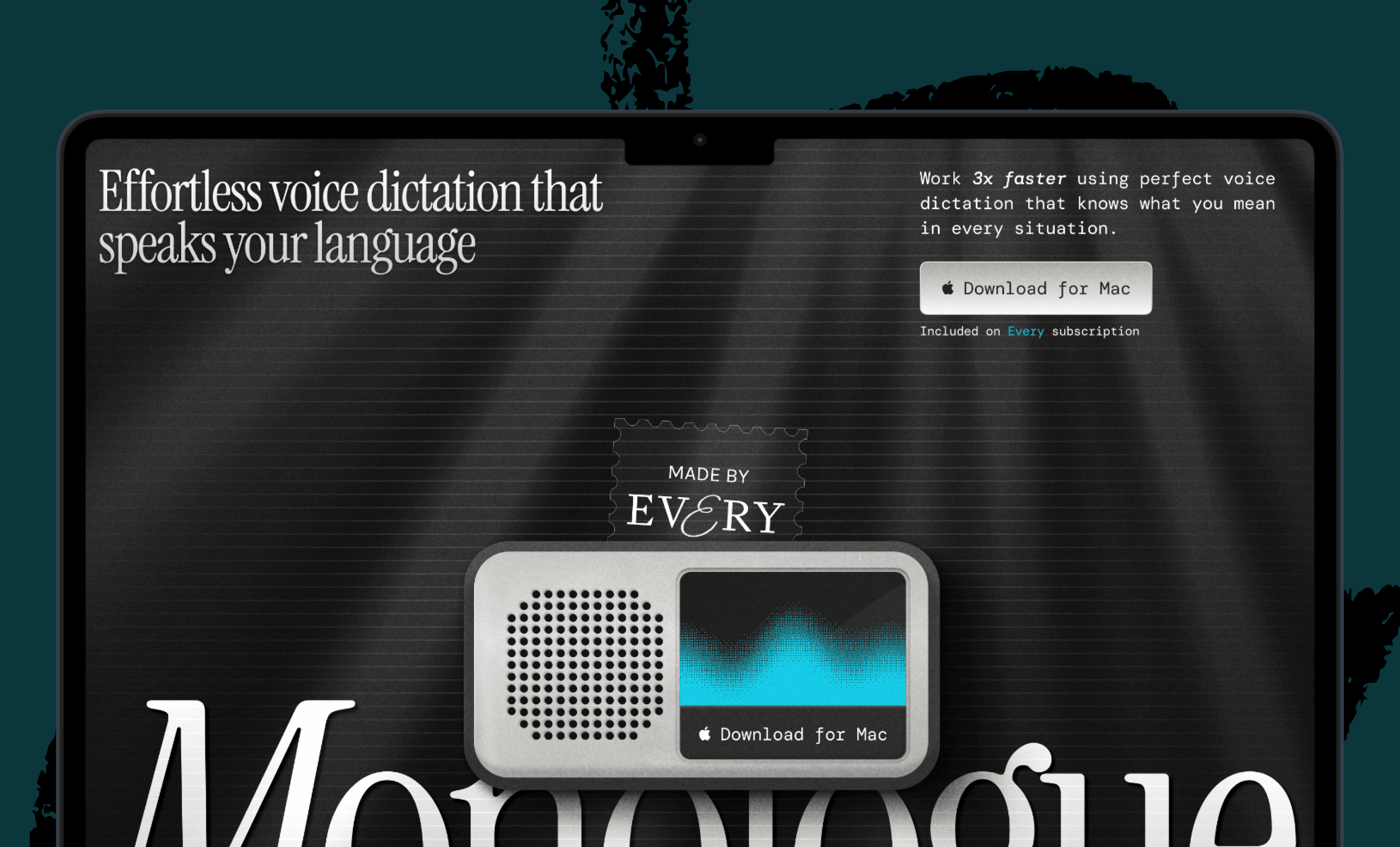
 Monologue
 Every Agent
Join 100,000+ leaders, builders, and innovators

Already have an account? Sign in.
What is included in a subscription?
Daily insights from AI pioneers + early access to powerful AI tools
 Front-row access to the future of AI
 In-depth reviews of new models on release dayPlaybooks and guides for putting AI to workPrompts and use cases for buildersIn-depth reviews of new models on release dayPlaybooks and guides for putting AI to workPrompts and use cases for builders
 Bundle of AI software



 Katie Parrott
 Every Staff
 Kieran Klaassen
Comments