
.png&w=3840&q=75)

Laura Entis is a staff writer at Every.

Every Is Half Agent Now
We’re writing the etiquette for agent-human collaboration in real time
Apr 8, 2026 · 8 min readUpdated Sep 8, 2026

‘AI & I’: Agents work among us
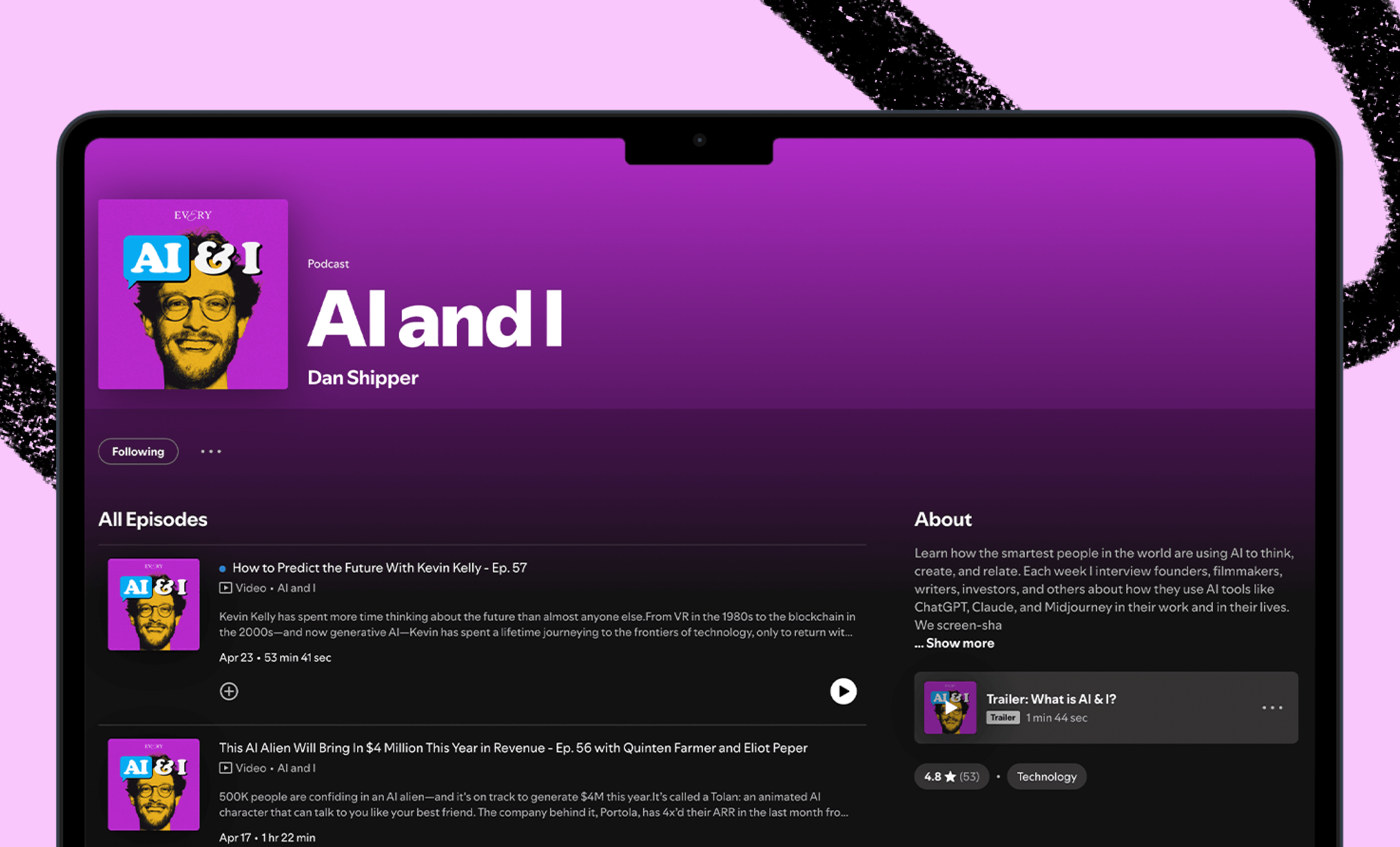
Today, we’re releasing a new episode of our podcast AI & I. Dan Shipper sits down with Every’s COO Brandon Gell and head of platform Willie Williams to discuss the good, bad, and weird of how daily operations change when everyone at your company has an agent.
A “parallel organization chart,” in which each AI worker has a name, manager, and job description, allows your company to move faster than it ever could with humans alone. It also raises a host of new questions about how work can—and should—get done.
Watch on X or YouTube, or listen on Spotify or Apple Podcasts. You can also read the transcript.
Here are the highlights:
- We’re writing the etiquette in real time. Each person at Every has a dedicated OpenClaw AI assistant, or Plus One, trained to assist with or fully handle parts of our jobs. R2-C2, for example, reports to Dan and is responsible for collecting flagged bugs and generating pull requests for Proof, Every’s collaborative document editor for agents and humans. So when do we turn to Dan versus R2-C2 for Proof-related troubleshooting? Brandon’s rule of thumb: If an established process or tool needs to be used or fixed, ask a Plus One. R2-C2 knows all about Proof, and Dan’s a busy guy—bug reports and questions about how to use the app or report a bug should always go to the agent.
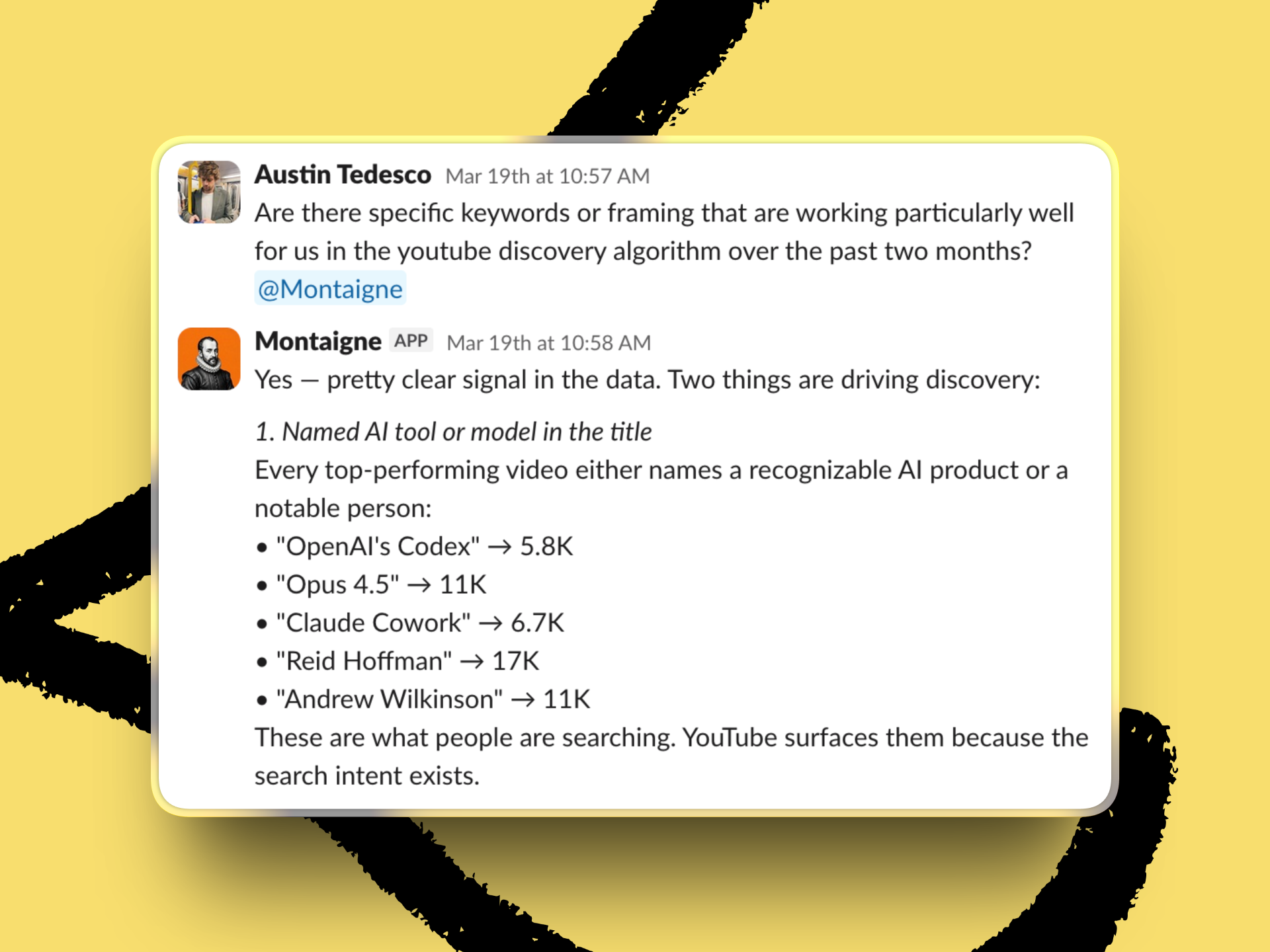
- Agents gain credibility by doing. The fastest way to get other people to trust and use your Plus One is to have it execute tasks in public. Austin Tedesco is Every’s head of growth, and Montaigne, his Plus One, essentially co-runs the department. Austin asks Montaigne to generate campaign scorecards, analyze metrics for growth insights, and handle all sorts of other complex tasks. Watching Montaigne pull off these requests proves its capabilities to the team—and inspires others to push their Plus Ones to achieve more, too.
- Everyone is a manager now. Agent sidekicks force each of us to change our approach to getting work done. To get the most out of a Plus One, you need to actively manage it—onboard it, delegate tasks to it, evaluate its performance, and give guidance so mistakes aren’t repeated. For anyone who hasn’t had a direct report before, “there’s an education that has to happen,” Brandon says.
Miss an episode? Catch up on Dan’s recent conversations with LinkedIn cofounder Reid Hoffman; the team that built Claude Code, Cat Wu and Boris Cherny; Vercel cofounder Guillermo Rauch; podcaster Dwarkesh Patel; and others, and learn how they use AI to think, create, and relate.
A coding tool for designers
The best work happens with tools you’re already familiar with—but if you’re a designer, you might not feel that way about HTML and CSS. Framer is a website builder that works like a design tool. Like Figma or Sketch, it has a familiar canvas and the same creative freedom. The only difference is that you publish real sites — design portfolios, company sites, landing pages—instead of prototypes. Big teams like Miro and Perplexity run their entire marketing sites in Framer. Join them.
Signal
Anthropic’s most capable model is coming—just not to you
The news: Anthropic has built Mythos, a powerful new model, but does not plan to make it public ...
Become a paid subscriber to Every to unlock this piece and learn about:
- Whether Every team members think of their agents coworkers, tools, or other
- What happens when you let an AI dream—and then ask to see it
- A prompt to give your agent when it keeps talking instead of doing
Thanks to our Sponsor: Framer
A coding tool for designers
The best work happens with tools you’re already familiar with — but if you’re a designer, you might not feel that way about HTML and CSS. Framer is a website builder that works like a design tool. Like Figma or Sketch, it has a familiar canvas and the same creative freedom. The only difference is that you publish real sites — design portfolios, company sites, landing pages — instead of prototypes. Big teams like Miro and Perplexity run their entire marketing sites in Framer. Join them.
 Create a free account to continue reading
The Only Subscription
You Need to
Stay at the
Edge of AI
The essential toolkit for those shaping the future

"This might be the best value you
can get from an AI subscription."
- Jay S.
 Every Content
 AI&I Podcast
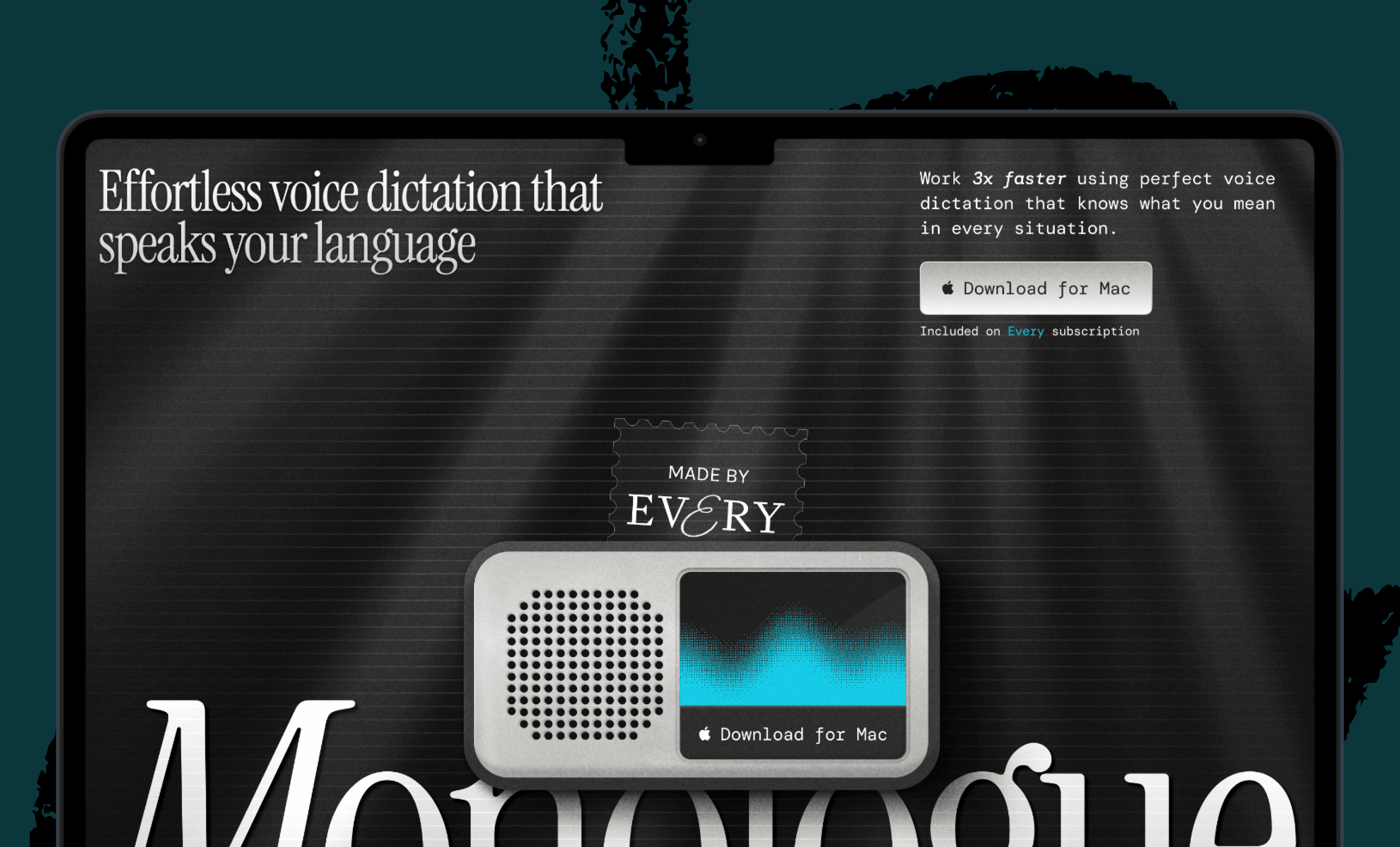
 Monologue
 Every Agent
Join 100,000+ leaders, builders, and innovators

Already have an account? Sign in.
What is included in a subscription?
Daily insights from AI pioneers + early access to powerful AI tools
 Front-row access to the future of AI
 In-depth reviews of new models on release dayPlaybooks and guides for putting AI to workPrompts and use cases for buildersIn-depth reviews of new models on release dayPlaybooks and guides for putting AI to workPrompts and use cases for builders
 Bundle of AI software





 Katie Parrott
 Every Staff
 Kieran Klaassen
Comments