


How AB 5 Will Break Uber’s Business
If contractors become employees nationwide, Uber won't survive
Aug 20, 2020 · 9 min readUpdated Jul 15, 2026

Today, Californians can call an Uber. Tomorrow, they can’t.
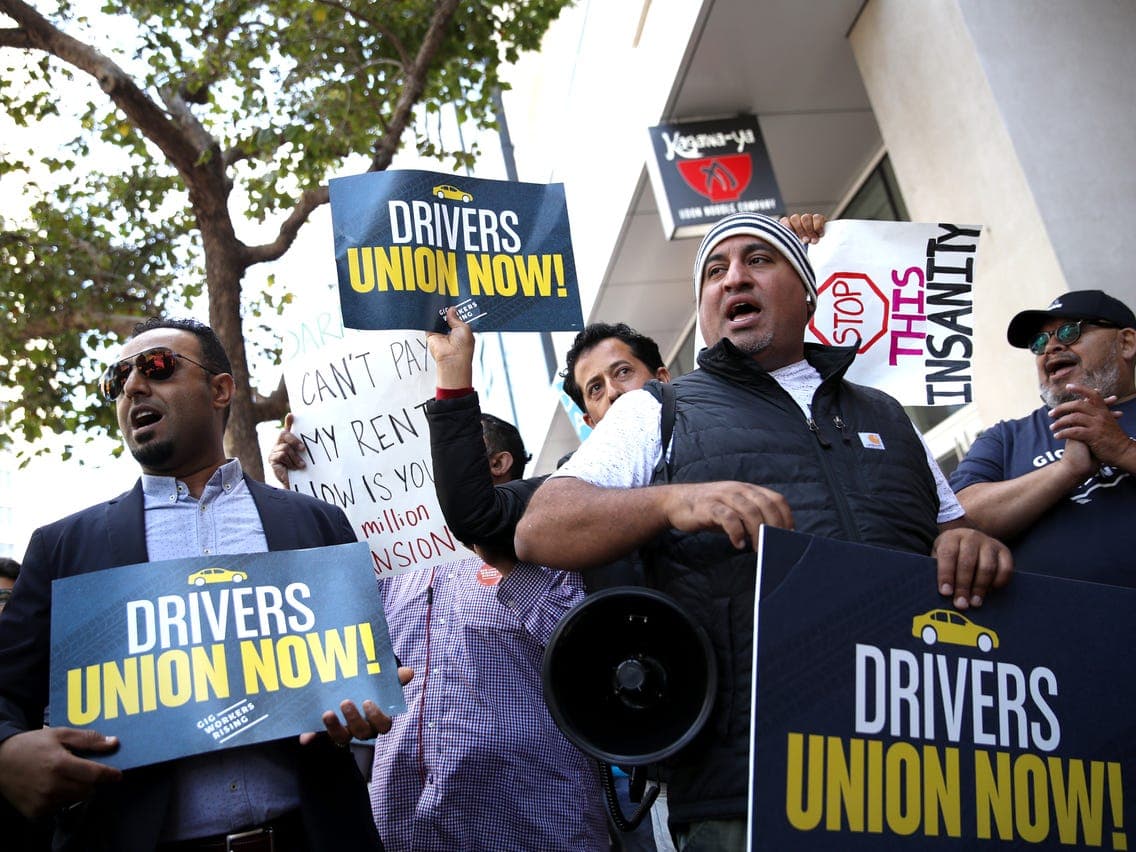
Last September, California Governor Gavin Newsom signed the controversial Assembly Bill 5 (AB 5). In this bill, California required companies to reclassify independent contractors as employees. As evidenced by the substantial list of exceptions, the bill was designed to regulate tech companies like Uber and Lyft, which employ hundreds of thousands of gig workers and rose to prominence over the past decade.
The bill took effect on January 1, 2020 but these tech companies had been resisting the requirement. Early last week, Uber and Lyft were ordered by a California judge to classify their contractors as employees within 10 days. The companies haven’t been able to reclassify their workers in that time and so they are shutting down operations in the state. As of August 21, if Uber and Lyft employee independent contractors as drivers, they will be breaking the law.
These companies claim that they are shutting down because they can’t reclassify workers fast enough. The sheer amount of logistics and administration of turning a workforce from contractors to employees is immense. Especially when there are over 100,000 workers.
But the other reason they are stopping operations is to gain support for Proposition 22. In November, California citizens will decide with their vote whether or not app-based drivers that are classified as contractors should become employees. If drivers are unemployed for two months, and residents don’t have ridesharing services for two months, that will help gain support for Prop 22 (in favor of Uber and Lyft). These constituencies could feel the pain for themselves and want it changed.
In this article, I outline what makes a contractor different from an employee, analyze what Uber’s business might look like if their labor costs increased on a global scale, and explain why each side has a good argument. Let’s get into it.
Independent Contractor vs Employee
Most people have an intuition for the difference between a contractor and an employee. A contractor works by the hour and has many clients. An employee has a set amount of hours and works for one company. However, when we get into labor laws, the differences need to be precise. And that precision causes disagreement.
 Create a free account to continue reading
The Only Subscription
You Need to
Stay at the
Edge of AI
The essential toolkit for those shaping the future

"This might be the best value you
can get from an AI subscription."
- Jay S.
 Every Content
 AI&I Podcast
 Monologue
 Every Agent
Join 100,000+ leaders, builders, and innovators

Already have an account? Sign in.
What is included in a subscription?
Daily insights from AI pioneers + early access to powerful AI tools



 Front-row access to the future of AI
 In-depth reviews of new models on release dayPlaybooks and guides for putting AI to workPrompts and use cases for buildersIn-depth reviews of new models on release dayPlaybooks and guides for putting AI to workPrompts and use cases for builders
 Bundle of AI software






 Katie Parrott
 Every Staff
 Kieran Klaassen
Comments