

The Everything Sunday Digest
Welcome to the Sunday edition of Everything, the best business writing on the internet. You’re getting this weekly digest because you signed
Aug 2, 2020 · 4 min readUpdated May 30, 2026

Welcome to the Sunday edition of Everything, the best business writing on the internet. You’re getting this weekly digest because you signed up for one of our newsletters: Superorganizers, Divinations, Praxis, Napkin Math, and Talk Therapy.
To manage your email settings, click here.
Hello and happy Sunday!
What we published this week
We published three new articles this week 7,500 words. We unearthed AI-written poetry in the style of Emily Dickinson, continued our exploration of the theory of disruption, and outlined how to make the cheesy commencement advice of “following your heart” actionable.
How to manage your subscription
You can subscribe and unsubscribe from individual newsletters inside of the bundle without affecting your overall subscription to what we write. If you want to turn on or off email notifications for a specific newsletter, you can manage your settings here.
Enjoy!
NAPKIN MATH
Get smarter about investing📐GPT-3 Will Accelerate The Privatization of Internet Communities
Adam outlines three ways in which GPT-3 makes public internet forums like Reddit and Twitter less viable, through examples ranging from Drake to Paul Graham’s Twitter Feed. He then explains why private, invite-only communities are the antidote.
DIVINATIONS
Get smarter about strategy🔮 Disrupting Disruption Part 2: Ben Thompson
The second in Nathan’s disruption series, this essay analyzes Stratechery’s Ben Thompson proposed modifications to the classic disruption theory proposed originally by Clay Christensen. They revolve around a simple idea: What if there’s no such thing as being too good? 🔒
Dive deeper — “Disrupting Disruption.” Read Nathan’s first post in the series, on the original theory of disruption. He sets out the basic tenets and the counter-examples that it doesn’t quite explain, from Tesla to Costco.
From the Divinations archives — “Notion’s $2b Valuation is Sensible, Probably.” Nathan and Adam dive into three segments on how to value Notion, how Roam took over Twitter, and how to apply the economic concept of time preference to your own life. 🔒
SUPERORGANIZERS
How the world’s smartest people organize their work⚡️Follow your heart — with caveats
Follow your heart is squishy advice. Dan proposes a new way to understand that bumper-sticker directive, and uses it to propose a new answer to the question: “What idea should I work on first?” 🔒
From the Superorganizers archive — “If your system was a house, would you want to live in it?” Dan pulls analogies from architecture and biology to suggest a simpler approach to building systems for our lives.🔒
MEANS OF CREATION
Exploring the passion economy😍 Episode 4: Leah Culver and Erik Berlin
This week Li and Nathan interviewed Leah Culver and Erik Berlin, co-founders of podcast app Breaker.
Want to join the next one? Our guest is Nathan Barry, founder of ConvertKit! This should be a great one, as Nathan stared on the creator side of the passion economy, and ended up building a powerful email platform for creators. Click here to RSVP. 🔒
PRAXIS
The modern frontier of productivity➰You Need a Budget: 13 Parallels Between Money and Productivity
From the archive: Tiago Forte summarizes the approach outlined in a popular budgeting book by Jesse Mecham, which includes tips on how to create multiple emergency funds and set a flexible grocery budget. He then dives into how those skills translate to increasing productivity as well. 🔒
TALK THERAPY
What happens when two friends start a business💞 #16 - Should you follow your heart?
Nathan and Dan discuss Dan’s latest Superorganizers essay on the framework he developed to help him follow his heart — and filter for the best ideas.
FROM OUR NETWORK
📈What Dan Rose Learned from Building the Kindle
Check out Dan Rose’s 10 takeaways from working with Jeff Bezos to build the Kindle back in 2004, after two ebook readers had already failed in the market.
That’s it for this week!
Thanks, and see you next Sunday :)
How did you feel about this post?
This issue was written by Saanya Jain and edited by Dan Shipper.
The Only Subscription
You Need to
Stay at the
Edge of AI
The essential toolkit for those shaping the future

"This might be the best value you
can get from an AI subscription."
- Jay S.
 Every Content
 AI&I Podcast
 Monologue
 Every Agent
Join 100,000+ leaders, builders, and innovators

Already have an account? Sign in.
What is included in a subscription?
Daily insights from AI pioneers + early access to powerful AI tools

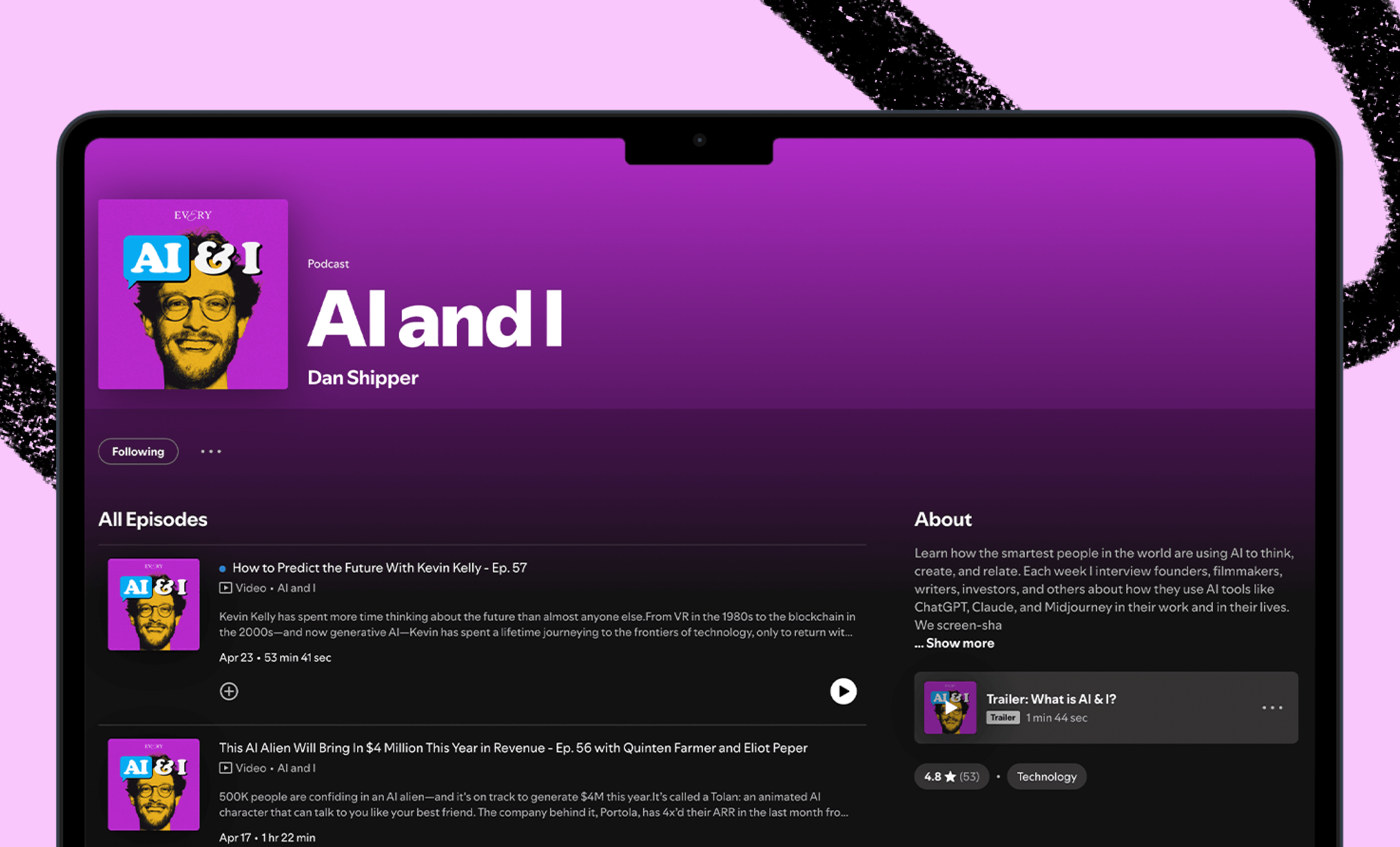

 Front-row access to the future of AI
 In-depth reviews of new models on release dayPlaybooks and guides for putting AI to workPrompts and use cases for buildersIn-depth reviews of new models on release dayPlaybooks and guides for putting AI to workPrompts and use cases for builders
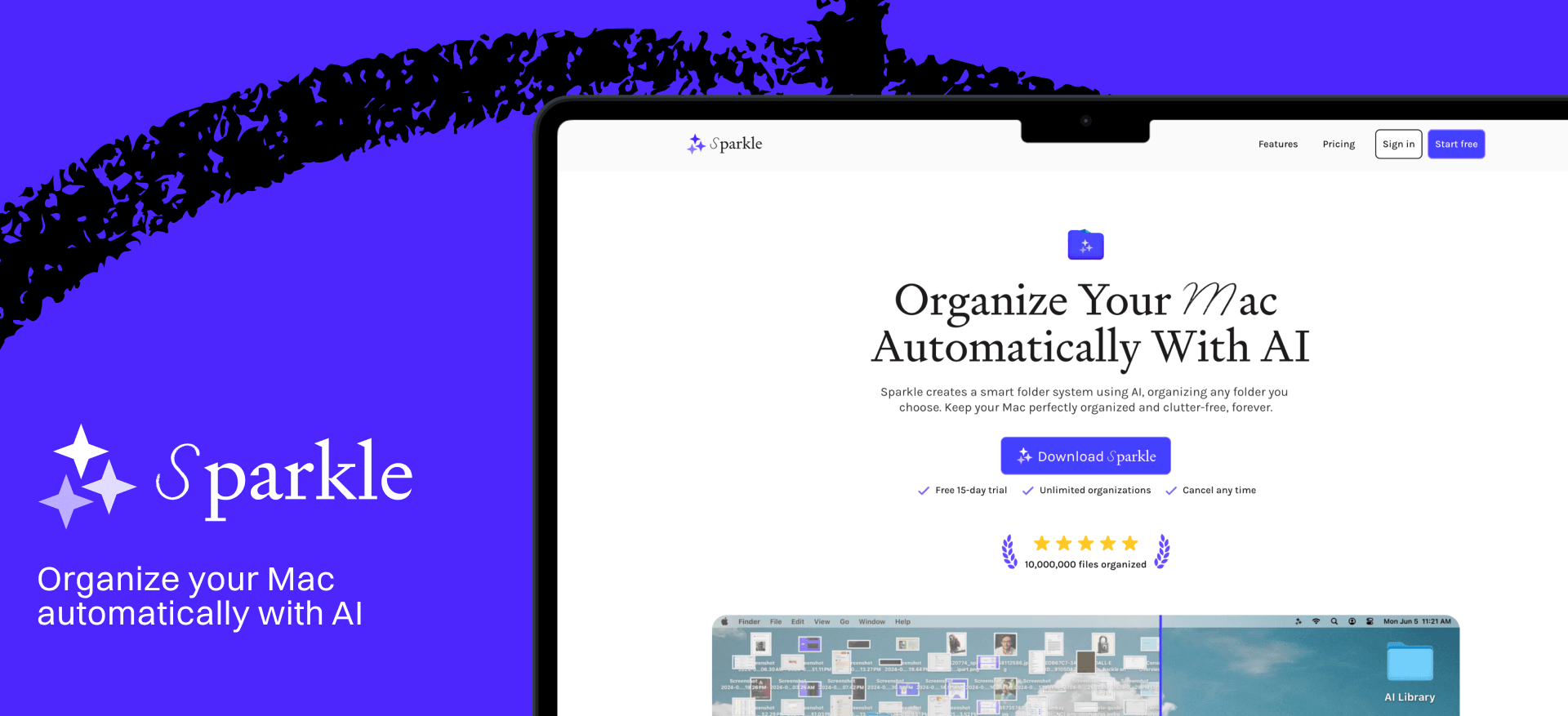
 Bundle of AI software






 Katie Parrott
 Every Staff
 Kieran Klaassen
Comments