
.png&w=3840&q=75)


Claude Code Takes Pole Position
Plus: Two camps this week to get you building with agents
Jan 18, 2026 · 6 min readUpdated Aug 28, 2026

Hello, and happy Sunday! Agent-native coding is officially blowing up, and whether you’re ready to start building with agent-native software or still wondering what it’s about, we’re hosting two camps this week that are perfect for you. First, join us at Thursday’s Vibe Code Camp to watch more than a dozen of the very best vibe coders in action during an all-day livestream. Then, on Friday, paid subscribers are invited to Every’s first Agent-native Camp, where CEO Dan Shipper will go step-by-step from how the software works to how to use it yourself. We’ll be off Monday for Martin Luther King Jr. Day, but back in your inboxes Tuesday.—Kate Lee
Was this newsletter forwarded to you? Sign up to get it in your inbox.
Knowledge base
“Vibe Check: Claude Cowork Is Claude Code for the Rest of Us” by Katie Parrott/Vibe Check: Developers have been losing their minds over Claude Code for months; now everyone else gets their turn. Cowork is a new tab in Claude’s desktop app that brings the same asynchronous, agentic workflow to nontechnical users. Hand off a task, come back an hour later—poof! It’s done. Dan Shipper ran an audit of his calendar that took an hour; Cora general manager Kieran Klaassen designed a 3D-printable chair using two Skills at once. The interface is rough, but no competitor is attempting anything like it. Read this for our day-zero verdict.
“OpenAI Has Some Catching Up to Do” by Dan Shipper/Chain of Thought: At a recent event, Dan asked what AI tools programmers are using daily. Almost everyone said Claude Code with Opus 4.5. A year ago, the whole room would have said GPT. OpenAI’s Codex is powerful and growing fast, but it’s built for senior engineers who want to read diffs and approve every change—a shrinking market. Meanwhile, the vibe coders building iPhone apps today will ship real software tomorrow, and whoever wins vibe coding wins how people work on their computers. Read this to understand how for all its trailblazing, OpenAI faces a real strategic challenge.
“The Boring Businesses That Will Dominate the AI Era” by Tina He/Thesis: As AI agents become the primary users of software—evaluating economics in milliseconds and switching without loyalty—startups building AI-native tools face a precarious future. The winners will be companies that control the infrastructure AI must flow through but cannot replace, writes Tina He: proprietary data, financial rails, compliance systems, workflow libraries. Read this for the five archetypes that’ll own this space.
“AI Can Build Anything. Social Dandelions Decide What Spreads” by Lewis Kallow: In 1933, 70 percent of Iowa’s farmers knew about a miraculous new corn seed that could save their crops—but only 1 percent adopted it. Why? High-risk ideas don’t spread through awareness; they spread through trust. Lewis Kallow traces a line from those skeptical farmers to ChatGPT’s explosive launch, revealing the sociology behind product adoption. Read this for his playbook.
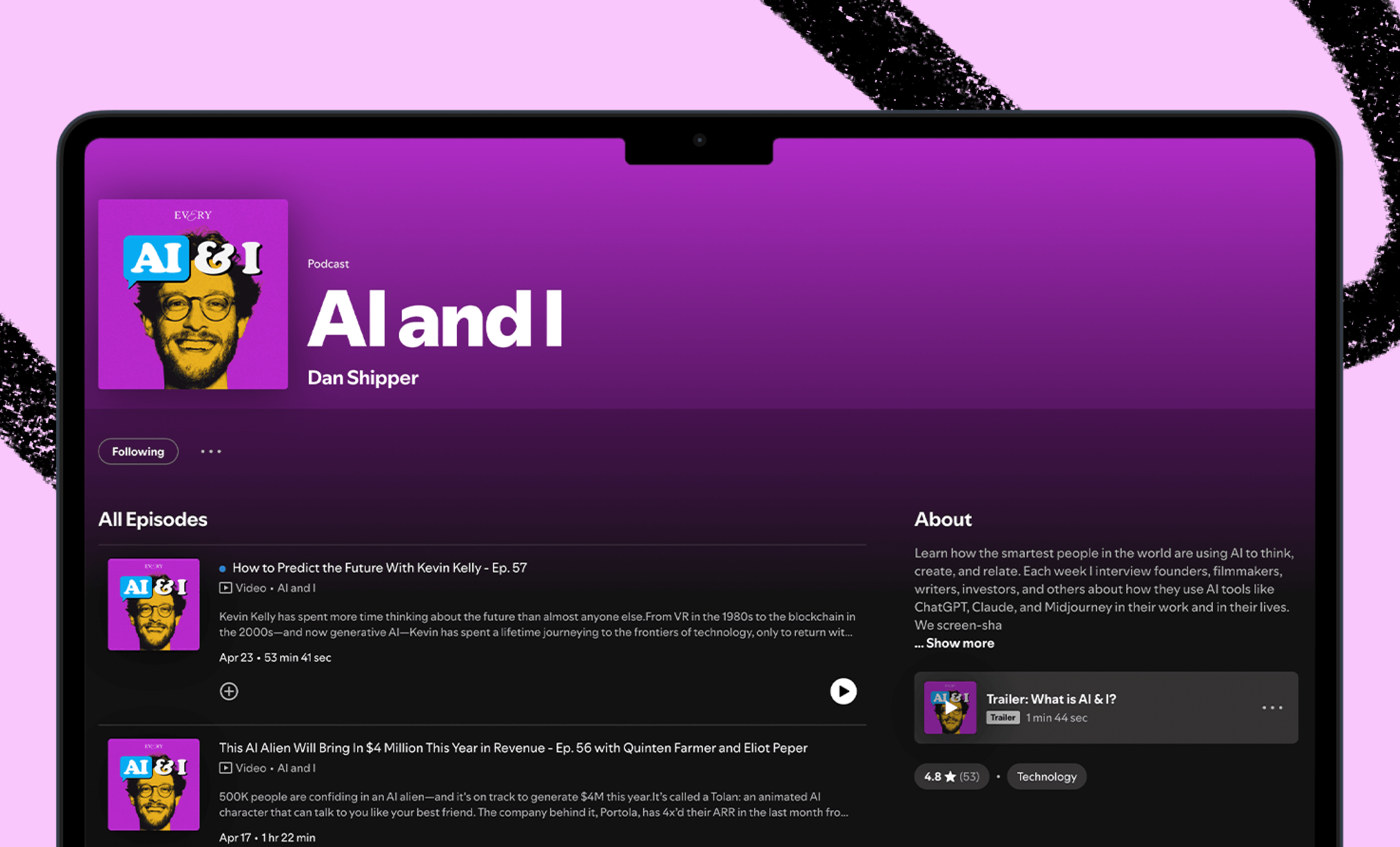
🎧 “Why Your AI Learning Projects Keep Fizzling Out” by Rhea Purohit/AI & I: You’ve probably tried using ChatGPT to finally learn something—quantum physics, a new language, the names of trees in your neighborhood—and quit after a few chats. Nir Zicherman, cofounder of Anchor and now CEO of AI learning platform Oboe, explains why: LLMs can answer your questions, but they won’t notice when you’re lost or your attention fades. Zicherman walks Dan through what real learning requires—multimodality, pacing, and milestones that make progress feel achievable. 🎧 🖥 Listen on Spotify or Apple Podcasts, or watch on X or YouTube.
From Every Studio
Sparkle Deep Clean enters beta testing
Sparkle is testing a new feature called Deep Clean that helps you reclaim storage by surfacing files you’ve never opened or haven’t touched in over a year. General manager Yash Poojary ran it on his Mac Studio and went from approximately 18,000 files to 800—saving around three times the space compared to CleanMyMac. The guided flow breaks cleanup into focused steps:Sscreenshots, DMGs, and zips each get their own section, with instant feedback as you remove files. Beta testing is underway now; stay tuned for the public release.
First look: Proof, a markdown editor that tracks who wrote what
Dan has been building Proof, a markdown editor designed to solve a problem that’s only getting worse: knowing which words came from a human and which came from an AI. Proof tracks authorship at the sentence level, showing what was AI-generated, what was human-written, and what was AI-suggested but human-edited. Proof can also add comments and track changes that work for both human collaborators and AI agents, so an AI can propose a revision, and you can accept, reject, or edit it just like you would with a human editor.
Proof isn’t publicly available yet, but we’ll share more as it develops.
Alignment
Writers have an edge in AI. I built something with Claude Code recently that has no right to exist. I can’t code. But somehow I now have a website that scrapes academic papers on GLP-1s, summarizes them for busy doctors, grades the evidence, and emails subscribers weekly. I’ve checked it every day for the past three weeks, and it works.
I created the site out of pure frustration. I can’t keep up with all the research, and rather than saving hundreds of papers on my desktop, I needed something simple and easy to understand.
There are two reasons I could make this. One is that writing for Every means I’m constantly reading about how these tools actually work from people at the frontier like Dan, Kieran and Monologue general manager Naveen Naidu. The other is I know how to take a vague idea and make it specific, which is all essay writing really is.
First, I asked Claude to interview me in depth. What do I want people to feel when they go to my site? What are the flaws? What am I missing? This is a technique I use in my writing to gain clarity about what I want to say. I then traced the logical flow on the page: If I’m collecting academic papers, I need a way to identify them so they’re not posting to the site more than once. If I’m emailing people, I need a way to track what’s already been sent, and If I want papers to be easy to follow, I need a way to surface the evidence clearly.
What started as a simple idea required, it turns out, a pretty sophisticated system. But that’s how essay writing works, too. You think you’re making one point, then realize you need to define a term first, or address an objection, or split one argument into three.
By jotting down what I wanted step by step, I could see gaps I would have missed, and gaps I didn’t want Claude to fill with assumptions or hallucinations because it would inevitably get them wrong. I wanted to catch these early potholes myself.
I think that’s the edge right now: the habit of writing your way to clarity before asking anyone or anything to execute. Writers have been doing this forever, but it’s especially useful now.—Ashwin Sharma
That’s all for this week! Be sure to follow Every on X at @every and on LinkedIn.
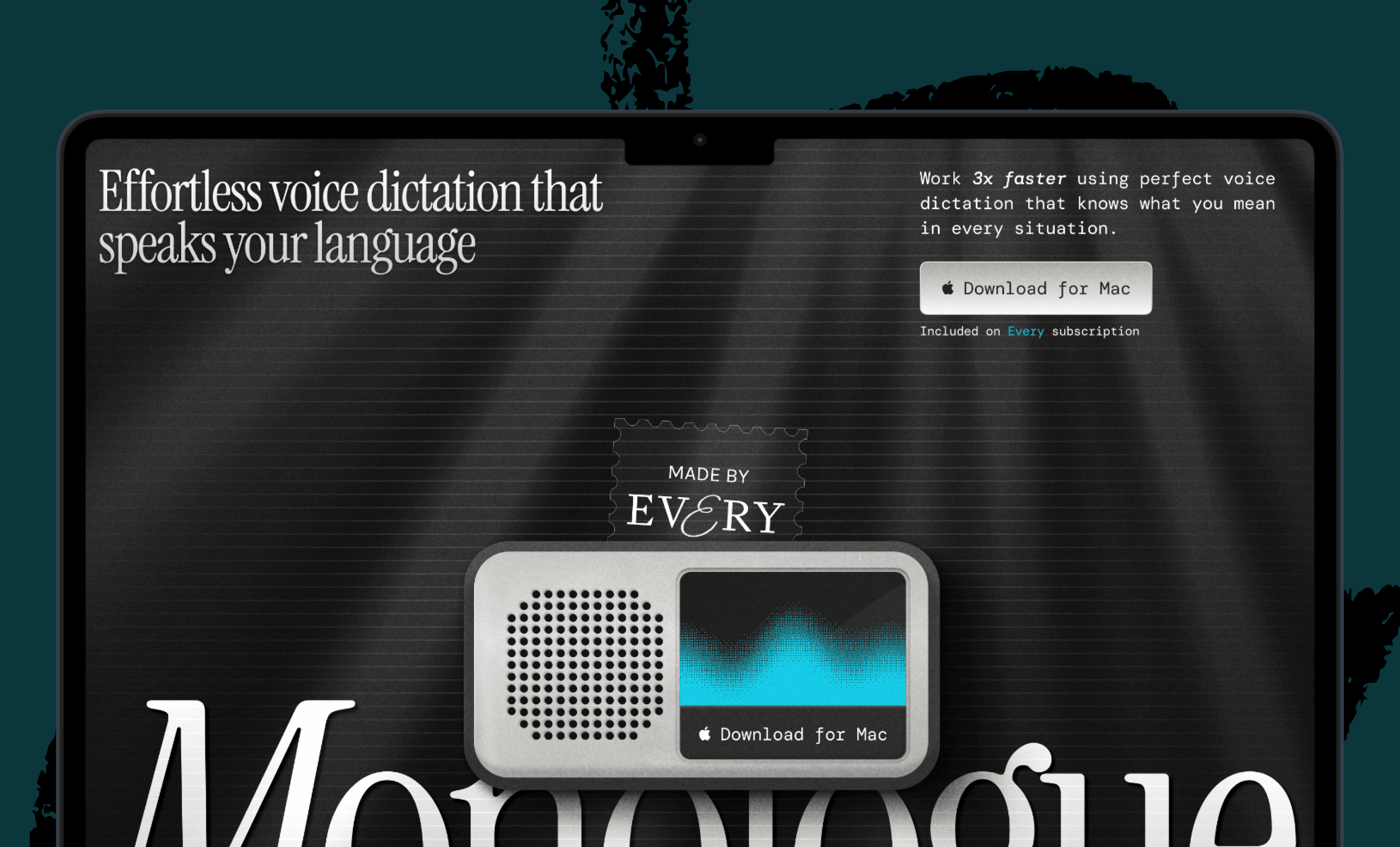
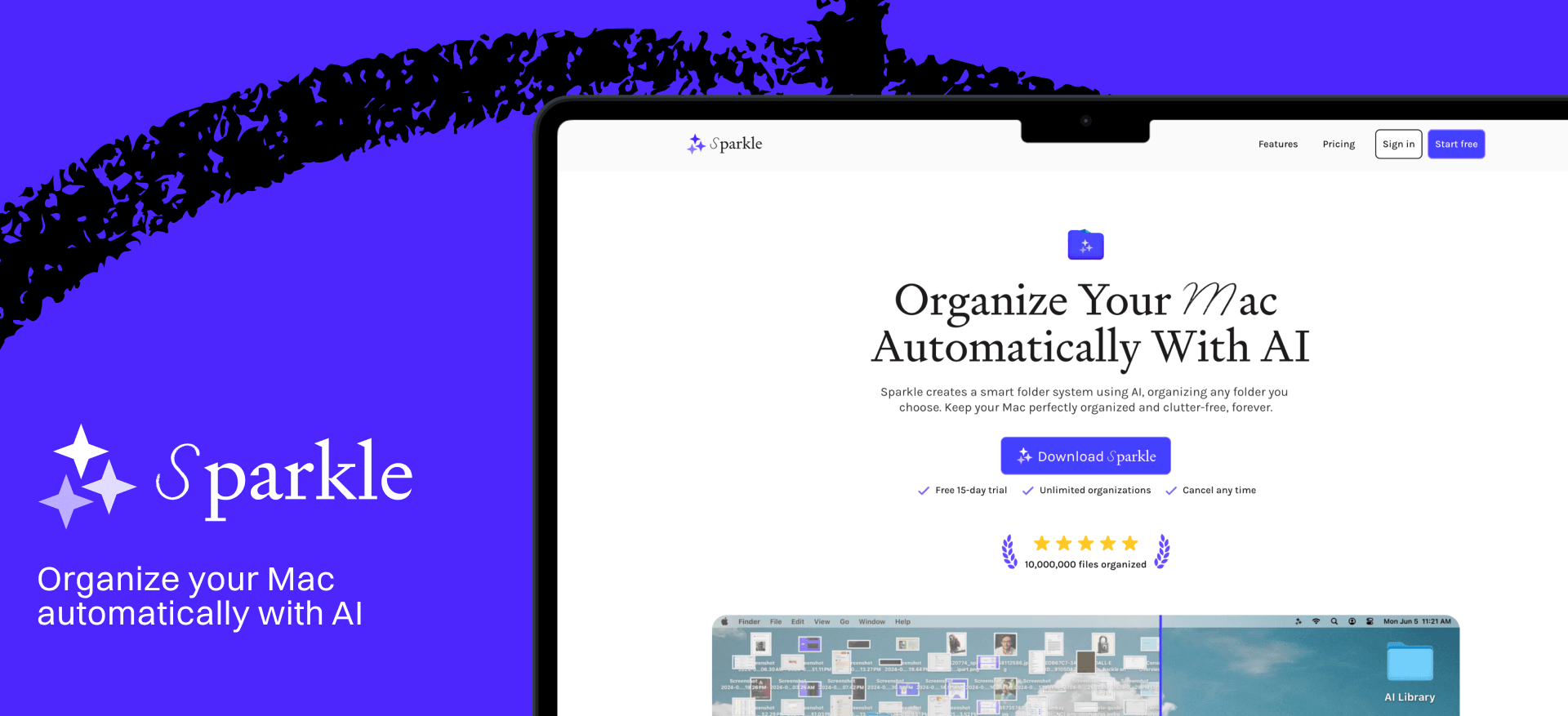
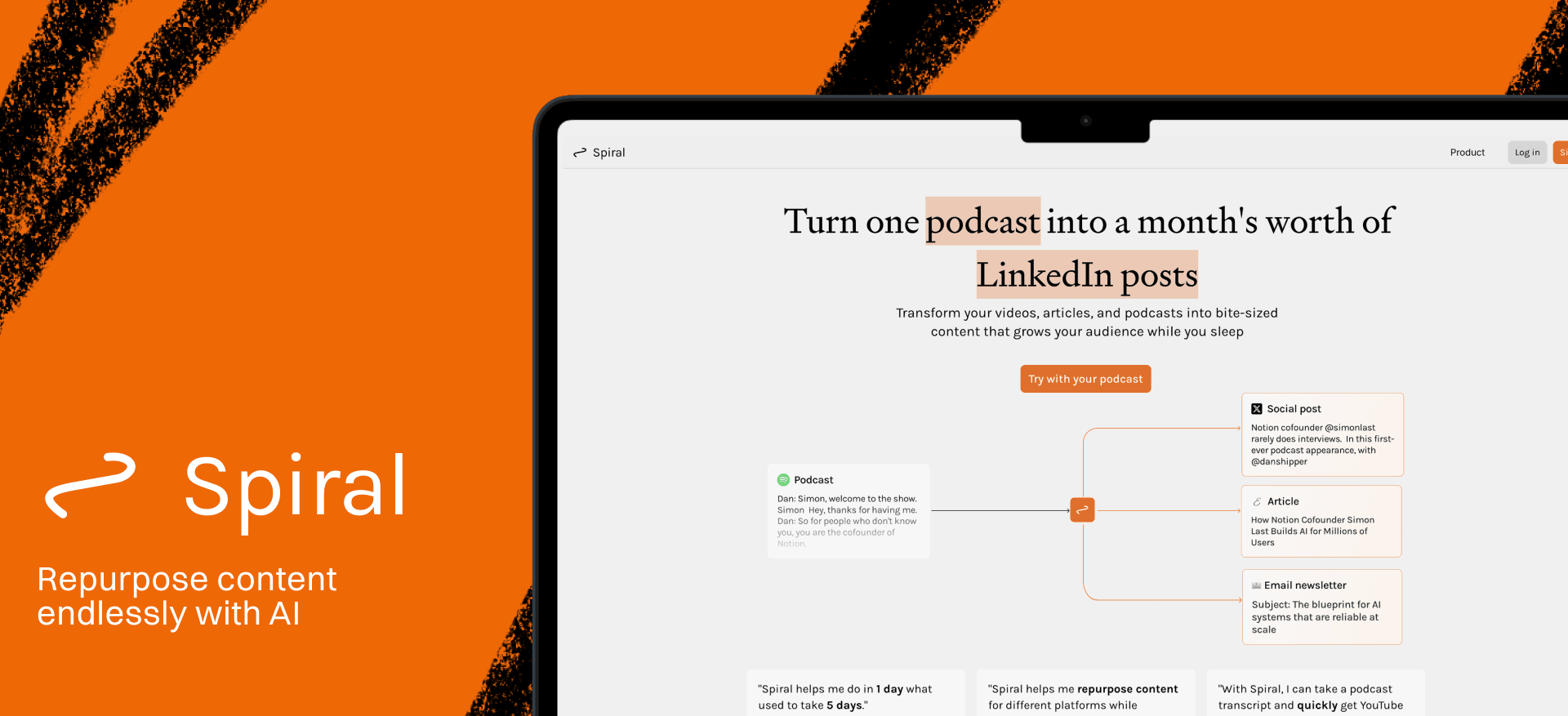
We build AI tools for readers like you. Write brilliantly with Spiral. Organize files automatically with Sparkle. Deliver yourself from email with Cora. Dictate effortlessly with Monologue.
We also do AI training, adoption, and innovation for companies. Work with us to bring AI into your organization.
Get paid for sharing Every with your friends. Join our referral program.
For sponsorship opportunities, reach out to [email protected].
Help us scale the only subscription you need to stay at the edge of AI. Explore open roles at Every.
The Only Subscription
You Need to
Stay at the
Edge of AI
The essential toolkit for those shaping the future

"This might be the best value you
can get from an AI subscription."
- Jay S.
 Every Content
 AI&I Podcast
 Monologue
 Every Agent
Join 100,000+ leaders, builders, and innovators

Already have an account? Sign in.
What is included in a subscription?
Daily insights from AI pioneers + early access to powerful AI tools

 Front-row access to the future of AI
 In-depth reviews of new models on release dayPlaybooks and guides for putting AI to workPrompts and use cases for buildersIn-depth reviews of new models on release dayPlaybooks and guides for putting AI to workPrompts and use cases for builders
 Bundle of AI software






 Katie Parrott
 Every Staff
 Kieran Klaassen
Comments