

Lewis Kallow is the author of The Action Digest newsletter and a ghostwriter for industry-leading founders. He is currently developing a consumer AI product.
AI Can Build Anything. Social Dandelions Decide What Spreads.
When everyone can build and market with AI, the founders who win are the ones who master how trust spreads through communities
Jan 15, 2026 · 14 min readUpdated Sep 1, 2026

What does 1930s Iowa corn have to do with ChatGPT? More than you’d think. Lewis Kallow, a writer who partners with startup founders on content strategy, traces a through line from skeptical farmers to today’s fastest-growing AI products, revealing why great ideas get rejected and what finally makes them spread. His takeaway: In an age of commoditized code and saturated channels, understanding how trust travels through communities may be your last competitive edge.—Kate Lee
Join us tomorrow for a live, hands-on workshop with the team building Cursor, one of the most powerful AI coding tools available. Free for subscribers.
In 1933, the state of Iowa was facing catastrophe. Decades of outdated farming practices had left the state’s crops weak and vulnerable. Fifty percent of the year’s harvest was already rotting in the field due to a market crash, and severe dust storms were threatening to turn an economic disaster into a wholesale agricultural apocalypse.
Then, hope arrived: “hybrid corn,” a miraculous new seed capable of producing healthy crops that were easy to harvest and could thrive even in drought.
But after a year of expensive sales campaigns and educational pushes, officials were baffled. While 70 percent of Iowa’s farmers knew about hybrid corn, less than 1 percent had adopted this perfect solution.
“A man doesn’t just try anything new right away,” one farmer reasoned.
As insane as this example seems, rejection is in fact the norm for great, new ideas, even when people are aware of the benefits.
Take the seatbelt. By the mid-70s, 91 percent of U.S. drivers knew it saved lives, yet only 11 percent actually wore one.
AI may seem like the exception to this rule; ChatGPT exploded to 1 million users in just five days. But OpenAI had been trying to sell GPT 3.5 to executives for months with no success, and despite the model’s power, quarterly revenue was only $15 million.
ChatGPT succeeded because OpenAI finally understood sociology—the same sociology that was essential for the eventual adoption of hybrid corn, the seatbelt, and almost every great idea that eventually gained widespread popularity.
Recent research has cracked the code on what these sociological forces are. I’ll explain how these dynamics determine whether humans decide to embrace something new, how they relate to winning trust within a community, and how you can harness them to drive adoption for your own business.
AI has made it faster than ever to build and market products, and the channels we’ve long relied on are saturated. Harnessing the power of trust and community is the one of the last remaining ways for builders and creators to secure a competitive edge.
Executing an AI-first strategy with Box
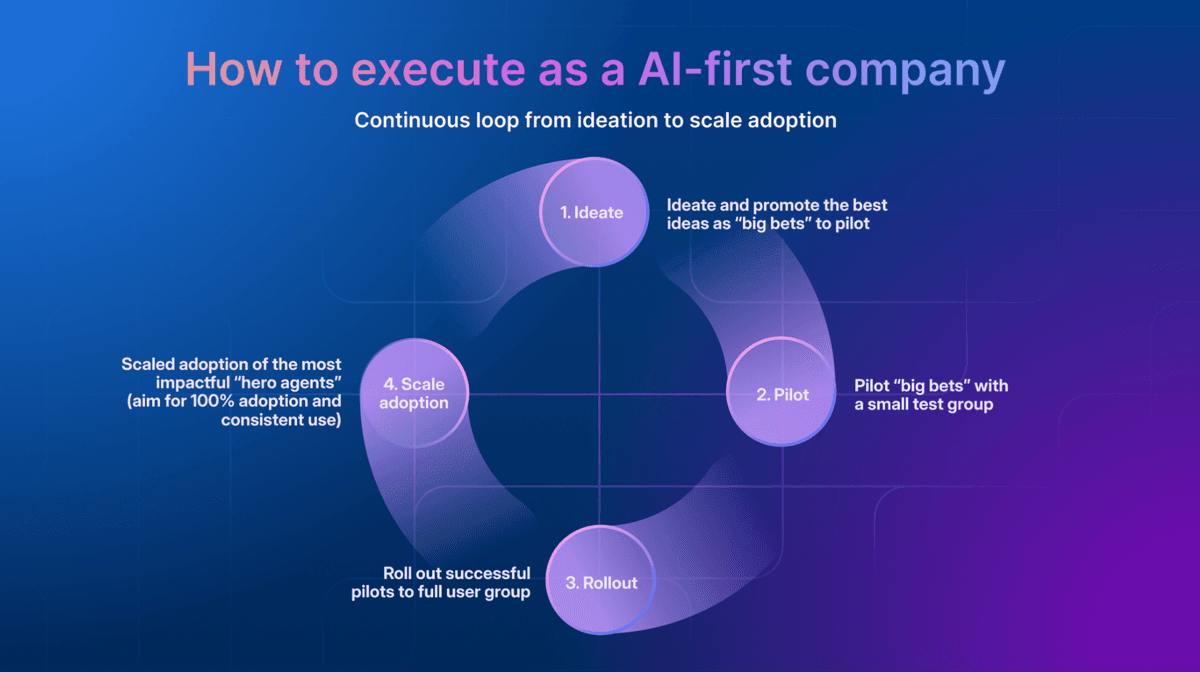
Box, the leading intelligent content management company, is breaking down how it structures experiments, frameworks for AI principles, and more in its “Executing AI-First” series. In it, you’ll discover how to turn a raw idea into a strategic AI powerhouse, and get a step-by-step playbook for empowering teams to thrive in the era of AI. You’ll learn:
- How Box approached becoming AI-first through its value realization strategy
- How to deploy agents with an Ideate>Pilot>Rollout>Scale plan
- How to identify and empower AI managers
- How to measure what matters by tracking AI agent impact
Dive into Box’s “Executing AI-First” series and follow along for actionable insights and downloadable templates.
Low risk is viral. High risk is social.
Iowa’s corn conundrum puzzled scientists for the better part of the 20th century, but a review published in Nature Communications in 2024 uncovered the secret after more than 90 years by doing a broad analysis of the research to that point.
“The key insight,” the researchers write, “lies in the fundamental distinction between simple and complex contagions.”
A simple contagion is defined by low risk. Think of a funny viral cat video—free to consume, easy to share, and socially safe. You only need to watch it once to decide to send it to your friend. When the risk is clearly low, “a single exposure to an agent can be sufficient for transmission to occur.”
Complex contagions, on the other hand, are ideas that “require individuals to make a substantial personal investment due to the costs or risks involved, including reputational or social risks, personal risks, and personal effort.” Will this expensive corn seed actually grow? Is this new software worth the time to learn? Will I look foolish for wearing this seatbelt?
When the risk of adoption is high, a single recommendation is rarely enough to move us; we need social reinforcement—to see others using it—before we decide to take the plunge. This explains Iowa’s farmers: They were reluctant to embrace this risky new idea after a single visit from a salesperson, because no other farmers in their trusted network were recommending it. They weren’t ignorant; they were cautious.
We embrace complex contagions based on norms, not knowledge. So where do you find an environment in which people can be exposed to your new idea by multiple different others?
Density before distribution
This was the challenge that the founders of Airbnb faced in 2008.
Despite receiving national news coverage for a viral cereal box stunt, the site was making $800 in revenue per month. The founders were contemplating giving up. After all, if no one uses your product after national news coverage, will they ever?
Staying in a stranger’s house is a risky behavior that defied the social norms of the day—the perfect example of a complex contagion. One news broadcast was not enough to convince people.
So they flew to New York City to meet around 30 hosts in person. The founders took them for beers, 10 people at a time, and stayed in touch after returning to California. They turned those few users into evangelists, and Airbnb finally took off.
These beer meetings created the specific network structure required for a complex contagion to spread. Social scientists call these structures “wide bridges.”
A wide bridge is where you have multiple points of interaction with a complex contagion—you hear about it from several different contacts. The more contacts who recommend something, the wider the bridge.
These bridges are widest inside tight-knit communities where individuals have a large number of overlapping mutual connections. If you can convince even a small subsection of a narrow community to adopt your idea—whether it’s an office, an online forum, or a pickleball club—then a magical cascade can unfold. As your small subsection pings other members multiple times about the new idea, they gradually convert each member until they take over the whole group.
This pattern extends to the most advanced technology of our time.
One hundred and thirty-five thousand people visited ChatGPT on its launch day. They weren’t random internet users. They were AI safety researchers, Silicon Valley developers, and machine learning experts who had been following OpenAI’s progress for a long time. These groups had spent years forming wide bridges in passionate physical and online communities. The people who initially propelled ChatGPT to millions by the end of the first week were embedded in remarkably fertile networks.
This is exactly how many of the biggest winners in AI have emerged. Midjourney didn’t launch with a Superbowl ad; the company started on a Discord server. The CEO of Jasper AI, an early winner in AI-powered marketing, admitted that the company’s primary growth strategy was posting templates in a Facebook group for marketers. Meeting transcription tool Granola started by targeting venture capitalists.
This is the same mechanism that solved our hybrid corn conundrum. Farmers didn’t adopt the seed because a scientist told them to; they adopted it once they saw their trusted neighbors succeed with it (who those early adopters were exactly will be revealed shortly).
The sociology of complex contagions is the dark matter of product adoption. It all hinges on...
Become a paid subscriber to Every to unlock this piece and learn about:
- The social barrier Granola removed that had nothing to do with technology
- How Slack identifies “corporate dandelions” to drive adoption without executive mandates
- The “invisible physics” that determines whether a group decides to trust something new
Thanks to our Sponsor: Box
Executing an AI-first strategy with Box
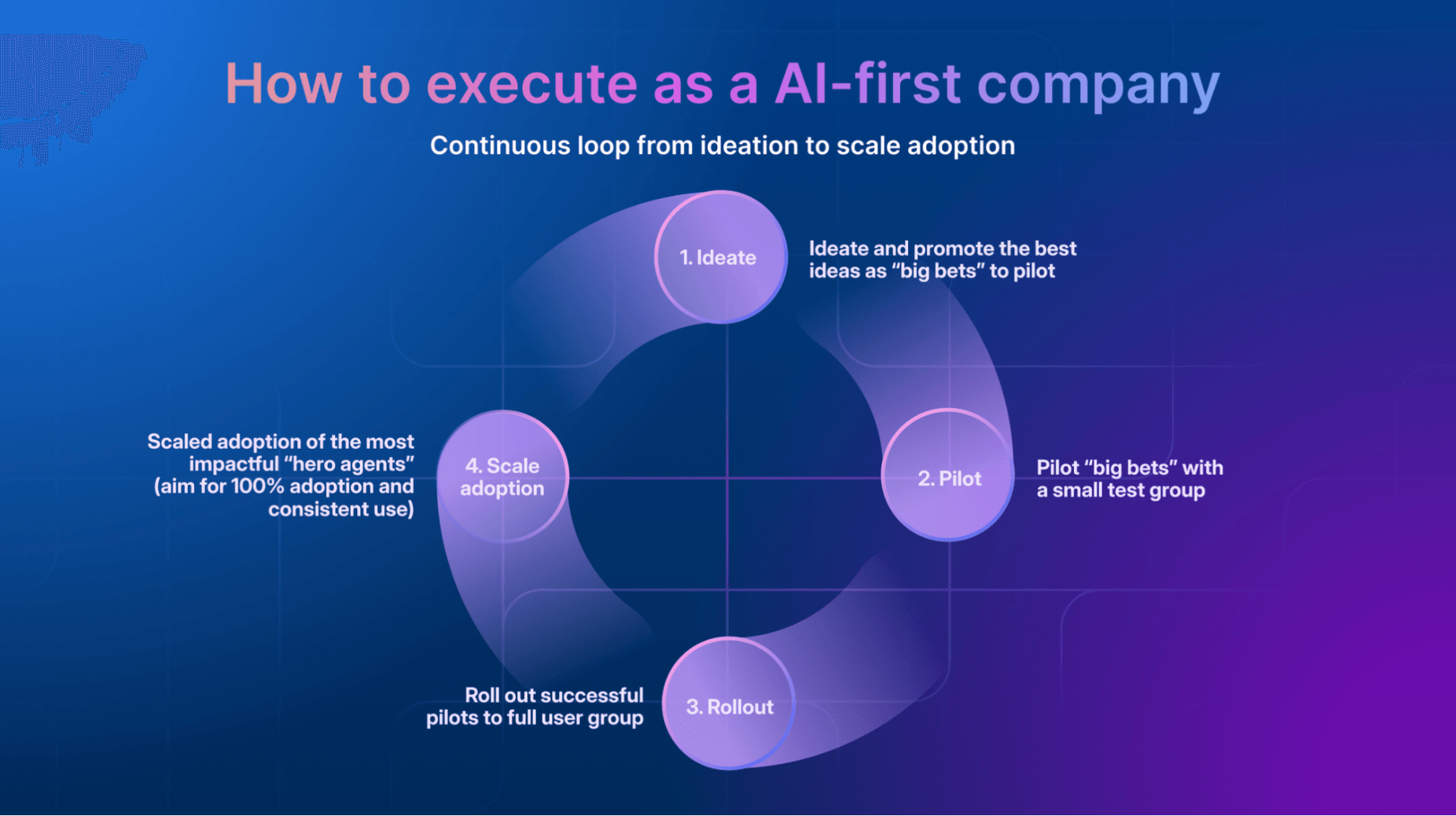
Box, the leading intelligent content management company, is breaking down how it structures experiments, frameworks for AI principles, and more in its “Executing AI-First” series. In it, you’ll discover how to turn a raw idea into a strategic AI powerhouse, and get a step-by-step playbook for empowering teams to thrive in the era of AI. You’ll learn:
- How Box approached becoming AI-first through its value realization strategy
- How to deploy agents with an Ideate>Pilot>Rollout>Scale plan
- How to identify and empower AI managers
- How to measure what matters by tracking AI agent impact
Dive into Box’s “Executing AI-First” series and follow along for actionable insights and downloadable templates.
 Create a free account to continue reading
The Only Subscription
You Need to
Stay at the
Edge of AI
The essential toolkit for those shaping the future

"This might be the best value you
can get from an AI subscription."
- Jay S.
 Every Content
 AI&I Podcast
 Monologue
 Every Agent
Join 100,000+ leaders, builders, and innovators

Already have an account? Sign in.
What is included in a subscription?
Daily insights from AI pioneers + early access to powerful AI tools



 Front-row access to the future of AI
 In-depth reviews of new models on release dayPlaybooks and guides for putting AI to workPrompts and use cases for buildersIn-depth reviews of new models on release dayPlaybooks and guides for putting AI to workPrompts and use cases for builders
 Bundle of AI software






 Katie Parrott
 Every Staff
 Kieran Klaassen
Comments