





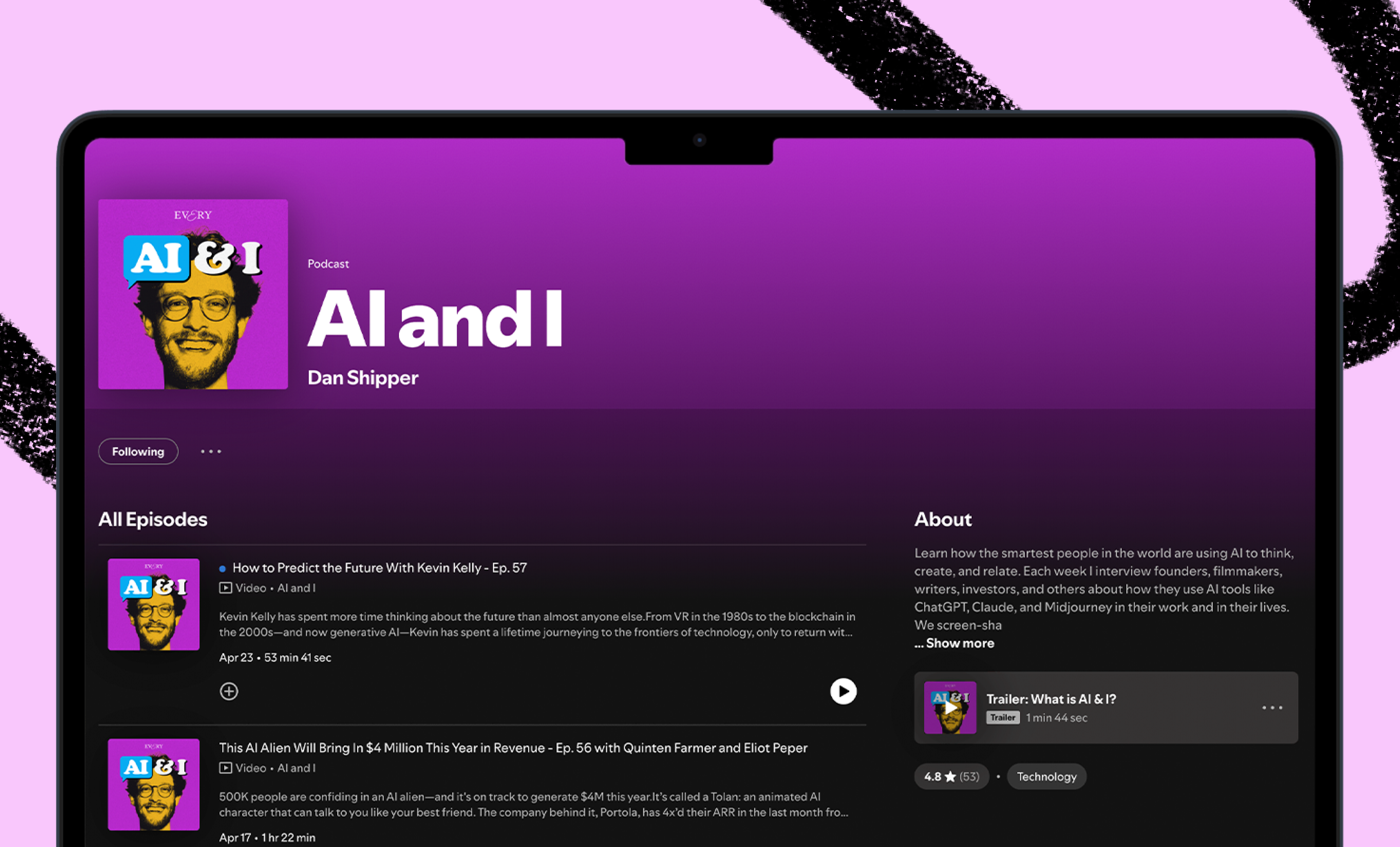
TL;DR: Today, we’re releasing a new episode of our podcast AI & I, where Dan Shipper sits down with two members of the team building OpenAI’s agentic browser Atlas, Ben Goodger, head of engineering, and Darin Fisher, member of technical staff. Watch on X or YouTube, or listen on Spotify or Apple Podcasts.
Was this newsletter forwarded to you? Sign up to get it in your inbox.
The AI labs fighting for attention during the Super Bowl call to mind another iconic Super Bowl moment: Apple’s 1984 ad for the Macintosh, which promised that the personal computer would be a source of unbound wonder, freedom, and delight.
They were right, but over time, the personal computer has also become cluttered with errands.
These “computer errands”—downloading a W-2 when tax season rolls around, hunting for the right coupon code before checkout, or navigating the unholy labyrinth of the Amazon Web Services dashboard just to change one permission setting—have taken over our digital lives. Atlas, OpenAI’s agentic browser, sprang from the idea that AI should handle this tedium for you.
In this week’s episode of AI & I, Dan Shipper sat down with two members of the Atlas team, Ben Goodger and Darin Fisher. Goodger is Atlas’s head of engineering, and Fisher is a member of the technical staff. Both are legends of the browser world. They’ve spent decades building the modern web, working together on Netscape, Firefox, and Chrome before arriving at Atlas. From that vantage point, they told Dan how they think browsing is about to change, why building a browser is harder than it looks, and what it’s like to create a new one with AI coding tools like Codex.
Here is a link to the episode transcript.
You can check out their full conversation:


Here are some of the themes they touch on:
How browsing the web will evolve
As agentic browsers become mainstream, they raise fundamental questions about the future of the web, and how we’ll interact with it going forward.
The web will survive—with less drudgery
One of the big questions hanging over agentic browsers is whether they eventually make the web obsolete. If you can stay inside ChatGPT and have agents do all the browsing for you—maybe even spin up custom pages on demand—do traditional websites cease to matter?
Goodger doesn’t buy that future. Yes, people will increasingly hand off tedious or mechanical work to agents. But he believes there is a category of activities, like shopping and travel planning, where people still want to be directly involved. The web’s abundance, in these cases, is part of its appeal; it’s a place to wander rather than a resource to extract.
Fisher offered an analogy: He loves taking Waymos, but he also loves driving his stick shift. Sometimes you want the convenience of being chauffeured; other times, you want tactility and control—and the future involves moving between the two modes depending on the task. While AI might synthesize information for you, what to ignore and what to act on is still up to you. You might ask a model to prepare a shopping cart, but you’re still going to want to look at what’s in it before you buy. You’ll probably incorporate the two modes, says Fisher, very naturally in your life.
A browser as a guide, not just a doorway
For most of the web’s history, browsers have been an empty door frame between you and whatever site you’re trying to reach. If they work well, you barely notice they exist. But an agentic browser introduces a new possibility: a browser that also helps you decide where to go. Dan likens this to the difference between a utilitarian taxi and a more-involved tour guide. He wonders if this new vision of the browser conflicts with what people have come to expect from the old vision.
Goodger argues Atlas is built to balance this duality. The interface is deliberately minimal, keeping the browsing experience familiar and unobtrusive—but ChatGPT sits at the heart of the product, ready when you want it. You choose how much to engage with the AI. The web is full of moments where you don’t know what to do next in order to achieve an objective. Atlas, they suggest, is designed for those situations.
An inside look at building an agentic browser
Goodger estimates that more than half the code behind Atlas was written by Codex, OpenAI’s coding agent. The browser is as much built by AI as it is built for AI.
How the Atlas team uses Codex
Goodger and Fisher have been manually coding browsers together for decades, and they both say that building Atlas with AI feels fundamentally different.
For Fisher, the value lies in navigating complexity. For years they’ve worked in the Chromium codebase—the foundational code that underlies Google Chrome and other browsers including Microsoft Edge, Opera, Brave, and Atlas. That codebase has grown enormous over time, so being able to ask Codex questions about it is, Fisher says, “unbelievably useful.” The same goes for learning new techniques like how to set up a particular animation, or knowing what the right strategy is for a UI effect. “A lot of our code is able to be created by Codex because there’s a lot of straightforward aspects to what we’re doing, but there’s also very delicate aspects,” he says. “These tools can be tremendous companions as we’re trying to figure out what’s the right strategy to explore the solution space.”
How AI changes the experience of coding
For engineers who’ve spent decades writing software by hand, using AI coding tools can feel like a kind of loss: The work gets faster, but perhaps less personal. Fisher doesn’t deny that tension. He describes writing code as “almost therapeutic,” like “art, ”and views Codex as a tool that accelerates the tedious parts while leaving the satisfying ones intact. He describes spending hours on a refactor that spanned the code base—updating the same kind of code, with slight variations, in dozens of places across the project. When a similar task came up later, he handed it to Codex, and it finished in an hour by following the patterns he’d already established.
Goodger sees a similar division of labor. AI coding tools are often surprisingly good at finding elegant solutions, but they don’t always understand the context behind a decision—the reasons that aren’t written in the code. There’s still a need for the kind of judgment that comes from experience. But once you’ve made that call, AI can execute far quicker than you could yourself. “I don’t feel precious about typing that code,” he says.
Another upshot of coding with AI is that the Atlas codebase is better-tested than it otherwise would be. Writing unit tests—small pieces of code that check whether a specific part of your software works correctly—is important but tedious. Fisher notes that the team can now just ask Codex to generate them, and it often catches edge cases they didn’t think to specify. “In that regard,” Fisher says, “it’s been a fabulous friend.”
What do you use AI for? Have you found any interesting or surprising use cases? We want to hear from you—and we might even interview you.
Timestamps
- Introduction: 00:01:57
- Designing an AI browser that’s intuitive to use: 00:11:51
- How the web changes if agents do most of the browsing: 00:15:24
- Why traditional websites will not become obsolete: 00:25:06
- A browser that stays out of the way versus one that shows you around:00:29:00
- How the team uses Codex to build Atlas: 00:39:51
- The craft of coding with AI tools:00:44:47
- Why Goodger and Fisher care so much about browsers: 00:52:33
You can check out the episode on X, Spotify, Apple Podcasts, or YouTube. Links are below:
- Watch on X
- Watch on YouTube
- Listen on Spotify (make sure to follow to help us rank!)
- Listen on Apple Podcasts
Miss an episode? Catch up on Dan’s recent conversations with founding executive editor of Wired Kevin Kelly, star podcaster Dwarkesh Patel, LinkedIn cofounder Reid Hoffman, ChatPRD founder Claire Vo, economist Tyler Cowen, writer and entrepreneur David Perell, founder and newsletter operator Ben Tossell, and others, and learn how they use AI to think, create, and relate.
If you’re enjoying the podcast, here are a few things I recommend:
- Subscribe to Every
- Follow Dan on X
- Subscribe to Every’s YouTube channel
Rhea Purohit is a contributing writer for Every focused on research-driven storytelling in tech. You can follow her on X at @RheaPurohit1 and on LinkedIn.
To read more essays like this, subscribe to Every, and follow us on X at @every and on LinkedIn.
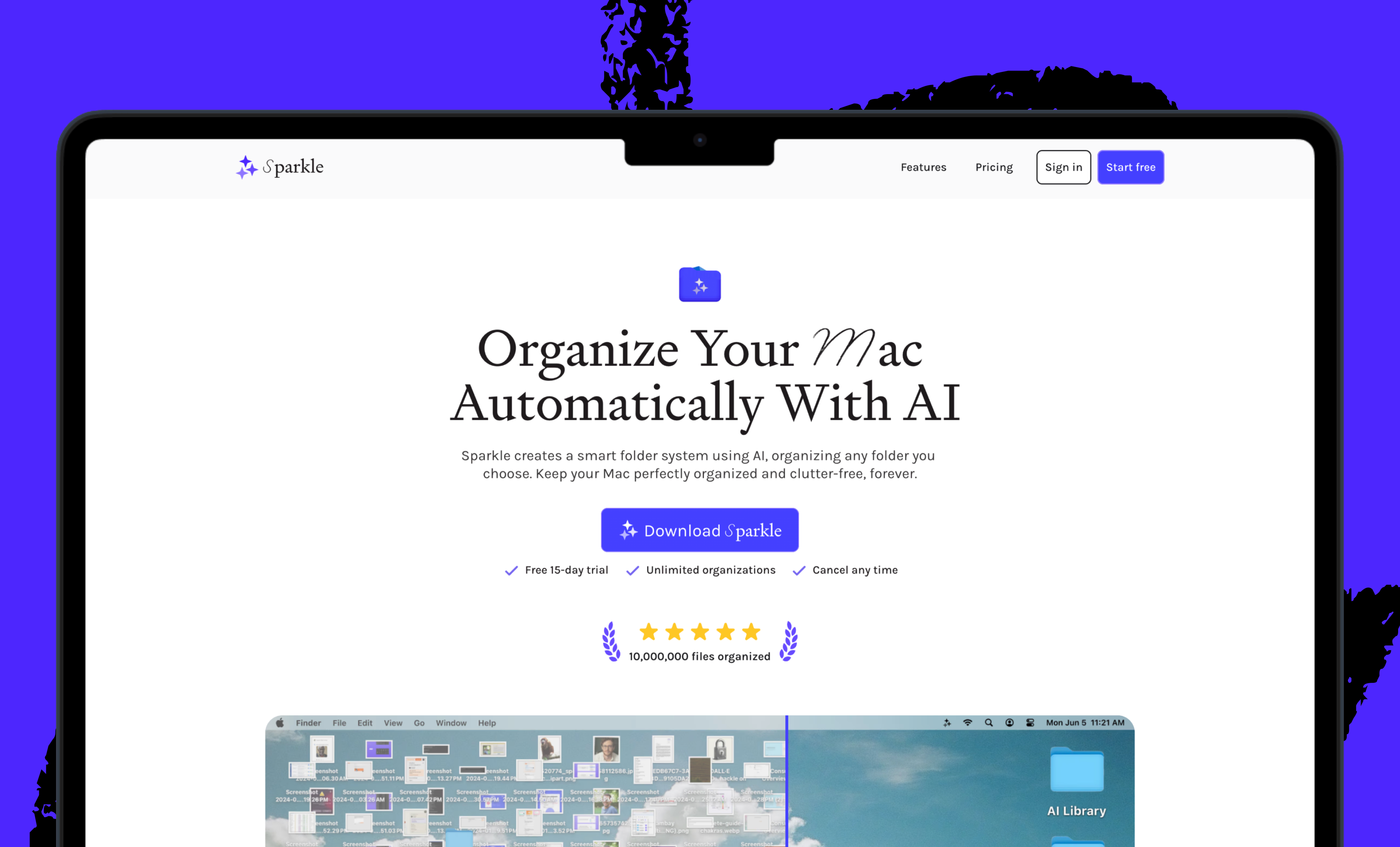
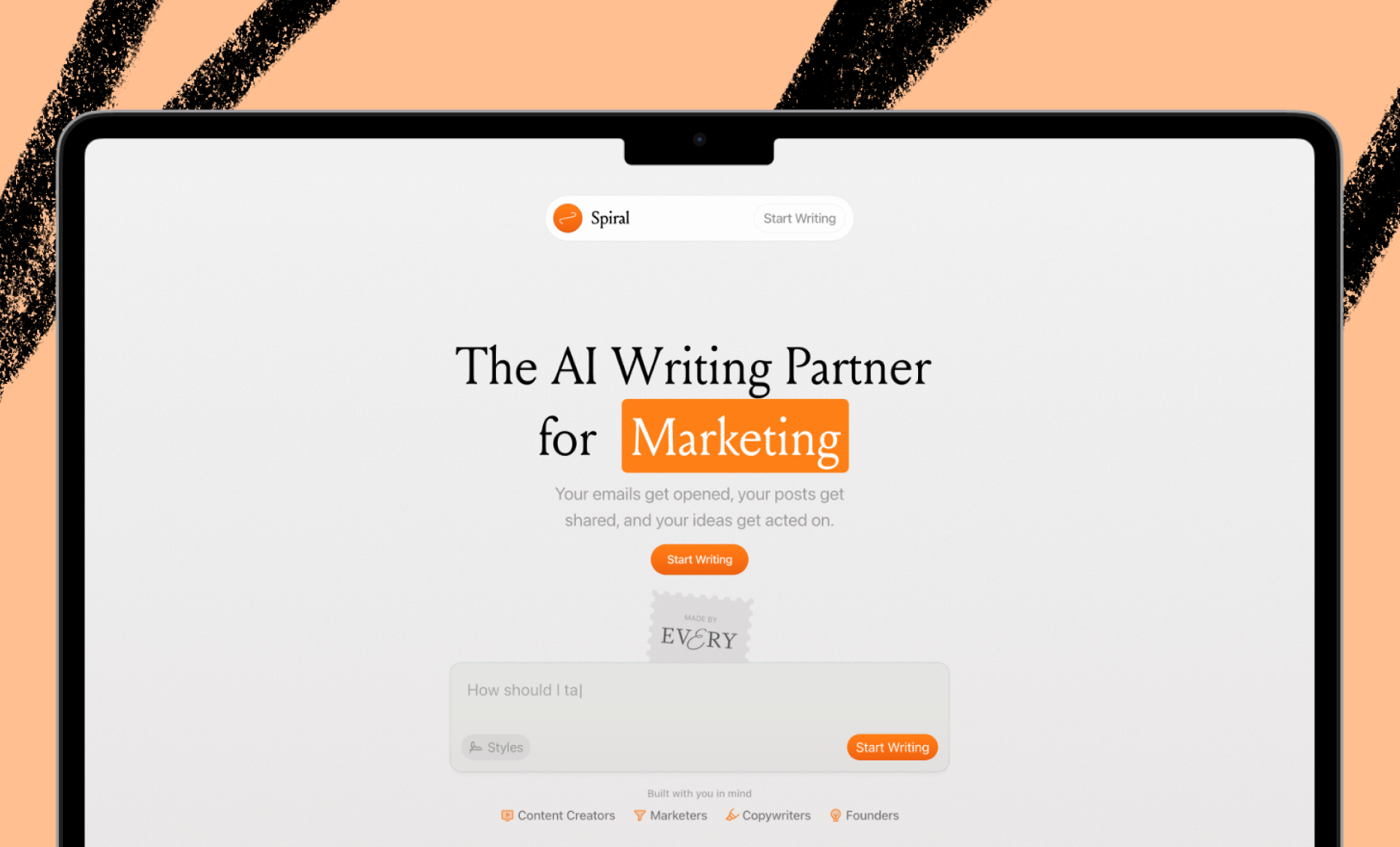
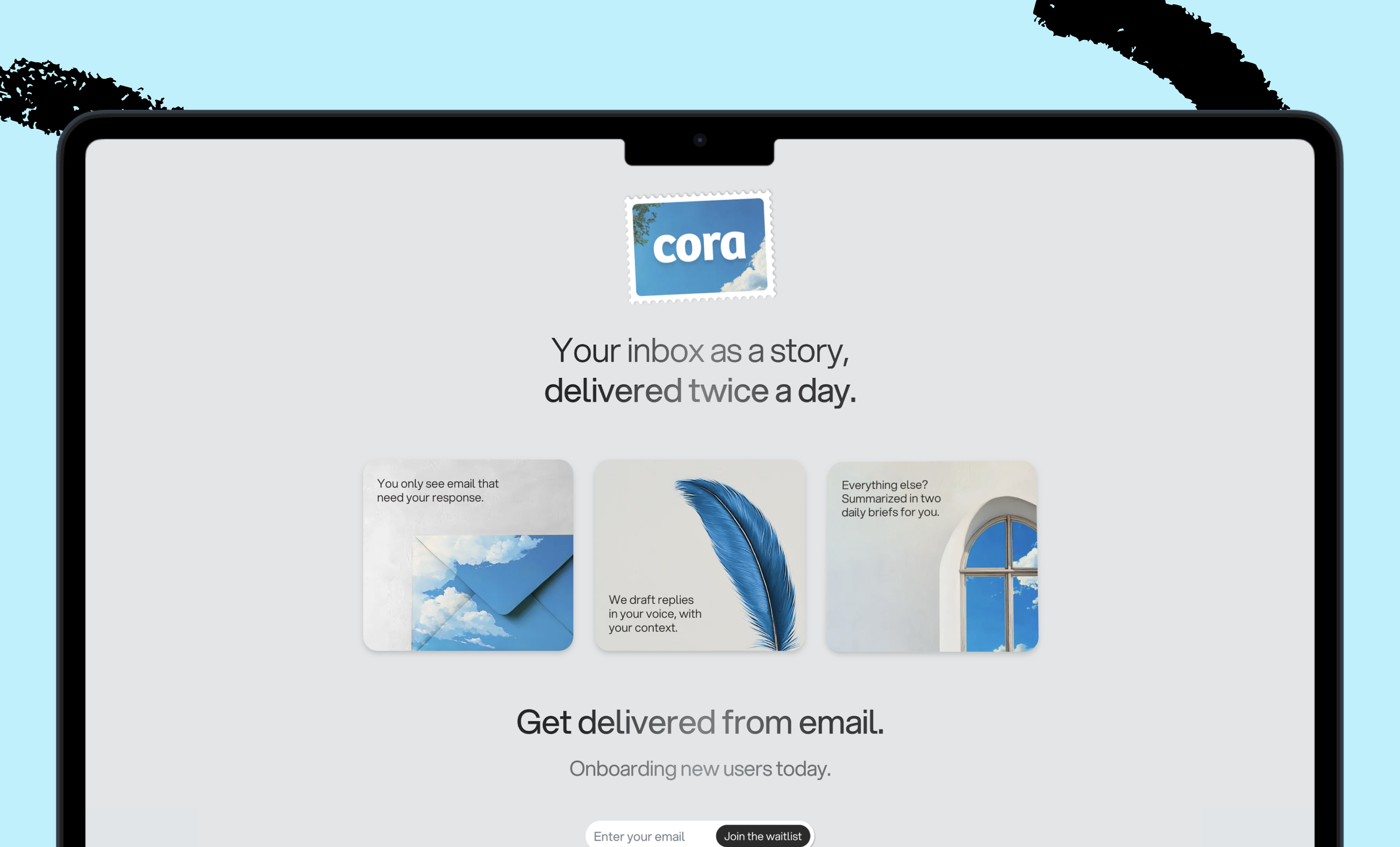
We build AI tools for readers like you. Write brilliantly with Spiral. Organize files automatically with Sparkle. Deliver yourself from email with Cora. Dictate effortlessly with Monologue.
We also do AI training, adoption, and innovation for companies. Work with us to bring AI into your organization.
Get paid for sharing Every with your friends. Join our referral program.
For sponsorship opportunities, reach out to [email protected].
Help us scale the only subscription you need to stay at the edge of AI. Explore open roles at Every.
The Only Subscription
You Need to
Stay at the
Edge of AI
The essential toolkit for those shaping the future

"This might be the best value you
can get from an AI subscription."
- Jay S.
 Every Content
 AI&I Podcast
 Monologue
 Cora
Cora
 Sparkle
 Spiral
Join 100,000+ leaders, builders, and innovators

Email address

Already have an account? Sign in
What is included in a subscription?
Daily insights from AI pioneers + early access to powerful AI tools


 Front-row access to the future of AI
 In-depth reviews of new models on release day
Playbooks and guides for putting AI to work
Prompts and use cases for builders
In-depth reviews of new models on release day
Playbooks and guides for putting AI to work
Prompts and use cases for builders
In-depth reviews of new models on release day
Playbooks and guides for putting AI to work
Prompts and use cases for builders
In-depth reviews of new models on release day
Playbooks and guides for putting AI to work
Prompts and use cases for builders
 Bundle of AI software





 Rhea Purohit
.31.48_AM.png)

 Dan Shipper
 Reviews of new AI models on release day
Comments
Don't have an account? Sign up!