Welcome to Issue #11 of the Means of Creation weekly news roundup where we break down the latest news on the passion economy, including the happenings related to platforms, creators, startups, and trends.
Happy Thanksgiving!
We took a short breather for the live show for Thanksgiving, and we hope you did too!
If you’d like to revisit our previous episodes, you can find them on Apple Podcasts, Spotify, Overcast, Breaker or wherever you listen to podcasts, or on the Means of Creation YouTube Channel. And now for the news!
Chinese Government Issues Strict Live Streaming Guidelines
What Happened?
- Chinese regulatory authorities recently issued strict regulations governing live streaming.
- The rules include: user name and identity verification through facial recognition + manual verification, a cap on how much a viewer can tip, a ban on minors from tipping, and a mandate for platforms to have 1 human moderator per 50 livestreams.
👧 Li’s Take:
- Wow! This is pretty significant news, and will have major impacts on creators’ ability to monetize as well as platforms’ viability and business models.
- This statement from the National Radio and Television Administration about the ban is the most Chinese sentence I’ve ever read: “Live-streaming platforms should adhere to the direction of prioritizing social benefits; actively spread positive energy; demonstrate truth, goodness and beauty.”
- Why did China feel the need to impose the new regulations? A 2017 opinion piece that ran in the China Daily newspaper — owned by the Publicity Department of the Chinese Communist Party — provides clues:
“It may seem like it is a person's right to give their own money to the hosts of live streaming websites if that is what they want to do. After all, surely it is their decision whether to tip the hosts or not, and how much to tip if they do. However, it is not that simple.
As a matter of fact, these web shows and online games have similar features that lead to addiction. Of course the main responsibility for controlling their addiction falls upon each individual, but the platforms should also be put under scrutiny and not divorced from regulation and supervision. [...]
There should be some restrictions to make sure this income is obtained without violating the law or morality. However, the relevant departments and society, along with the parents of minors should also provide guidance so that people rationally participate in online entertainment activities and ensure such broadcasting is above board both morally and legally.”
- Notably, OnlyFans also recently introduced a limit to how much creators can charge—for instance, the ceiling for pay-per-view messages was capped at $100, down from $200; and a new maximum tip of $100 (previously unlimited).
- In older forms of content like television, there’s a seven-second delay between recording and publishing. This gives the FCC time to review for any profanity, bloopers or nudity. So it’s expected that some kind of content moderation develops for livestreamed UGC, which is currently the wild west of content.
- It will lead to a major impact on how creators are able to monetize, leading them to prioritize scale of audience over cultivating a base of superfans.
👦 Nathan’s Take
- Totally agree with Li that it will lead to changes for how creators monetize. It’s just like subscriptions vs advertising. Your content strategy depends on your business model.
- It makes sense that it would start in China because they are the most strict about content. Eventually, this will likely come to the U.S. as well.
- For example, if there is licensing around giving people haircuts, it’s likely that regulation will also be introduced in the creator economy. This is the new middle class, after all.
- The thing that seems most important to me is the 50:1 livestreams to moderator ratio. The cost to operate that would break their business model.
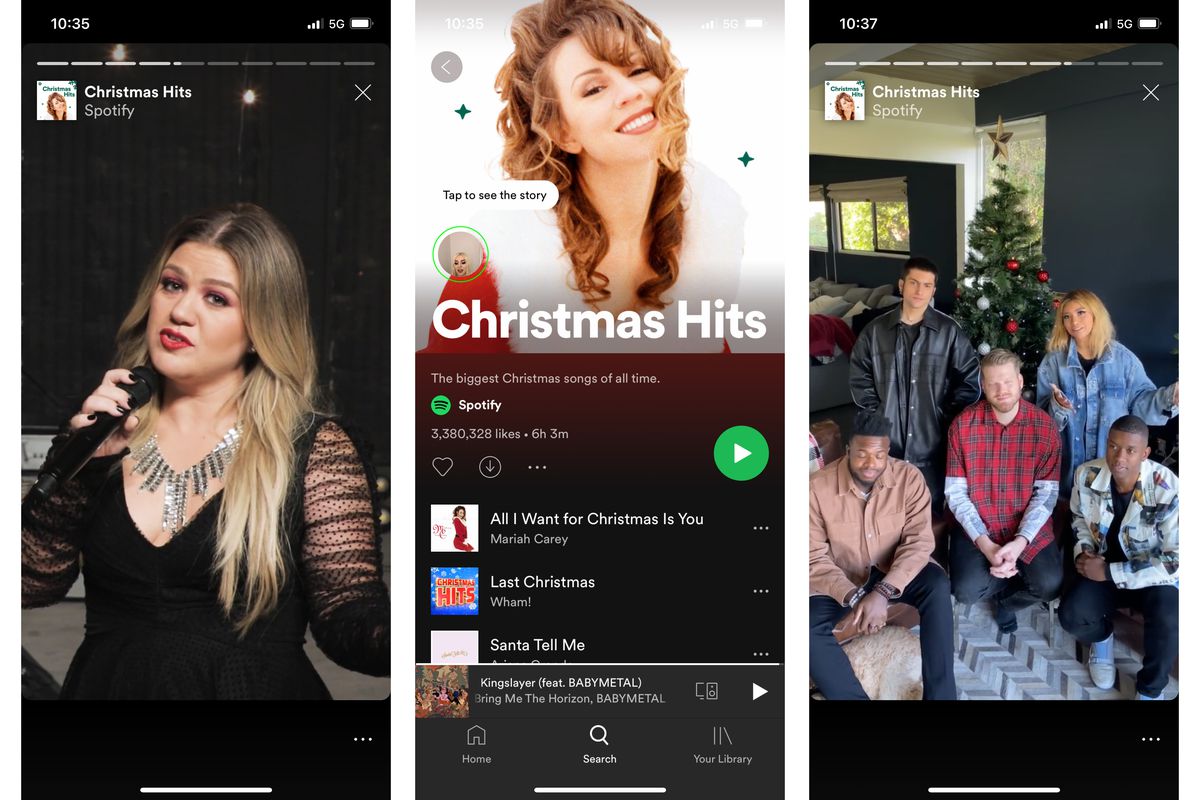
Spotify Tests Stories (Again)
What Happened?
👧 Li’s Take:
- My first thought (again): why???
- One of the reasons why there’s multiple social platforms is each is home to a different type of content: Twitter is more knowledge/information-based, Instagram is visual, LinkedIn is professional updates, etc. With the proliferation of Stories everywhere, content is becoming duplicated and shared everywhere. Last week, I saw the same exact picture of my friend’s dog in 3 places: IG, Twitter, and iMessage. As cute as the dog was, I didn’t want to see it so many times!
- Next up, will we see tools that help creators distribute their Stories to every platform that supports Stories? Perhaps we won’t need a Linktree because the content will be the same across every creator platform?
👦 Nathan’s Take
- Agreed: creators are taking the same content to multiple channels.
- There’s a reason why so many companies are adding stories: there’s a low cost to build it. When companies look at features to add, they consider the costs and benefits of those features. The cost of adding stories is super low: it’s easy to build, and you don’t have to make hard UI decisions because you can just add it to the top of the screen.
- Additionally, there’s a network effect with this feature.
When you subscribe to Means of Creation, you also get:
- The Means of Creation talk show every Friday at 11:00am PST / 2:00pm EST featuring founders and investors in the passion economy. Recent guests include Ankur Nagpal, Joseph Cohen, and Blake Robbins.
-
Passion Economy News (you’re reading it now!) where we break down the latest news on the passion economy — platforms, creators, startups, and trends.
-
Everything else in the bundle, including great stuff from all our other paid newsletters: Divinations, Superorganizers, Praxis, Napkin Math, Ask Jerry, The Long Conversation, Free Radicals, and Almanack. And we’re adding new stuff all the time!





 Every Content
 AI&I Podcast
 Monologue
 Every Agent
 Front-row access to the future of AI
 In-depth reviews of new models on release day




 Katie Parrott
 Every Staff
 Kieran Klaassen

Comments