





Was this newsletter forwarded to you? Sign up to get it in your inbox.
‘AI & I’: Slowing down to speed up
Today, we’re releasing a new episode of our podcast AI & I. Dan Shipper sits down with Karri Saarinen, cofounder and CEO of Linear, a product management tool designed for agent-native software development, to discuss what the “SaaS is dead” narrative gets right—and wrong—and why conviction can be the best product strategy.
Watch on X or YouTube, or listen on Spotify or Apple Podcasts. You can also read the transcript.
Here are the highlights:
- Just because the technology has changed doesn’t mean your mission should. Founded in 2019, Linear is the rare company that started pre-ChatGPT to have successfully reinvented itself as an agent-native business. Saarinen attributes Linear’s success to never losing sight of what it’s always cared about: helping companies build great software. Whereas competitors chased AI trends, Linear focused on understanding how the technology was impacting customers’ workflows, and updating its service accordingly.
- SaaS winners are building for agents. Linear started as an excellent product management tool for humans. Opening up the tool to agents instantly increased the available user base. Today, agents are first-class users inside of Linear, and companies like OpenAI and Coinbase are using its platform to manage their own agents.
- Speed means decisions matter more, not less. AI makes it easy to have an idea and build it without considering whether it justifies its existence. When ChatGPT was released, SaaS companies were launching their own chatbots left, right, and center. Instead of jumping on the bandwagon, Linear stopped to consider whether the application was useful. Turns out it really wasn’t, Saarinen says, a realization that freed up resources to focus on what mattered, like making it easy for humans and agents to collaborate on software development.
Miss an episode? Catch up on Dan’s recent conversations with LinkedIn cofounder Reid Hoffman; the team that built Claude Code, Cat Wu and Boris Cherny; Vercel cofounder Guillermo Rauch; podcaster Dwarkesh Patel; and others, and learn how they use AI to think, create, and relate.
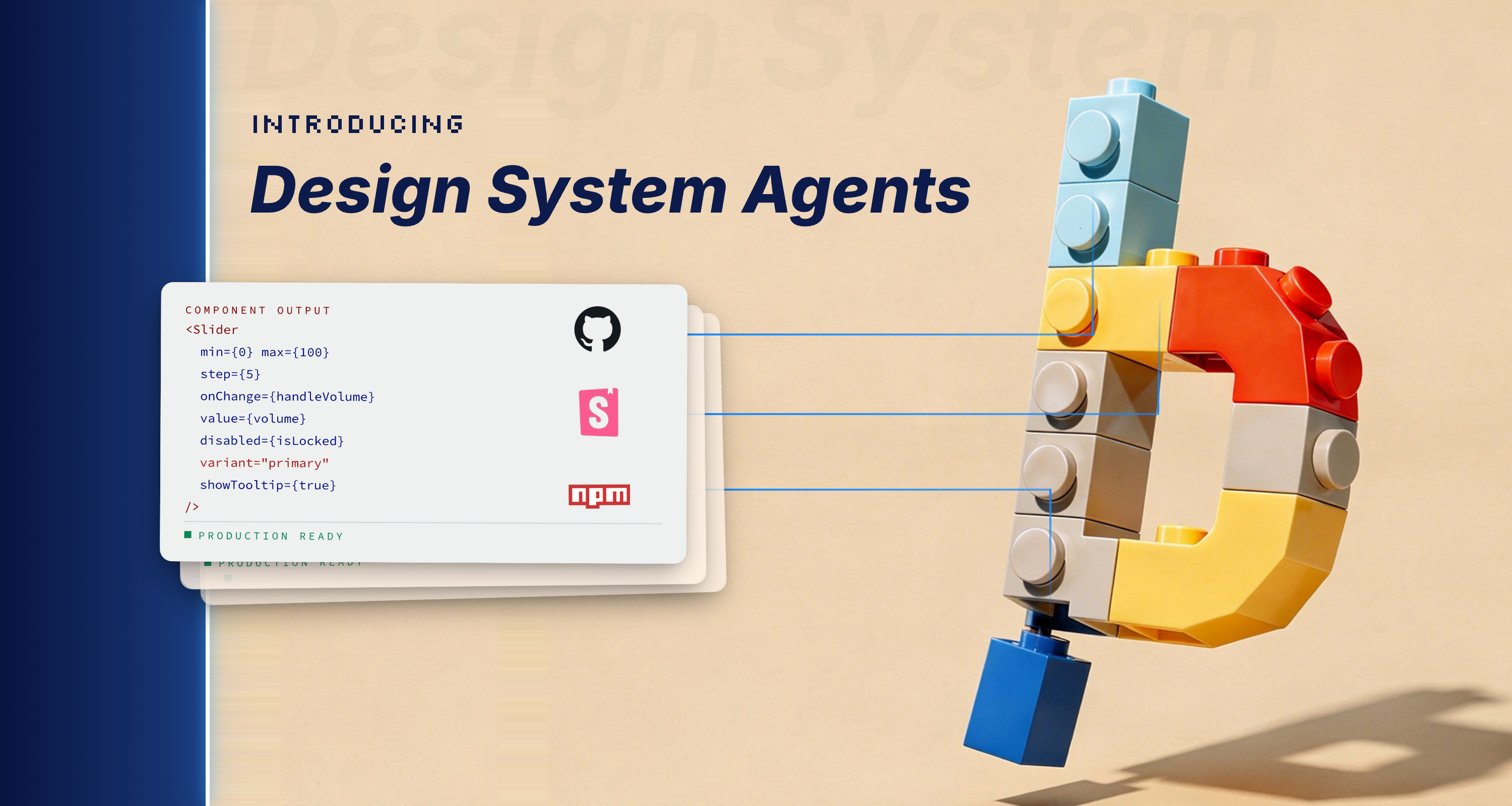
Generate designs that actually work
Ever come up with a brilliant design using an AI tool but have it break the moment engineering gets to it? Try Bolt.new. Its Design System Agent uses your NPM packages, CSS files, and component library to build designs that use real components that your engineers can integrate into your codebase. They actually work. These aren’t generic approximations: Your prototype is the product.
Dissecting Claude Code
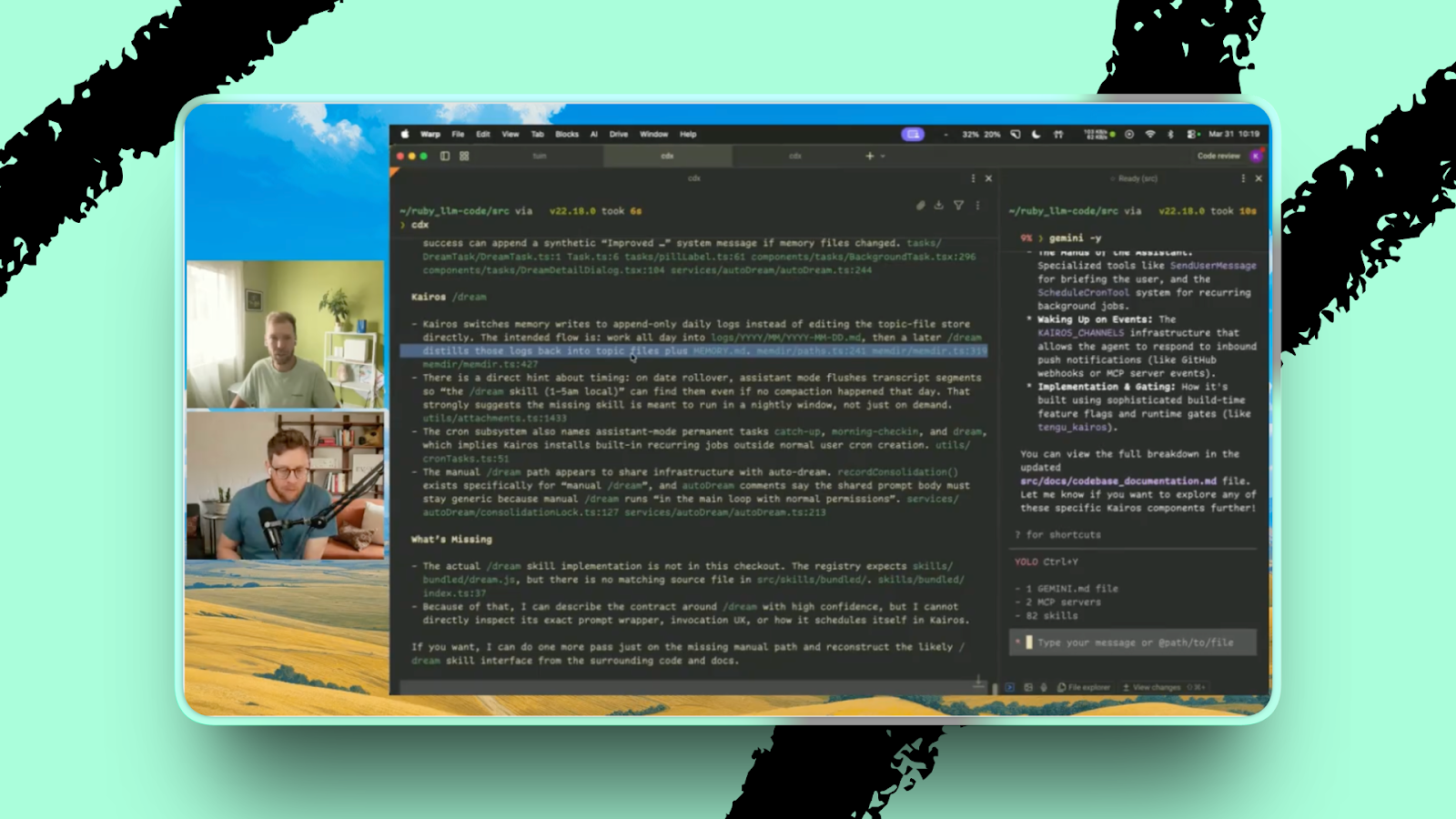
On Tuesday, Anthropic inadvertently leaked the entire source code for Claude Code. Naturally, Cora general manager Kieran was curious to see what was happening under the hood.
In an impromptu livestream, Kieran dug deep into how Claude Code works, unpacking its approach to memory, tools, skills versus slash commands, and prompt structure.
Here are three things he found particularly interesting:
- Kairos, one of Claude Code’s most advanced and autonomous features. It’s often called “Assistant Mode.” Where the standard command line interface waits for you to type, Kairos represents a shift to a proactive, always-on background assistant that keeps running when you leave your laptop. (The name Kairos is ancient Greek for “opportune moment.”) It’s currently internal-only at Anthropic, but the infrastructure is fully built.
- The “Buddy” companion. Similar to Kairos, the infrastructure for Buddy is built, but not yet shipped to users. Buried inside the source code is a virtual pet for your command line. Each Buddy has its own species, personality stats (including ones called CHAOS and SNARK), and little ASCII art animations that respond to what you’re doing. Kieran’s a chaos snail—take from that what you will.
- AutoDream, Claude’s nightly closet clean. This was the feature that most impressed Kieran. It’s a background process that runs when you go idle and consolidates everything that happened—daily logs, session notes—into a better-performing memory for when you come back. Kieran says this is the first compound engineering-style capability he’s seen built into the Claude Code, referring to his philosophy of AI-native software engineering, where each session makes the next one easier. While he’s already been doing this manually, AutoDream is Anthropic’s first move to baking this into Claude Code by default.
Log on
We host camps and workshops on topics like compound engineering and writing with AI to share the knowledge we’ve acquired from training teams at companies like the New York Times and leading hedge funds, and by learning and playing with AI every day ourselves.
This week’s camp
- Every x Notion | Custom Agents Camp: A free workshop where we demo the custom agents running Every’s daily operations. We’ll be joined by Notion product designer Brian Lovin, who will show how the team behind custom agents uses them and what they’re building next. The event takes place on Friday, April 3, at 12 p.m. ET. This camp is sponsored by Notion.
Upcoming courses
Claude Code for Absolute Beginners (April 14): This beginner-friendly, live workshop led by Mike Taylor, Every’s head of tech consulting, is designed to get you from zero to a working project with Claude Code.
Recordings you may have missed
- Every’s Q2 Demo Day: The Every team shares what we’ve been building, including a walk-through of Plus One, our hosted AI agent that lives in Slack. Watch the recording or read the write-up.
- Compound Engineering Camp: Cora general manager Kieran Klaassen walks through, step by step, how to go from prompt to working app in under an hour using the compound engineering plugin. Watch the recording or read the write-up.
- OpenClaw Camp: The Every team walks through OpenClaw, showing how to set it up and our favorite use cases. Watch the recording or read the write-up.
What Every’s creative director says about Google Stitch
When a major update to Google Stitch was released a couple of weeks ago, the consensus on Twitter was that the “vibe design” platform spelled the end for art directors. Why hire a human when AI can do the job in a fraction of the time, at a fraction of the cost?
Lucas Crespo, Every’s creative director, has an opposite read: As AI homogenizes the web, designers are more important than ever.
Tools like Google Stitch allow anyone to produce a polished, competent app. They create digital products that look good, but may not meet the standards of professional designers. “But it makes people more comfortable saying, ‘This is good enough,’” Lucas says. “Good enough is not the thing that will make something stand out or make a difference when every website looks the same. You have to go above and beyond that, which will always require some unique angle or idea or imagination. It’s not something I’ve seen any model output yet.”
Lucas draws inspiration from being a person in the world—walking through the park on a windy day, the fizz of receiving a party invitation—not from what’s on his screen. The goal is to produce work that evokes precise emotions.
The redesign for Cora, Every’s email management system, is built around “the feeling of sitting on the shoreline in front of a body of water, looking at the horizon where you can see the gradients in the sky changing during sunset and sunrise,” Lucas says. The vision cascades into the hundreds of user experience, color, and typography decisions that create the final product. “You’re going to think about nature. You’re going to start thinking about fresh air,” he says. “But it has to start with the point of view.”
Writing works the same way. Marcus Moretti, general manager of Spiral, Every’s AI writing assistant, begins a draft knowing “about 30 percent” of what he wants to say. This might be a scene he can’t stop thinking about or an argument he hasn’t found the right words for yet. Spiral helps him with the mechanics: structure, pacing, and filling in the connective tissue. In his experience, however, the remaining 70 percent can’t be prompted into existence. “You figure out the rest by writing.”
For careful readers, it’s easy to spot when a writer has outsourced that process to an LLM. While not always apparent on the sentence or paragraph level, longform AI writing drifts without constant human oversight. Arguments and scenes that look like insight collapse upon a closer read.
Maybe this is why AI tools tend to impress people who are new to a discipline the most. If you’ve never written code, vibe coding feels like magic. For engineers, there are caveats. Lucas notices the same pattern on his feed: When a new AI design tool drops, the people most blown away “are usually not the designers I admire,” he says.
Whereas non-designers see a shortcut to creative genius, Lucas sees a useful tool that still requires hundreds—potentially thousands—of decisions before the output meets his own exacting standards.
AI has raised the floor. It can raise the ceiling, too, making it easier to execute work built on a singular vision. But it cannot generate that vision for you.
Laura Entis is a staff writer at Every. You can follow her on LinkedIn. To read more essays like this, subscribe to Every, and follow us on X at @every and on LinkedIn.
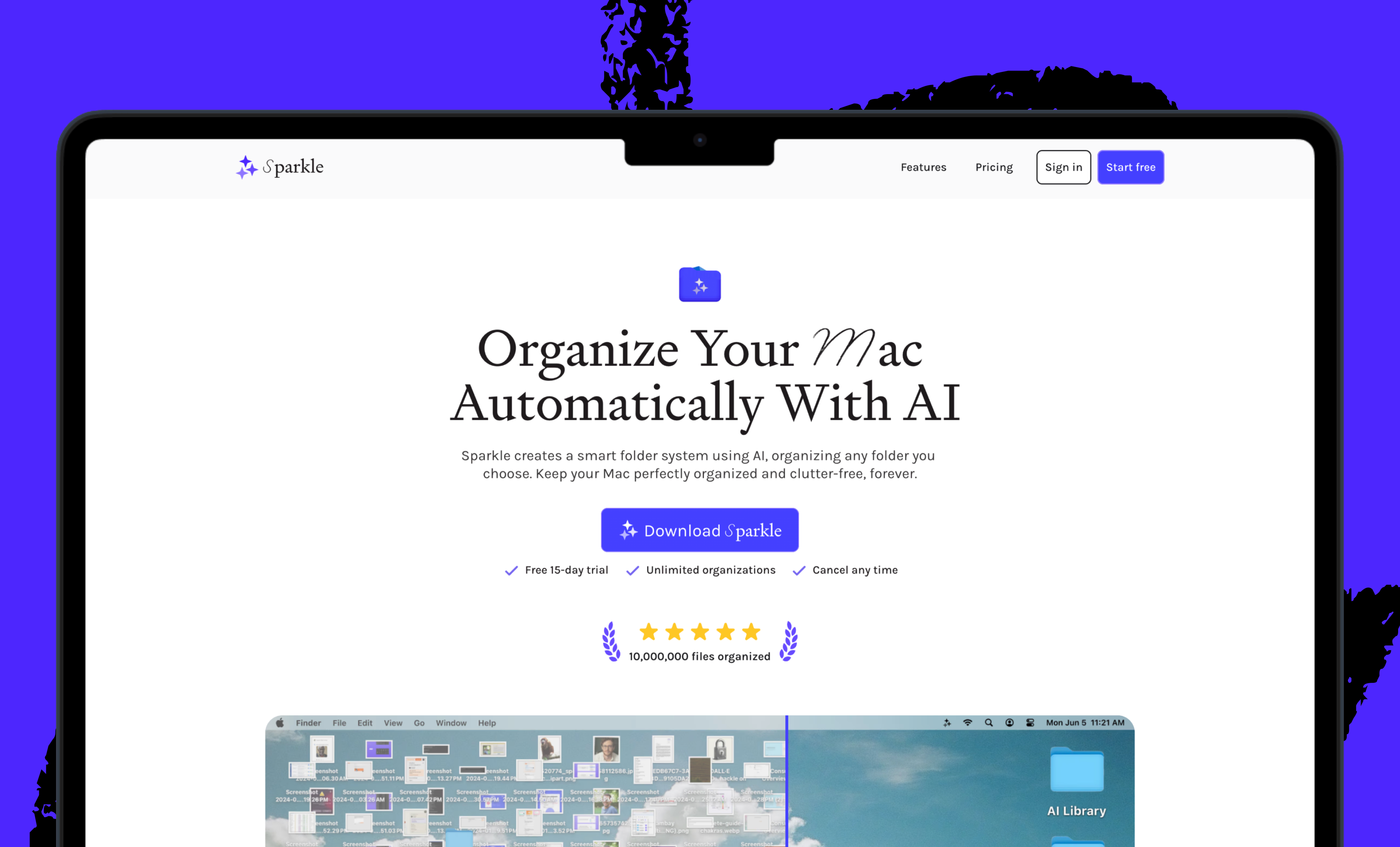
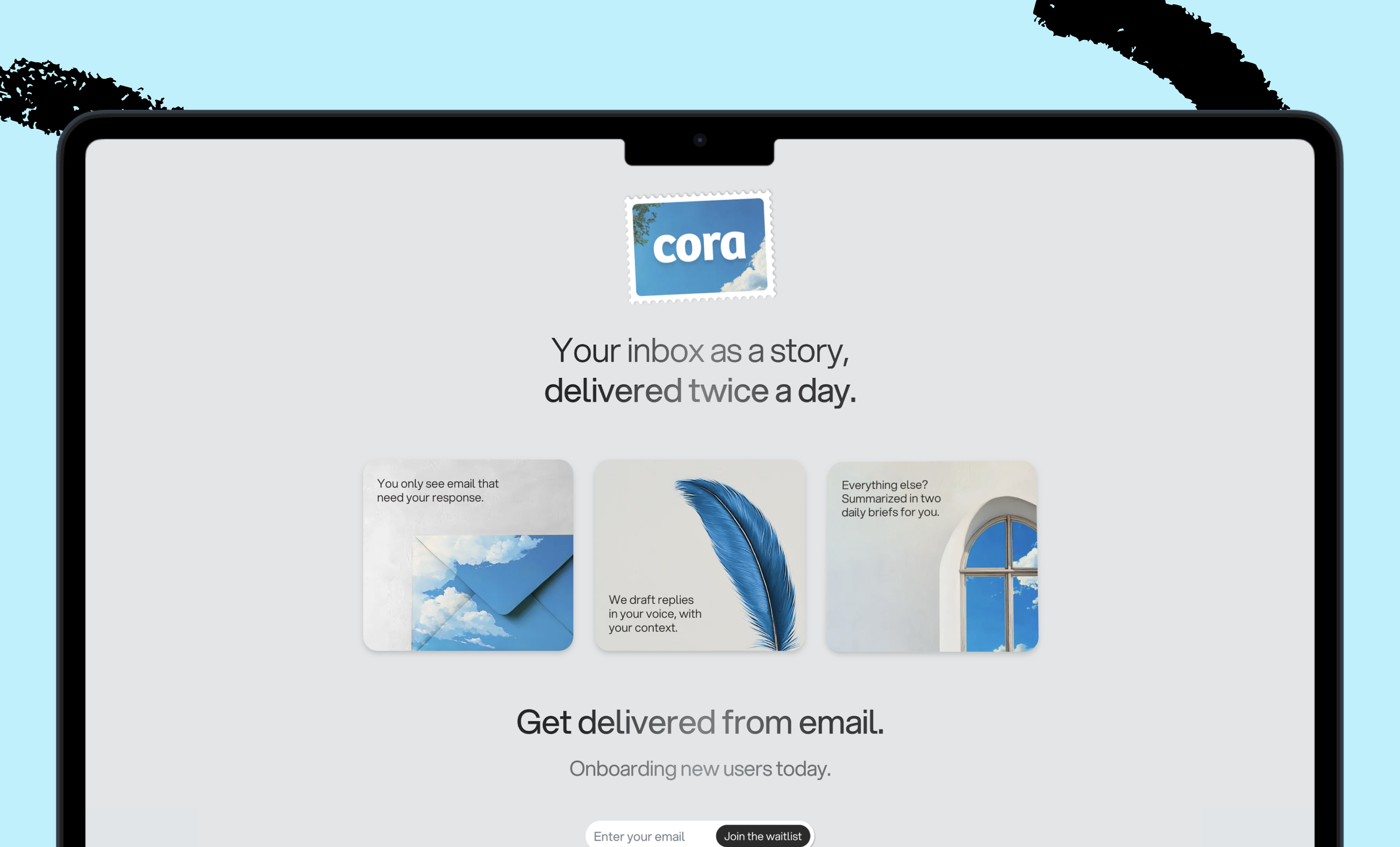
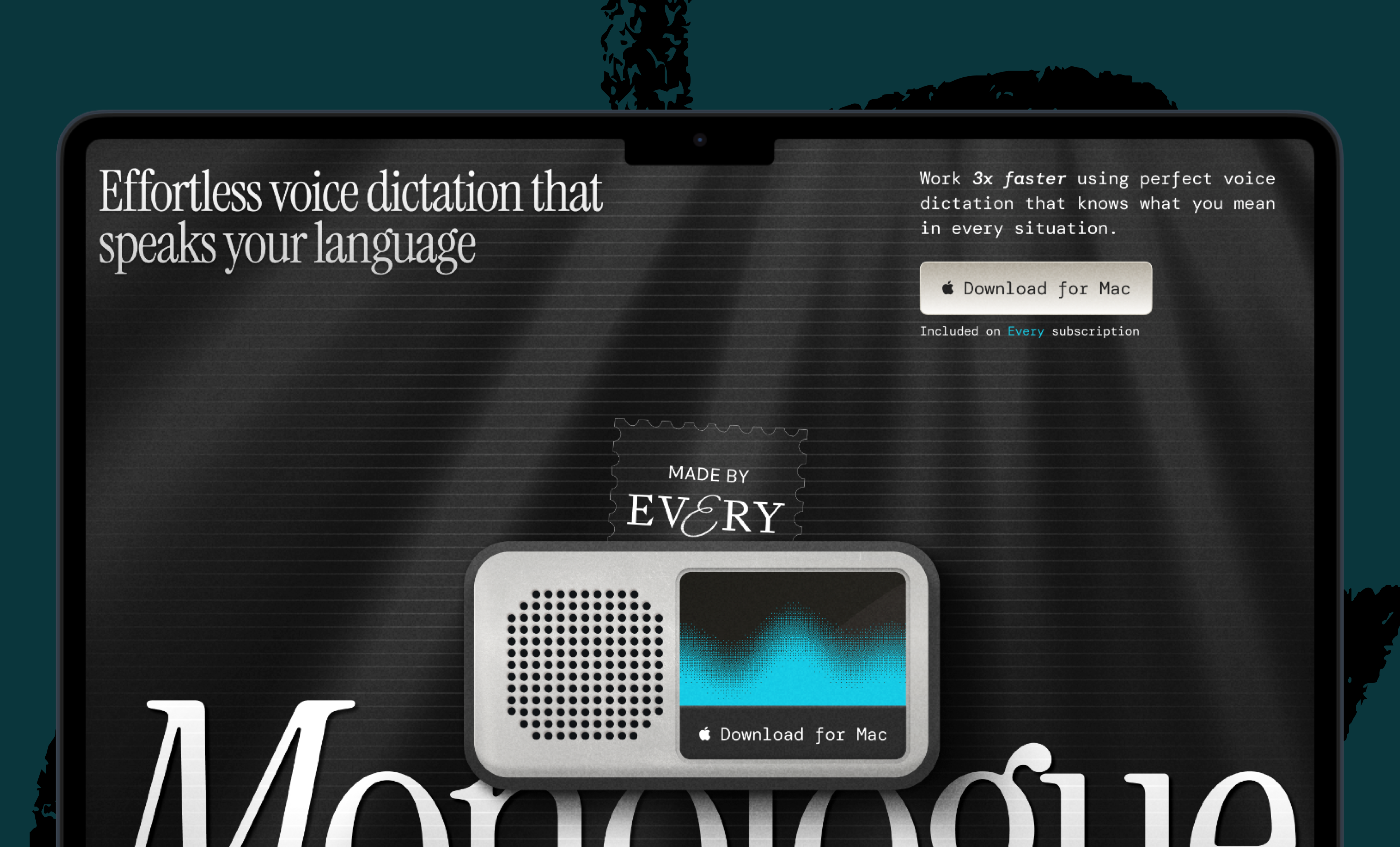
We build AI tools for readers like you. Write brilliantly with Spiral. Organize files automatically with Sparkle. Deliver yourself from email with Cora. Dictate effortlessly with Monologue. Collaborate with agents on documents with Proof.
Discover Every’s upcoming workshops and camps, and access recordings from past events.
For sponsorship opportunities, reach out to [email protected].
The Only Subscription
You Need to
Stay at the
Edge of AI
The essential toolkit for those shaping the future

"This might be the best value you
can get from an AI subscription."
- Jay S.
 Every Content
 AI&I Podcast
 Monologue
 Cora
Cora
 Sparkle
 Spiral
Join 100,000+ leaders, builders, and innovators

Email address

Already have an account? Sign in
What is included in a subscription?
Daily insights from AI pioneers + early access to powerful AI tools



 Front-row access to the future of AI
 In-depth reviews of new models on release day
Playbooks and guides for putting AI to work
Prompts and use cases for builders
In-depth reviews of new models on release day
Playbooks and guides for putting AI to work
Prompts and use cases for builders
In-depth reviews of new models on release day
Playbooks and guides for putting AI to work
Prompts and use cases for builders
In-depth reviews of new models on release day
Playbooks and guides for putting AI to work
Prompts and use cases for builders
 Bundle of AI software




.25.09_PM.png)
 Alex Duffy


 Every Staff
 Reviews of new AI models on release day
Comments
Don't have an account? Sign up!