



Everyone Gets a Sidekick
Plus: The best from our Q2 Demo Day
Mar 29, 2026 · 9 min readUpdated Jul 18, 2026

Hello, and happy Sunday! Was this newsletter forwarded to you? Sign up to get it in your inbox.
Knowledge base
“Introducing Plus One: One-click OpenClaw Agents by Every” by Dan Shipper/On Every: Every’s team has spent months working alongside personal AI agents in Slack—triaging bugs, drafting marketing copy, launching growth experiments—and now we’re sharing them with subscribers. A Plus One is a hosted OpenClaw agent that shows up to the job with Every’s best tools and workflows. Read this to see how our team collaborates with their AI coworkers, and to join the waitlist.
“I Achieved the Four-hour Workweek. So Why Did I Just Take a Job?” by Mike Taylor/Also True for Humans: After five years of self-employment, Mike Taylor had passive income and total freedom. He also had unpredictable revenue, a string of failed products, and no one to share ideas with—which is why he went full-time as Every’s head of tech consulting. His argument is that while AI makes building anything easy, getting someone to notice is harder than ever, and the best learning happens inside a team. Read this if you’ve ever wondered whether the solo path is actually worth it.
“The Agent That Saved My Brain” by Austin Tedesco: Austin Tedesco, Every’s head of growth, used to lose hours toggling between Stripe, PostHog, Slack, and Notion. So he built an agent in Claude Code—even though he has no technical background—that pulls data, drafts campaign briefs, and answers his questions right in Slack. Through this, Austin’s found a worthy thought partner—though, he admits he still loses time tinkering with the system. Read this for the full build process, plus his open-source compound knowledge plugin.
🎧 🖥 “AI Makes Building Products Easy. Knowing What To Cut Is the Hard Part.” by Laura Entis/Context Window: Instagram cofounder Mike Krieger now co-leads Anthropic Labs, where his team builds experimental products on top of Claude. On this week’s podcast, he tells Every CEO Dan Shipper why even when AI has collapsed development timelines from months to hours, the hard part hasn’t changed. 🎧 🖥 Listen on Spotify or Apple Podcasts, or watch on X or YouTube.
“Build Your Own Bloomberg Terminal With AI” by Brooker Belcourt: As a hedge fund analyst, Every’s head of financial services consulting Brooker Belcourt used to spend four hours writing previews of earnings reports per company, per quarter, for 40 companies. Today, his work is greatly compressed by AI tools ranging from a ChatGPT prompt that drafts the writeups to a Claude Code setup that reads his proprietary models, cross-references them against Wall Street estimates, and assembles everything into a custom dashboard he checks each morning. Read this for a step-by-step progression toward making the most of AI for investors.
Log on
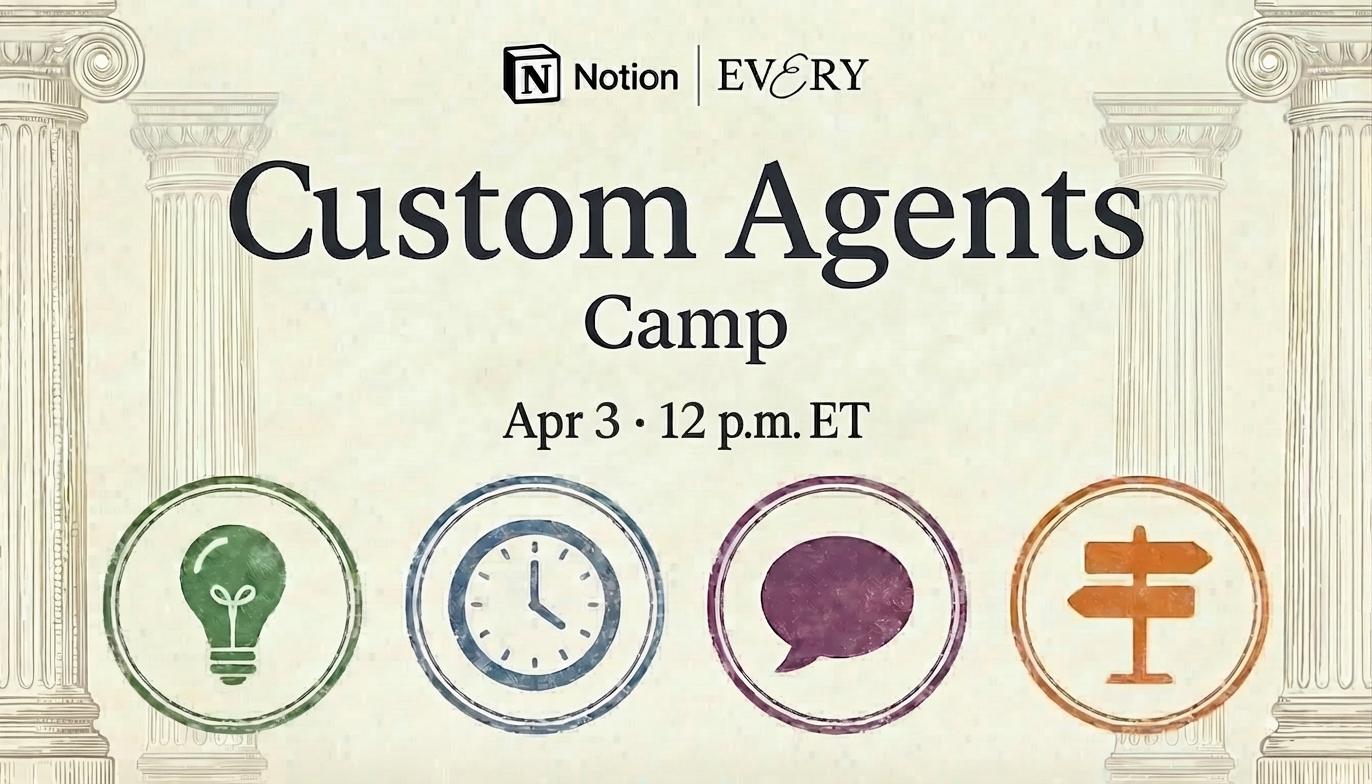
We host camps and workshops on topics like compound engineering and writing with AI to share the knowledge we’ve acquired from training teams at companies like the New York Times and leading hedge funds, and by learning and playing with AI every day ourselves.
Upcoming camps
- Every x Notion | Custom Agents Camp (April 3): A free workshop where we demo the custom agents running Every’s daily operations. We’ll be joined by Notion product designer Brian Lovin, who will show how the team behind custom agents uses them and what they’re building next. RSVP for ready-to-use templates and up to six months free of Notion Business + AI.
- Claude Code for Absolute Beginners (April 14): This beginner-friendly, live workshop led by Mike Taylor (head of tech consulting at Every) is designed to get you from zero to a working project with Claude Code.
Jagged frontier
I stare at my screen some days and think: Why hasn’t AI replaced me yet?
I spend my hours playing textual Tetris—nudging workstreams, reviewing code, editing prose, shipping features. An AI agent can do all of those things. So why am I still here?
Because taste can’t be typed out. It has to be worn in.
If I said to our managing editor, Eleanor Warnock, “Write down everything I’d need to edit one of our pieces,” it would be impossible. Her instincts come from hundreds of past edits, thousands of small decisions layered on top of each other. You would need to work with Eleanor for a long time to emulate her editing style. You can’t enumerate it from scratch.
The gap between what I want and what AI gives me is real. To get a result I’m satisfied with, I need what I’ve always needed: time. I lean on AI to make a decision, but it’s not the decision I would make. So I give feedback. Then I give it again. And again. The process of teaching an AI your taste looks a lot like the process of developing taste in the first place—the accumulation of many small moments, each one building like sediment on the last.
Every’s AI-native engineering philosophy, compound engineering, recognizes this need for ongoing growth. After every piece of work, you ask your AI to distill and integrate the lessons you’ve learned. The next time you encounter a similar problem, you’re better able to solve it. After many cycles, you amass a war chest of small opinions. The AI may be fast, but there’s no way to speedrun the process.
The same goes for trust. People start timidly with OpenClaw, asking it to do simple tasks. Then, they give the agent a little more responsibility. When it does well, they share a bit more context, grant a bit more permission. The output improves. Trust builds, the same way it builds with any human: one kept promise at a time.
That’s good reason to start now. A person who spends time with their AI today, accreting those layers of context and taste and trust, will be meaningfully ahead of someone who starts next year.
AI can help us move faster between the moments that matter. But it can’t manufacture the moments themselves. Some things won’t be rushed. I remain uncompressed.—Willie Williams
From Every Studio
Every held its Q1 2026 Demo Day this week, with live demos of Plus One, Cora, Spiral, Sparkle, and Monologue. The common thread? Each product is becoming agent-native. Agents can now connect to your inbox, draft in your voice from a coding session, organize your files through conversation, and work alongside you in Slack. These used to be standalone tools you operated yourself. Now your agent can use them on its own.
Here’s what’s shipped and what’s on the way.
Plus One is here—your own AI coworker, connected to everything
Every has launched Plus One, a hosted OpenClaw that lives in Slack, where you and your team already work. COO Brandon Gell set one up in 45 minutes and had it triaging bug reports into Notion, generating daily briefs from his calendar, and collaborating with other team members’ Plus Ones in shared channels. Plus Ones come already connected to Every’s AI tools and our best skills and workflows. Willie, our head of platform, has been leading the system architecture. The team is onboarding people from the subscriber-only waitlist at around 20 per week, with a public launch targeted for April. Join the waitlist.
Cora goes agent-native with a CLI, skills, and an iOS app in the works
Cora now has an Agents tab, from which you can connect your agent directly to your inbox or install Cora’s new command-line interface (CLI). Kieran Klaassen, general manager of Cora, demoed the integration by asking his agent about his planned trip to Austria this summer. Because Cora is specifically tuned for organizing and retrieving email, it outperformed a generic Gmail integration and surfaced the flight details instantly. On the design side, Kieran is building toward a full email inbox, with an experimental iOS app that includes a Tinder-style swipe interface for quickly keeping or archiving messages. Try the latest experiments at baby.cora.computer, and connect your agent from cora.computer.
Spiral gets an agent integration, saved prompts, and an X style-guide generator
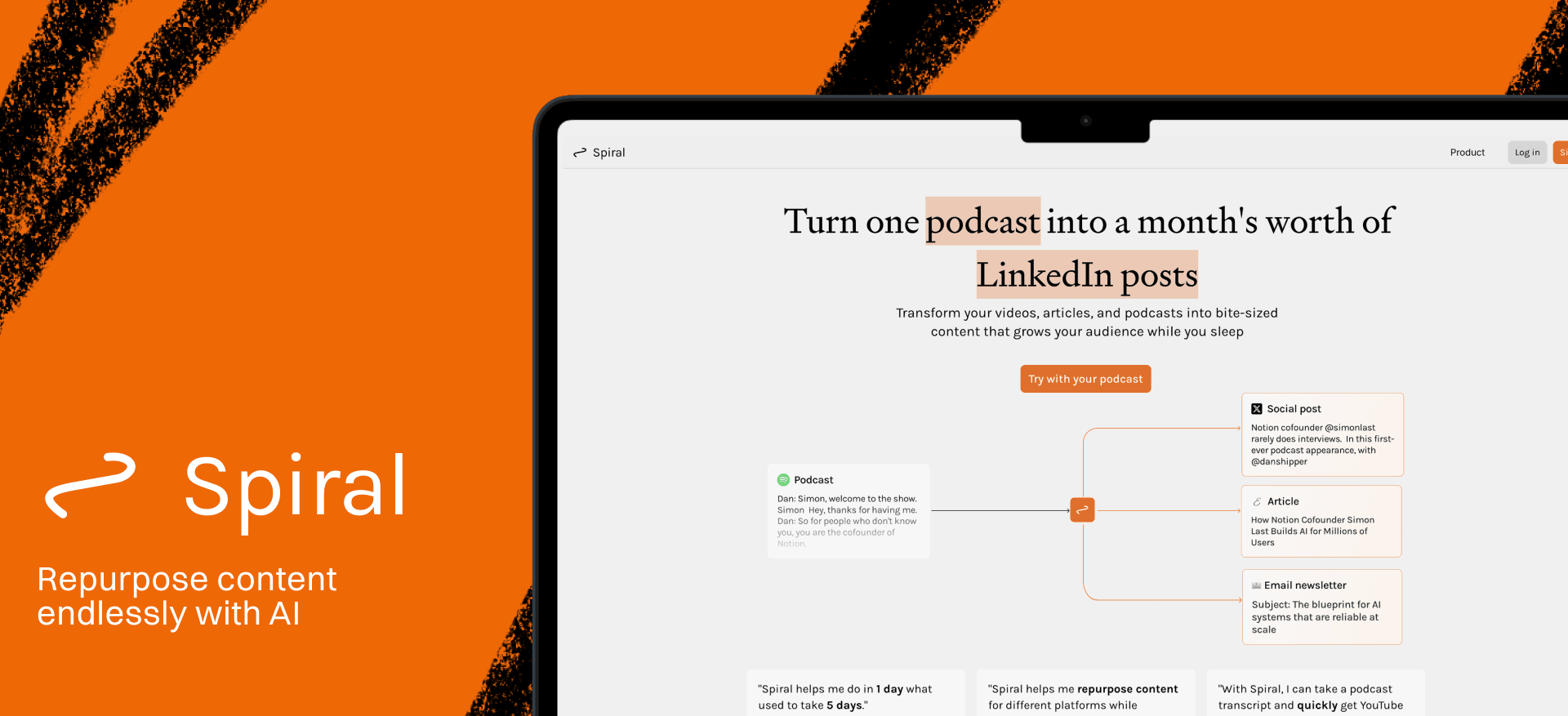
Marcus Moretti, general manager of Spiral, shipped an agent integration and CLI that lets your coding agent draft content in your own voice. In the demo, Marcus sent context from a Claude Code thread directly to Spiral, which generated options—written in Marcus’s personal style—for X posts to announce a new feature. Spiral is also rolling out saved prompts that you can reuse and share with others, and new ways to generate style guides based on your X account or other online writing. Try it at writewithspiral.com.
Sparkle rebuilds from scratch with conversational organizing and agentic cleanup
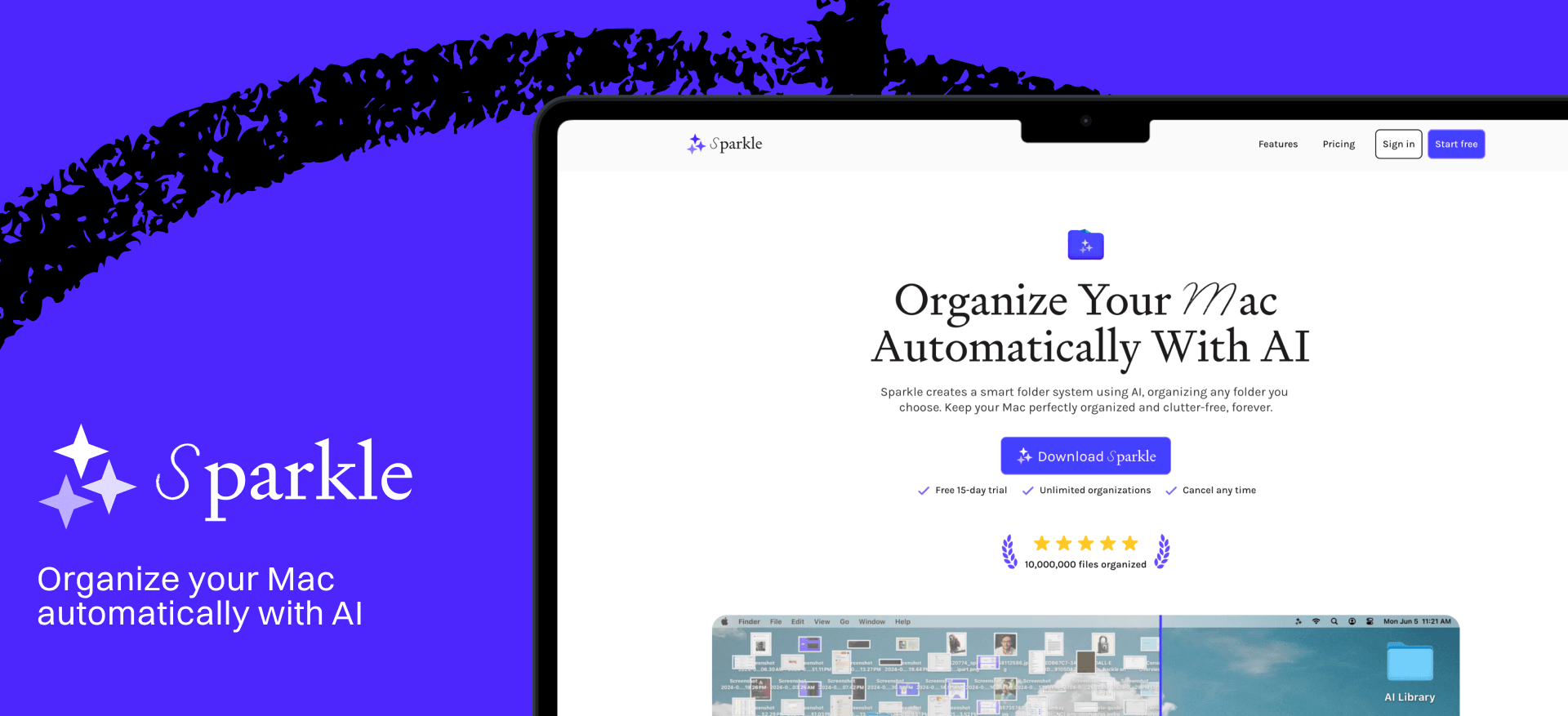
Sparkle has organized more than 40 million files, and general manager Yash Poojary applied the lessons learned from doing so to rebuild the app. The new version lets you organize files through conversation: Point Sparkle at a folder, and it proposes a custom structure that it refines in real time as you chat it. Yash also demoed “agentic cleanup”—a term coined by Dan—where the agent can act, with guardrails that prevent permanent deletion, on the system junk and old installation files it finds. Sparkle also remembers your preferences and runs cleanup continuously in the background. The new Sparkle launches to the public on April 14. Download it at makeitsparkle.co.
Monologue trained its own blazing-fast model and hits 2 million words a day
Naveen Naidu, general manager of Monologue—which is now processing 2 million words per day—announced a custom transcription model so fast that text appears less than a second after you stop speaking. The other news: Monologue’s voice notes feature, which launched quietly on iOS and has crossed 10,000 notes in four weeks, is also coming to your Mac. There, Monologue records both system audio and your microphone, and syncs across all of your Apple products. All notes are also accessible via Monologue’s API, CLI, and model-context protocol (MCP), so your Plus One—or any agent—can pull your meeting notes without extra setup. Expect the new model and MacOS voice notes in the next few weeks. Download it at monologue.to.
Alignment
The cosmic joke. I read so much AI prose now that it’s seeping into my brain and warping my own. Last week I almost wrote, “It’s not X, it’s Y.” I shuddered.
As a result, I’ve started reaching for older books. I want to develop a unique writing style and get more comfortable breaking the rules, and I like to think of reading as my protective force field against the sloppening. It’s helped a tiny bit—this new reading practice. My words are beginning to flow in a more authentic way. What I didn’t expect, though, were the detours on which many older books take you.
I’m reading In Search of Lost Time, and Marcel Proust is describing a magic lantern projecting scenes on his bedroom wall when he was a young boy. And describing it. For multiple pages. What does this have to do with time? I wonder. It’s not until several chapters later, reading a seemingly unrelated scene, that the penny drops. I realize that, with the memory of the lantern, Proust was showing how a break from your everyday experience, brought on by even a change to the light in a room, can leave you lost and disoriented.
When the awareness finally dawned on me, it was much more profound than it would have been had I not taken the detour.
AI doesn’t make you wait for anything. It gets you from A to B in the straightest line possible. Whereas good writing can take you far afield, so that you may, eventually, come to the answer on your own.—Ashwin Sharma
That’s all for this week! Be sure to follow Every on X at @every and on LinkedIn.
We build AI tools for readers like you. Write brilliantly with Spiral. Organize files automatically with Sparkle. Deliver yourself from email with Cora. Dictate effortlessly with Monologue. Work on documents with AI agents using Proof.
For sponsorship opportunities, reach out to [email protected].
The Only Subscription
You Need to
Stay at the
Edge of AI
The essential toolkit for those shaping the future

"This might be the best value you
can get from an AI subscription."
- Jay S.
 Every Content
 AI&I Podcast
 Monologue
 Every Agent
Join 100,000+ leaders, builders, and innovators

Already have an account? Sign in.
What is included in a subscription?
Daily insights from AI pioneers + early access to powerful AI tools

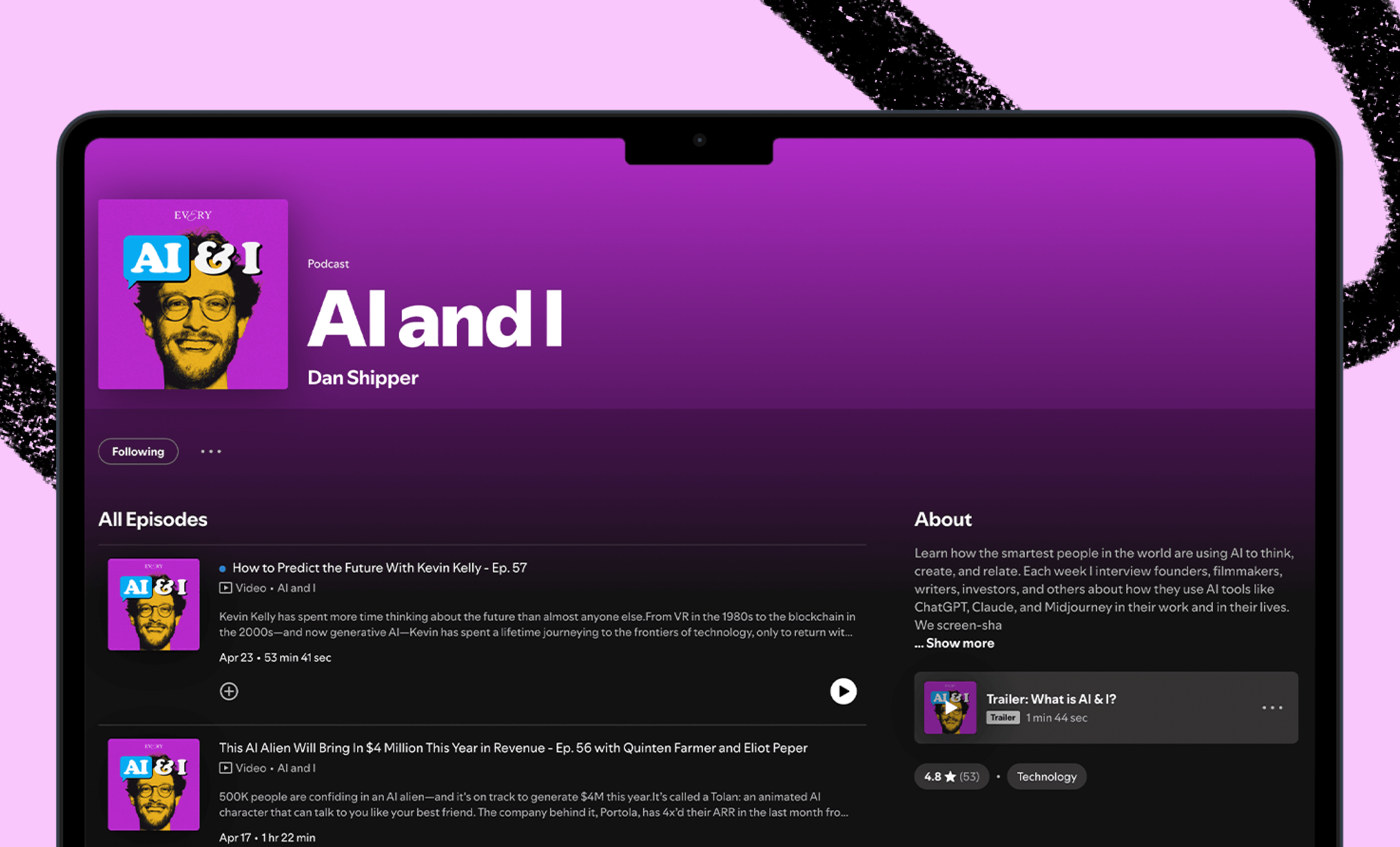

 Front-row access to the future of AI
 In-depth reviews of new models on release dayPlaybooks and guides for putting AI to workPrompts and use cases for buildersIn-depth reviews of new models on release dayPlaybooks and guides for putting AI to workPrompts and use cases for builders
 Bundle of AI software






 Katie Parrott
 Every Staff
 Kieran Klaassen
Comments