



Notes From the Foothills of the Singularity
Google I/O wasn't flashy, but it might be the most important yet
May 22, 2026


Was this newsletter forwarded to you? Sign up to get it in your inbox.
Last year at Google I/O, the company made an overwhelming 100 announcements, including an AI video model—Veo 3—that was miles ahead of anything else at the time. This year had less wow but more dutiful iteration. Gemini 3.5 Flash is faster and more capable than Google’s previous frontier model. Search now builds the right small tool to answer your question on the fly. Gemini assistants can keep running with your laptop closed. Even Gemini Omni, a new, multi-model world model that intuitively understands gravity, kinetic energy, and fluid dynamics—and will likely help train robots—is, for now, being billed as “Nano Banana for video.”
In a year when competitors like OpenAI continued to throw things at the wall—touting its video model, Sora 2, as a ChatGPT moment for video that, according to former head Bill Peebles, would “evolve into a mini alternate reality”—only to shut it down later in the same year. Or leaned into the work market while simultaneously talking, as Anthropic CEO Dario Amodei did, about AI’s potential to decimate entry-level jobs, Google’s releases were not flashy. But filling the gaps both within AI’s jagged intelligence and across its products, while getting the tools to people who will use them, is probably orders of magnitude more important.

Demis Hassabis, CEO of Google DeepMind, called this moment the “foothills of the singularity.” He puts artificial general intelligence (AGI) “just a few years” out and its total impact at 10 times the Industrial Revolution, and arriving 10 times faster. We now have the ability to automate almost anything we can capture reliable data on, but one of the biggest hurdles is convincing society that it’s worth investing in that ability. Right now most people don’t think it is.
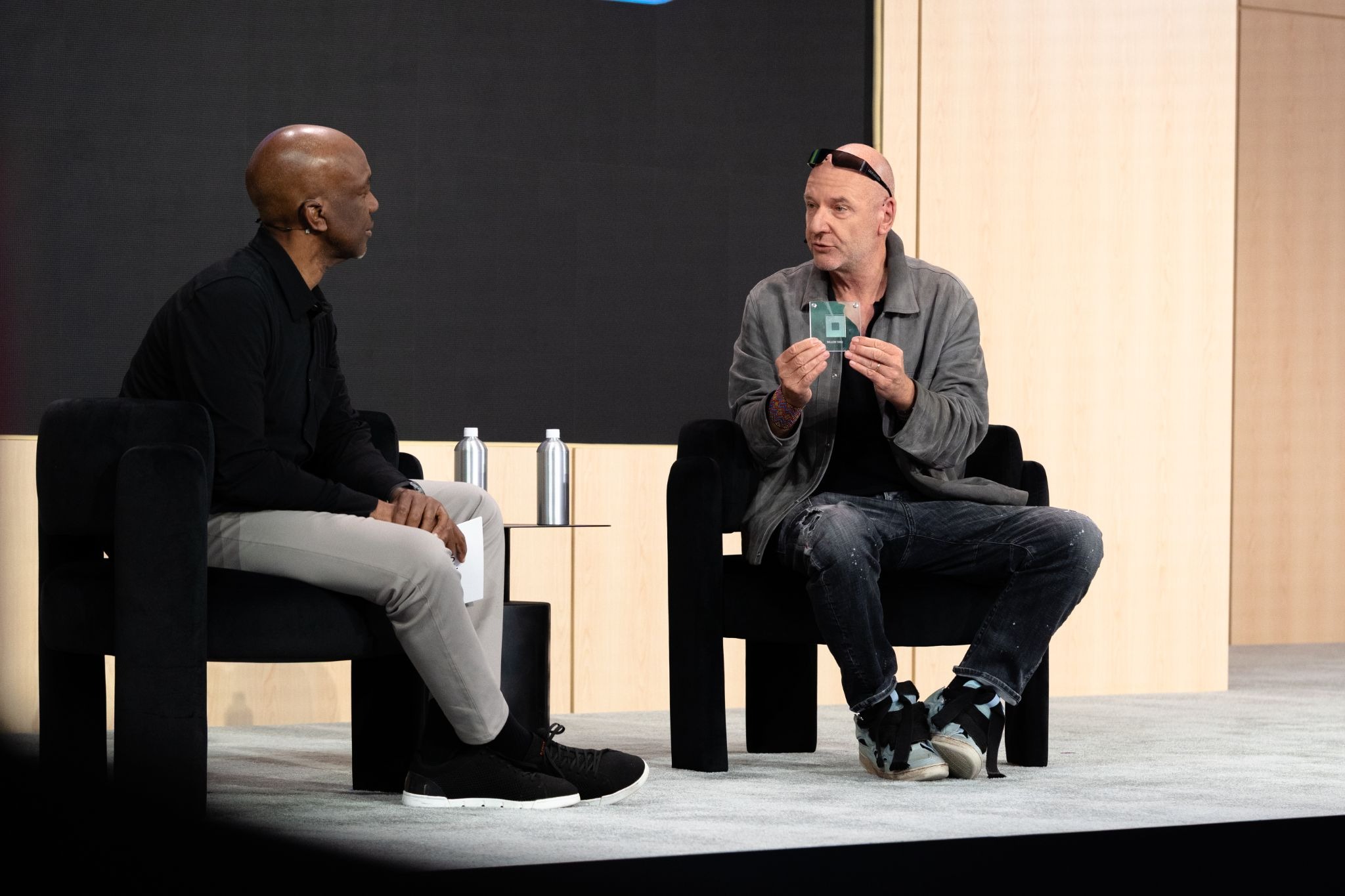
Hassabis called out explicitly that “it’s incumbent on the field, our field, the AI field and industry to show the unequivocal benefits more clearly and more concretely.” My impression, after this year’s conference, is that Google sees the precarity of the current moment clearly, and its scale gives it a rare position to do something about it.
PRDs don’t work in the AI era
You’re probably used to old product specs. You write acceptance criteria, engineers build according to it, and QA verifies that it shipped correctly. But AI doesn’t do that—it gives different results every time. Braintrust just published “Evals Are the New PRD”—the argument is that, for AI products, evals replace the spec, the acceptance criteria, and the roadmap all at once. While a PRD gathers dust in a Google Doc, an eval suite runs on every commit. The piece walks through a four-stage flywheel: Observe, analyze, evaluate, improve. It’s based on how teams at Stripe, Zapier, and Vercel actually ship quality AI. Read it now.
The loop
Google’s loop works like this: Researchers find new data, improve the model architecture, and train a new one. The model is trained specifically to fit into their “Antigravity” harness, giving it the ability to write and run code, and therefore do pretty much anything else. The company then applies it across every product: Search, Docs, YouTube, Gmail, Android, the works. Users try it out and provide feedback implicitly through behavior and explicitly with thumbs up or down ratings. The next model improves. Everything happens across Google’s full stack—the chips it designs, the data centers it owns, the models, the deployment pipeline, billions of users on more than half a dozen core apps. This past year has been about realigning the organization to run that loop at scale.
Internal tools are being rewritten to be 20 times faster and built for agents. Google is looking at how experts within and outside of the organization work, collecting that high-quality data, identifying the underlying capability gaps, then training models to overcome them.
It shows up as a search box that can build a custom widget for your question on the fly, helping drive home a deeper understanding than a headline. Or in an easier-to-use Gemini app, which just passed 900 million monthly users and will soon have a 24/7 personal agent doing research across your emails, catching tasks and running with them asynchronously, returning drafts, reports, itineraries, and more. Google’s adding new agents to surfaces across its family of apps like Maps and Shopping, all of them powered by Gemini 3.5 Flash and the Antigravity harness—the same combination that can build a working operating system in 12 hours with 93 sub-agents for under $1,000. None of that was possible six months ago. Now billions of people will use these tools to pursue their goals, often without realizing that they’re using them.

The obligation
A year ago, Google processed 480 trillion tokens a month. Last month, that number was 3.2 quadrillion—3 trillion a day, doubling every three weeks. Its capital expenditures this year were around $180 billion, almost six times what it was in 2022. But so far, the general public is not convinced that the investment is worth it. What most people see, instead, is white-collar layoffs, resource-hungry data centers going up in their back yards, and a small group getting very rich.
My Uber driver back from Mountain View to San Francisco was 54 years old, still works in construction, and optimized his routes around the goings-on of his city with which he was intimately familiar. He’d never heard of Hassabis or how games could help teach AI, but was curious about what happened at I/O. He opened our conversation with a worry about layoffs, the rich getting richer, and the question of who would be left to spend in the economy. I asked a lot of questions and mentioned how Hassabis emphasized the obligation of the industry to “show the unequivocal benefits of AI more clearly.” I shared my admiration for Hassabis’s clear, vocal focus on curing all disease, and the progress made so far thanks to AlphaFold. We talked about how one person could now do what used to take a team, and how that opens room for more small businesses, though the road there may be pocked with layoffs. By the time we arrived in San Francisco, he had moved the YouTube documentary he’d saved to the top of his watch list.
I think people want to be excited. The promise is real—AI is the best general-purpose tool we’ve ever had for science. Data centers already pay half of some counties’ property tax revenue, lessening the burden on everyday people and providing dramatically better returns on resources like water than alternatives. On the horizon are cures we’ve been chasing for decades, materials that could increase our energy efficiency while reducing our footprint, and education that adapts to the learner. Self-driving cars could save tens of thousands of American lives a year and provide the freedom of mobility to many. They will also be coming for my driver’s job. The promise arrives at scale, but the cost arrives household by household. Unless the industry shows upsides as tangible as today’s downsides, whether actual or perceived, and invests in the people displaced first, progress will slow.
The window is open. Google and others have built the infrastructure to run this cycle at scale and put it in the hands of billions. This past week mathematicians used a frontier model to uncover a mathematical secret which had eluded us for 80 years, disproving a long-standing conjecture in discrete geometry. That used to require a PhD or a team. Now it can mean one curious person and a coding agent. What’s left is to point these tools at problems worth solving right now, that produce visible benefits for individuals and communities alike. Announcements like the Gemini XPRIZE, which aims to do just this, show that the company understands the urgency of the moment. As does just simply getting the tools into the hands of more people, especially when the learning curve is as shallow as asking a question.
I’m excited about the robotics updates and the world models being built for simulation. The bigger moonshots are coming. But the work most worth doing right now is the work in front of us, with the people around us. The future, in Hassabis’s words, is yet to be written. But we must also be careful with direction and not mistake activity with achievement. The stakes are high. The conversations we have, the stories we tell, and the way we use these tools today will define what comes tomorrow.
Alex Duffy is the cofounder and CEO of Good Start Labs and a contributing writer.
To read more essays like this, subscribe to Every, and follow us on X at @every and on LinkedIn.
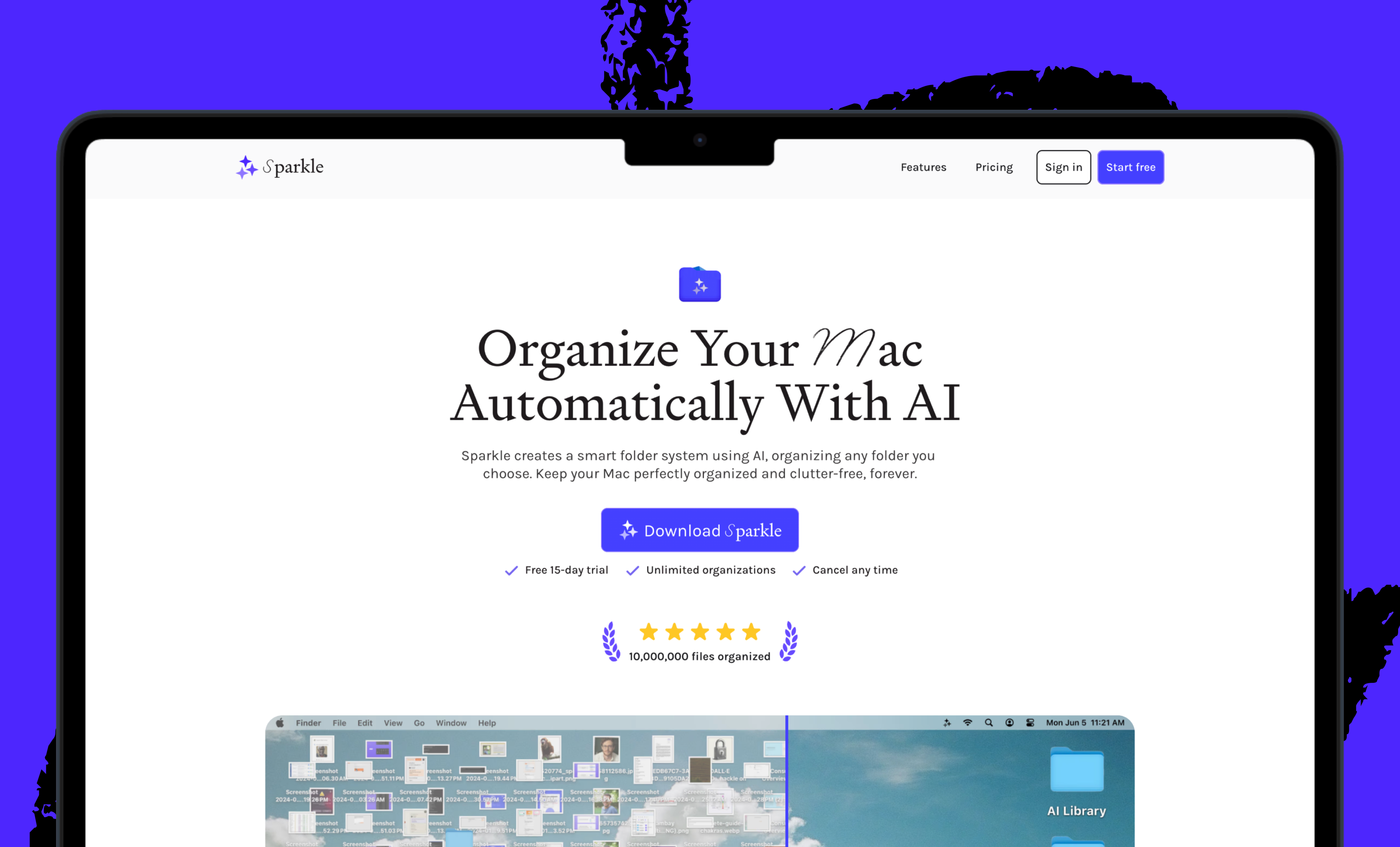
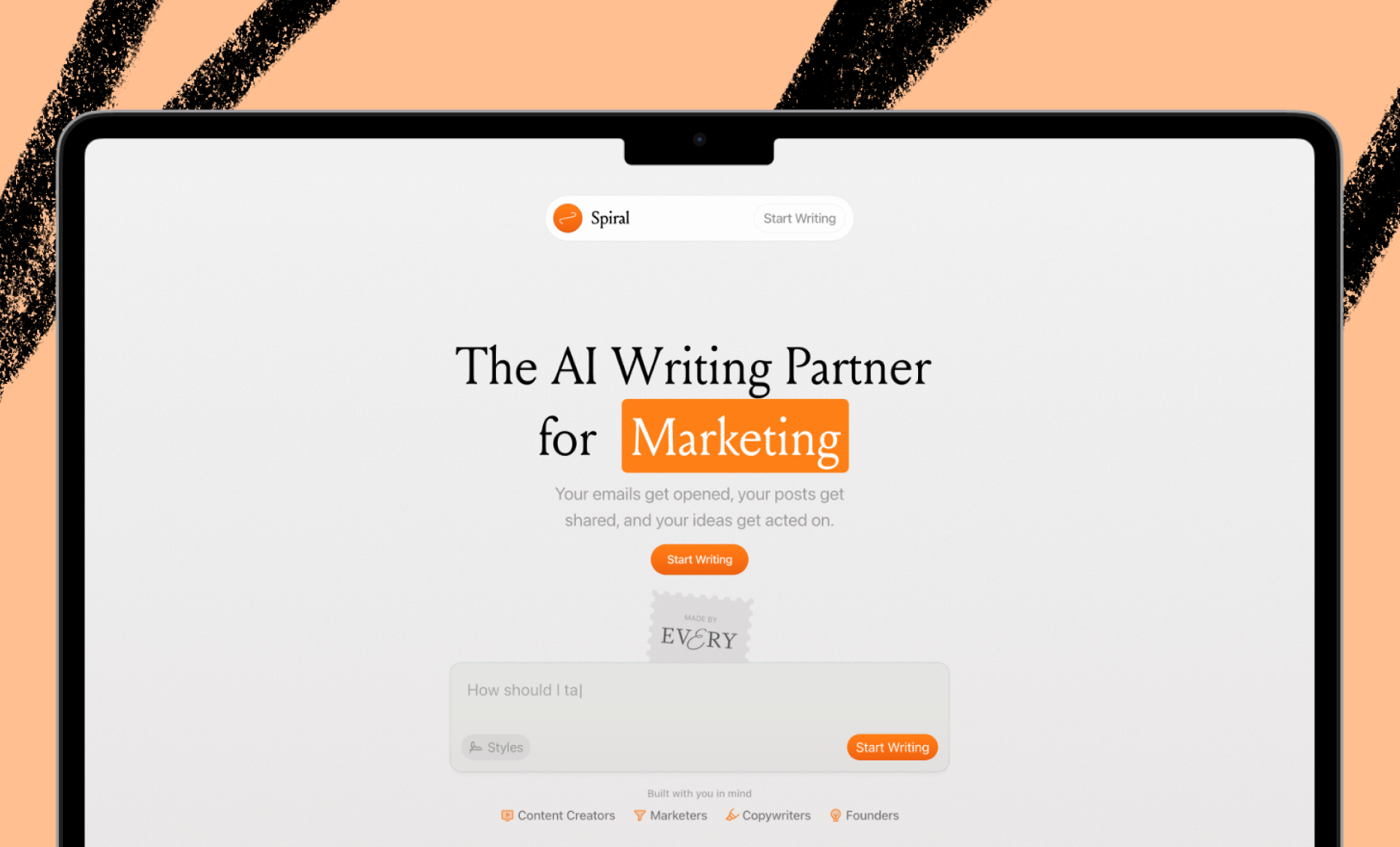
We build AI tools for readers like you. Write brilliantly with Spiral. Organize files automatically with Sparkle. Deliver yourself from email with Cora. Dictate effortlessly with Monologue. Collaborate with agents on documents with Proof.
Help us scale the only subscription you need to stay at the edge of AI. Explore open roles at Every.
The Only Subscription
You Need to
Stay at the
Edge of AI
The essential toolkit for those shaping the future

"This might be the best value you
can get from an AI subscription."
- Jay S.
 Every Content
 AI&I Podcast
 Monologue
 Cora
Cora
 Sparkle
 Spiral
Join 100,000+ leaders, builders, and innovators

Email address

Already have an account? Sign in
What is included in a subscription?
Daily insights from AI pioneers + early access to powerful AI tools

 Front-row access to the future of AI
 In-depth reviews of new models on release day
Playbooks and guides for putting AI to work
Prompts and use cases for builders
In-depth reviews of new models on release day
Playbooks and guides for putting AI to work
Prompts and use cases for builders
In-depth reviews of new models on release day
Playbooks and guides for putting AI to work
Prompts and use cases for builders
In-depth reviews of new models on release day
Playbooks and guides for putting AI to work
Prompts and use cases for builders
 Bundle of AI software




 Alex Duffy
 Reviews of new AI models on release day
Comments
Don't have an account? Sign up!