

Alex Duffy is the cofounder and CEO of Good Start Labs, and a contributing writer.

We Trained an AI on a Board Game. It Became a Better Customer Support Agent.
Games teach transferable skills—to humans and AI alike
Feb 3, 2026 · 6 min readUpdated Oct 8, 2026

In this installment of Playtesting, Alex Duffy shows why games might be the smartest approach to AI training right now. As the cofounder and CEO of Good Start Labs, he’s been exploring how game environments can improve AI capabilities across unexpected domains. His latest finding is surprising: Fine-tuning a model on the strategy game Diplomacy improved its performance on customer support and industrial operations benchmarks. Read on to learn why games generate the kind of data and behaviors that make AI better at the serious stuff, and what the Every team has learned from classics like StarCraft.—Kate Lee
Was this newsletter forwarded to you? Sign up to get it in your inbox.
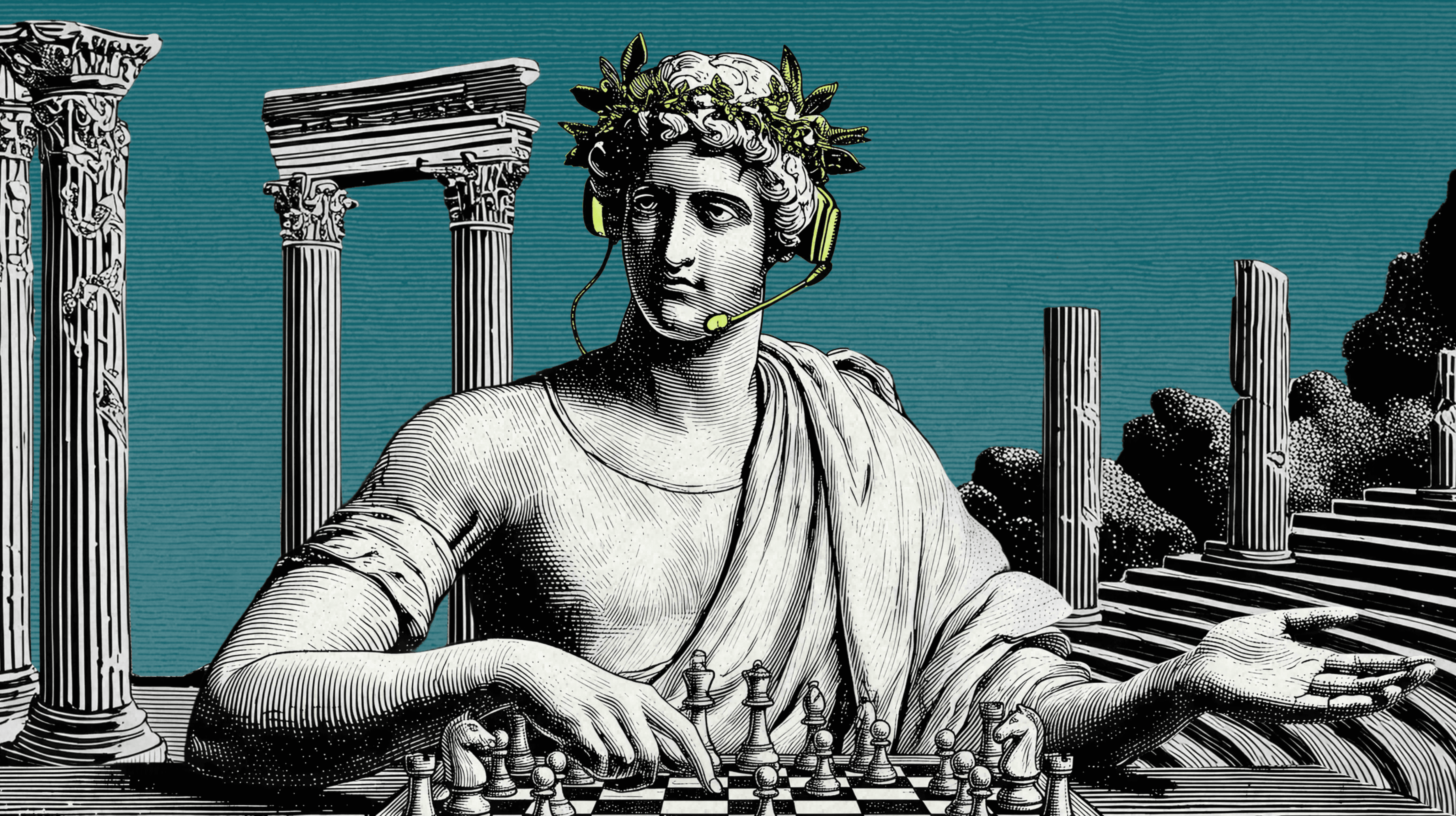
It’s my job to make AI play games. One board game we’ve focused on at Good Start Labs has been Diplomacy, a World War I simulation reportedly played by John F. Kennedy and Henry Kissinger. There’s no dice and no luck. As everything shifts around you, all you can rely on are persuasion and strategy.
When we fine-tuned the Qwen3-235B model—an open-source model developed by the team at Chinese cloud computing company Alibaba Cloud—on thousands of rounds of Diplomacy, we found an over 10 percent improvement in performance on other games such as the card game Hanabi and word game Wordle. But we were encouraged to see that these improvements translated to other realms. The fine-tuned model also did better on Tau2, a benchmark that tests how well AI agents handle customer support conversations, and AssetOpsBench, IBM’s benchmark for industrial operations like equipment monitoring and maintenance.

Write at the speed of thought
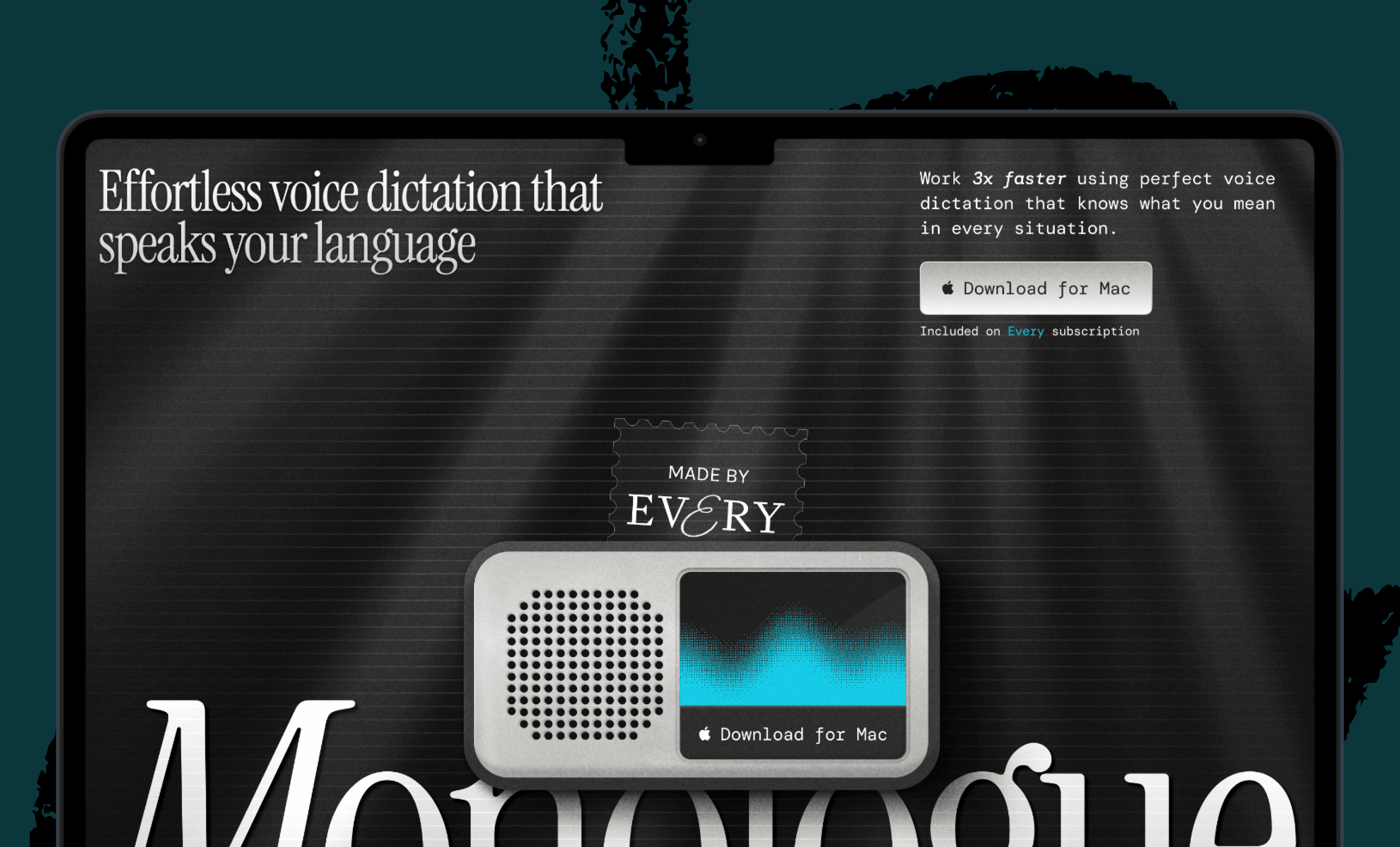
That gap between your brain and your fingers kills momentum. Monologue lets you speak naturally and get perfect text three times faster, and your tone, vocabulary, and style are kept intact. It auto-learns proper nouns, handles multilingual code-switching mid-sentence, and edits for accuracy. Free 1,000 words to start.
It’s not a big leap to believe that improvement in one game could boost the model’s performance on others. But how does understanding WWI strategy make a model better at helping someone change their airline reservation or monitor equipment? Simple: Games reward specific behaviors. When you get good at those behaviors, they show up elsewhere.
When I asked my colleagues at Every what games had taught them, everyone had similar experiences. “StarCraft taught me how to cook,” Every’s head of platform Willie Williams tells me, recalling the high-speed chess-like game. “You have things that take different amounts of time, and you want them to land at the same time.” Our senior designer, Daniel Rodrigues, learned English from Pokémon before any classroom. AI editorial lead Katie Parrott became a more systematic thinker from board game mechanics and applied it to designing AI workflows.
This transfer of skills from games to other domains works for AI, too—and we can measure it. Diplomacy trains context-tracking, shifting priorities, and strategic communication. Customer support, where information is often incomplete and requests shift, needs the same capabilities.
We trained our model on Diplomacy in a reinforcement learning environment where you can clearly score whether the AI did something right. Labs are racing to build these kinds of environments because they do something that feeding the models static data can’t: They give models feedback on their decisions, teaching them to strategize, not just recall facts.
When you train a model on text from the internet, it learns to predict words. If you train it in an environment with goals and feedback, the model starts to develop skills that look remarkably like strategy. It’s a glimpse of where AI training is headed: less scraping the web, more learning by doing...
Become a paid subscriber to Every to unlock this piece and learn about:
- Why top AI labs are betting on board games—not bigger models—to make their next breakthrough
- Why the benchmarks we use to measure AI are already obsolete, and what’s replacing them
- The accidental discovery that made researchers rethink how “reasoning” develops
Thanks to our Sponsor: Monologue

Write at the speed of thought
That gap between your brain and your fingers kills momentum. Monologue lets you speak naturally and get perfect text three times faster, and your tone, vocabulary, and style are kept intact. It auto-learns proper nouns, handles multilingual code-switching mid-sentence, and edits for accuracy. Free 1,000 words to start.
 Create a free account to continue reading
The Only Subscription
You Need to
Stay at the
Edge of AI
The essential toolkit for those shaping the future

"This might be the best value you
can get from an AI subscription."
- Jay S.
 Every Content
 AI&I Podcast
 Monologue
 Every Agent
Join 100,000+ leaders, builders, and innovators

Already have an account? Sign in.
What is included in a subscription?
Daily insights from AI pioneers + early access to powerful AI tools
 Front-row access to the future of AI
 In-depth reviews of new models on release dayPlaybooks and guides for putting AI to workPrompts and use cases for buildersIn-depth reviews of new models on release dayPlaybooks and guides for putting AI to workPrompts and use cases for builders
 Bundle of AI software




 Katie Parrott
 Every Staff
 Kieran Klaassen
Comments