
We use analytics and advertising tools by default. You can update this anytime.
Bethany Biron is a journalist, editor, and communications expert.
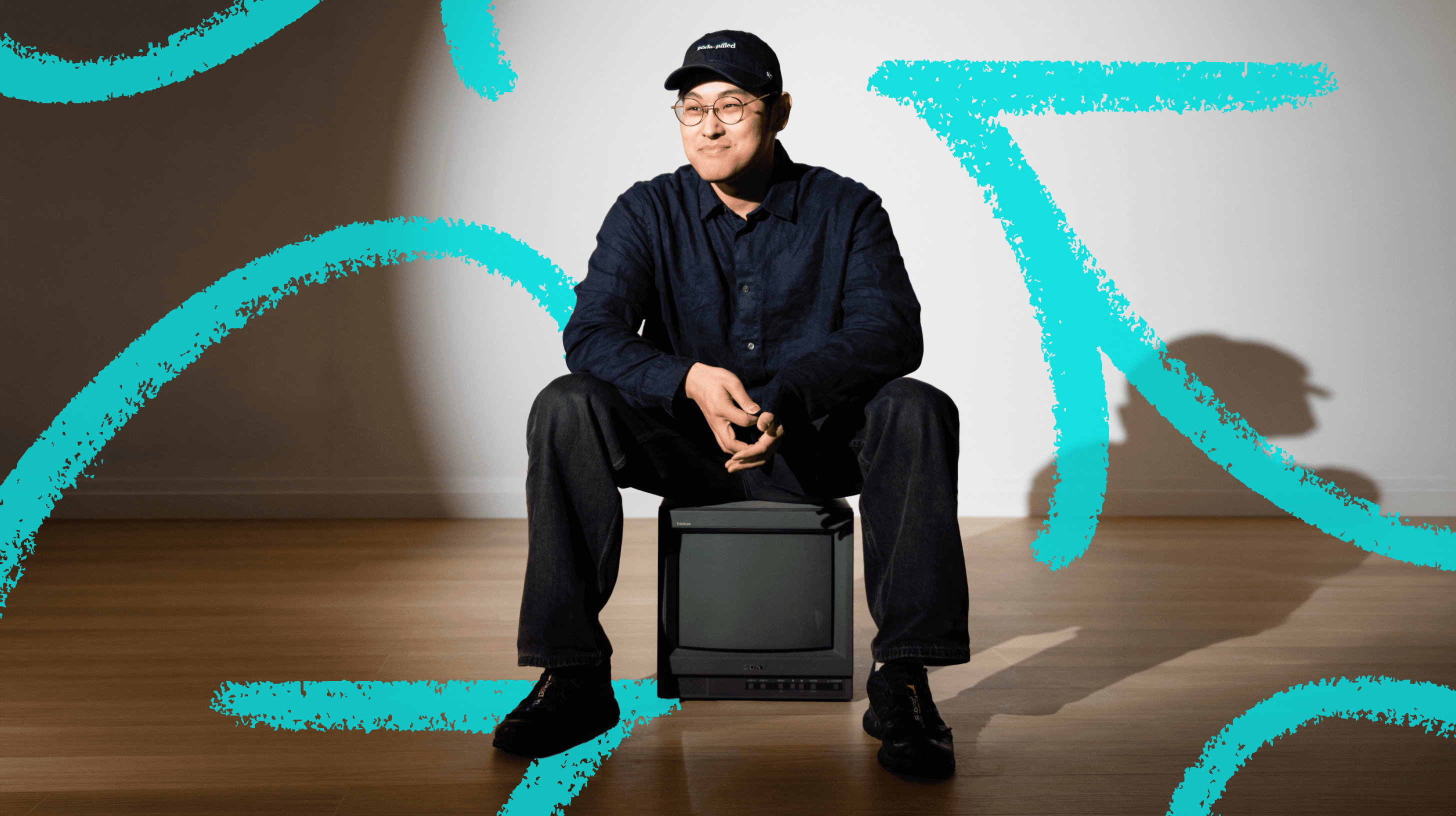
Flora’s Weber Wong raised $42 million for his creative AI startup. He also spent 10 weeks waiting for the right couch.
Mar 5, 2026 · 5 min readUpdated Jul 26, 2026

TL;DR: Flora is a suite of AI-native tools tailored to creative professionals—and a favorite of Every’s head of design Lucas Crespo. Yesterday, Flora founder Weber Wong shared his thesis about the future of creative work and AI with our readers, arguing that both traditional design software and current AI tools trap creative professionals in one-off outputs. In his view, the real opportunity is building reusable, shareable workflow systems. It’s no surprise that someone this opinionated about how creative people should work is equally opinionated about where they work, as this interview from Flora’s Brooklyn offices shows.—Kate Lee
Was this newsletter forwarded to you? Sign up to get it in your inbox.
Weber Wong is determined to prove that AI is anything but a death knell to creativity.
As the founder of Flora—a suite of AI-native creative tools tailored for professionals in industries like fashion, advertising, and film—Wong is helping clients use AI to bolster their work “without sacrificing their craft.” The company raised $42 million in January and, since its founding in early 2024, has worked with clients like design firm Pentagram, artist collective MSCHF, and indie film production darling A24.
A former investment banker and venture capitalist, Wong founded Flora while juggling his graduate studies in interactive art at New York University’s Tisch School of the Arts. Though Flora began as a student project, the company now occupies a light-drenched office in the historic Domino Sugar Factory building in Williamsburg, Brooklyn, where 30 employees work next to floor-to-ceiling windows overlooking the East River.
Here, Wong discusses the importance of the first office couch, why New York is the only city for a creative AI company, and when he likes to do his workouts.
Most of the creative industry thinks: that this is the dark ages to be a creative. In reality, it’s the golden age. You can have an idea turn into an entire campaign in minutes. There’s never been a better time to have a good creative idea.
New York is: the hub for a lot of the creative industry, so it was very natural that we just continued to stay here. Being in New York has been a great advantage for us.
As a creative company: we have a pretty high bar for taste and would just not be able to accept a working environment that was not aesthetic.
I had a stint: in investment banking, and one thing you learn when you go through an environment like that is how to get work done regardless of what situation you’re in. We have a nice office for the company, but honestly, I can do work anywhere since I spend most of my time looking at a screen.
The first couch in the company’s history: is very important. It defines the interior design aesthetic as the company grows. I found a very specific Saporini couch that needed to be handcrafted in Italy. It took 10 weeks to arrive, but once it got here, the entire company just stood around looking at it like, ‘Wow, this is great.’ We’re very glad that we got that couch. People love it.
We were intentional about: things like the color of the desks and desk chairs. At some point, we switched them out from walnut desks with black chairs to better match the floors. We just felt that it wasn’t doing the vibe correctly. We also got this big desk for the common area, and I ordered eight different vintage wooden chairs to go around it. It’s a little bit of a mish-mash, but it’s an area for people to sit around and talk.
The one thing that we’re missing: is enough lighting, partially because we have high standards for what is a good lamp.
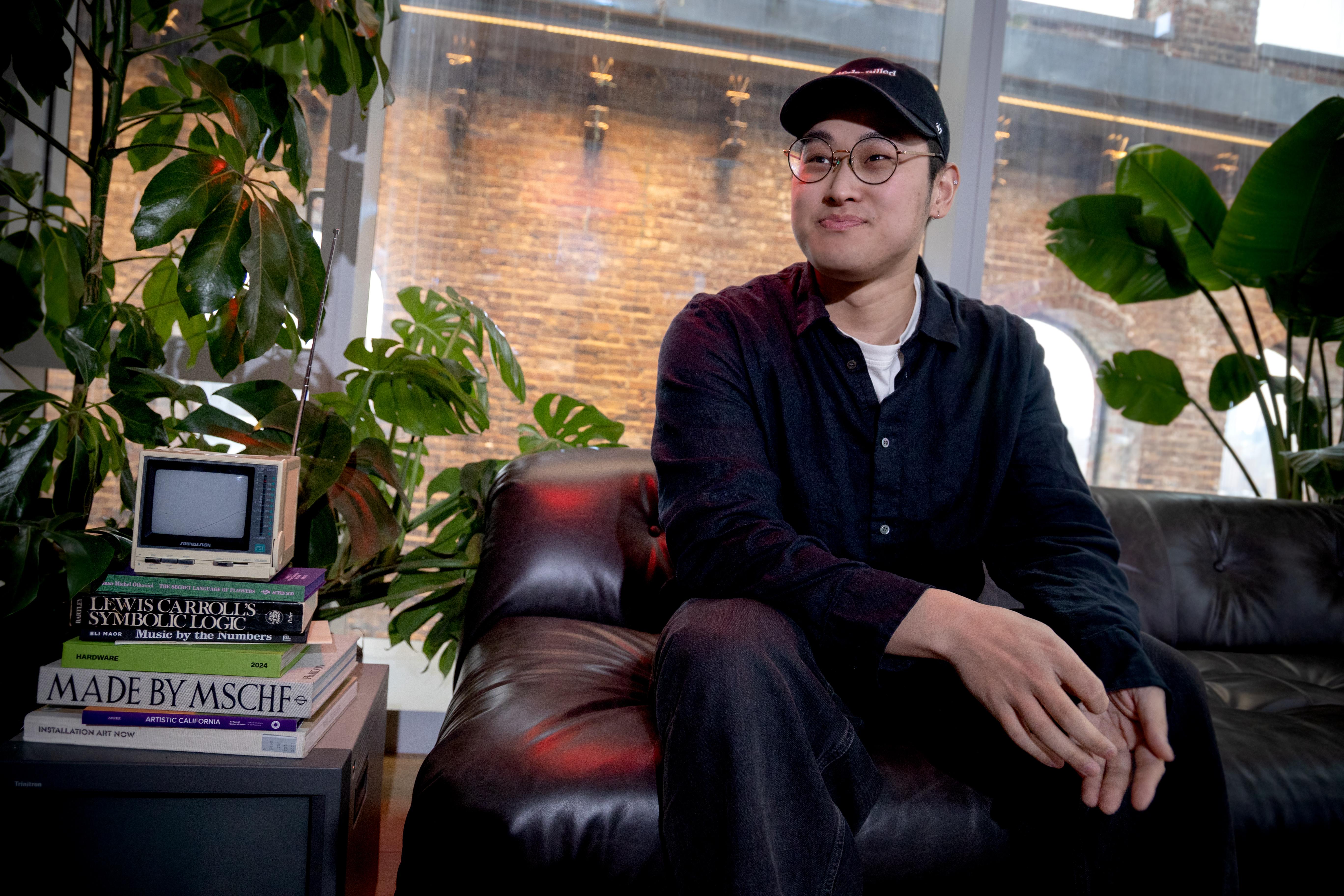
Working at home: works well for me from 10 p.m. to 1 a.m. On Saturdays and sometimes Sundays, I like to work at Partners Coffee. I do like coffee shops.
I wake up: and work out, usually a jog or an intense swim. Then I get to the office, and depending on how many calls I have, I’ll just try to knock out emails or write a bit about any of the major things I’m thinking through across product, team, or strategy. I’ll usually jump into a mix of customer calls, talking to creative teams, and product meetings with design and engineering to work through the new creative tool features we’re building out. In the evening, sometimes I’ll grab dinner with my girlfriend and then continue doing more work or take the evening off, depending on how busy it is.
I like to journal: on the weekends when I have time. I write long Google Docs about what I’ve done that week and what’s top of mind for me professionally and personally. It’s been really quite helpful to think through things. Deep reflection is still very useful.
I used to do: a lot of poetry. I really romanticize writing stuff down, but my handwriting is also really bad, so I mostly use Google Docs. I don’t even know what the brand is called, but there’s a specific type of Japanese notebook I like where the binding on the back makes it so it lies flat completely. And for pens, I love Muji.
We launched a product: that went really viral and started growing really quickly. Going from having a magical product that really hits, to needing to figure out how to scale that up, how to build out the team, and how to build a proper company is maybe one of the more stressful parts of building a startup.
We’ve known since day one: roughly what that end state looks like, and I’d say we’re only 30 percent done. This year we’ll probably get to 50 or 60 percent. There are two to three really powerful features that we’re launching over the next few months. I’m excited to see how those play out.
Read Wong’s thesis about the future of creative work and AI.
Bethany Biron is a journalist, editor, and communications expert. Follow her on X at @bethanybiron or on LinkedIn.
To read more essays like this, subscribe to Every, and follow us on X at @every and on LinkedIn.
We build AI tools for readers like you. Write brilliantly with Spiral. Organize files automatically with Sparkle. Deliver yourself from email with Cora. Dictate effortlessly with Monologue.
For sponsorship opportunities, reach out to [email protected].
The essential toolkit for those shaping the future

"This might be the best value you
can get from an AI subscription."
- Jay S.
 Every Content
 AI&I Podcast

 Cora
Cora Sparkle
 Spiral
Join 100,000+ leaders, builders, and innovators

Already have an account? Sign in.
Daily insights from AI pioneers + early access to powerful AI tools
 Front-row access to the future of AI
 In-depth reviews of new models on release dayPlaybooks and guides for putting AI to workPrompts and use cases for buildersIn-depth reviews of new models on release dayPlaybooks and guides for putting AI to workPrompts and use cases for builders
 Bundle of AI software

 Katie Parrott
 Every Staff



 Kieran Klaassen
Comments