
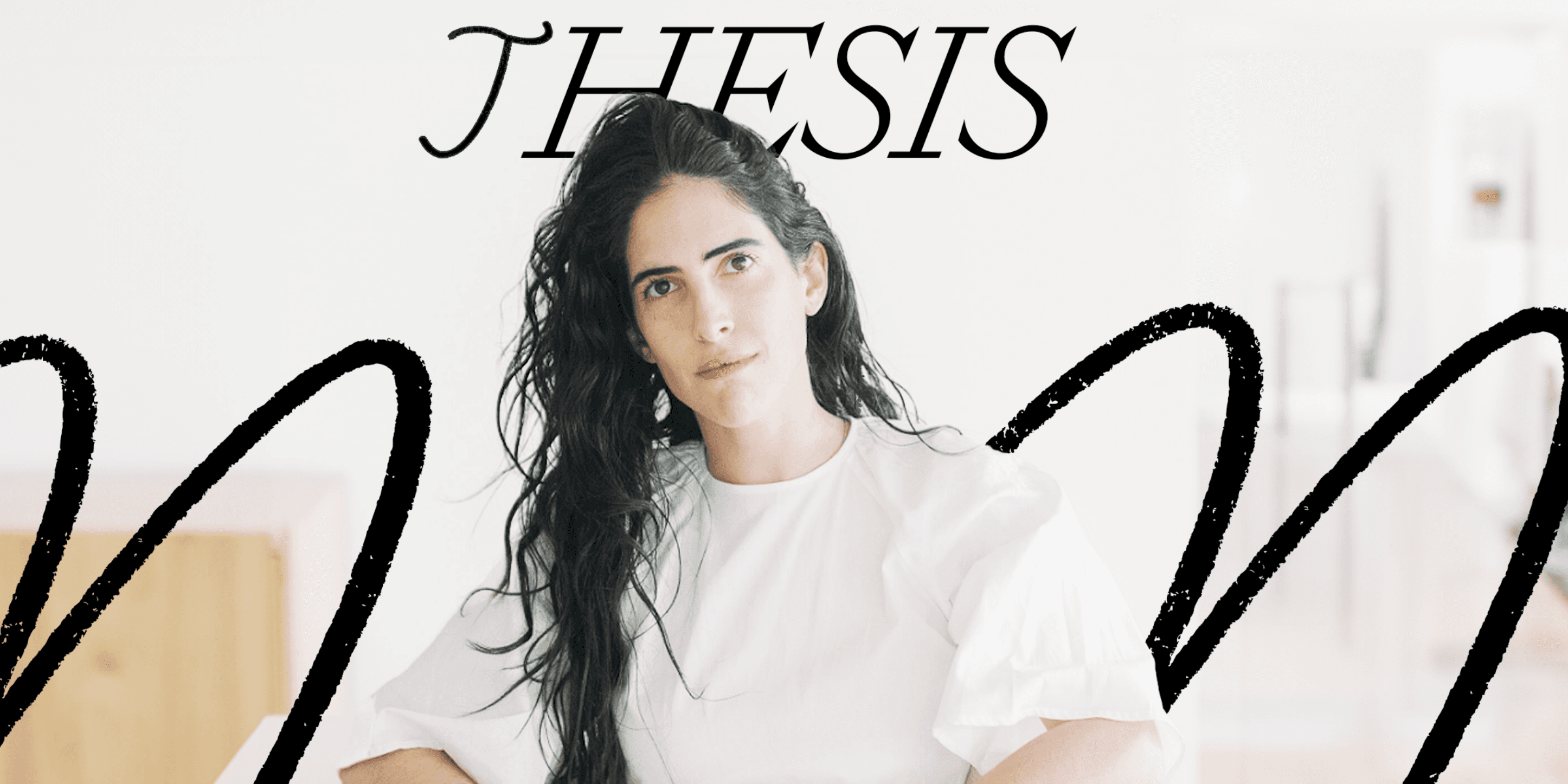

Sari Azout is the founder of Sublime, a knowledge tool designed for creative thinking. She was previously a partner at Level Ventures.

The End of Productivity
Why creativity is the new currency of success
Nov 18, 2024 · 14 min readUpdated Jul 18, 2026

Artificial intelligence has the potential to shift our focus from productivity to creativity. As Sari Azout—the founder of knowledge management tool Sublime—argues in her Thesis piece, perhaps it's time to prioritize our creative potential over traditional productivity metrics. Read on to learn how.—Kate Lee
Plus: All Every subscribers can skip the waitlist and get access to Sublime. And exclusively for paid Every subscribers, Sari is hosting a workshop on building your knowledge library for creative work. Click here for details and registration.
Was this newsletter forwarded to you? Sign up to get it in your inbox.
In a world where we can outsource productivity to technology, the people who reap the biggest rewards aren’t those who work the fastest.
They’re the people who make things that are wonderful, original, weird, emotionally resonant, and authentic. As our feeds become flooded with instant, AI-generated content, the most dangerous thing you can do is play it safe.
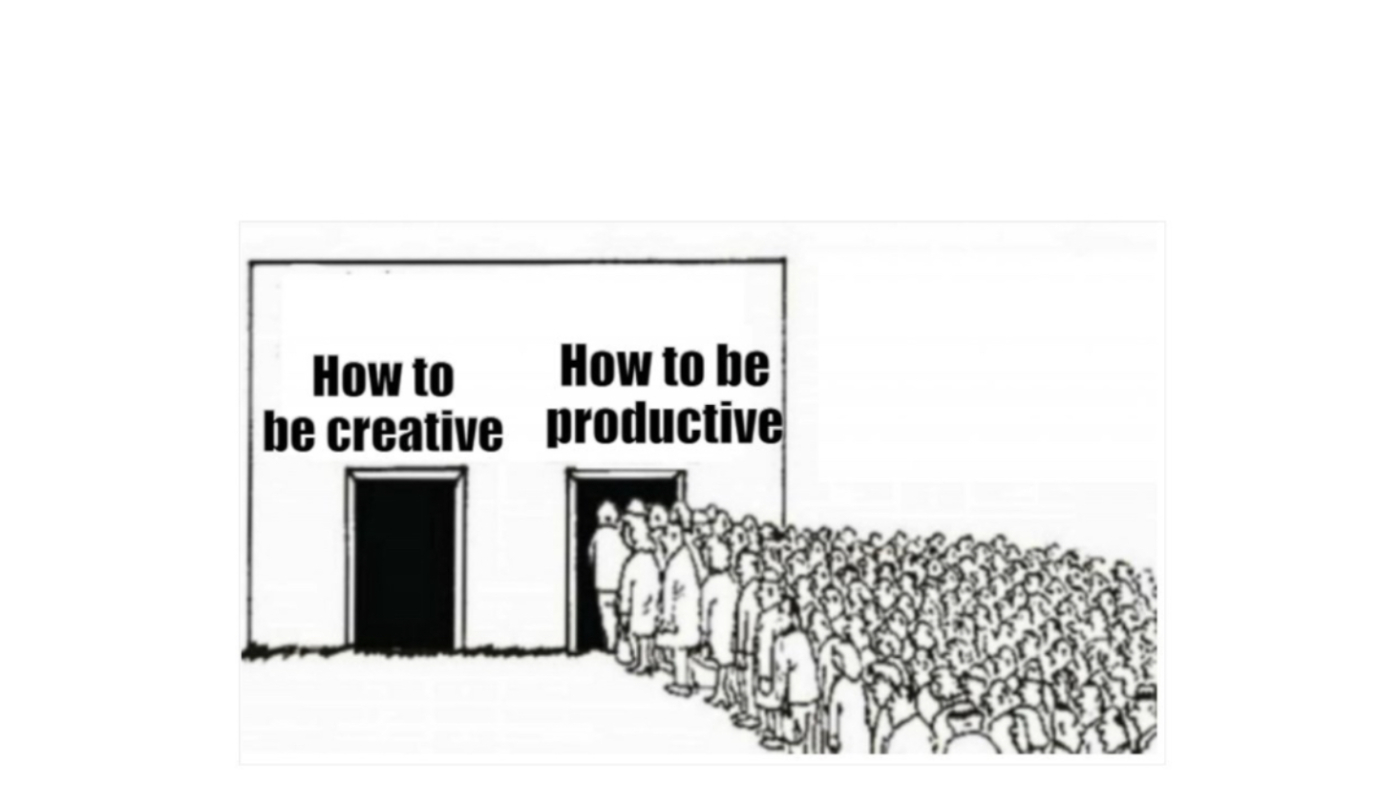
We live in a culture that venerates productivity above all else. For centuries, success—particularly in the West—has hinged on a simple dictum: “Do more, faster.” As AI commoditizes speed and output, however, this pursuit will lose its value.
Still, the productivity religion is so ingrained that it’s almost impossible to imagine a different way of working. That’s why, even with AI, we are still fixated on tools that help us do more, faster. As the founder of Sublime, a personal knowledge management (PKM) tool designed for creative thinking, I want to offer a different vision of the possibilities that this technology opens up, one that rescues knowledge work from its frenetic striving toward an impossible ideal of maximum efficiency and shifts our focus back where it belongs: original, meaningful, creative work.
Let’s explore the limitations of today’s productivity tools when it comes to fostering creativity—and how we can design them to help us think more deeply and create more intentionally.
Sponsored by: Every
Tools for a new generation of builders
When you write a lot about AI like we do, it’s hard not to see opportunities. We build tools for our team to become faster and better. When they work well, we bring them to our readers, too. We have a hunch: If you like reading Every, you’ll like what we’ve made.
The limitations of productivity tools
Digital tools designed to enhance our productivity and help us manage information have proliferated over the past two decades. These tools are great for tracking and executing tasks, but less helpful when it comes to figuring out what work we should be doing in the first place.
Tools like 3D CAD are excellent for creating designs, but not particularly useful for deciding what to design in the first place. Project management tools such as Asana, Linear, and Trello can help us manage workflows by creating and organizing lists of tasks. But it’s impossible to build the right workflow if you don’t know what outcome you’re working toward. There’s a part of the creative process that these tools simply don’t account for: the difficult, messy, non-linear work of figuring out what you actually want to build.
Rory Sutherland, vice chairman of the Ogilvy advertising agency, famously told a story about an office building where people complained that an elevator took too long to arrive. Instead of spending $1 million to make the elevators 5 percent faster, they solved the problem by spending around $100 to add mirrors so people could look at themselves while waiting.
Productivity tools shape our thinking in ways that favor standardization, efficiency, and predictability. They demand structure before inspiration has a chance to strike. They ask for timelines when the problem itself is still hazy. But creativity is not linear. Often, it involves struggling down several blind alleys before finding the right path.
As Every CEO Dan Shipper writes, most productivity tools are built for convergence, the part of creativity that involves narrowing down and refining ideas. They aren’t built for divergence, which involves opening ourselves up to new ideas and possibilities.
Imagine trying to shoehorn the elevator mirror solution into a Linear project. The software would prompt you to move through a neatly organized set of issues: “Research elevator speeds,” “Calculate upgrade costs,” “Implement faster motors.” There’s no task for “Stare at the wall and ponder human psychology,” but sometimes that’s exactly what we have to do.
The problem extends to PKM tools like Roam, Notion, and Evernote. These platforms market themselves as ways to help us organize and make sense of all kinds of information. But as anyone who has captured ideas for an essay in the same Apple Notes app where they keep track of their dentist appointments can attest, not all information is created equal.
Information that is worth saving usually falls into two buckets:
- Administrative information: The daily minutiae of our lives (e.g., grocery lists, meeting notes, to-do lists)
- Creative information: Information that fuels our projects and ideas (e.g., that perfect quote for a presentation, the scientific study that inspires your next big essay, the podcast episode that sparks a new business idea)
For administrative information, a search bar or hierarchical folder structure is sufficient. When you’re locating your child’s health insurance forms or retrieving your tax returns, you want efficient, predictable retrieval—not exploration.
But for creative information, what you need is tools that encourage connections, facilitate serendipity, and support non-linear thinking. If you think of tools as places where you spend your time, then Linear is a factory production line, Asana a conveyor belt, Evernote an office cubicle, and X an overcrowded bar. A tool built for creativity should feel like a sunlit artist’s studio—spacious and inspiring, with windows you can open to allow the unexpected in.
A new vision for creative tools
The creative process involves taking existing ideas, making novel connections between them, and combining them into something new. Whether we do this consciously or unconsciously, and whether or not we use PKM tools, the creative process typically involves three steps:
Become a paid subscriber to Every to unlock this piece and learn about:
- The three pillars of creative work—and the role of AI in each
- Moving from efficiency to intentional creativity
- Building tools that bridge consumption and creation
- Plus: Exclusively for paid every subscribers, Sari is hosting a workshop on building your knowledge library for creative work.
 Create a free account to continue reading
The Only Subscription
You Need to
Stay at the
Edge of AI
The essential toolkit for those shaping the future

"This might be the best value you
can get from an AI subscription."
- Jay S.
 Every Content
 AI&I Podcast
 Monologue
 Every Agent
Join 100,000+ leaders, builders, and innovators

Already have an account? Sign in.
What is included in a subscription?
Daily insights from AI pioneers + early access to powerful AI tools

 Front-row access to the future of AI
 In-depth reviews of new models on release dayPlaybooks and guides for putting AI to workPrompts and use cases for buildersIn-depth reviews of new models on release dayPlaybooks and guides for putting AI to workPrompts and use cases for builders
 Bundle of AI software





 Katie Parrott
 Every Staff
 Kieran Klaassen
Comments