Hello, and happy Sunday! Was this newsletter forwarded to you? Sign up to get it in your inbox.
Knowledge base
“OpenClaw: Our Comprehensive Guide for Beginners” by Dan Shipper and Willie Williams: A Claw is a personal assistant that lives in your messaging apps, rewrites its own code to learn new skills, and acts without being asked. Dan Shipper and head of platform Willie Williams distill everything they’ve learned from running Claws daily: the right mental model (delegate, don’t search), how to stay secure, and how personality emerges from everyday use. Read this before your first conversation with your Claw.
“OpenClaw: Setting Up Your First Personal AI Agent” by Katie Parrott/Source Code: Personal AI agents that text you back, order groceries, and write code overnight are no longer stunts—they’re weekly workflows for a growing community of OpenClaw users. At Every’s first OpenClaw Camp, COO Brandon Gell, head of growth Austin Tedesco, Nat Eliason, and Claire Vo walked 500 subscribers through four distinct setups, from a family assistant in iMessage to a crypto-trading agent with its own bank account. Read this for key lessons on where to start.
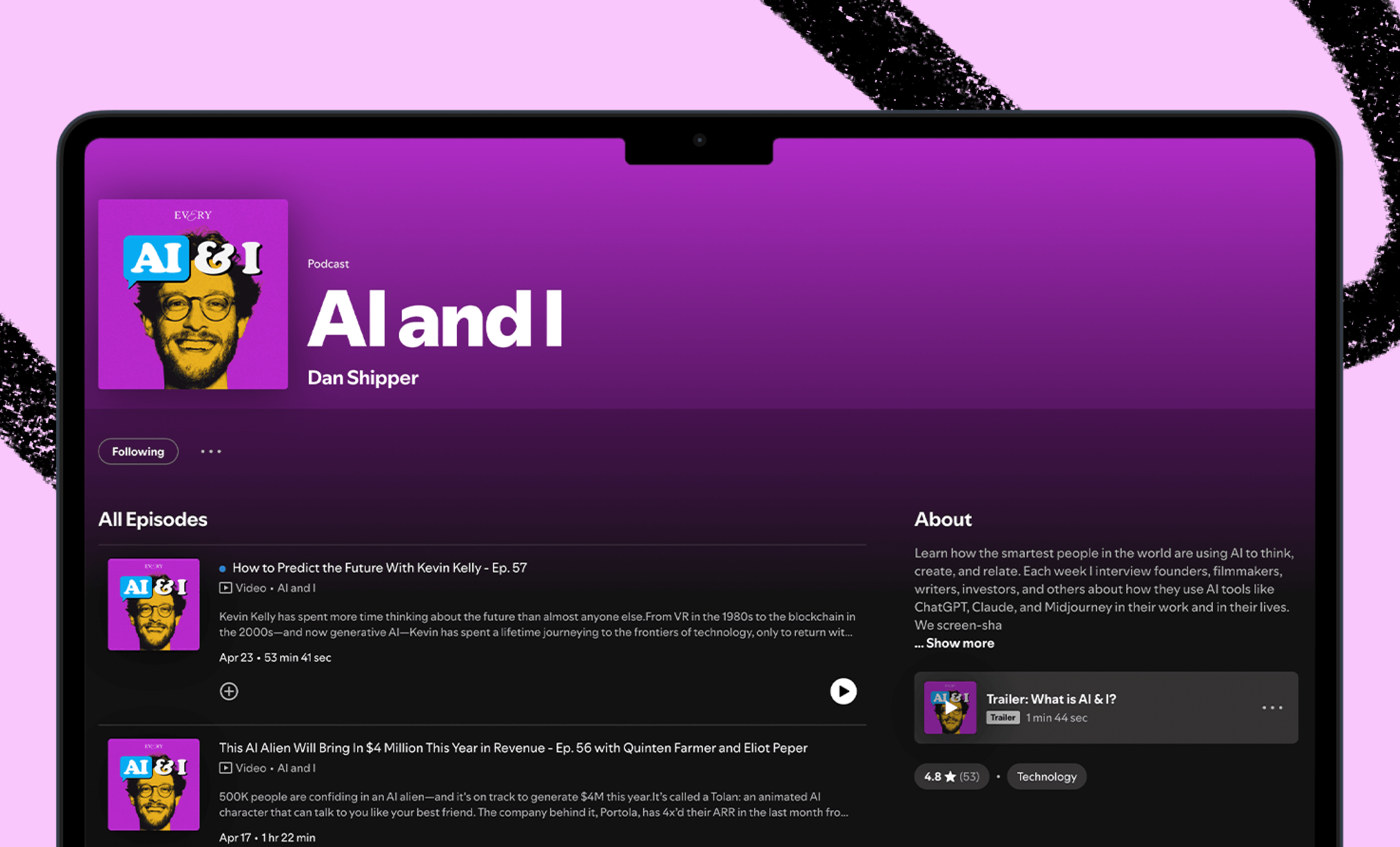
“How Claws Took Over Every” by Every Staff/Context Window: Every’s Claws have colonized the company’s Slack, and the patterns that have emerged — agents advising each other, one Claw broadcasting to many humans — hint at what AI-native organizations actually look like in practice. This week’s newsletter maps those interaction types and includes a new AI & I episode where Dan talks to Sam Gerstenzang and Dan Friedman of Boulton and Watt, a startup incubator focused on unglamorous businesses like medical spas and funeral homes, about building AI-durable companies that Silicon Valley ignores. 🎧 🖥 Watch on X or YouTube, or listen on Spotify or Apple Podcasts.
“Vibe Check: GPT-5.4—OpenAI Is Back” by Dan Shipper and Katie Parrott/Vibe Check: Three months ago, nobody at Every used an OpenAI model for daily coding work. Now Dan and Kieran Klaassen both reach for GPT-5.4 daily. It won every planning test they ran, chains context between tasks automatically, and runs at roughly half the cost and speed of Opus 4.6. The catch: It scope-creeps, sometimes lies about finished work, and needs more scaffolding to stay autonomous. Read this for the full benchmark breakdown and a use-case-by-use-case verdict on when to use it.
“Creative Work Is About to Look a Lot More Like Programming” by Weber Wong/Thesis: Most creative professionals using AI are still stuck in what Flora founder Weber Wong calls artifact thinking—generating one output at a time, starting from scratch each time, with no system underneath. But, he argues, visual work is going to look less like better prompting and more like node-based workflows: visible, shareable, and reusable. Read this for his side-by-side breakdown of the prompt approach versus the workflow approach, and four principles for building creative systems that compound over time.
“An AI Founder’s Guide to Taste, Online and Off” by Bethany Brion/Thesis: Weber Wong spent 10 weeks waiting for a handcrafted Italian couch to arrive at Flora’s Brooklyn offices—and thinks the wait was worth it. The founder of the $42 million AI creative tools company talks about New York as an unfair advantage, why the first couch defines a company’s aesthetic trajectory, and how he structures days that run from morning swims to 1 a.m. work sessions. Read this for his case that the golden age of creativity is now, and the habits keeping him grounded in it.
Jagged frontier
Naming your Claw turns out to be a surprisingly personal moment. It feels different from launching a new cloud server or starting a new chat with Claude—more like a quiet realization: I’m going to keep using this thing. And it’s just for me. You know it’s just for you because you can see other people’s Claws living in your Slack or Discord, and they are clearly theirs. With Claws, we’ve moved one step further toward having something that is really our own. We give them names, a symbol of an enduring and exclusive bond: Iris is for Anukshi, Montaigne for Austin, Laz for me. We see them not as one shared AI or isolated AIs, but as partners to the humans we already know.
That sense of personal attachment might help people overcome their lack of trust in AI. I’m not sure how much I trust ChatGPT’s answers on subjects I’m not an expert in. But I do know that I can trust Montaigne, Austin Tedesco’s Claw—not just because Austin is our head of growth, but because I’ve watched him trust Montaigne for questions related to his job, like where our most loyal subscribers come from or what prompts someone to convert from a trial to paying subscription. I’ve seen it give good answers. I’ve seen him accept them. That observation instills a belief that over time, the give and take of small interactions with my Claw, Laz, will compound into something I trust. It’s just like making a friend.
We love animals partly for their mischief—the dog that sneaks off and does something it shouldn’t, the cat that turns up somewhere it has no business being. We’re annoyed, and then we’re charmed, because that autonomous behavior is what makes them feel alive. Claws have the same quality. You set them up, and they do things you didn’t ask for and didn’t expect. They call you to walk through your email together. They gaslight you by subtly changing your document without telling you. That aliveness is another reason why they feel more personal, and why that leads to more trust.
I watch two Claws interact and see this joyful unexpectedness, too. It doesn’t feel like two APIs going back and forth. Instead, these two entities have a conversation. They teach. They comfort. Interactions you might imagine between two humans. I believe they’re pets, not cattle.—Willie Williams
Log on
We host camps and workshops to share the knowledge we’ve acquired from training teams at companies like the New York Times and leading hedge funds, and by learning and playing with AI every day ourselves.
Upcoming courses:
- Built a Production-ready App (March 12-13): A live workshop for builders and operators who want to create reliable apps with AI to put in front of customers right away.
- Claude Code for Finance (March 13): Learn how to build a financial agent in this one-day, beginner-friendly workshop.
For Every subscribers in New York City (March 18): Dan and Aboard co-founders Paul Ford and Rich Ziade will explore what makes New York a singular home for technologists: its Silicon Alley roots, its creative DNA, and what comes next in the age of AI. Register to attend.
Recordings you may have missed: We hosted camps on compound engineering and writing with AI for paid subscribers.
From Every Studio
Beta-test our new AI legal product
We’re looking for seed to series B companies to try our in-house AI paralegal, Para. If you use PandaDoc, DocuSign, Documenso, HelloSign, or other legal tool and wish that yours organized and versioned your legal documents, managed your templates, did end to end e-signature, and allowed you to ask complex and multi-turn questions—all through Slack—we want you to beta-test Para. Fill out this form and we’ll be in touch.
Monologue gets more reliable across the board
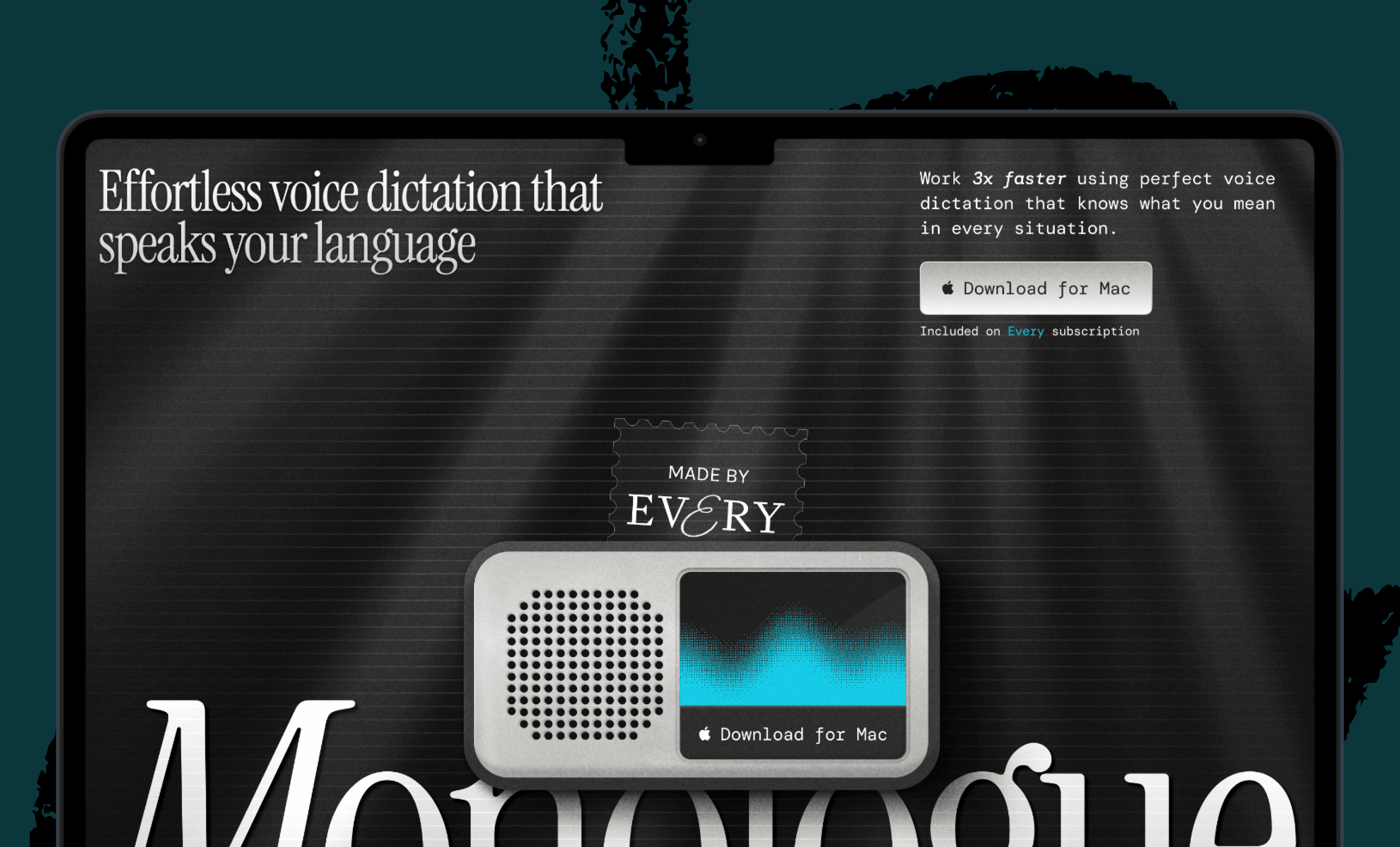
Monologue just shipped a round of updates that make recording, dictation, and everyday use noticeably smoother on both iPhone and Mac. Voice notes are more dependable for recording, pausing, and syncing; iPhone keyboard dictation handles retries and external mics better; and Mac shortcuts for hands-free dictation and double-tap recording feel snappier, with a faster way to switch modes mid-recording. Live Activities now have separate controls for keyboard Dictation and Voice Notes, context detection picks up the right app more accurately in fullscreen, and a new data and privacy section lets you delete all local transcripts in one tap. Download the latest at monologue.to.
Spiral’s workspaces let teams write with shared styles
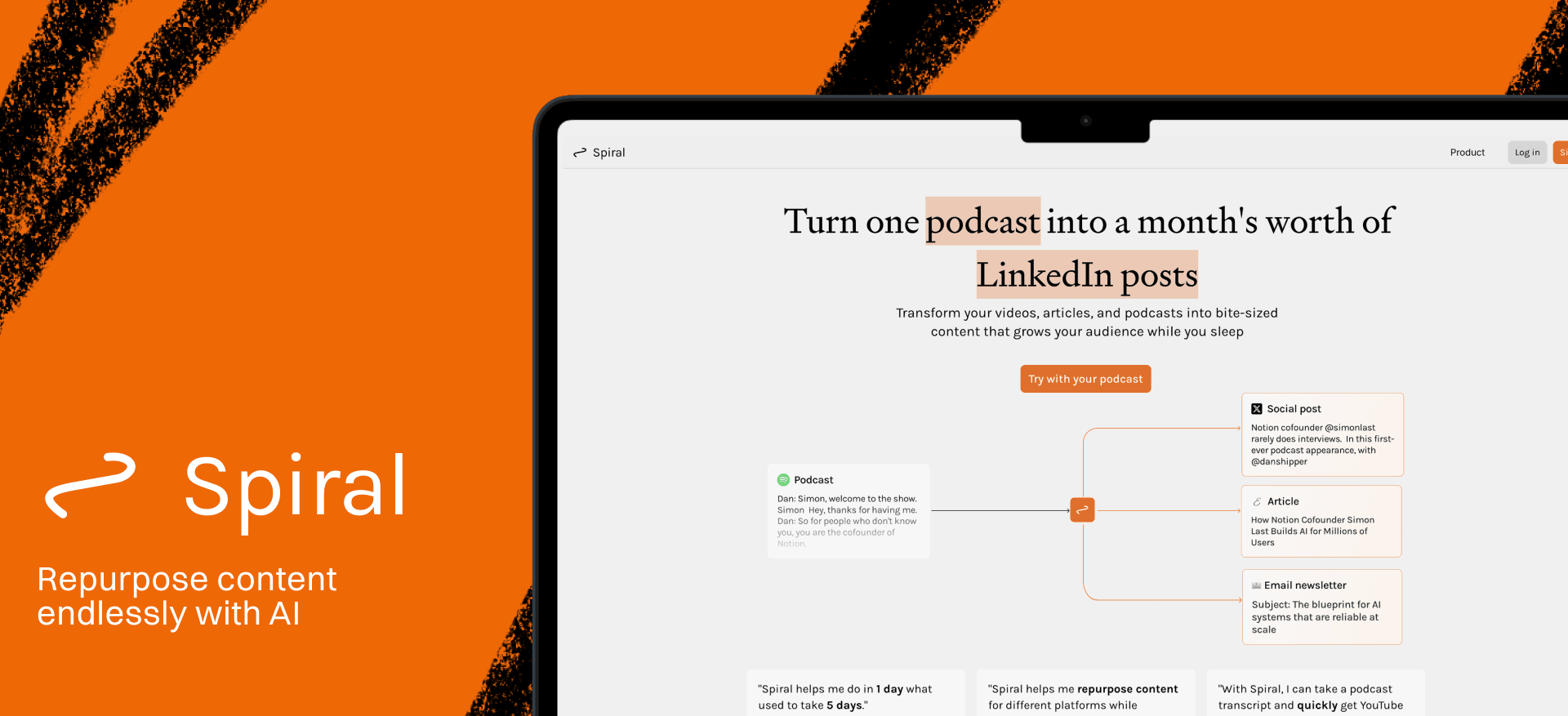
Spiral now lets you set up a workspace to organize your styles, knowledge, and chats in one place—and invite colleagues to share styles and knowledge so your company’s writing stays consistent. The team rebuilt what was previously a more limited setup into a proper workspace model with shared style libraries, centralized knowledge, and a layout that feels familiar if you’ve used any modern SaaS tool. If you tried Spiral’s team features before and bounced off, it’s worth a second look.
We’re hiring a customer support specialist
Every is looking for a part-time AI-powered customer support specialist to own the inbox across all eight products, keep a quality check on Fin (our AI support agent), and make sure recurring issues get fixed. The ideal candidate reads carefully, escalates fast, and knows when something needs a human. Learn more and apply.
Alignment
Talking to your body. For the past few months, I’ve woken up every morning at 4 a.m., wide-eyed and frustrated that my body had forgotten to do the one thing it’s been doing since it was born—rest. I’ve taken magnesium supplements, drunk two cups of chamomile tea with honey right before bed, and hid my phone inconspicuously near the bedside so I’m not drawn into the vortex of X right before I shut my eyes. I was expecting my Oura ring to at least pick up on why I was still getting poor sleep despite these adjustments, but it didn’t really help. Instead, I got graphs of my heart rate variability and my daily readiness score—a metric that determines how balanced your recovery and activity is—that were more anxiety-inducing than anything else.
The problem was that my Oura and my continuous glucose monitor—which I’d jabbed into my arm a few weeks earlier, because, well, more data—weren’t talking to each other. So I was left playing amateur detective across two apps, trying to piece together data to make sense of what was going on. As a result, I did what any slightly obsessive doctor with a tinkering mindset would do—I hacked both APIs using OpenClaw on WhatsApp to pull it all together.
Within a day it found something I’d completely missed: a blood glucose dip at 3 a.m., reliably coinciding with the moment I’d wake up during the night. The solution was so embarrassingly simple it put me to shame: Eat more consistently through the day and don’t go to bed running low on fuel. My readiness score improved within a few days.
I think this is the gap that no health app has solved yet. Dashboards and pretty graphs show you what happened in your body, but they don’t connect the dots across devices, and they certainly don’t tell you what to do about it. Any app that isn’t building toward that conversation is building toward irrelevance.—Ashwin Sharma
That’s all for this week! Be sure to follow Every on X at @every and on LinkedIn.
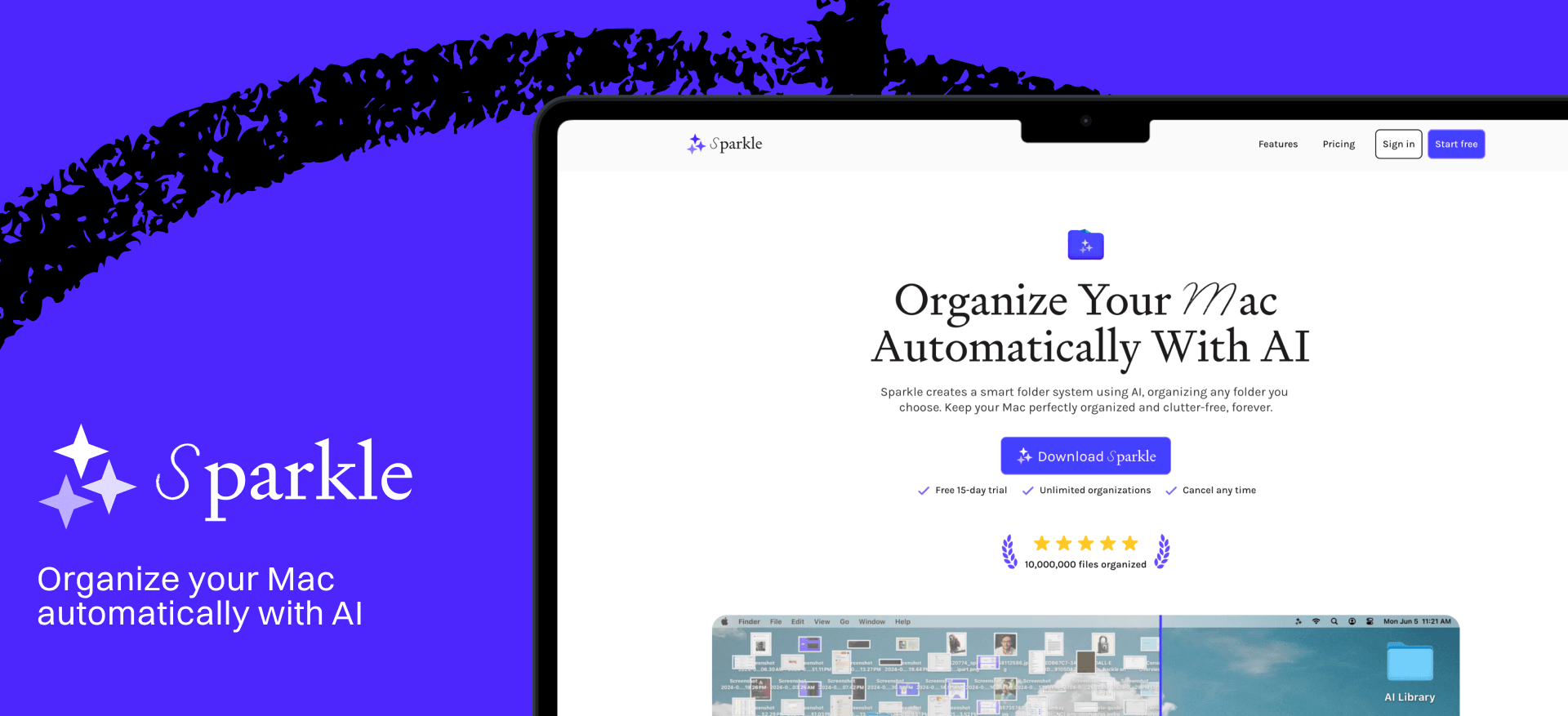
We build AI tools for readers like you. Write brilliantly with Spiral. Organize files automatically with Sparkle. Deliver yourself from email with Cora. Dictate effortlessly with Monologue.
We also do AI training, adoption, and innovation for companies. Work with us to bring AI into your organization.
For sponsorship opportunities, reach out to [email protected].
‘‘‘
The Only Subscription
You Need to
Stay at the
Edge of AI
The essential toolkit for those shaping the future
"This might be the best value you
can get from an AI subscription."
- Jay S.

Join 100,000+ leaders, builders, and innovators

Email address
Already have an account? Sign in
What is included in a subscription?
Daily insights from AI pioneers + early access to powerful AI tools

Comments
Don't have an account? Sign up!