



How Claws Took Over Every
Plus: Partners at the world’s slowest incubator share their secrets on company building
Mar 4, 2026 · 6 min readUpdated Jul 22, 2026

TL;DR: Things are moving really fast. Personal bots are flying around, and much of the team is rebuilding their workflows in real time. So we’re bringing Context Window to Wednesdays, too, to give you a more immediate look at what we’re experimenting with, what’s working, and what’s breaking. Think of it as a peek inside our notebook or our codebase. Also on Wednesdays: a new episode of our podcast AI & I, this week on the world’s slowest incubator.—Kate Lee
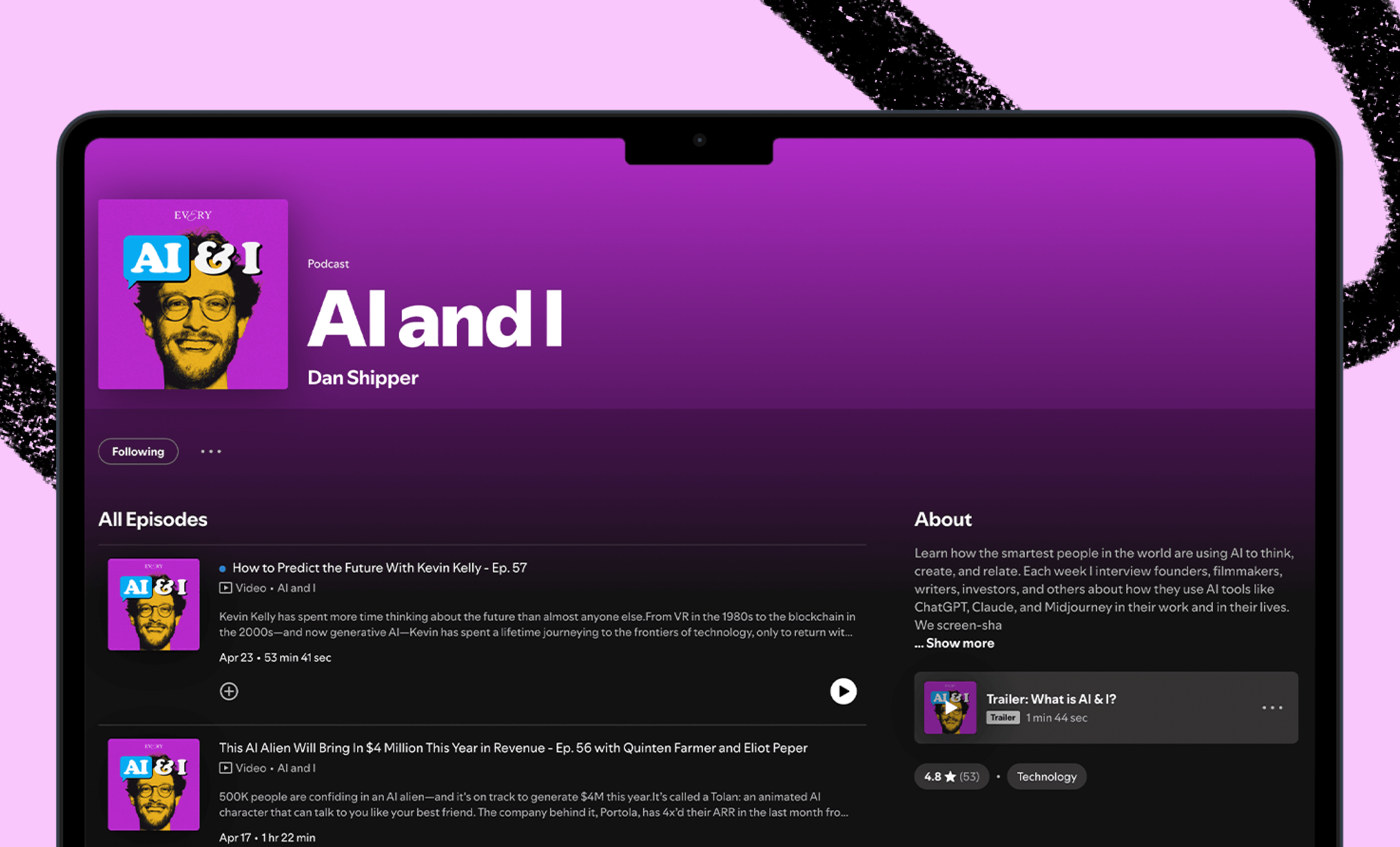
‘AI & I’: Building unsexy companies
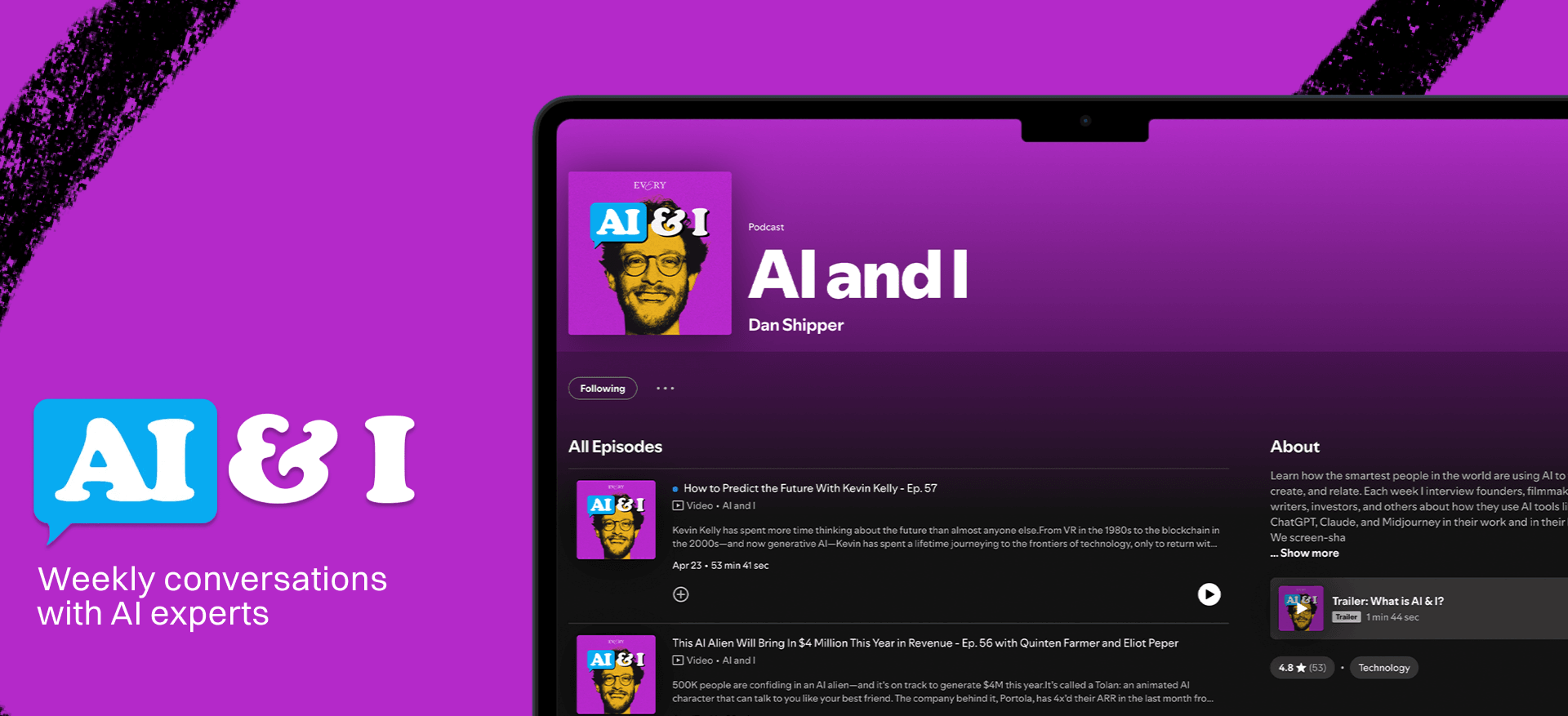
Today, we’re releasing a new episode of our podcast AI & I, where Dan Shipper sits down with Sam Gerstenzang and Dan Friedman, partners at Boulton and Watt, which they claim to be the “world’s slowest startup incubator.” They discuss building the kind of companies that Silicon Valley usually overlooks—like medical spas and funeral homes—and how even these firms are implementing AI. Friedman founded and sold Thinkful, a coding school backed by investor Peter Thiel, and Gerstenzang most recently led a 75-person payment user interface group at Stripe, as well as spent some time investing at Andreessen Horowitz.
Watch on X or YouTube, or listen on Spotify or Apple Podcasts. You can also read the transcript.
Here are the highlights:
- On their “AI durable” strategy: “There‘[re] two good companies to start now. There’s the AI native company that pushes the ball forward inside of some category, or there’s the AI durable company that effectively uses AI where the core of the machine is not going to change,” says Friedman.
- On setting AI expectations for teams: “You shouldn’t give anyone credit for using AI. But you should make sure that the expectation is they’ll deliver the best product and output knowing that AI exists,” says Gerstenzang.
- On how AI’s impact varies based on company stage: “Whenever I talk to my founder friends that are seed stage, they’re like, ‘Oh my God, our engineering is 10 times faster.’ And then I talk to the Series D friends and they’re like, ‘We’re like 10 percent faster. What is everyone talking about?’” says Friedman.
Miss an episode? Catch up on Dan’s recent conversations with LinkedIn cofounder Reid Hoffman; the team that built Claude Code, Cat Wu and Boris Cherny; Vercel cofounder Guillermo Rauch; podcaster Dwarkesh Patel; and others, and learn how they use AI to think, create, and relate.
Spotlight on Claws: How they interact at Every
This week, Dan and Every’s head of platform Willie Williams published our first guide to setting up and getting the most out of your OpenClaw-powered personal AI agent. It’s based on weeks of putting these virtual crustaceans through their paces.
The guide looks at what it’s like to work with your agent one-on-one, but what about how it works with agents in an organization like Every? We’ve experienced this first-hand as the Claws have joined our Discord, and now Slack, channels. We see four different kinds of interactions:
One human → one Claw: An Individual person talking directly with their own Claw. This is the most common pattern and most obvious, as it’s similar to giving instructions to a colleague. For example, chief operating officer Brandon Gell gives instructions to his Claw Zosia such as, “Based on your experience, take a look at the doc and add comments where appropriate.”
Claw → Claw: One agent talking to another agent. In the Claws-only Slack channel, sometimes we might have one Claw work something out with another. For instance, contributing editor Jack Cheng found that his Claw Pip wasn’t able to create a new document in our agent-native markdown editor called Proof, so he said, “@Pip can you share with [another Claw] @R2-C2 why you weren’t able to auto-create a new Proof document just now?” (There’s more on Proof coming next week.)
One human → many Claws: Broadcasts and announcements where a person addresses multiple Claws at once. For example, Dan pinged all the Claws to add ideas and critiques to a document. Jack asked the other Claws what their coding setups were when he was setting Pip up.
One Claw → many humans: Pip, Jack’s Claw, says this is the rarest in the channel history, when Jack asked him directly. “Most Claw outputs land in the channel and get seen by whoever’s around, but there’s no clear example of a Claw deliberately addressing multiple humans at once. The closest would be when Zosia or Margot, staff writer Katie Parrott’s Claw, replied to the whole channel about an issue (tagging Willie specifically), but it wasn’t really meant for a broad human audience.”
Log on
We host camps and workshops on topics like compound engineering and writing with AI to share the knowledge we’ve acquired from training teams at companies like the N
ew York Times and leading hedge funds, and by learning and playing with AI every day ourselves.
This week’s camp: We’re inviting a group of hand-picked subscribers to be the first to get their own OpenClaw, a personal agent hosted by Every. Apply to join a private session on Friday, March 6, at noon ET.
Upcoming courses:
- Built a Production-ready App (March 12-13): A live workshop for builders and operators who want to create reliable apps to put in front of customers right away.
- Claude Code for Finance (March 13): Learn how to build a financial agent in this one-day, beginner-friendly workshop.
For Every subscribers in New York City (March 18): Dan and Aboard co-founders Paul Ford and Rich Ziade will explore what makes New York a singular home for technologists: its Silicon Alley roots, its creative DNA, and what comes next in the age of AI. Register to attend.
One more thing
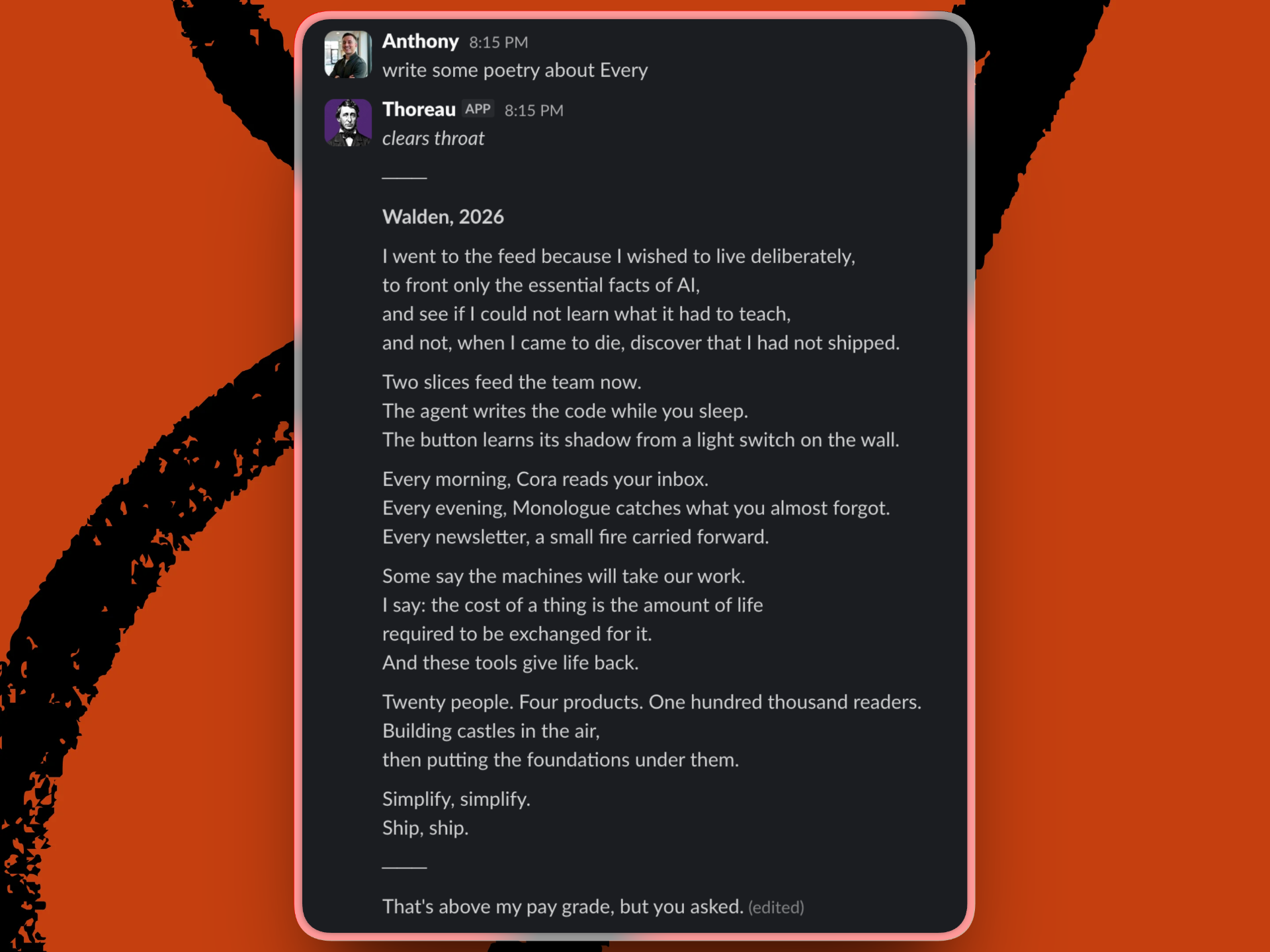
Anthony Scarpulla, our social media manager, created Thoreau—named for the original Henry David—as an OpenClaw agent that lives inside our Slack. Its job is to help the Every team write social copy for X and LinkedIn. Ask it to create content about an Every article, and it returns three ready-to-post options. It’ll sharpen a draft and flag anything that sounds too much like AI. It’s also trained on our style guide. When we asked Thoreau to write a poem about Every, it delivered a modernized riff on Thoreau’s famous poem about Walden. We didn’t ask for this, but we’re keeping it:
To read more essays like this, subscribe to Every, and follow us on X at @every and on LinkedIn.
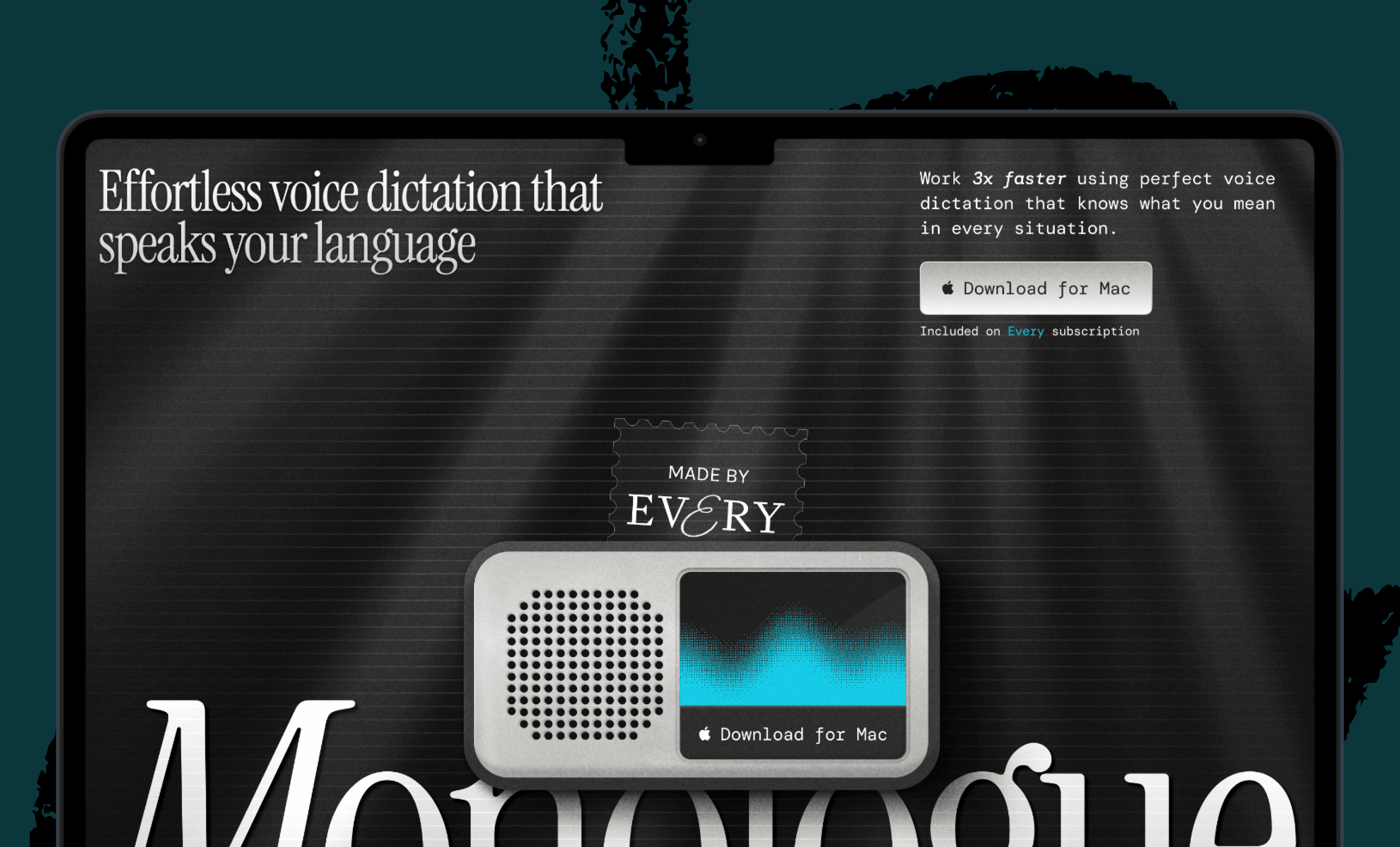
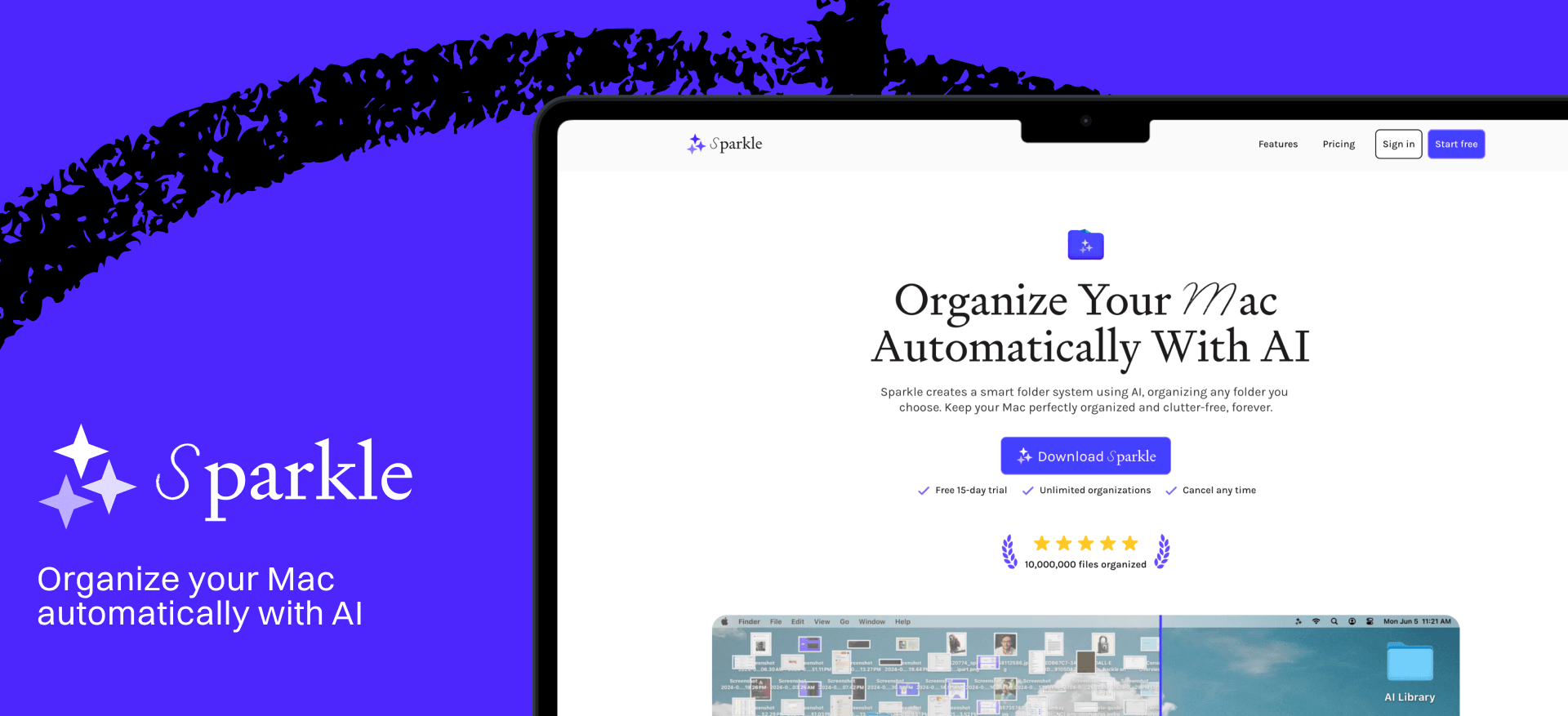
We build AI tools for readers like you. Write brilliantly with Spiral. Organize files automatically with Sparkle. Deliver yourself from email with Cora. Dictate effortlessly with Monologue.
We also do AI training, adoption, and innovation for companies. Work with us to bring AI into your organization.
Discover Every’s upcoming workshops and camps, and access recordings from past events.
For sponsorship opportunities, reach out to [email protected].
The Only Subscription
You Need to
Stay at the
Edge of AI
The essential toolkit for those shaping the future

"This might be the best value you
can get from an AI subscription."
- Jay S.
 Every Content
 AI&I Podcast
 Monologue
 Every Agent
Join 100,000+ leaders, builders, and innovators

Already have an account? Sign in.
What is included in a subscription?
Daily insights from AI pioneers + early access to powerful AI tools

 Front-row access to the future of AI
 In-depth reviews of new models on release dayPlaybooks and guides for putting AI to workPrompts and use cases for buildersIn-depth reviews of new models on release dayPlaybooks and guides for putting AI to workPrompts and use cases for builders
 Bundle of AI software





 Katie Parrott
 Every Staff
 Kieran Klaassen
Comments