

Midjourney/Every illustration.

The Model Got Stranger

Plus: Using NotebookLM to run the Pyramid Principle in reverse

Like 5 Comments

Hello, and happy Sunday! Was this newsletter forwarded to you? Sign up to get it in your inbox.


Knowledge base

“Vibe Check: Opus 4.7 Stopped Reading Between the Lines” by Katie Parrott/Vibe Check: Opus 4.7 is the best coding model Every has tested on well-specified tasks—Kieran Klaassen called his Rubber Duck benchmark run “best model ever”—but it won’t infer what you want the way 4.6 did, and the prompts you’ve tuned for the last two months will likely disappoint you at first. The gap between a tight brief and a loose one is wider than in any prior Opus. Read this for the full breakdown of where to switch to 4.7 now and where to stay on 4.6.

“The Folder Is the Agent” by Kieran Klaassen/Source Code: After three months trying to make AI agent swarms work in his coding flow, Kieran Klaassen realized that what was doing the work was a folder. A project directory with a CLAUDE.md, accumulated context, and specialized sub-agents is all you need to turn a general model into a domain expert. He’s now running 44 of them, connected by a Ruby dispatch layer that routes work while he sleeps. Read this to learn how to build the dispatch layer yourself.

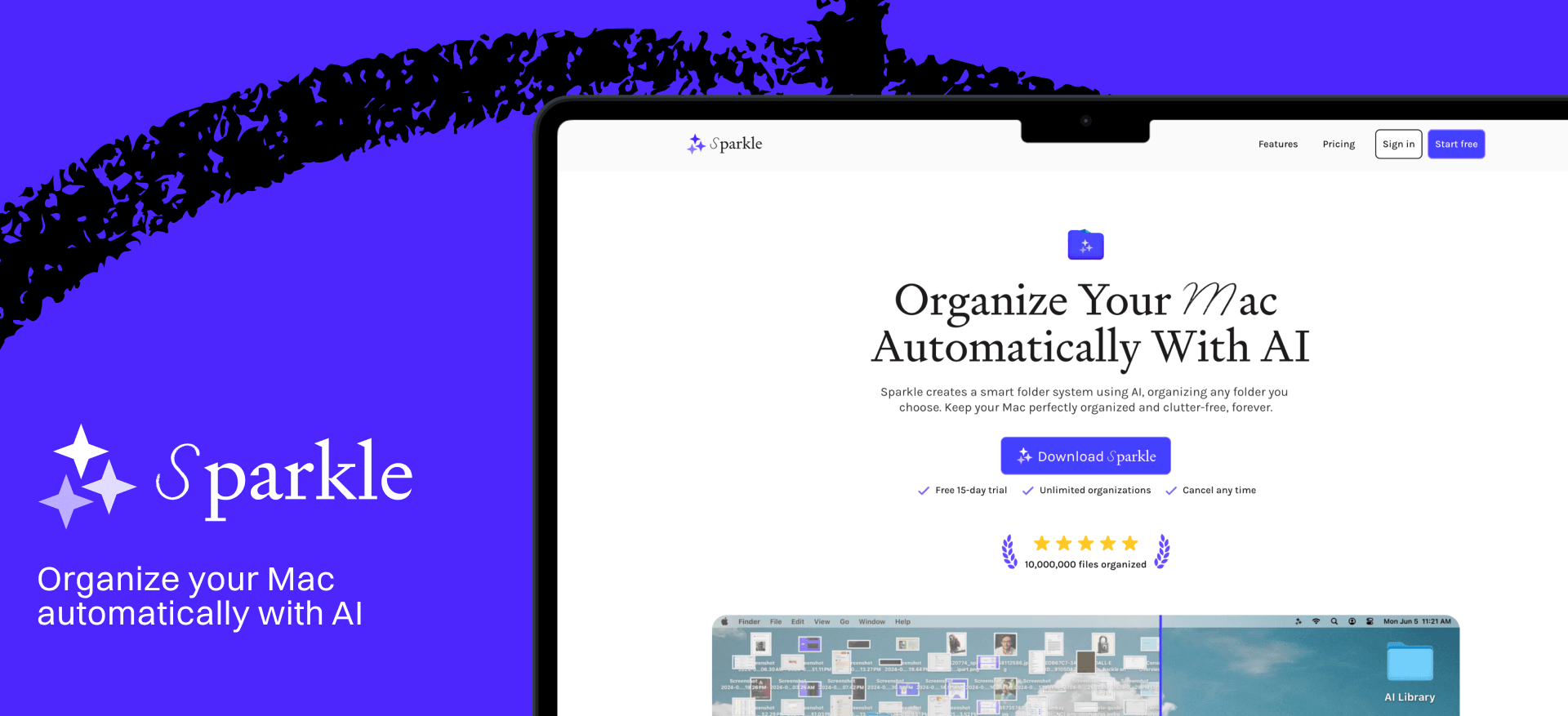
“(Re(Re))Introducing Sparkle: Marie Kondo Your Mac” by Yash Poojary/On Every: Yash Poojary rebuilt Sparkle to purge the 80% percent of files on the average Mac that are screenshots, installer packages, and duplicates you’ll never open again before it organizes. The new version runs a cleanup pass first, then proposes a custom folder structure you can reshape through chat until it matches you like to work. Download the app and try it yourself.

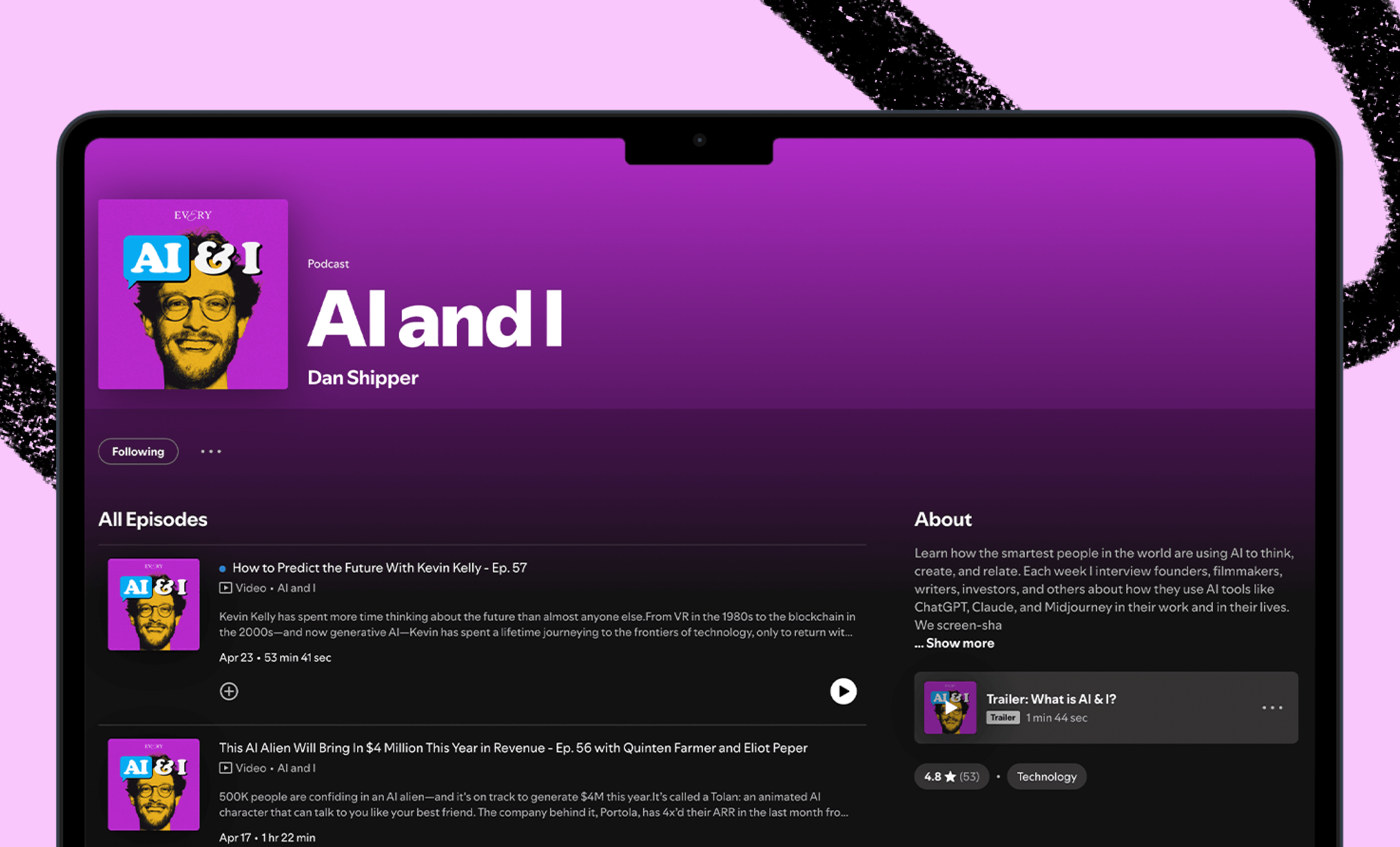
🎧 🖥 “Mini-Vibe Check: Claude Managed Agents Handle the Infrastructure Work” by Laura Entis/Context Window: Dan Shipper sits down with Eve Bodnia, founder and CEO of Logical Intelligence, who argues that LLMs have a ceiling—and that energy-based models, which scan the full landscape of possible answers rather than predicting one token at a time, are what comes next. Plus: A Mini-Vibe Check on Anthropic’s Claude Managed Agents; Willie Williams proposes new vocabulary for the AI age. 🎧 🖥 Listen on Spotify or Apple Podcasts, or watch on X or YouTube.

“You’re the Manager Now” by Laura Entis/Context Window: The Claude Code desktop app gets a redesign built for managing parallel agent work—and Kieran Klaassen was already living in it. Plus: Dan Shipper explains why you should ignore the viral claim that smaller models can match Anthropic’s Mythos, Austin Tedesco shares the one question he asks Claude Code before shipping anything, and Eleanor Warnock on why the Dia browser’s bet on beauty might be the right one.

“Living Software” by Jack Cheng: AI-accelerated development has made software feel zombieish—tools that shouldn’t be alive suddenly sprouting chat boxes and AI sidebars. Jack Cheng proposes a distinction: “tool-like software,” which users expect to be stable, versus “living software,” which users expect to adapt and grow. The two categories carry different expectations, and confusing them causes disorientation. Read this for his practical advice on how builders of both should design, ship, and communicate with their users.


Log on

We host camps and workshops on topics like compound engineering and writing with AI to share the knowledge we’ve acquired from training teams at companies like the New York Times and leading hedge funds, and by learning and playing with AI every day ourselves.

Upcoming camp
Last week’s camp

Recordings you may have missed


From Every Studio

Spiral’s new onboarding quadruples style creation

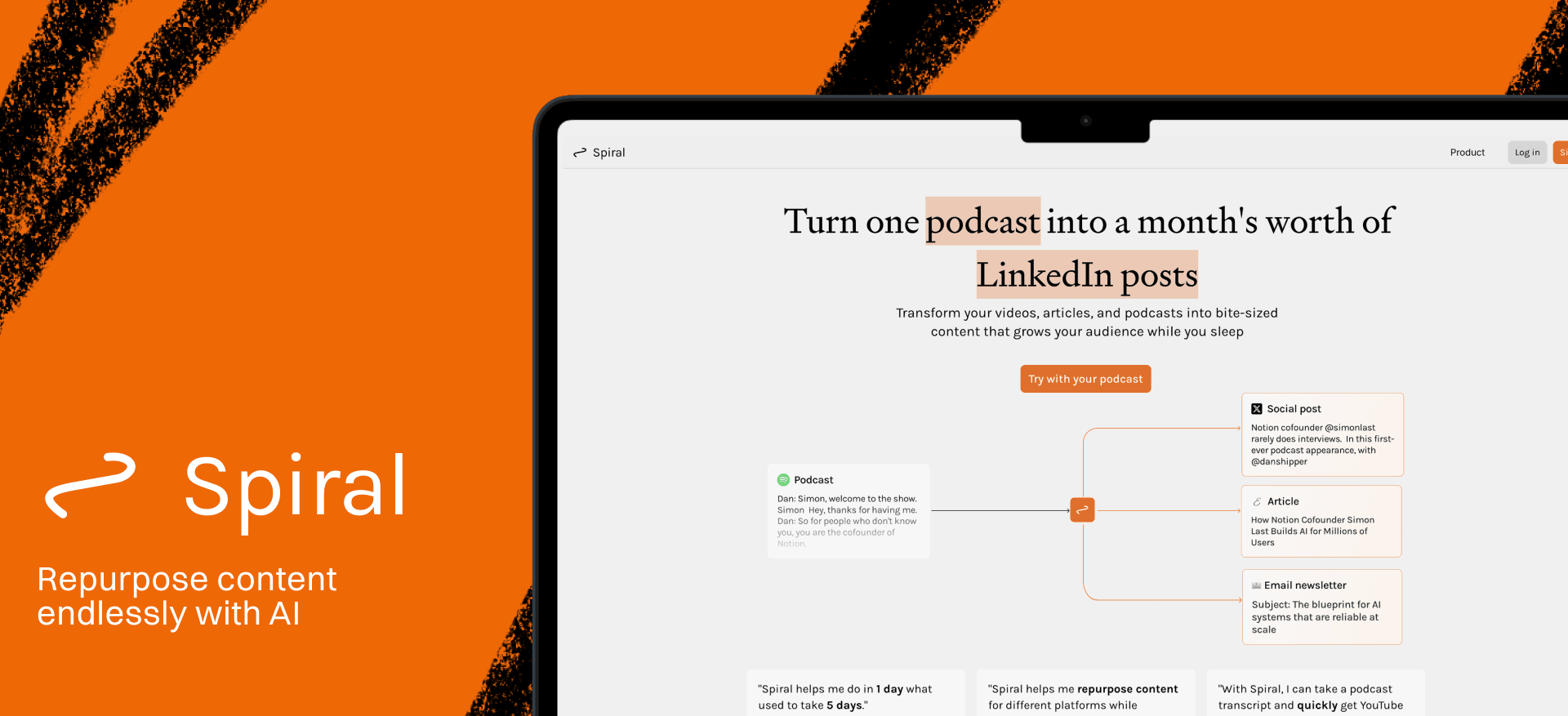
Getting started with Spiral just got a lot faster. Marcus Moretti, general manager of Spiral, rebuilt the onboarding flow from the ground up. Now, instead of clicking through six explainer screens, you drop in writing samples from your X account, a website, uploaded files, or pasted text, and Spiral generates a style guide tuned to how you write. The result: About 80 percent of new users leave onboarding with a personalized style, up from roughly 20 percent before. The sooner Spiral knows your voice, the sooner it’s useful—and the new flow gets you there in minutes.

New Spiral users: Start creating your styles at writewithspiral.com. Existing Spiral users: Try the new onboarding experience at app.writewithspiral.com/onboarding.


Alignment

How NotebookLM rewired the way I problem-solve. I am moderately dyslexic. It’s an awkward thing to be if you write for a living, because the job is essentially the piecing together of textual information into a shape other people can follow. The difficulty, for me, is not reading the words, but holding the information they contain in relation to one another.

For most of my career I have used a mind map—a messy visualization of ideas—to help me wade through the facts and opinions of dense textbooks and research papers. The diagrams worked inasmuch that they allowed me to organize information in my head, but any problem bigger than a single sheet of A4 paper was effectively closed to me until I could block out an afternoon to draw it.

NotebookLM, Google’s AI research assistant, has removed that barrier by letting me hold more in my head at once. Here’s an example: I’ve been stuck on one question for three weeks. Patients on chronic disease therapies like GLP-1s drop off at a staggeringly high rate. Roughly half are no longer on the drug 12 months after they start, because of both side effects like nausea, and the cost.

For a direct-to-consumer telehealth operator distributing the drug at scale, the analytically difficult thing is that none of the available research separates the two cleanly, and the solution to the problem of churn sits somewhere inside that mess. This is less a medical question than a management consulting one, and it’s the kind of problem where I used to feel the particular flavor of panic that comes from having a lot of data and no thesis.

Instead, I’ve been running Barbara Minto’s Pyramid Principle in reverse inside NotebookLM. Minto was the first woman McKinsey ever hired out of Harvard Business School, and she was sent to London in the 1960s to figure out why the firm’s consultants wrote such terrible memos. Her book The Pyramid Principle, which came out of that work, is the closest thing consulting has to a scripture. At the top of the pyramid sits your answer, the governing thought. Underneath it sit groups of supporting points, each of which answers a why question or a how question about the layer above.

Minto is taught, almost universally, as a top-down tool. You know your answer, so you arrange your evidence beneath it. But what happens when you don’t have an answer? You run the pyramid backwards: Dump every random fact onto the page, group them inductively by what they seem to be about, write a summary for each group, and let those summaries push their way up to an answer you didn’t have when you started.

On paper, I could do it with five random facts. I could not do it with 50, which is what the GLP-1 churn question looks like once you have pulled in all the sources of information, business and medical included. Now I drop all of that information into a single notebook and group every passage that touches patient drop-off by those that are about the drug and about the delivery model, and give me one-sentence summaries of each group. What the sheet of A4 used to hold, the notebook now holds, and I can interrogate it from inside.

The useful thing I did not expect is how much of the work happens in the asking. Because NotebookLM will only answer from the sources I have loaded into it, the quality of my questions is the only variable that matters. Half of the process is me figuring out what I want to know and why, and at which level of the pyramid. The other half is the model doing the clerical labor of pulling the summaries together so I can read them. In the old mind-map version, I spent most of my afternoon drawing. The tool has removed the labor between me and the thinking, which—for a dyslexic writer—is most of the labor there was.—Ashwin Sharma


That’s all for this week! Be sure to follow Every on X at @every and on LinkedIn.

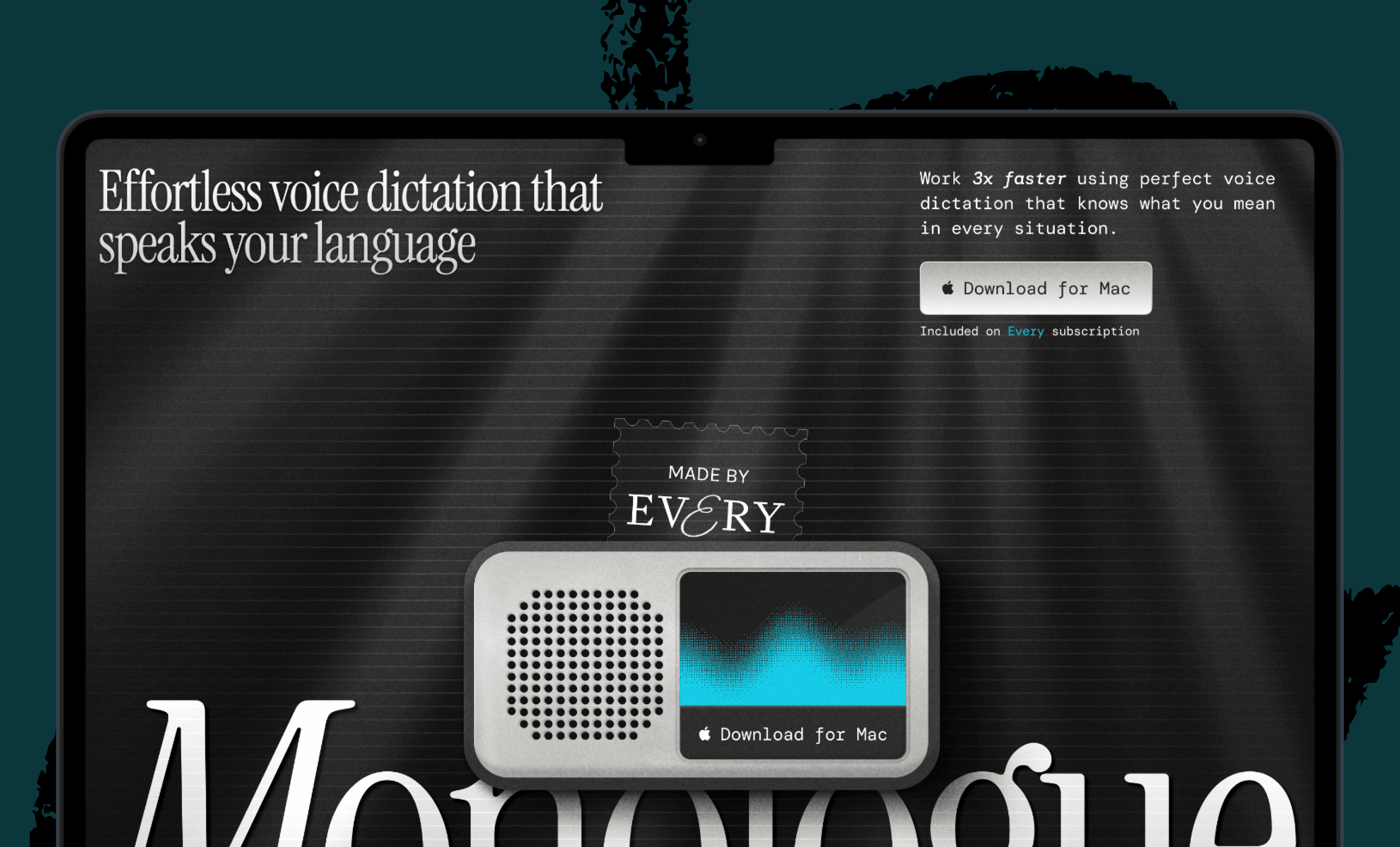
We build AI tools for readers like you. Write brilliantly with Spiral. Organize files automatically with Sparkle. Deliver yourself from email with Cora. Dictate effortlessly with Monologue. Work on documents with AI agents using Proof.

For sponsorship opportunities, reach out to [email protected].

The Only Subscription
You Need to Stay at the
Edge of AI

The essential toolkit for those shaping the future

"This might be the best value you
can get from an AI subscription."

- Jay S.

Mail Every Content
AI&I Podcast AI&I Podcast
Monologue Monologue
Cora Cora
Sparkle Sparkle
Spiral Spiral

Join 100,000+ leaders, builders, and innovators

Community members

Already have an account? Sign in

What is included in a subscription?

Daily insights from AI pioneers + early access to powerful AI tools
Pencil Front-row access to the future of AI
Check In-depth reviews of new models on release day
Check Playbooks and guides for putting AI to work
Check Prompts and use cases for builders

Comments

You need to login before you can comment.
Don't have an account? Sign up!

We use analytics and advertising tools by default. You can update this anytime.