


The AI Model Flood
Plus: Meet your new AI alien best friend
Apr 18, 2025 · 5 min readUpdated Jul 27, 2026

Hello, and happy Sunday! This week was chock-full of new model releases from the major AI labs. Not only did OpenAI have three new ones—o3, GPT-4.1, o4-mini—but Anthropic released its research tool. As such, we published not one but two Vibe Checks because, yes, the vibes were good. If you’re searching for your next AI tool and confused by a bevy of models with similar names, let us decipher them for you.—Kate Lee
Was this newsletter forwarded to you? Sign up to get it in your inbox.
Knowledge base
"Vibe Check: o3 Is Here—And It’s Great" by Dan Shipper/Chain of Thought: Remember those crime shows where someone yells "ENHANCE!" at a computer and it reveals crucial details in a blurry image? Dan Shipper took o3—OpenAI's new, truly agentic reasoning model—for a test drive and found that not only can it do such sci-fi magic, it can also analyze meeting transcripts to point out when he's avoiding conflict and create personalized ML courses that ping him daily. Read this if you want to understand why o3 represents the biggest "wow" moment since GPT-4 and how to use it to its fullest potential.
“Vibe Check: OpenAI’s o3, GPT-4.1, and o4-mini” by Vivian Meng and Katie Parrott/Context Window: OpenAI just dropped three new models faster than we can learn their naming conventions. The Every team spent days testing each one to figure out which is worth your time. The difference between choosing the right or wrong model could be that between solving a Sudoku puzzle in seconds or burning through your token budget with nothing to show for it.
"A Science-based Guide to Thinking Creatively—With LLMs" by Rhea Purohit/Learning Curve: Creativity isn't some mystical force—it's a system you can hack, especially with the help of AI. Rhea Purohit introduces cognitive scientist Margaret Boden's framework, which breaks creativity into three trainable types. Read this if you want practical ways to use LLMs to shorten feedback loops, push past obvious ideas, and articulate your taste more precisely.
"AI Phobia Is Just Fear That ‘Easier’ Equals ‘Cheating’" by Katie Parrott/Working Overtime: Is using AI for professional work an easy way out? That’s the theory behind some zero-AI policies, but the aversion to AI is really a centuries-old cultural hangover from the Puritans that equates suffering with virtue and visible effort with value. Read this if you want to understand why we're so uncomfortable with tools that make work easier, and how AI might finally free us from the tyranny of performative productivity.
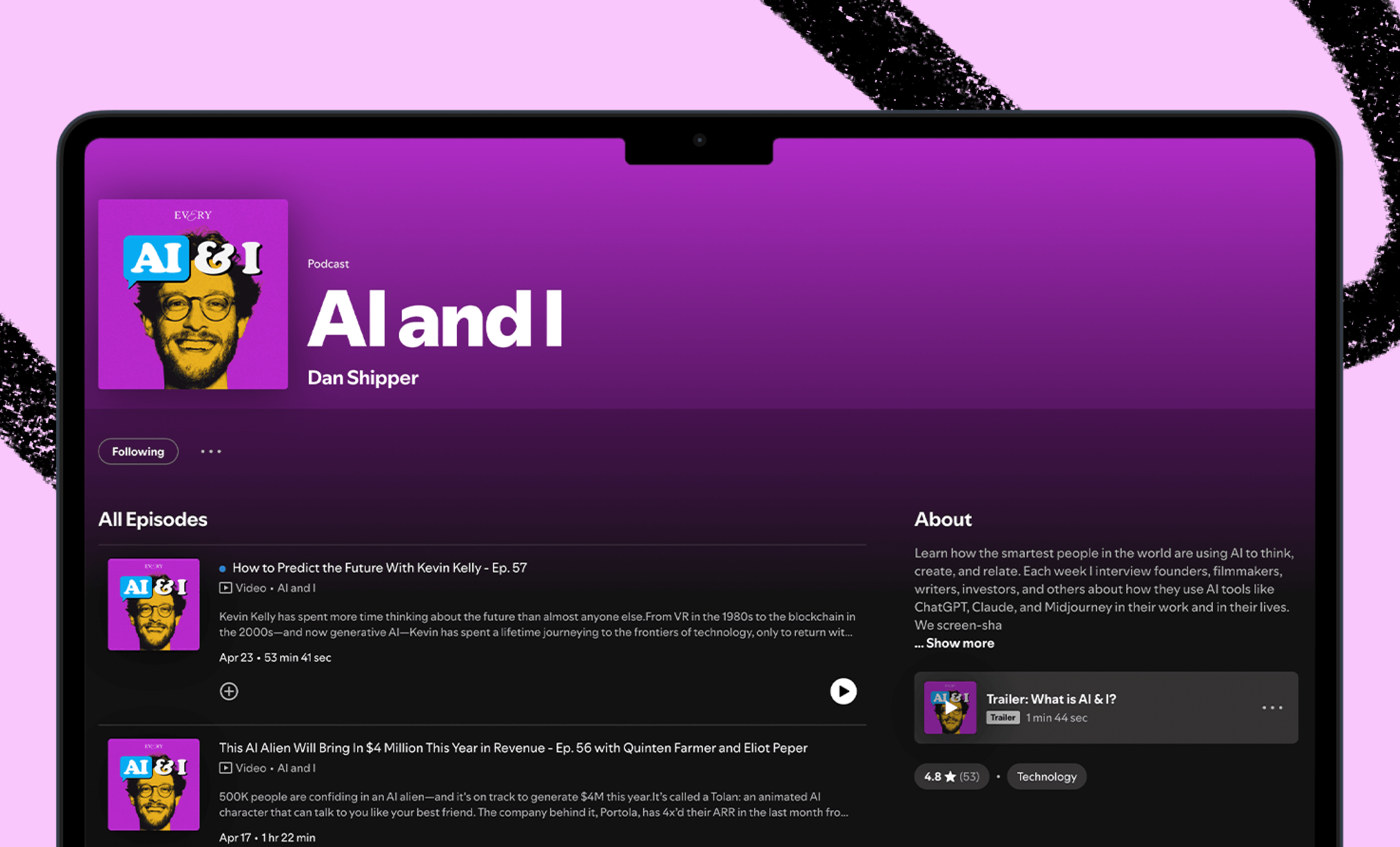
🎧🖥 "This AI Alien Will Bring In $4 Million This Year in Revenue" by Rhea Purohit/AI & I: Imagine having a cute alien best friend living in your phone. That's what 500,000 Americans are experiencing with Tolans, AI companions that took Portola to $4 million in annualized revenue in just four weeks. Dan sits down with Portola CEO Quinten Farmer (who previously sold a company for $300 million) and head of story Eliot Peper (a bestselling sci-fi novelist) to uncover how they're building AI companions people actually connect with. Read this if you want to understand how they taught AI to improvise like a great actor. Watch on X, YouTube, or listen on Spotify or Apple Podcasts.
From Every Studio
See it, feel it, believe it: How we’re thinking about visual storytelling
Rather than just telling users how a product works, we strive to help you feel what it’s like to use it. At our Studio show and tell (our internal ritual where Every’s builders share what we’re working on) this week, we talked about how we want to design interactions in our products that will be shareable moments, the kind that make you want to turn to your friend/mom/dog and say, “Hey, look at this—that’s so cool!”
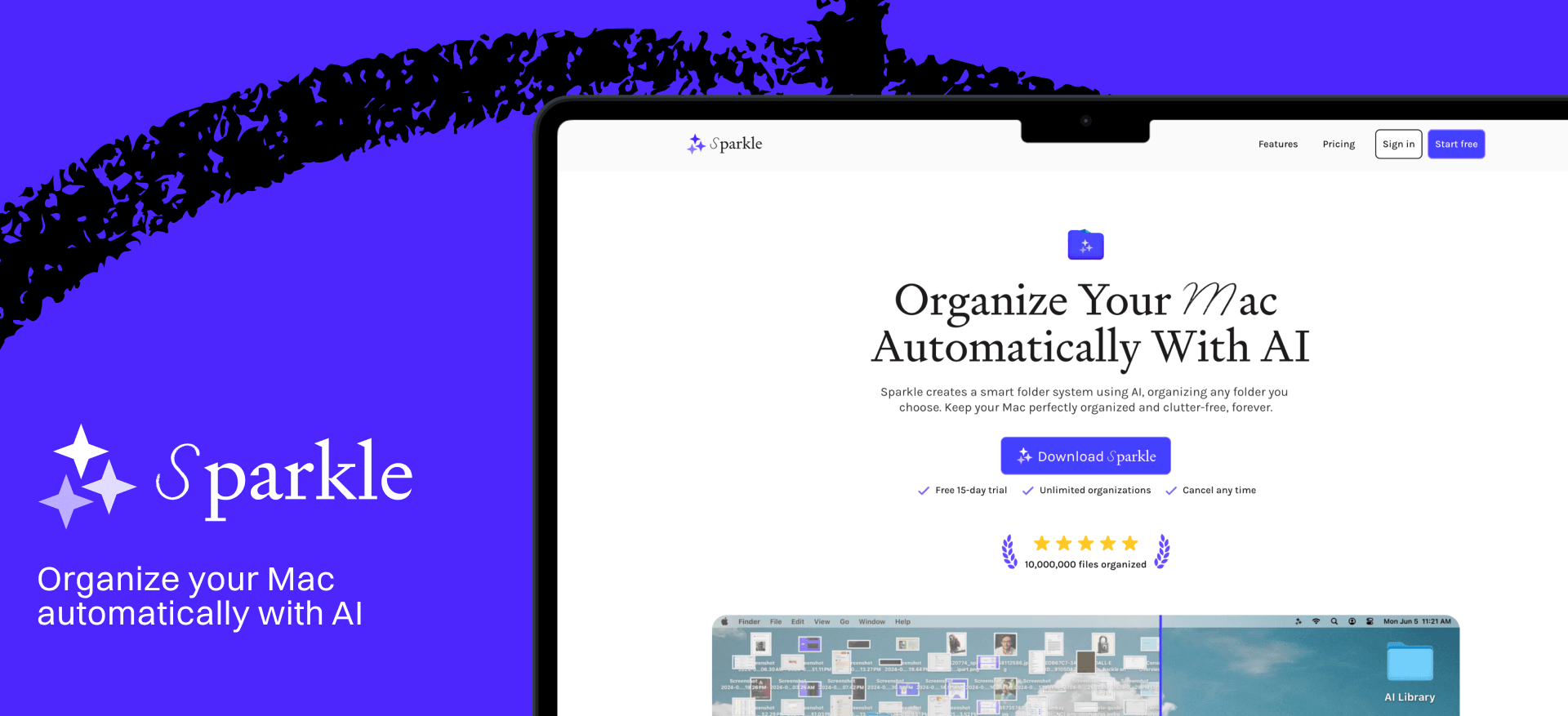
Take Sparkle. You might already know that it’s an Every product that tidies up your digital workspace. But how do we make that relief at seeing your desktop cleaned up visceral from the start? We show you—from the second you open the app.
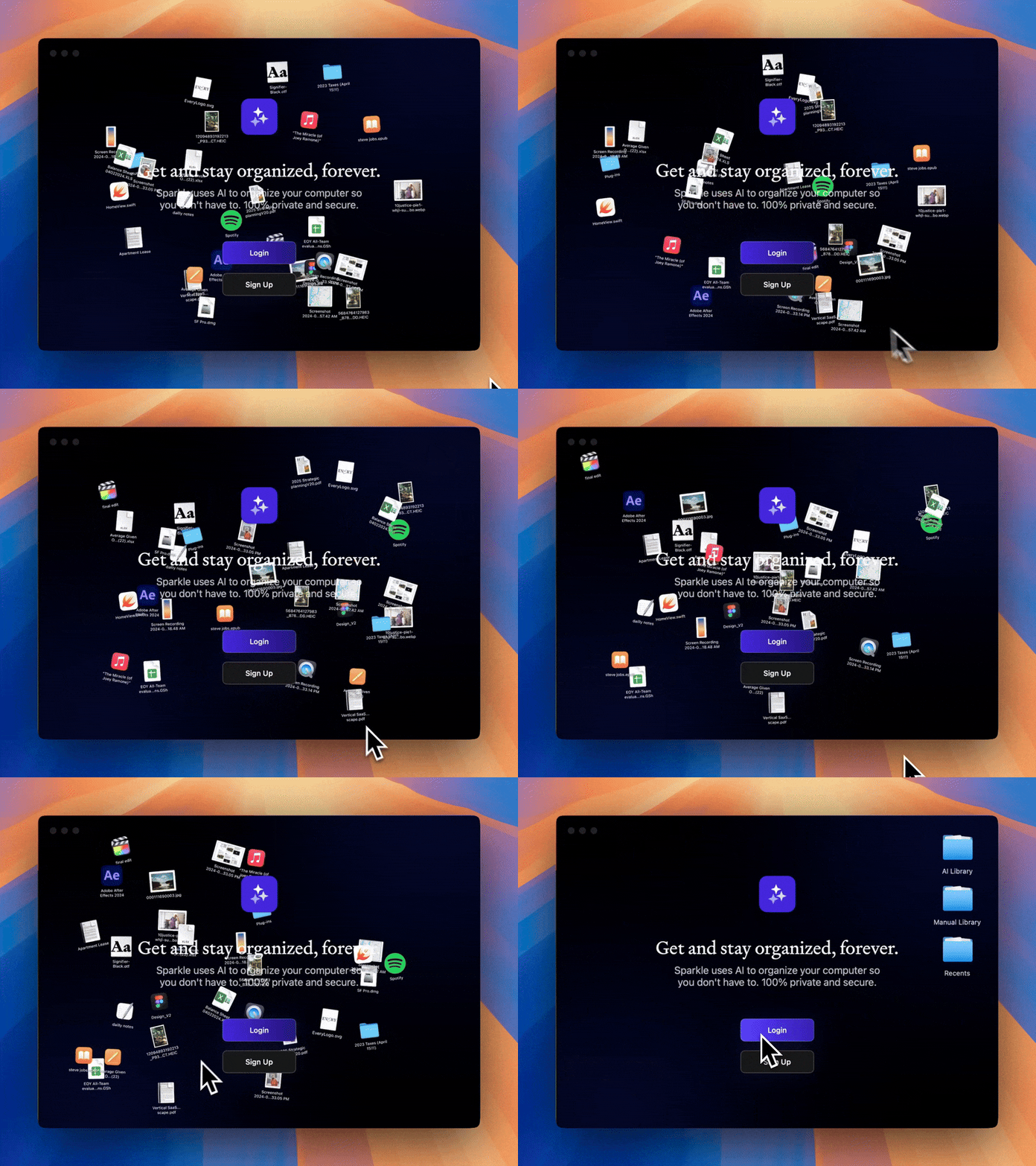
Source: Sparkle/Yash Poojary.
The same goes for Cora, our inbox management tool. On the landing page, you’ll journey from a stormy abyss into a sunny park. It’s not just a metaphor—we’re showing you what your inbox could feel like.
Source: Cora/Vivian Meng.
Want to know more about how we designed Cora’s landing page? Watch our creative lead Lucas Crespo take you behind the scenes on his thinking for not only Cora, but Every’s visual brand as a whole.—Vivian Meng
Alignment
Language is physics. For 40 years, scientists have been documenting dolphin gossip. cataloging every whistle, click, and underwater drama between Atlantic spotted dolphins. Later this summer, Google will turn this ocean archive into DolphinGemma, an AI that's helping decode the dolphins' communication and will soon be loaded onto a waterproof phone to create dolphin speech that real dolphins will, hopefully, respond to. Wild. If an AI can hold a conversation that jumps from human speech to dolphin sonar to electronic signals, calling it a "human" language model doesn't fit anymore. More importantly, we may someday decode and translate troves of other previously unknowable languages... including thought itself.—Ashwin Sharma
Collaborative filtering
AI moves fast. We created our year-long conversation series about the current and future state of the industry—in partnership with New York-based venture capital firm Company Ventures—so we can deepen our understanding of AI as it rapidly evolves. Already, so much has happened since the first installment of AI Review last month. At the second event, on April 29, Databricks chief AI scientist Jonathan Frankle and Anthropic’s Prithvi Rajasekaran will discuss their new collaboration and its implication for the creation of AI agents, followed by a hacker night with HackerSquad. Learn more about the series and register to attend.
That’s all for this week! Be sure to follow Every on X at @every and on LinkedIn.
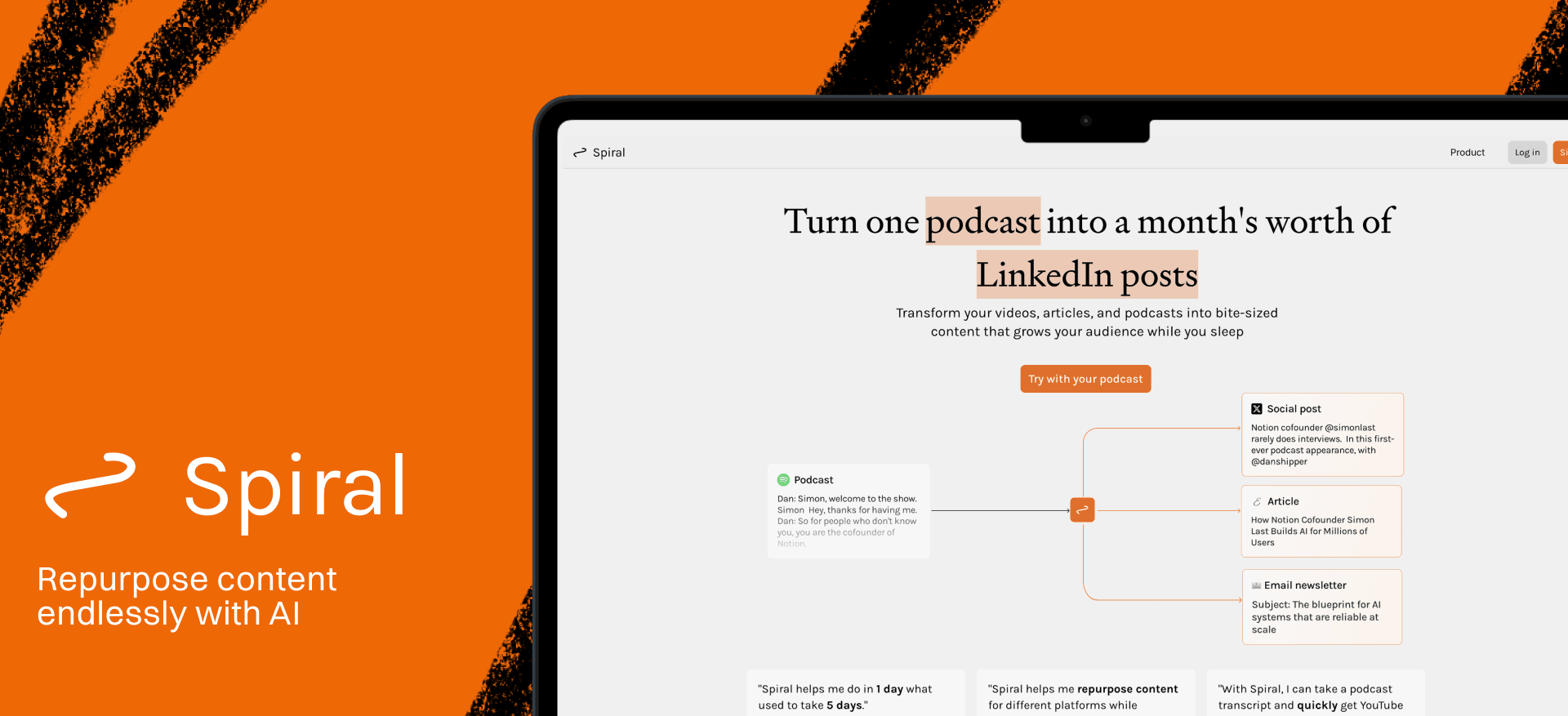
We build AI tools for readers like you. Automate repeat writing with Spiral. Organize files automatically with Sparkle. Write something great with Lex. Deliver yourself from email with Cora.
We also do AI training, adoption, and innovation for companies. Work with us to bring AI into your organization.
Get paid for sharing Every with your friends. Join our referral program.
The Only Subscription
You Need to
Stay at the
Edge of AI
The essential toolkit for those shaping the future

"This might be the best value you
can get from an AI subscription."
- Jay S.
 Every Content
 AI&I Podcast
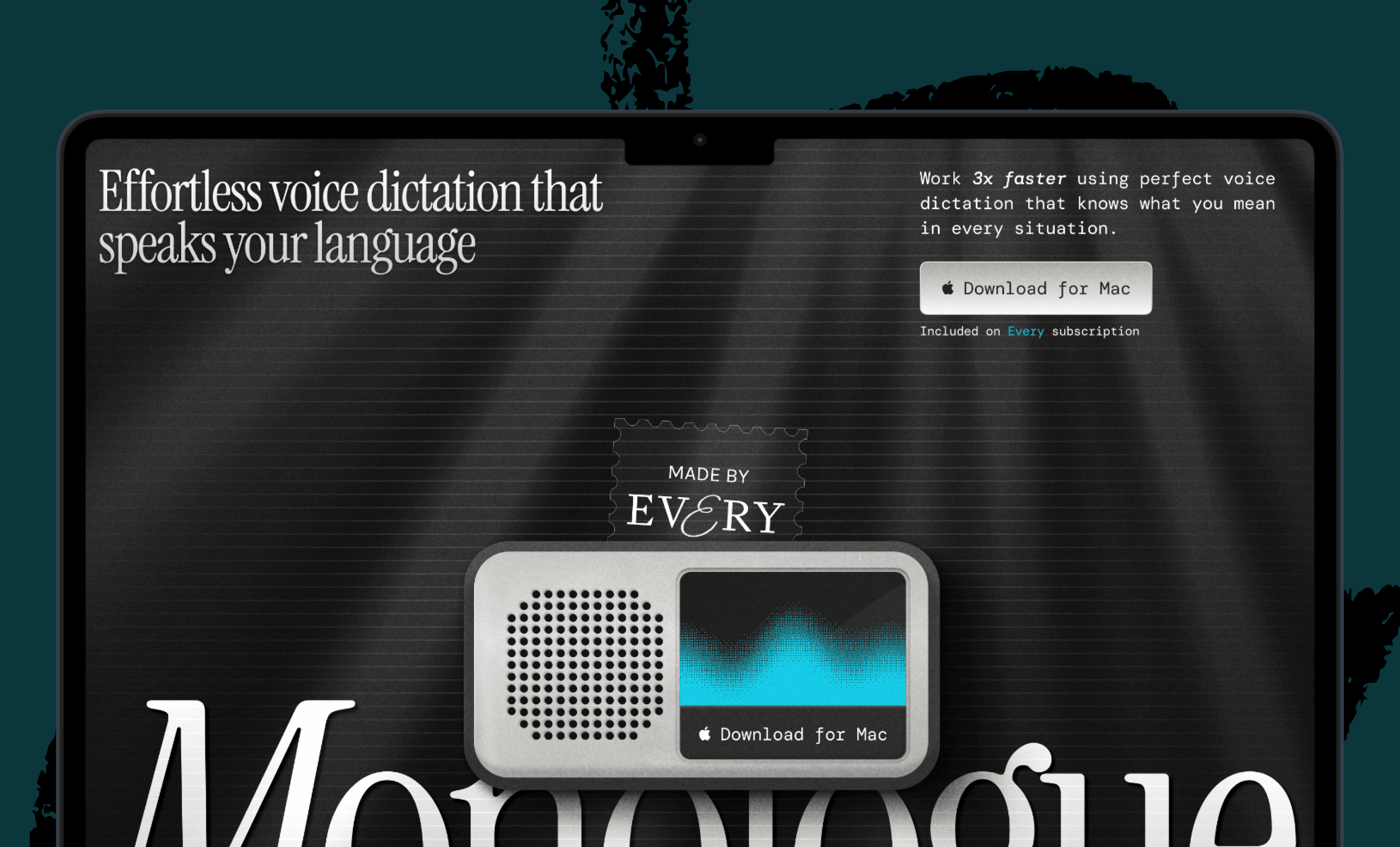
 Monologue
 Every Agent
Join 100,000+ leaders, builders, and innovators

Already have an account? Sign in.
What is included in a subscription?
Daily insights from AI pioneers + early access to powerful AI tools
 Front-row access to the future of AI
 In-depth reviews of new models on release dayPlaybooks and guides for putting AI to workPrompts and use cases for buildersIn-depth reviews of new models on release dayPlaybooks and guides for putting AI to workPrompts and use cases for builders
 Bundle of AI software



 Katie Parrott
 Every Staff
 Kieran Klaassen
Comments