


Laura Entis is a staff writer at Every.

Mini-Vibe Check: ChatGPT Voice Mode
Plus a workflow for managing agents while doing the dishes, why AI needs to be more social, and who to follow on X for design inspiration
Aug 5, 2026 · 6 min readUpdated Sep 2, 2026

If you’ve been following our coverage—or CEO Dan Shipper on X—you know the Every team is going all in on voice. On Friday, August 7, we’re hosting a camp for paid subscribers about all the tangible ways we’re using ChatGPT voice mode to get stuff done away from the keyboard.
Was this newsletter forwarded to you? Sign up to get it in your inbox.
Is voice mode ready for real work?
Last week, voice mode was blowing up Every’s Slack.
Powered by GPT-Live, OpenAI’s new voice model, the feature lets you have natural conversations with ChatGPT, complete with interruptions, follow-up questions, and redirections. Within the ChatGPT desktop app, voice mode can find the right task or thread based on spoken context, kick off new threads, check on existing work, and send more complex tasks to GPT-5.5.
After Dan took to X to evangelize voice mode’s powers for writing and revising an essay, the team put the feature through its paces. We used it to fix user-reported bugs, draft article outlines, do meal prep, draw connections between what we were reading and what we were building, book airline tickets, and orchestrate agents while cooking.
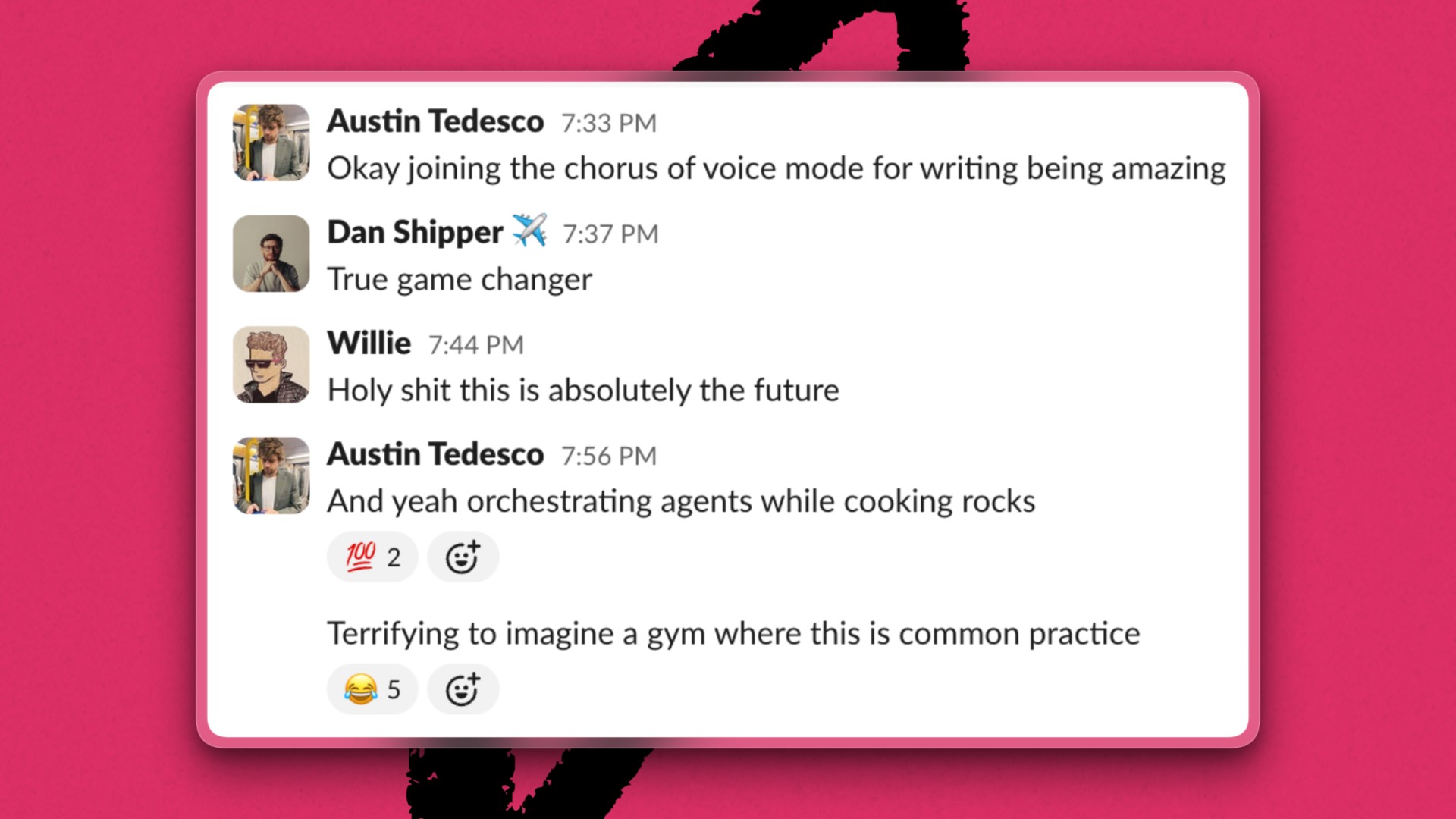
What works: There’s a lot to love about voice mode, which allows you to get work done without having to sit at a keyboard.
One of its biggest strengths is that it lets you read and ask questions aloud or connect what you’re reading to another file or project. Engineer Lee Knowlton uploaded a PDF of Designing Data-Intensive Applications, a book about building large-scale data systems, while voice mode had access to the codebase he was working on. As a result, he could keep reading while asking questions aloud, exploring unfamiliar ideas, and connecting the book’s insights to his own code. The result was a more fluid way to learn.
“Shifting from text to voice is different from shifting from text to text for me,” he says. “Reading something and then having a conversation, or asking a quick question, is different from typing something and then having to parse more text.”
What could be better: During a walk, COO Brandon Gell found that the mobile app’s voice mode could read a thread’s visible history but didn’t have access to important context outside the thread. Currently, voice can control local Codex work through Remote connections—but only while the host computer is awake, online, and running the desktop app. Without that connection, voice can’t access the host’s Codex projects, files, or tools.
Further complicating matters, the mobile app also has an “ordinary voice mode,” which can use the current cloud conversation but not the local context available through Remote. Are you confused? We’re confused.
The model’s ability to distinguish between speech intended for it and ambient conversation was also inconsistent. Lee found it good at filtering out exchanges with his wife, while engineer Tyler Nishida had the exact opposite experience. And the lag time can make it hard to use as a writing or editing partner (I found voice mode impressive but functionally too laggy to help me write this piece, for example). Finally, although GPT‑Live can delegate complex tasks to a frontier model in the background, some responses still felt shallow compared with responses from a text chat set to GPT-5.6 Sol.
Final verdict: Voice mode is, as Dan puts it, “a whole new world”—one in which you can direct agents away from a computer. But there are kinks to work out.
“It’s both not quite there yet and obviously the future,” Lee says. “A week ago, I couldn’t imagine a version of this that was really good, and now I can.”
From our sponsor

Scale customer service without scaling headcount
Customer service volume doesn’t scale with headcount—ElevenAgents does. The platform deploys voice and chat agents that handle billing questions, support tickets, and outreach around the clock across 70+ languages, integrating with Salesforce, Zendesk, and the tools your team already runs. Faster resolutions mean fewer abandoned carts and higher LTV.
‘AI & I’: The next big opportunity in AI is social
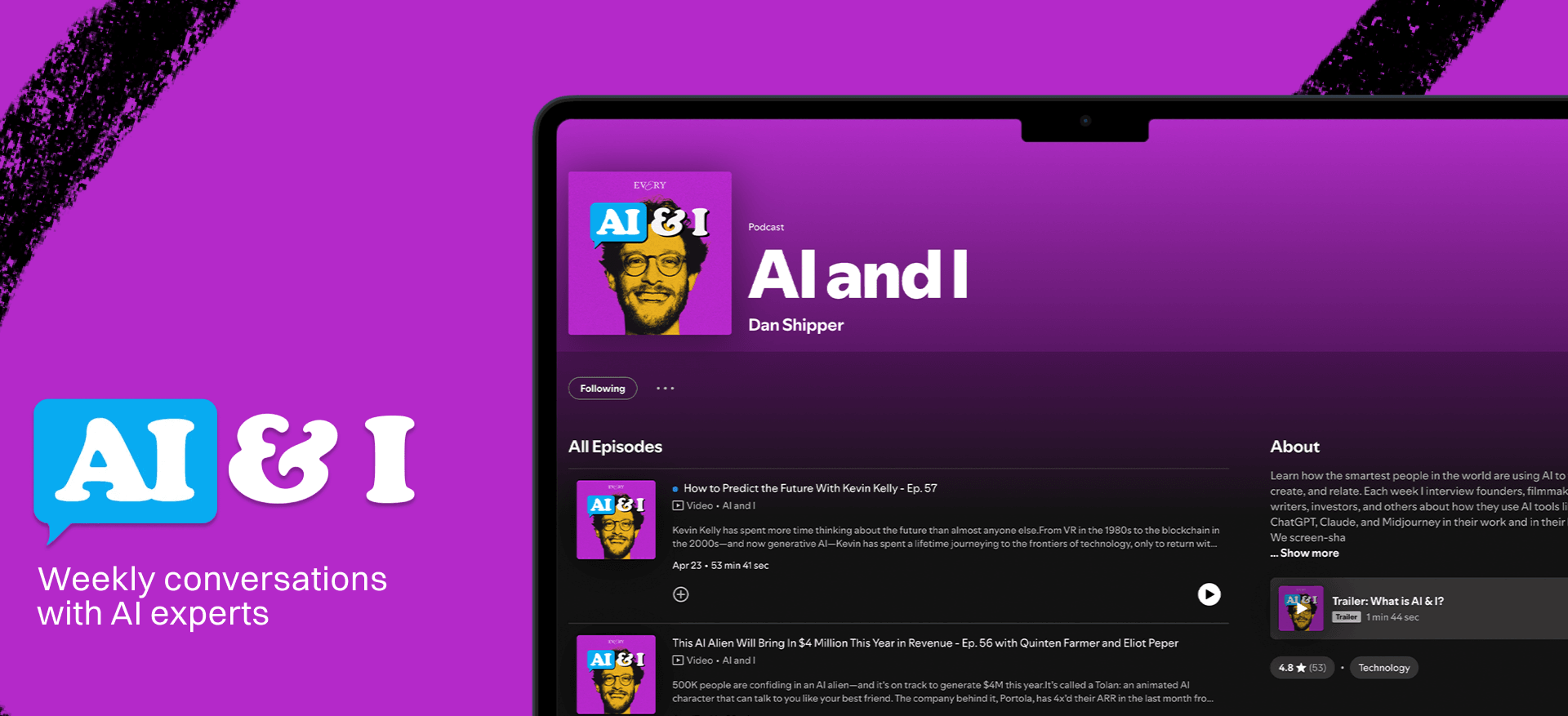
Sarah Tavel has spent her career studying consumer technology cycles, and she thinks she’s spotted the next one. A former Pinterest product manager and current Benchmark partner, she’s betting the next wave of AI products won’t just be smarter, they’ll be social. On this week’s AI & I, we’re revisiting our April 2025 conversation with Sarah, who argues that even power users are still using AI products like ChatGPT in a rudimentary way. But the gap isn’t the models: It’s that nobody has built a way for users to learn from each other. Sarah thinks whoever captures and shares that knowledge will create the next big product.
Watch on X or YouTube, or listen on Spotify or Apple Podcasts. You can also read the transcript.
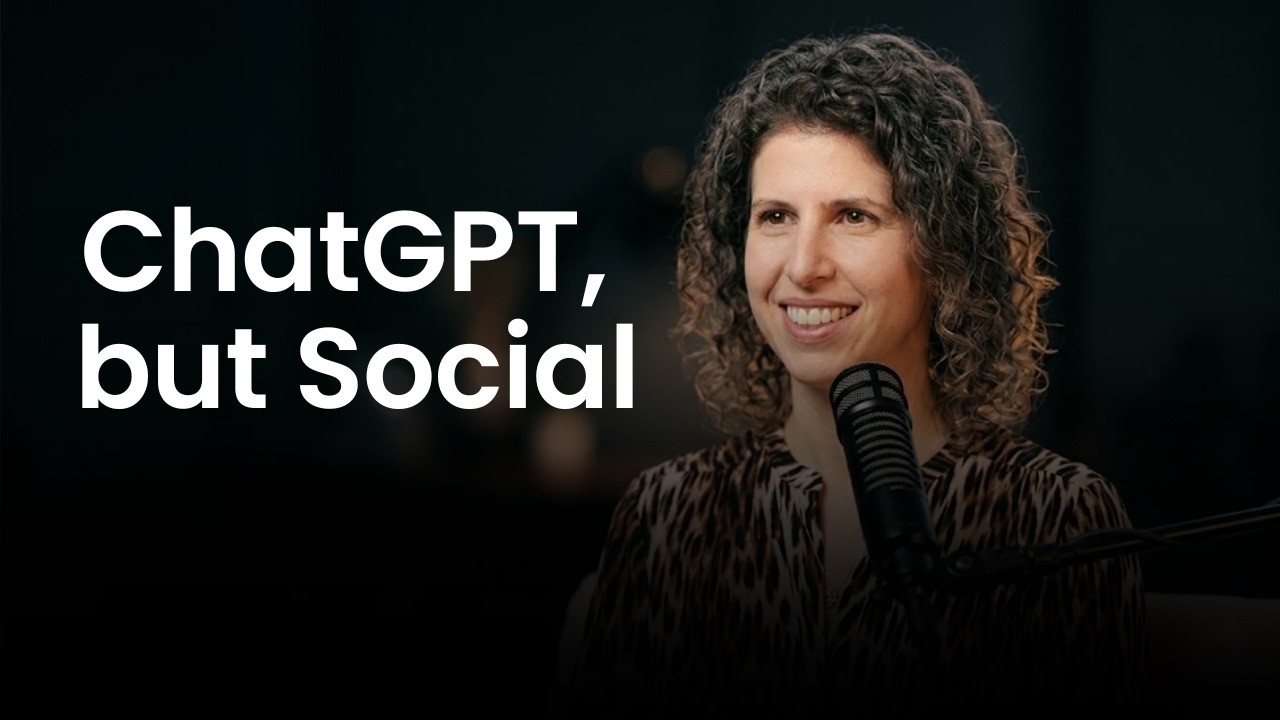

Here are the highlights:
- Somebody has to build the “follow” button for prompts. Sarah remembers searching Reddit for prompts to help interpret blood test results. That’s when she saw the opportunity. Imagine following trusted experts in healthcare, finance, or law the way you follow creators today—and automatically gaining access to the prompts they use. Prompt libraries aren’t new. They appeared shortly after ChatGPT launched. But Sarah thinks they arrived too early, serving mostly solopreneurs and marketers before mainstream users had developed meaningful AI habits. Now, she sees a second chance.
- Technical builders build the first wave; product geniuses will build the next. Looking across consumer technology, Sarah sees a familiar pattern. Google was primarily a technical breakthrough. Facebook was less technical and more polished. By the time Pinterest and Snap emerged, “the CEOs weren’t technical at all—they were product geniuses,” she says. She believes AI is following the same trajectory. Today’s leaders are largely infrastructure companies. Tomorrow’s winners may be the people who understand community, product design, and human behavior.
- How to spot if a startup actually has network effects. Sarah looks for strong network effects in startups she backs—but she’s learned most claimed ones aren’t real. Founders will describe a flywheel that sounds like Amazon’s or Uber’s. The tell, she says, is whether each step actually speeds up the next one or just sounds like it should: “The biggest thing is when you really look at what the articulation of the flywheel is—it’s words, but not accelerators.”
This episode is a must listen for anyone who wants to understand why the biggest AI product hasn’t been built yet—and what it might take to build it.
Miss an episode? Catch up on Dan’s recent conversations with Anthropic head of product Mike Krieger; the team that built Claude Code, Cat Wu and Boris Cherny; the team that built Codex, Thibault Sottiaux and Andrew Ambrosino; Vercel cofounder Guillermo Rauch; podcaster Dwarkesh Patel; and others to learn how they use AI to think, create, and relate.—Miriam Partington
Steal this workflow
Manage an agent team while you do the dishes
Lee’s workflow shows how voice mode changes the way we interact with agents...
Become a paid subscriber to Every to unlock this piece and learn about:
- How an orchestration thread to simplifies managing multiple agents
- Lee’s workflow for using voice mode with his orchestrator agent
- Three designers worth following on X
From our sponsor
Scale customer service without scaling headcount
Customer service volume doesn’t scale with headcount—ElevenAgents does. The platform deploys voice and chat agents that handle billing questions, support tickets, and outreach around the clock across 70+ languages, integrating with Salesforce, Zendesk, and the tools your team already runs. Faster resolutions mean fewer abandoned carts and higher LTV.
 Subscribe to read the full article
The Only Subscription
You Need to
Stay at the
Edge of AI
The essential toolkit for those shaping the future

"This might be the best value you
can get from an AI subscription."
- Jay S.
 Every Content
 AI&I Podcast
 Monologue
 Every Agent
Join 100,000+ leaders, builders, and innovators

Already have an account? Sign in.
What is included in a subscription?
Daily insights from AI pioneers + early access to powerful AI tools
 Front-row access to the future of AI
 In-depth reviews of new models on release dayPlaybooks and guides for putting AI to workPrompts and use cases for buildersIn-depth reviews of new models on release dayPlaybooks and guides for putting AI to workPrompts and use cases for builders
 Bundle of AI software




 Katie Parrott
 Every Staff
 Kieran Klaassen