


GPT Image 1.5 Shines (If You Do This)
Plus: How to fix your end-of-the-year planning
Dec 20, 2025 · 8 min readUpdated Jul 10, 2026

Hello, and happy Sunday! This is the final Context Window of the year. On Monday we’ll publish Every’s year by the numbers, looking back at the best of what we wrote, built, and produced in 2025. We’ll be back to regular publishing with Context Window on January 4.—Kate Lee
Was this newsletter forwarded to you? Sign up to get it in your inbox.
Mini-Vibe Check: GPT Image 1.5 is slick, but watch the context drift
Image generation has gotten good enough that Every’s senior designer Daniel Rodrigues now asks “Can AI do this?” before opening Figma. But different models serve different jobs. Think of them like art supplies: Midjourney is oil paint: textured, unpredictable, full of happy accidents. Google’s Nano Banana Pro is a technical pen: precise, consistent, no surprises.
So where does GPT Image 1.5 fit in the toolkit?
OpenAI’s newest image generation model promises four times faster generation, better instruction-following, and precise editing. Daniel stress-tested it with a detailed photorealistic prompt:
A man eating in a Spanish bar. He has medium-brown skin, a mustache, and is wearing a blue button-up shirt. He is eating Spanish potato omelette, with several plates of food on the table. The bar looks real and busy, with bottles and objects in the background. On the wall in the background, there is a calendar for December. The number 16 is circled with a marker. Realistic photo style.
First generation: Impressive. The scene felt real—lighting, atmosphere, materials all landed. Accuracy clocked in around 8/10. One miss: The calendar highlighted the 15th instead of the 16th.
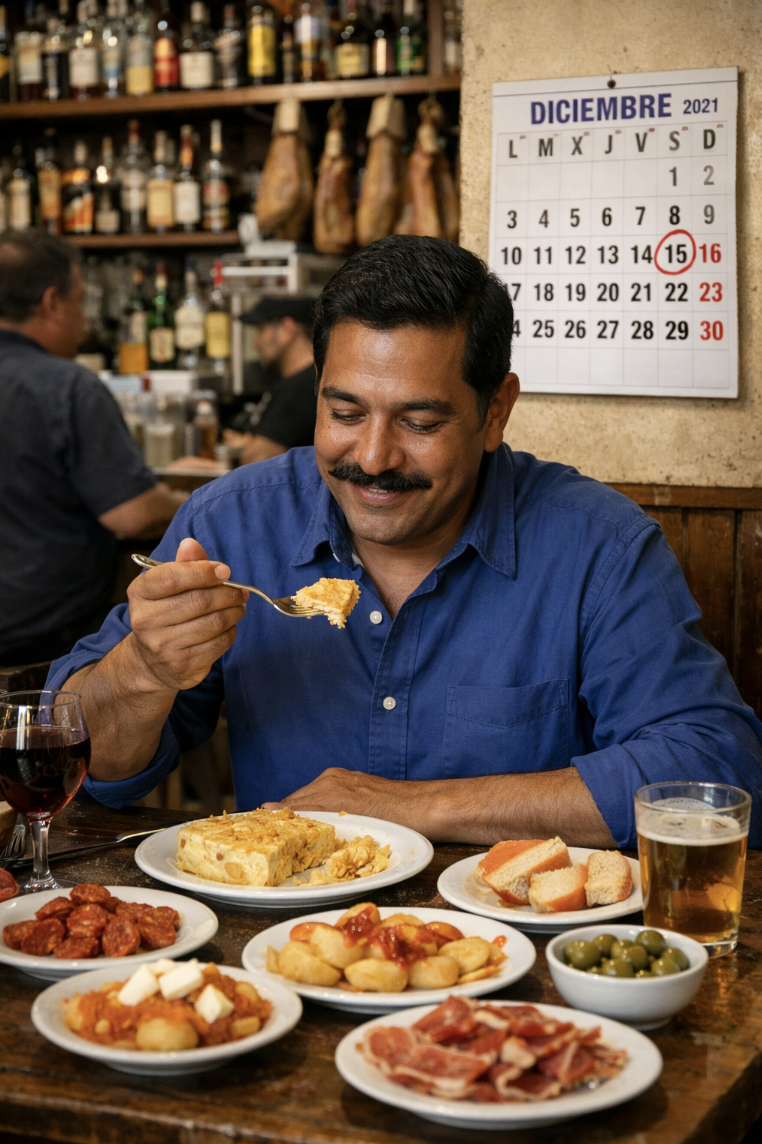
Iterative edits: Where things unraveled. Daniel then made changes within the same chat—swap the man for an Asian woman, add her boyfriend, change the year to 2025, add a Chihuahua, swap the tortilla for carbonara. Each edit introduced new errors. The woman’s arms became anatomically incorrect. The boyfriend didn’t appear at all. The carbonara came out as a strange hybrid with sausages instead of bacon. The model seemed anchored to earlier outputs, compounding mistakes rather than starting fresh.

Fresh chat, same prompt: Much better. When Daniel started a new conversation with the full corrected prompt, many issues disappeared. The scene looked natural, the composition held together, and the food—while still slightly ambiguous on close inspection—passed the average viewer’s test. The calendar, however, still showed the 15th. That appears to be a consistent weakness with precise numerical details, not a context issue.

How it stacks up against Nano Banana Pro: Daniel ran the same Spanish bar prompt through Google’s latest image model, Nano Banana Pro. Nano Banana delivered better tortilla rendering, a more authentically Spanish-looking subject, the correct date circled, and even local-looking beer bottles in the background. “For some reason this looks more natural, like it was taken from an iPhone,” Daniel noted.
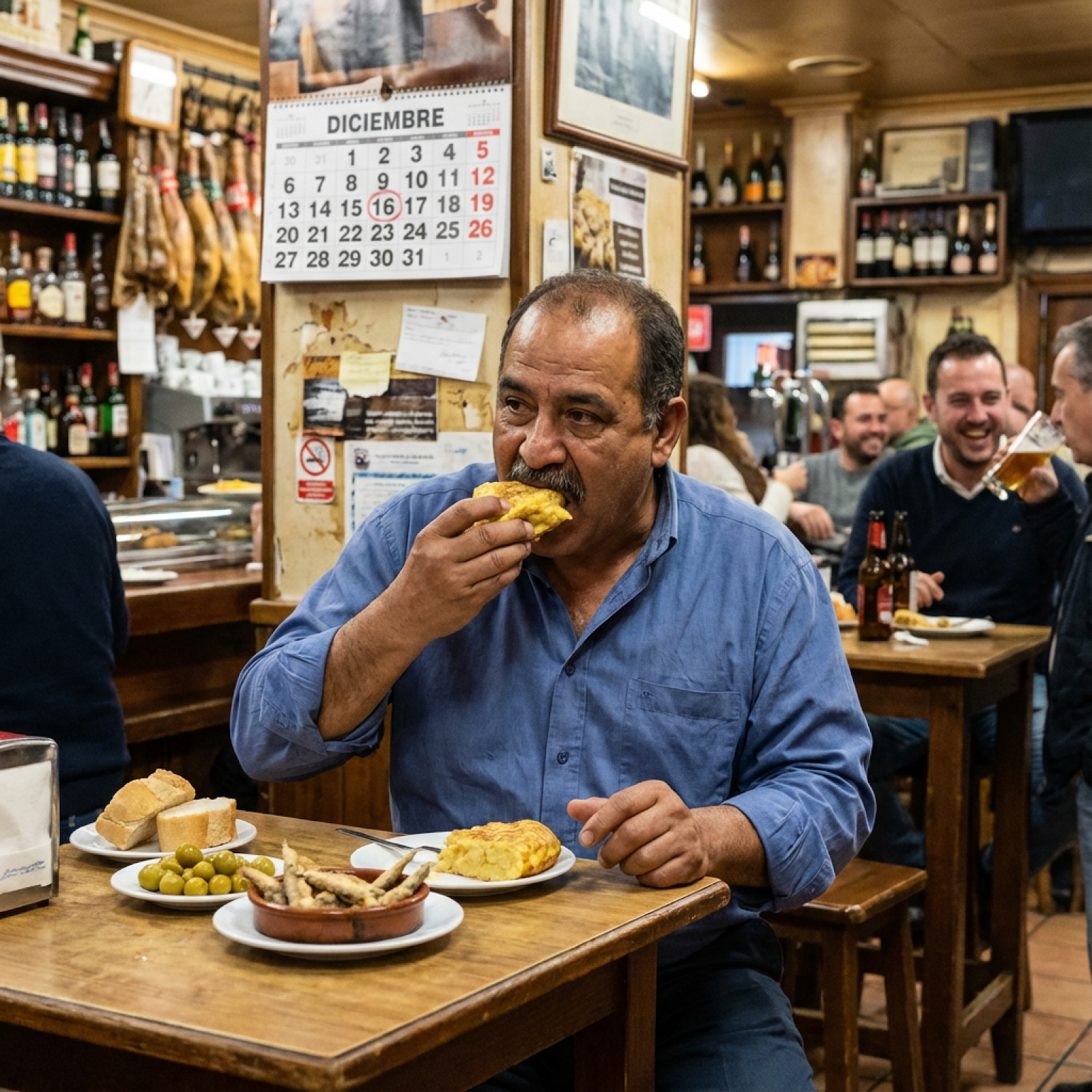
The verdict: GPT Image 1.5 produces genuinely competitive photorealism and can go head-to-head with Nano Banana Pro on atmosphere and composition. But for precision work—specific dates, iterative refinement, strict accuracy—Google’s model still has the edge. Pro tip: For best results, start a fresh chat rather than iterating in the same thread.—Katie Parrott
Knowledge base
“I Talked to More Than 100 Companies About AI—Here’s What’s Actually Working” by Natalia Quintero: Ninety-five percent of AI pilots fail, but it’s not a technology problem—, it’s a clarity problem. Every’s new head of consulting, Natalia Quintero, spent the year talking to startups, hedge funds, and media companies about why adoption stalls. The pattern is consistent: Companies have the tools but can’t articulate what they’re trying to achieve. The ones getting it right share a few common traits. Read this for a reality check on where most companies are with AI and a framework for moving forward.
“How AI Can Cut Your Planning Cycle From Two Weeks to Two Days” by Austin Tedesco: Everyone dreads annual planning—weeks of alignment meetings, document revisions, and calendar Tetris while the team is still pushing to close Q4. Every’s head of growth, Austin Tedesco, describes how three tools can compress that timeline to hours. Read this for the implementation process and to see the compounding benefits of finishing planning before January even starts.
“OpenAI Gave Us a Glimpse Into Their AI Coding Playbook” by Katie Parrott/Source Code: Four OpenAI engineers built the Android version of Sora in 28 days—and one of them did it without typing at all. A forced constraint—a shattered wrist—taught the engineer something counterintuitive: Treat Codex like a new hire you’re onboarding, not a tool you’re configuring. Let the agent research before it builds. Don’t overload context, and give each reviewer a single job. Read this for the full playbook from OpenAI’s first-ever Codex Camp with Every.
🎧 “What Jhana Meditation Feels Like—From the Inside Out” by Rhea Purohit/AI & I: A Jhana is an altered state of consciousness that Stephen Zerfas describes as “slipping into gratitude, the relief of coming home.” Through the company he co-founded, Jhourney, Zerfas is trying to help more people achieve the profound experience of Jhana meditation, which he entered live on this week’s podcast with Dan Shipper. Listen to learn the mechanics and how Zerfas hopes to use an AI-guided curriculum to make Jhana accessible without a human facilitator. 🎧 🖥 Listen on Spotify or Apple Podcasts, or watch on X or YouTube.
“What Becomes Valuable When AI Makes Creative Work Easy” by Jack Cheng: When AI makes surface creativity easy, what becomes valuable is the specificity of your lived experience—what critic James Wood calls “thisness.” Jack Cheng argues for the importance of a particular shade of blue, the smudged eyeglass frame—the details that match surface to substance, style to context. Read this to understand why your honest, detailed, personal story is your most durable creative edge.
From Every Studio
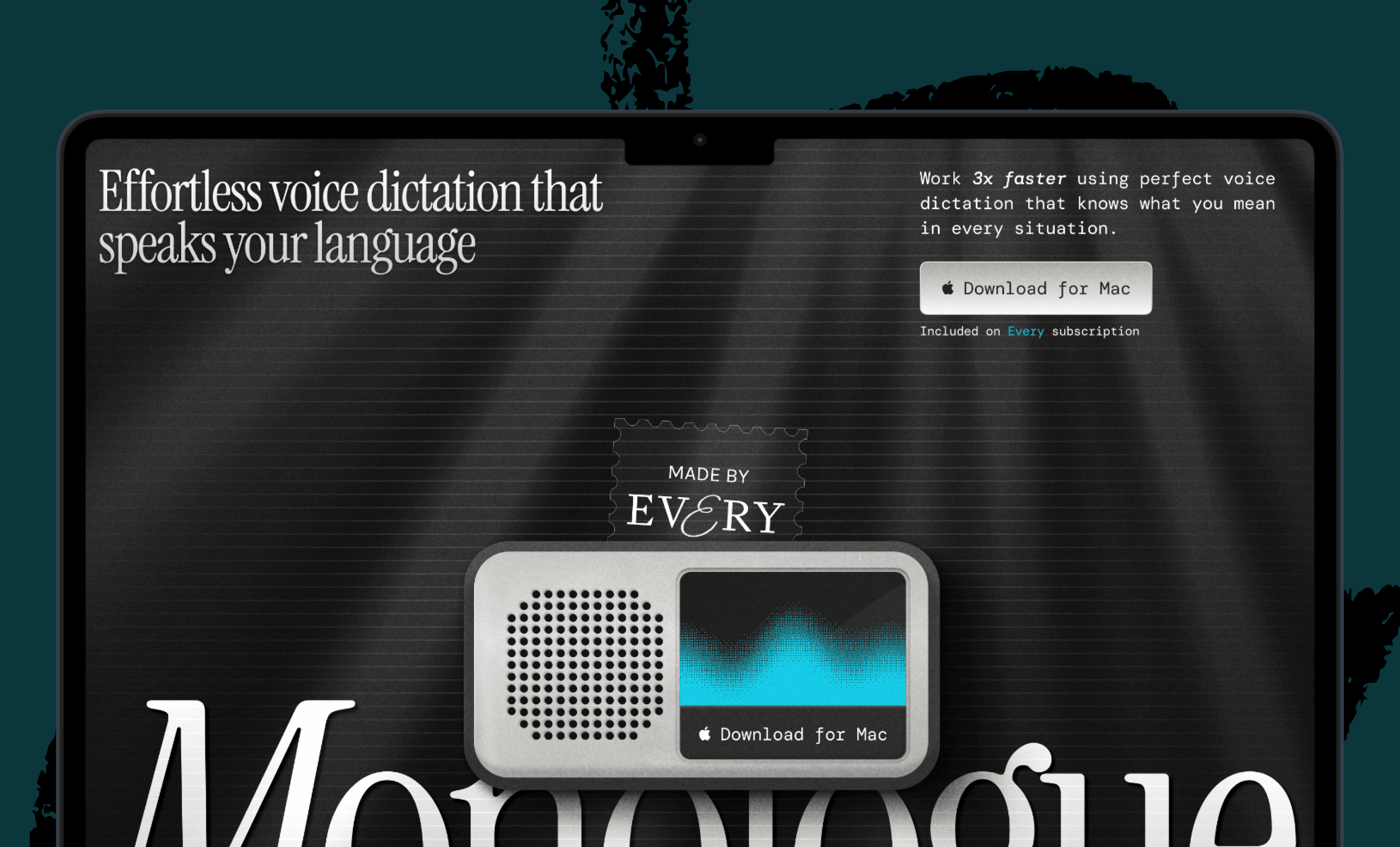
Monologue iOS launches soon
Monologue is coming to iOS with the speed and formatting intelligence you know and love from Mac, plus mobile-native shortcuts. Like the Mac version, Monologue iOS processes multi-minute recordings in seconds and formats your speech into readable messages—no manual cleanup required. The iOS app adds action button and back tap integration so you can activate Monologue without leaving your current app, plus Siri support for voice activation.
Cora becomes a full email client with agent-native inbox
Cora is graduating from brief summaries to a complete email experience. The Q1 update will bring a native inbox where you can read, respond to, and delegate emails without leaving the app. General manager Kieran Klaassen showed off a mobile-first prototype where Cora’s assistant handles background research while you work on other messages—tapping you when results are ready. Also coming in 2026: an iOS app to go along with the web application. Gmail-only at first, expanding to other providers later. Test the early prototype at baby.cora.computer.
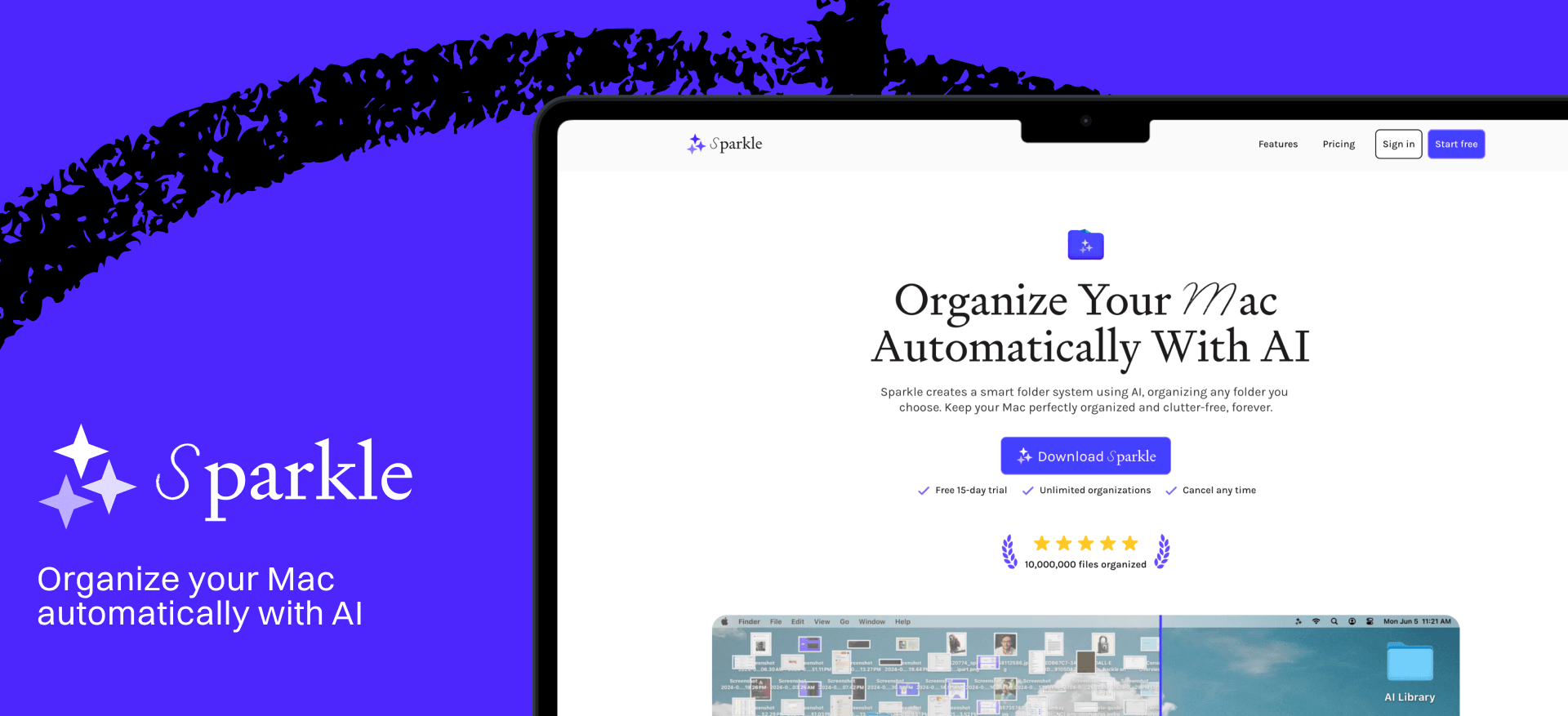
Sparkle gets rebuilt with conversational organization
Sparkle is getting its fourth ground-up rebuild in a year—this time as a chat-based file organizer. Instead of rules and schedules, the new version understands your files, proposes a smart folder structure, and lets you refine it through conversation. General manager Yash Poojary demonstrated the flow: Sparkle analyzes your desktop, suggests folders and subfolders, then adjusts the structure as you describe what you need (“I work at Every, create an Every Media folder”). It cleans clutter automatically, detects duplicates, and organizes subfolders—all processing locally before moving files. Beta signups open in the Every Discord.—KP
Alignment
Read to be moved. I’m tired of the scolding tone in the discourse around people not reading anymore. It’s true that people are reading less, but shaming them about their screen time won’t fix them, just as shaming someone for eating McDonald’s has never made them reach for a grilled chicken salad. Many of those doing the shaming are reading performatively anyway—to signal something about status or intellect, not for the otherworldly experience they insist reading provides them.
In my experience, the problem isn’t that people need to be scolded into reading more; it’s that reading has been framed as a signal of virtue or intellect rather than something people actually want to do. The way back to reading is simpler. Find something so good you want to know what happens next. Here are five that made me feel that way this year.
1. Antimemetics by Nadia Asparouhova. Some ideas go viral while others die in group chats. I’d never really stopped to ask why. Asparouhova explains that antimemes are ideas that resist spreading because they’re too complex, uncomfortable, or risky to share publicly. Once you see it, you can’t unsee it, and this is why certain truths stay trapped in private conversations while the absolute worst ideas spread everywhere.
2. To a God Unknown by John Steinbeck. Not the Steinbeck anyone recommends. It’s a mystical, symbolic story about one man’s attempt to control nature and understand forces beyond him. I read it as an accidental parable for AI—written 90 years ago, somehow about exactly where we are now.
3. Seeing That Frees by Rob Burbea. Dense and demanding and the opposite of a quick read. But it was still hard to put down, because in showing how perception shapes reality, Burbea gives you the ability to intentionally change the lens you see the world through. It requires slowness, which turned out to be the point.
4. Genghis Khan and the Making of the Modern World by Jack Weatherford. I thought I knew the story about one of history’s greatest mass murderers. Weatherford inverts this and explains that Genghis Khan was a builder of infrastructure, enabler of trade and surprisingly tolerant of religious and cultural differences. The tension between the two versions is what makes it gripping.
5. Out of Control by Kevin Kelly. A 30-year-old book about technology that reads like it was written next year. Kelly (who sat down with Dan in April) saw where humans and machines were heading before most people had email. A seriously, seriously good read.—Ashwin Sharma
That’s all for this week! Be sure to follow Every on X at @every and on LinkedIn.
We build AI tools for readers like you. Write brilliantly with Spiral. Organize files automatically with Sparkle. Deliver yourself from email with Cora. Dictate effortlessly with Monologue.
We also do AI training, adoption, and innovation for companies. Work with us to bring AI into your organization.
Get paid for sharing Every with your friends. Join our referral program.
For sponsorship opportunities, reach out to [email protected].
The Only Subscription
You Need to
Stay at the
Edge of AI
The essential toolkit for those shaping the future

"This might be the best value you
can get from an AI subscription."
- Jay S.
 Every Content
 AI&I Podcast
 Monologue
 Every Agent
Join 100,000+ leaders, builders, and innovators

Already have an account? Sign in.
What is included in a subscription?
Daily insights from AI pioneers + early access to powerful AI tools
 Front-row access to the future of AI
 In-depth reviews of new models on release dayPlaybooks and guides for putting AI to workPrompts and use cases for buildersIn-depth reviews of new models on release dayPlaybooks and guides for putting AI to workPrompts and use cases for builders
 Bundle of AI software


 Katie Parrott
 Every Staff
 Kieran Klaassen
Comments