


Rhea Purohit focuses on research-driven storytelling in tech. She writes about the psychology and history of adopting new technologies.
.jpg&w=64&q=90)
What Jhana Meditation Feels Like—From the Inside Out
Jhourney cofounder Stephen Zerfas on what Jhana feels like, where it can go wrong, and how AI could make the practice easier to learn
Dec 17, 2025 · 7 min readUpdated Oct 9, 2026

TL;DR: Today, we’re releasing a new episode of our podcast AI & I. Dan Shipper sits down with Stephen Zerfas, the cofounder of Jhourney, a company aiming to make life-changing meditation accessible to more people. Watch on X or YouTube, or listen on Spotify or Apple Podcasts.
Was this newsletter forwarded to you? Sign up to get it in your inbox.
Stephen Zerfas’s eyes are closed as one tear rolls down his cheek. “I for years have softly cried while meditating,” he says.
Live on this episode of AI & I, Zerfas is guiding himself towards Jhana—an altered state of consciousness that he describes as “gentle ease and slipping into gratitude, the relief of coming home.”
Zerfas is the cofounder of Jhourney, a company working to make this kind of meditation more accessible to people through retreats, one of which Dan Shipper attended in June.
Jhanas have long been considered the reward for thousands of hours of practice, but the Jhourney team believes that they can shorten this timeline by giving participants clear feedback on their meditation practice by having facilitators interview them in detail about what they felt during practice, and then using that to suggest what to try next. “Our curriculum and group sessions are set up to run rapid-fire experiments,” Zerfas explains, “and give you the tools to assess whether or not your experiments are helping you move in a certain direction.”
In this episode, Dan and Zerfas get into what the practice actually feels like, its potential pitfalls, and how AI might make it accessible to more people. This is not the first time AI & I has crossed paths with Jhourney: In an earlier episode, author Nadia Asparouhova described how she interviewed Zerfas—and later went on one of the company’s retreats.
Here is a link to the episode transcript.
You can check out their full conversation here:
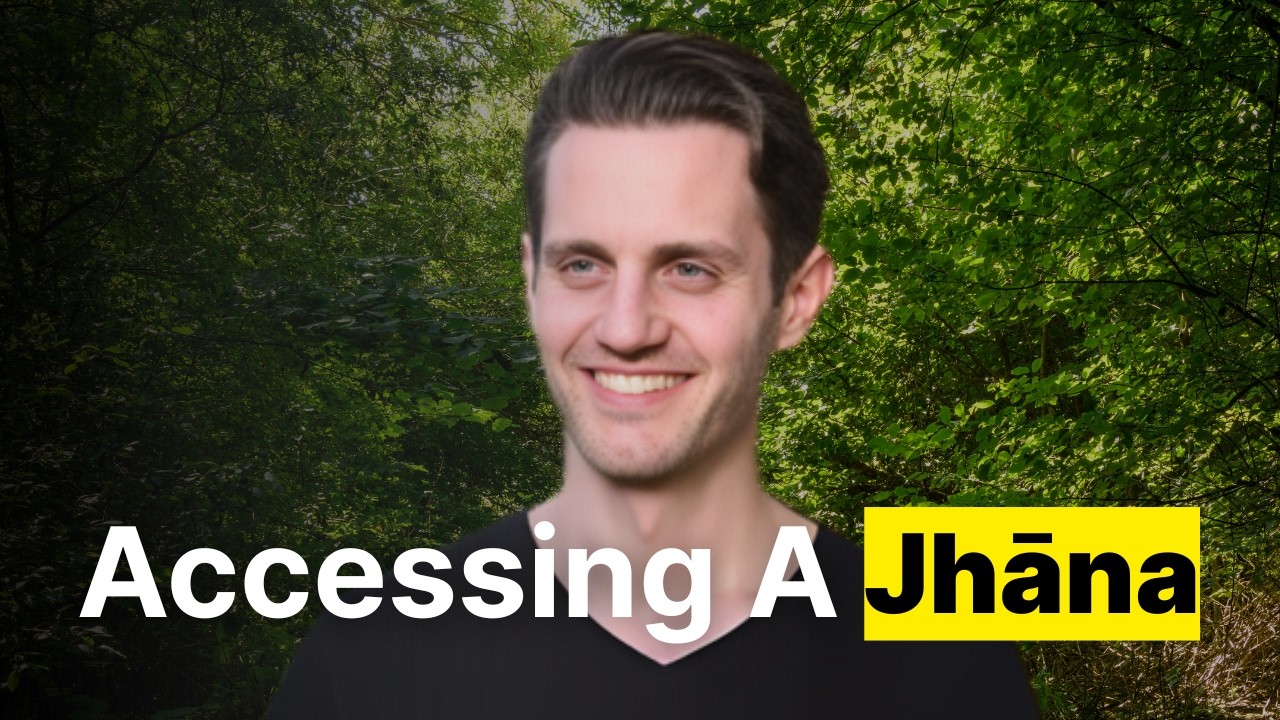

These are some of the themes they touch on:
Inside the mechanics of Jhana meditation
Here’s a closer look at Jhana, its potential to reshape how you respond to the world, and where things could go a little sideways.
Rest into what already exists
For your average Type A personality, meditation can feel like a Sisyphean challenge: You sit down intending to “let go,” only to turn mindfulness into another problem to solve. Zerfas reframes meditation as less about achieving a new, heightened state of awareness and more about noticing what’s already present within you. “One of the most difficult things to learn when you’re playing this game,” he says, “is that it’s really about…‘rest[ing]’ into love.”
This runs counter to how most high achievers have learned to operate. “We have the habit of getting great things done [by] clenching down, with applied effort,” Zerfas says, and unlearning that approach—softening instead of pushing—can be deeply freeing.
How to hack your personality
Zerfas frames much of what Jhourney teaches through the lens of “memory reconsolidation”—the idea that if you can reactivate a negative emotion while simultaneously feeling a commensurate sense of safety, compassion, or love, the two can wash over each other and reset your default response to the situation that triggered the negative emotion. “Knowing that you can reset your emotional defaults is, in my mind, one of the most underappreciated secrets in the world,” he says.
Most people have easy access to emotions that challenge them. “A lot of people can get into anxiety loops, no problem,” he says. “They got that on tap.” What’s harder is reliably summoning the safety, love, or connection needed to counterbalance it. That’s where Jhana practice comes in: It trains you to access those open-hearted states on demand, giving you the tools to rewrite your default emotional state.
Your personality, Zerfas argues, is essentially a collection of learned reactions to different stimuli, such as how you respond when your mom scolds you or when a difficult situation arises at work. By learning to hold a challenging emotion alongside a feeling of safety or love, you can rewrite those automatic responses. He calls this gaining “root permissions to hack on your personality.”
How to best prepare yourself for Jhana
Zerfas discusses the two big pitfalls that one might fall into while practicing Jhana:
Welcoming difficult emotions you’re not prepared for can backfire. Zerfas emphasizes the concept of a “window of tolerance”: You never want to push yourself past its seams into dysregulation, whether that’s hyperarousal (which can feel like a panic attack) or its counterpart, hypoarousal (which can be identified through numbness or dissociation). He adds that pushing past your limits too fast can retraumatize you and inhibit learning rather than enhance it. The top priority, Zerfas says, is figuring out where your guardrails are. Grounding exercises, such as shifting attention away from the body and toward the external environment when things get too emotionally charged, are one way to do this.
You can’t meditate your way out of real problems. A second concern is whether this practice becomes a way to bypass real problems—numbing yourself to difficult situations rather than addressing them. Zerfas acknowledges this as a thoughtful critique, but says the mechanism simply doesn’t work that way. If you let a loved one walk all over you, then retreat to your room for an hour of Jhana practice, it won’t stick. “Those [signals] are going to be embedded in the system, and you’re not gonna be able to gloss past them into some sort of happy bliss outland,” where you can float above your life in a permanent state of calm or pleasure while ignoring hard choices, he says. “It’s going to require reckoning with those seriously.”
A personal AI guide to help you along your meditation practice
Behind the scenes, Jhourney is already using AI to support its human facilitators by helping them prepare before meeting with students, recording sessions, and tracking experiments across the program. But Zerfas’s bigger ambition is what he describes as a “math academy for the Jhanas”: an AI-guided curriculum that could reliably get someone into these states with 15 to 30 hours of practice, without a human in the loop. Picture an app with a “skill tree” that marks exactly where you are in your practice, paired with an AI guide that can lead you through personalized meditations, offer real-time feedback, and adjust based on your experience.
What do you use AI for? Have you found any interesting or surprising use cases? We want to hear from you—and we might even interview you.
Here’s a link to the episode transcript.
Timestamps
- Introduction: 00:00:56
- A primer on Jhana meditation: 00:01:18
- Zerfas guides himself towards Jhana: 00:05:47
- Why Jhana is about resting into what already exists: 00:36:04
- Approaching meditation with play and curiosity: 00:39:30
- The potential pitfalls of Jhana meditation: 00:45:04
- How to hack your personality through memory reconsolidation: 00:48:21
- Why Jhana won’t let you numb yourself to real problems: 00:53:10
- How Jhana meditation has changed Zerfas: 00:55:36
- How Jhourney is using AI to make Jhanas more accessible: 01:09:41
You can check out the episode on X, Spotify, Apple Podcasts, or YouTube. Links are below:
- Watch on X
- Watch on YouTube
- Listen on Spotify (make sure to follow to help us rank!)
- Listen on Apple Podcasts
Miss an episode? Catch up on Dan’s recent conversations with founding executive editor of Wired Kevin Kelly, star podcaster Dwarkesh Patel, LinkedIn cofounder Reid Hoffman, ChatPRD founder Claire Vo, economist Tyler Cowen, writer and entrepreneur David Perell, founder and newsletter operator Ben Tossell, and others, and learn how they use AI to think, create, and relate.
If you’re enjoying the podcast, here are a few things I recommend:
- Subscribe to Every
- Follow Dan on X
- Subscribe to Every’s YouTube channel
Rhea Purohit is a contributing writer for Every focused on research-driven storytelling in tech. You can follow her on X at @RheaPurohit1 and on LinkedIn, and Every on X at @every and on LinkedIn.
We build AI tools for readers like you. Write brilliantly with Spiral. Organize files automatically with Sparkle. Deliver yourself from email with Cora. Dictate effortlessly with Monologue.
We also do AI training, adoption, and innovation for companies. Work with us to bring AI into your organization.
Get paid for sharing Every with your friends. Join our referral program.
For sponsorship opportunities, reach out to [email protected].
The Only Subscription
You Need to
Stay at the
Edge of AI
The essential toolkit for those shaping the future

"This might be the best value you
can get from an AI subscription."
- Jay S.
 Every Content
 AI&I Podcast
 Monologue
 Every Agent
Join 100,000+ leaders, builders, and innovators

Already have an account? Sign in.
What is included in a subscription?
Daily insights from AI pioneers + early access to powerful AI tools



 Front-row access to the future of AI
 In-depth reviews of new models on release dayPlaybooks and guides for putting AI to workPrompts and use cases for buildersIn-depth reviews of new models on release dayPlaybooks and guides for putting AI to workPrompts and use cases for builders
 Bundle of AI software







 Katie Parrott
 Every Staff
 Kieran Klaassen
Comments