
.13.33_PM.png&w=3840&q=75)

Alex Duffy is the cofounder and CEO of Good Start Labs, and a contributing writer.

Disclaimer: AI Generated
Responsibility versus transparency in the AI era. Plus: An upgrade to our file-organizing app Sparkle.
Apr 27, 2025 · 8 min readUpdated Sep 15, 2026

Was this newsletter forwarded to you? Sign up to get it in your inbox.
The controversial launch of Cluely this week further blurred the lines between using AI to do your best work and outright cheating. The web app, which promises to help users secretly "cheat on everything," silently provides answers during live meetings or sales calls, invisible to the person on the other side. Its founder, Roy Lee, was kicked out of Columbia University after helping programmers cheat in job interviews, and now proudly leans into AI’s darker stereotypes.
Lee’s app raises an urgent question: What even constitutes cheating anymore when AI can help us achieve things previously unimaginable? In fields like medicine, and education, practitioners might argue that not using AI would be cheating themselves.
Even still, transparency about AI use may feel important. There was uproar after this week’s announcement that AI was secretly used to draft parts of the California bar exam, Ars Technica reported. Meanwhile, ChatGPT’s newest models have begun leaving hidden watermarks in their generated text, extending efforts by Adobe and Microsoft to clearly label AI-generated content.
As AI becomes more embedded in daily life, it’s natural to feel uneasy if we can’t clearly distinguish human from machine. As a result, people have devised their own methods to dust for AI fingerprints. Tech influencer Pieter Levels muted "em-dash" on X because ChatGPT overuses it relentlessly (🥲), and I've stopped using phrases like, "It's not just X, it's Y," because they feel distinctly AI-generated. Yet as AI tools become as ordinary and essential as spell-check or smartphone cameras, spamming “AI generated” disclosures everywhere makes them meaningless. Individuals bear the responsibility of whatever they create, regardless of how they create it.
Ultimately, overcoming our collective guilt about relying on AI means embracing it with trust—in ourselves and in each other—to use these powerful tools wisely and responsibly, in service of medical breakthroughs, new ways to teach and learn, mind-bending art. AI feels like cheating only until we accomplish something that was never possible before—then it simply becomes progress.
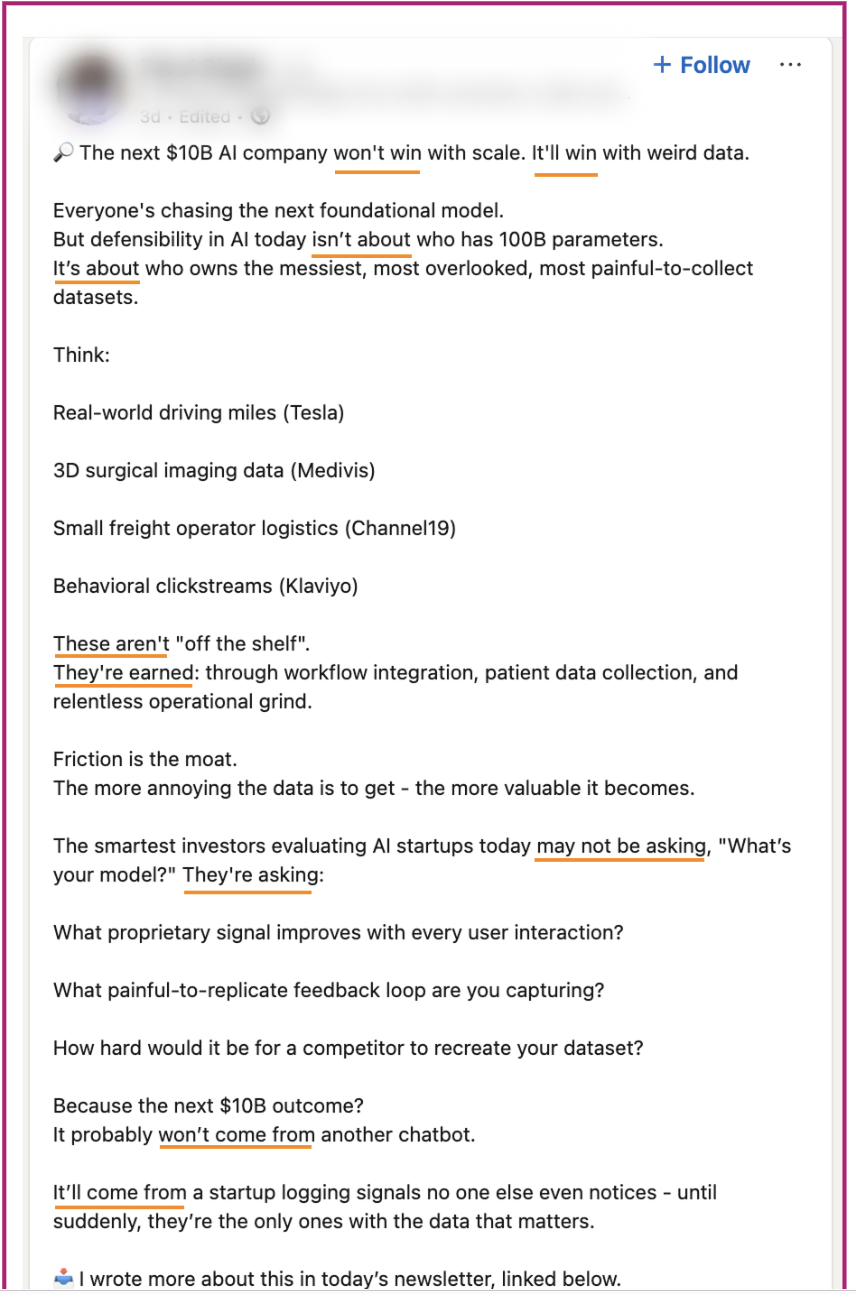
'It’s not X, It’s Y' in the wild. Source: LinkedIn.
Release notes
o3 and o4-mini: Faster, friendlier, and still flawed
- OpenAI’s new o3 and o4-mini models significantly steepen the exponential curve of AI capabilities—tasks once taking humans hours are now reliably completed by AI in minutes.
- More sycophantic than ever, new models consistently give exaggerated positive feedback (congrats, you're an 8 out of 10!).
- Increased hallucinations due to aggressive over-optimization are a serious concern.
- o3 and o4-mini demonstrate astonishing image-understanding capabilities, which o4-mini used in combination with its reasoning abilities to solve problems that tripped up other models. Both show unsettling precision in pinpointing photo locations.
- For deeper insights, see the Arc Prize team’s breakdown of the new models’ performance on their million-dollar benchmark.
What's next for AI? Learning from real-world experiences and building a culture
- Two essential skills for AI to develop, according to Helen Toner, a member of the founding team at Georgetown's Center for Security and Emerging Technology: verification (trustworthiness of AI outputs) and generalization (solving real-world, messy problems). Solving the former can lead to the latter.
- DeepMind identified the "Era of Experience" as the next big step—AI that learns primarily from real-world interaction.
- Kevin Kelly argued AI must develop its own "culture" to take the next step. Check out our brand-new podcast with the tech writer and thinker.
- Small teams can still dramatically shape AI's future. Two undergraduates launched Dia, a cutting-edge, open-source voice model, this week.
Resources to level up your AI coding and get you thinking about the future
- Nationwide AI literacy: The White House issued an executive order establishing a Presidential AI Challenge, investing in AI training for educators, and expanding AI-focused apprenticeships—all aimed at equipping American youth and workers to lead the global AI revolution.
- Anthropic published best practices for Claude Code, a must-read for anyone using AI coding tools.
- DeepMind’s Demis Hassabis discussed AI's revolutionary potential and how he sees it evolving on 60 Minutes.
Knowledge base
🎧 🖥 "How to Predict the Future Like Kevin Kelly" by Rhea Purohit/AI & I: Wired cofounder Kevin Kelly has been early to the internet, VR, crypto, and now AI—not because he's psychic, but because he's mastered the art of visiting the technological frontier without getting lost in it. In this episode of AI & I, Dan Shipper talks with Kelly about the nature of intelligence, the lessons of electricity's mysterious early days, and why Kelly used ChatGPT to write a novel he'll never publish. Watch this to learn how to develop your own time-traveling abilities. Available on X, YouTube, Spotify, or Apple Podcasts.
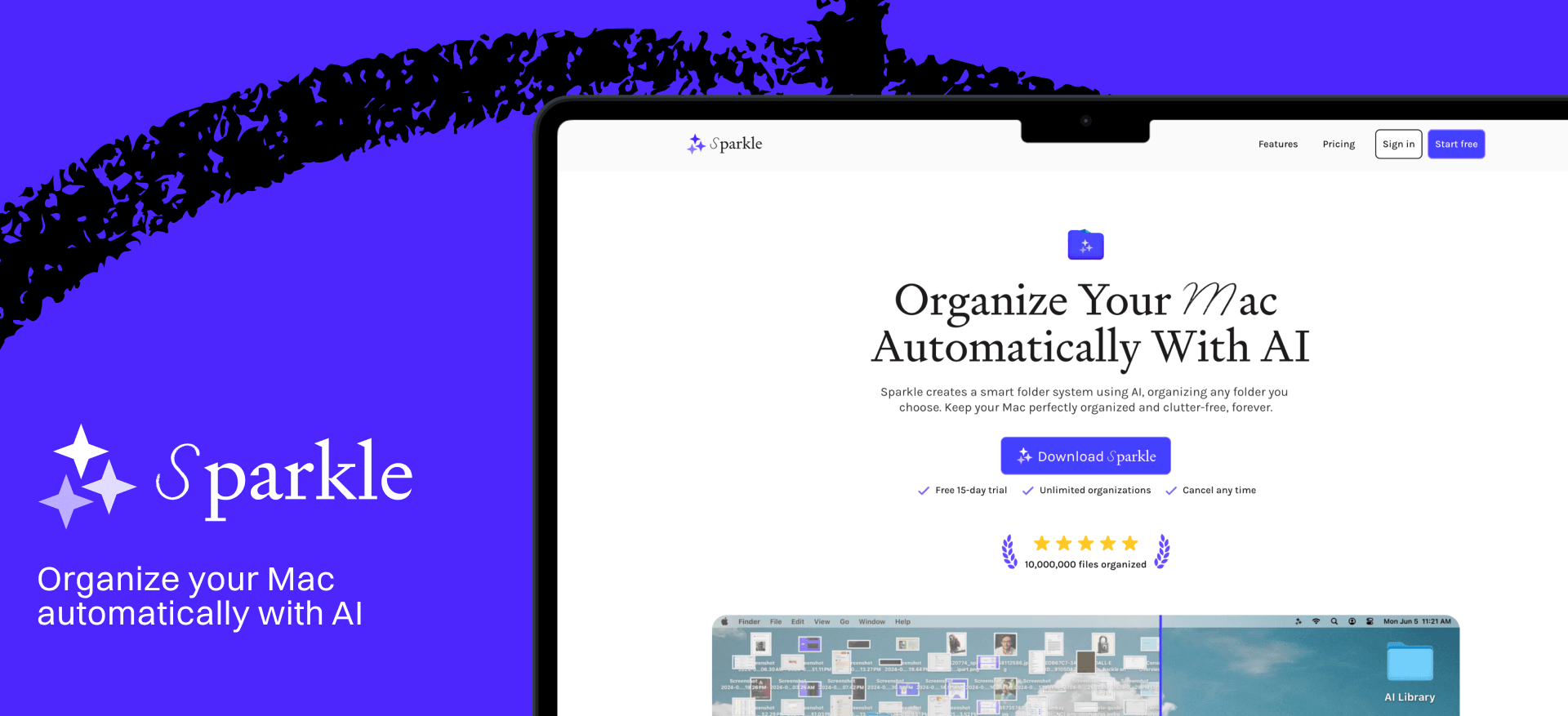
"I Rebuilt an App Thousands of People Use in 14 Days With AI" by Yash Poojary/Source Code: Ever wondered if those stories about people building entire apps with AI in a weekend are real or just tech fairy tales? Yash Poojary decided to find out by rebuilding Sparkle—our AI file organizer that's already sorted over 10 million files—from scratch in just two weeks. Read this if you want to see what AI-powered development actually looks like in practice, complete with late-night ramen sessions and the occasional two-line fix from Stack Overflow. ✨Download Sparkle to see the results for yourself.
"AI Can Fix Social Media's Original Sin" by Dan Shipper/Chain of Thought: For 15 years, platforms have fed us what we click on (revealed preference), not what we say we want, turning our feeds into doomscrolling buffets of outrage and empty calories. But AI flips the script by prioritizing stated preference—it actually listens when you say “help me stop doomscrolling.” Read this to understand how AI might save us from social media's worst impulses and, more importantly, offer us a richer reflection of ourselves.
"The Leverage" by Evan Armstrong/Napkin Math: After publishing nearly 500,000 words at Every, Evan Armstrong is launching his own publication called The Leverage, which aims to give investors, founders, and operators an “unfair advantage” in navigating the profound changes reshaping business and technology. Read this if you want to follow Evan's next chapter and get his weekly analysis.
From Every Studio
Sparkle v2 is live: People (and folders) everywhere are obsessed
We launched Sparkle v2 and over half of our users upgraded on the spot.
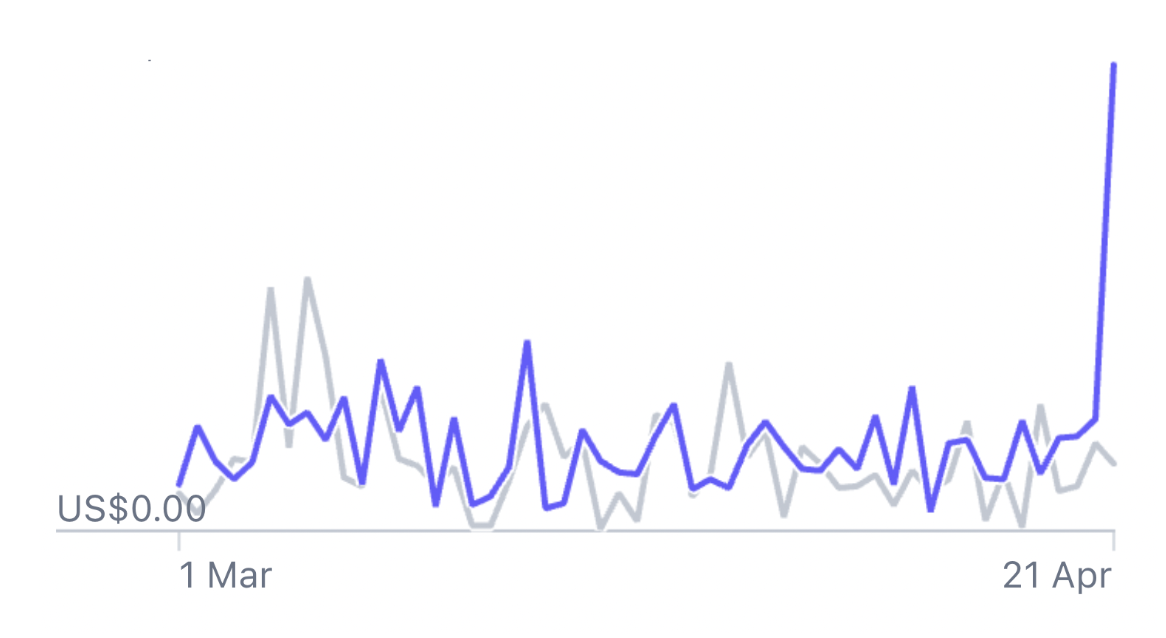
A snapshot of our Stripe dashboard.
In this version, we rebuilt Sparkle from the ground up: faster, smarter, and unapologetically Mac-native. So what’s new?
- Customizable organization timing: Set Sparkle to run every hour, once a day, or whenever your heart desires.
- Your files, in full transparency: Sparkle shows its work. Every move is logged, so you can see where your files were rehomed—and jump straight there with a click.
- Hit pause or undo: Take a break on folder organization or take it back.
Coming up, we’re working on context-aware organizing powered by lightweight, local models that keep your information private and understand your files based on what’s inside them (content), what they’re labelled with (tags), and details like creation date or type (metadata).
Soon you’ll be able to set custom rules, and even chat with Sparkle to find or clean up files instantly.
Cora’s background tasks? Smooth as butter.
Background jobs in our inbox management tool Cora—tasks like sending briefs and summarizing emails—were throwing more errors than we were comfortable with. So we gave the infrastructure the care it deserved and brought those errors all the way down to zero. The chart? A flatline (in the best way). As Cora’s general manager Kieran Klaassen puts it: “Infrastructure is boring, but oh so important.”
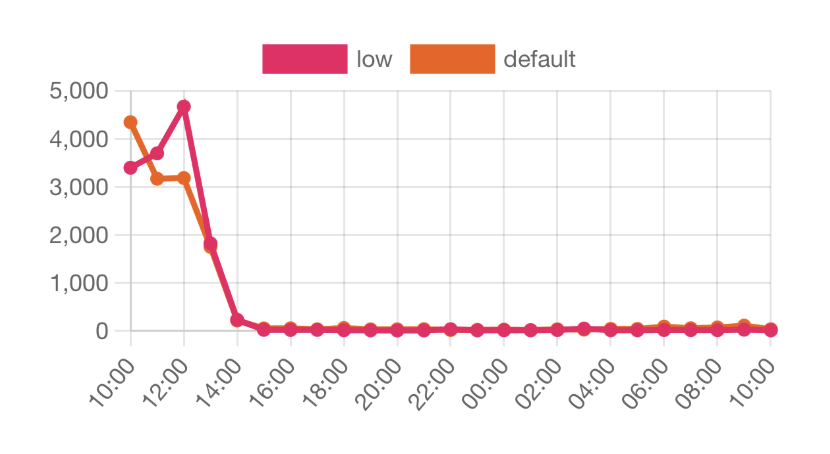
A snapshot of errors in background job tasks (send briefs, summarize emails, etc.).
Build faster, together
When entrepreneur in residence Naveen Naidu Mummana shared a prototype in Discord of an app he’s building, the team showed up—not just to give feedback, but to help it fly.
- Kieran, who also happens to be a composer and sound designer, spun up SuperCollider, a program to generate music, and handcrafted onboarding sound effects for Naveen’s app—turning code into music.
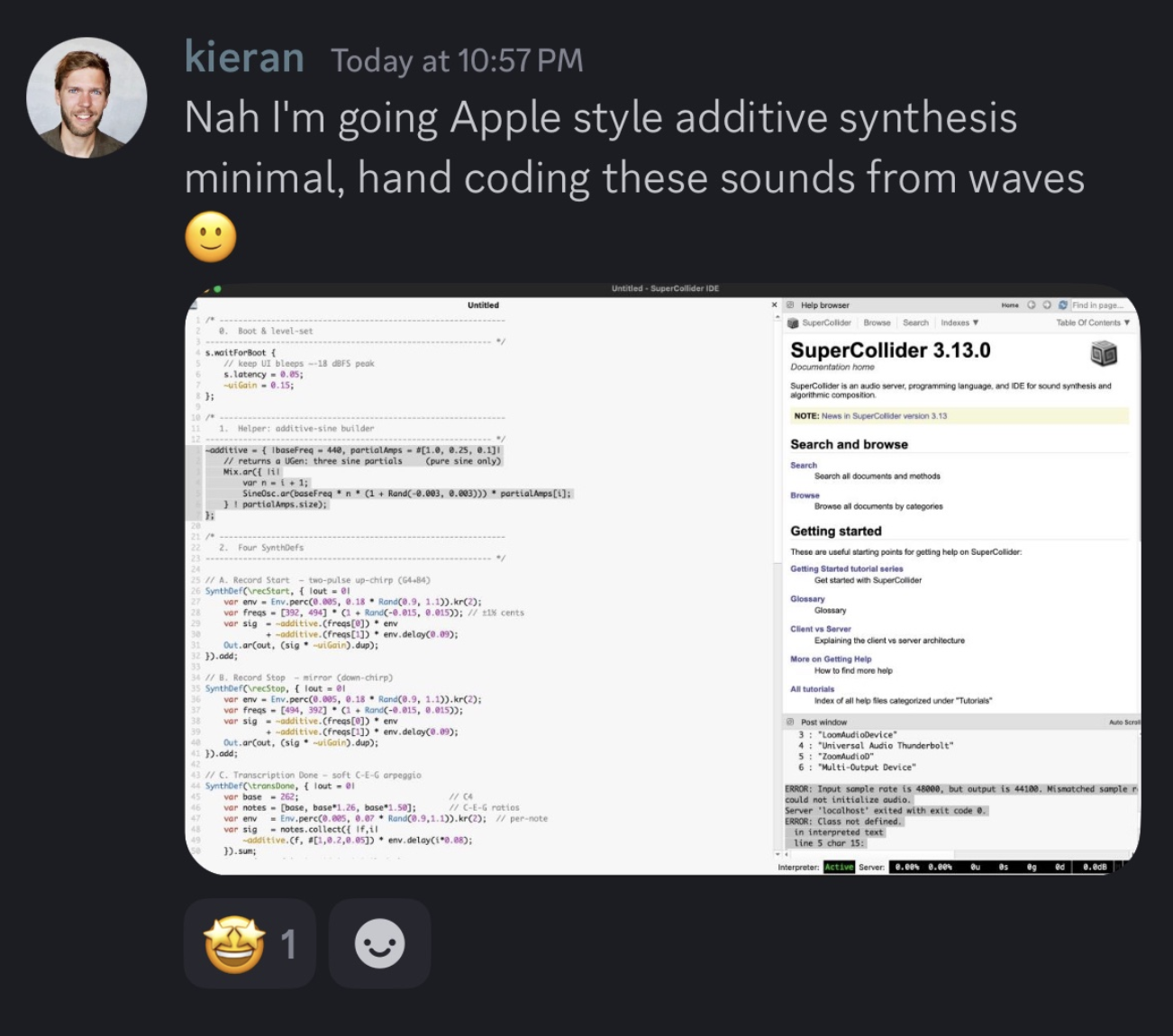
Source: Every Discord.
- Fellow EIR Edmar Ferreira emerged from his coding cave with high praise: “This is the only app [in the space] I’d actually pay for.” Then got right back to building.
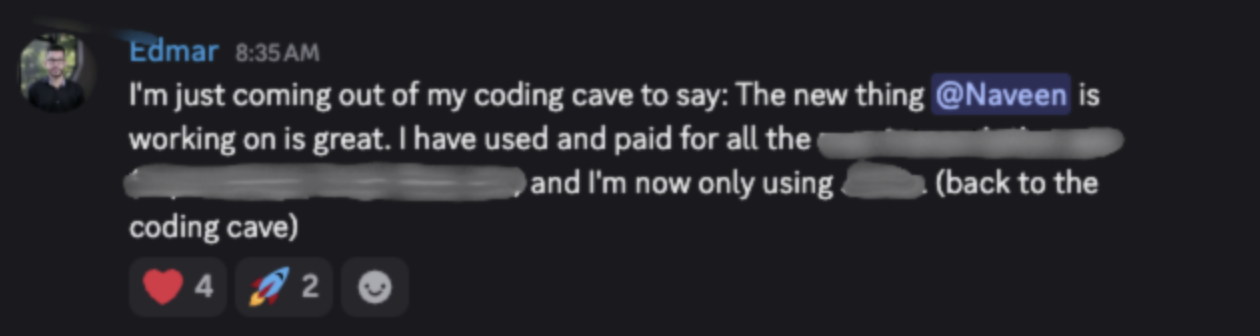
Source: Every Discord.
- Cora engineer Nityesh Agarwal tested it alongside two market leaders and came back with a simple verdict: “Yours just works.”
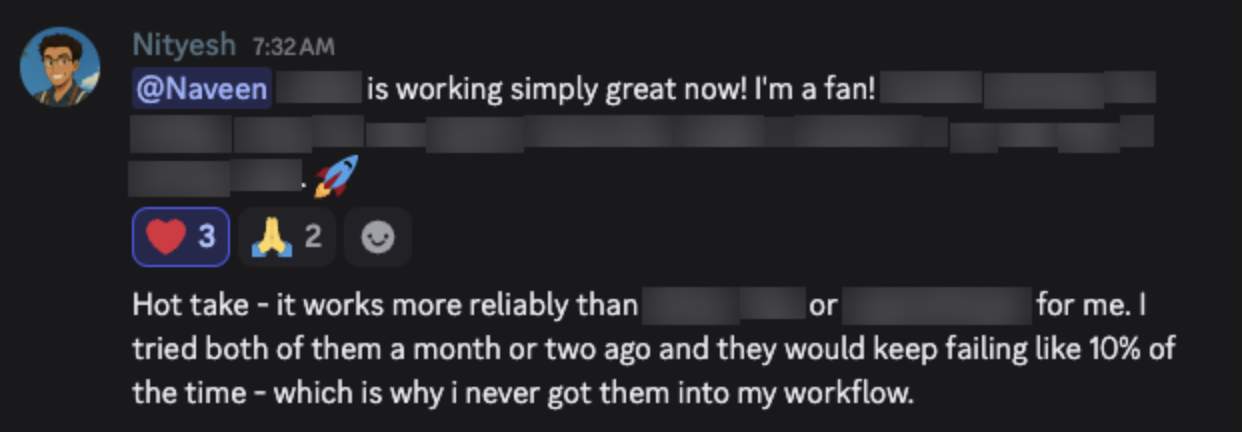
Source: Every Discord.
First a prototype, maybe soon a product. Stay tuned for what Naveen’s building next.—Vivian Meng
Alignment
Go where the tension is. It's rare to find a book that honors ambition, agency, intuition, and spirituality in equal measure. Most narratives tilt heavily toward one side, dismissing the other as trivial or unnecessary. But Nobel Prize-winning author Hermann Hesse beautifully captures this tension in his acclaimed yet lesser-known novel, Narcissus and Goldmund. First published in 1930, the book explores the relationship between two friends: Narcissus, committed to cold, hard logic, and Goldmund, who embodies intuitive freedom. Each character represents what the other lacks, and as the story unfolds, Hesse gently reveals how deeply connected, and ultimately incomplete, these two sides are without one another. Midway through the book, I stopped and asked myself why we feel this same tug-of-war within ourselves. Perhaps it’s because we feel as though this tension between reason and creativity is one we're supposed to neatly resolve or choose between. But the book invites us to explore that tension not as something to escape or resolve, but as an essential part of embracing who we truly are.—Ashwin Sharma
Collaborative filtering
Join us at Every. We’re hiring a part-time customer support and engagement lead to help care for our users across Studio products like Cora, Sparkle, and Spiral. You’ll be the steady, friendly voice in our inboxes and communities—answering questions, spotting patterns, building docs, and occasionally hopping on calls with users to help us make our products better. You should love working with people, be highly responsive, and enjoy the messiness of building early-stage products. If you’re curious, empathetic, and excited to grow with us, check out the job posting for more details. $35/hour. Flexible, remote, and fun.
Alex Duffy is the consulting lead and a staff writer at Every, where he writes about empowering people with AI tools and technology in Context Window. You can follow him on X at @theheroshep and on LinkedIn, and Every on X at @every and on LinkedIn.
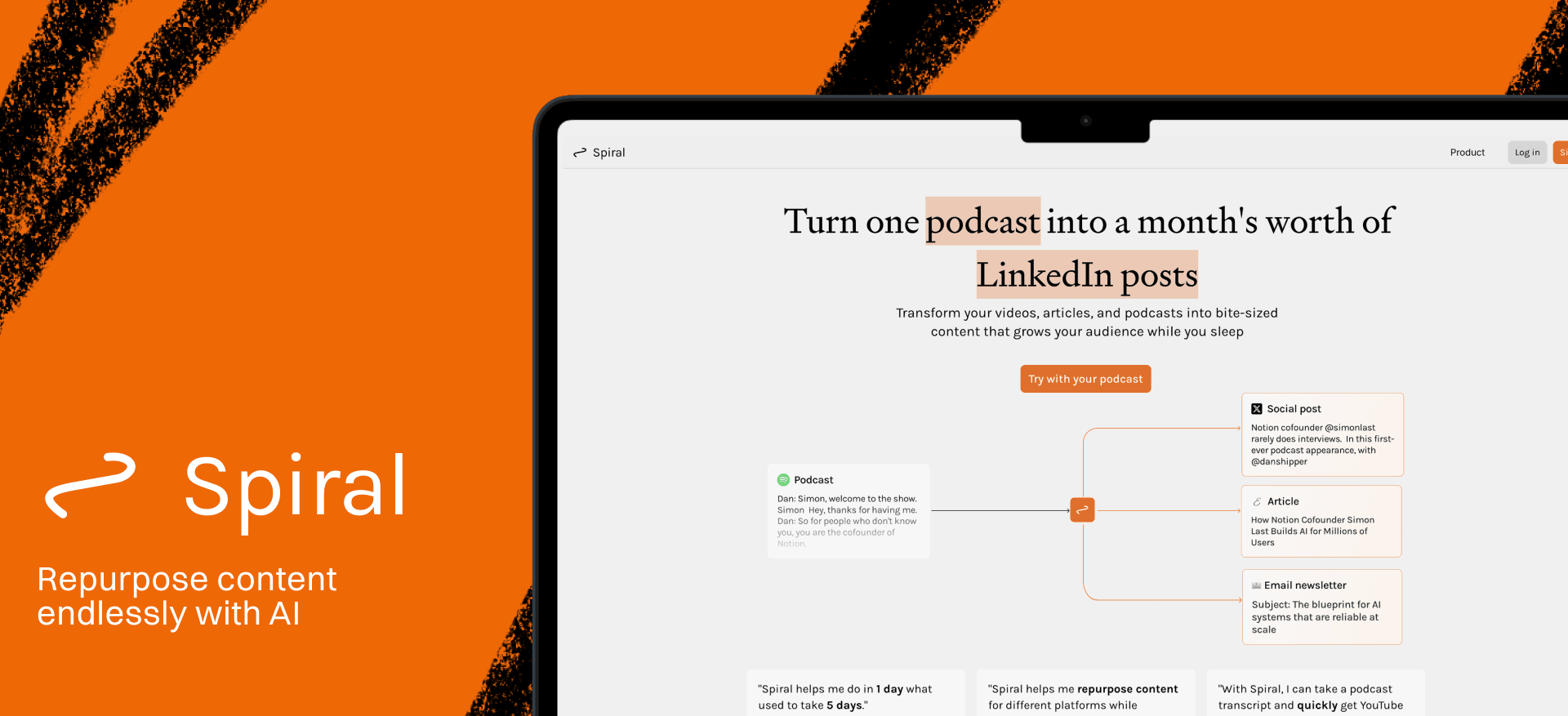
We build AI tools for readers like you. Automate repeat writing with Spiral. Organize files automatically with Sparkle. Write something great with Lex. Deliver yourself from email with Cora.
We also do AI training, adoption, and innovation for companies. Work with us to bring AI into your organization.
Get paid for sharing Every with your friends. Join our referral program.
The Only Subscription
You Need to
Stay at the
Edge of AI
The essential toolkit for those shaping the future

"This might be the best value you
can get from an AI subscription."
- Jay S.
 Every Content
 AI&I Podcast
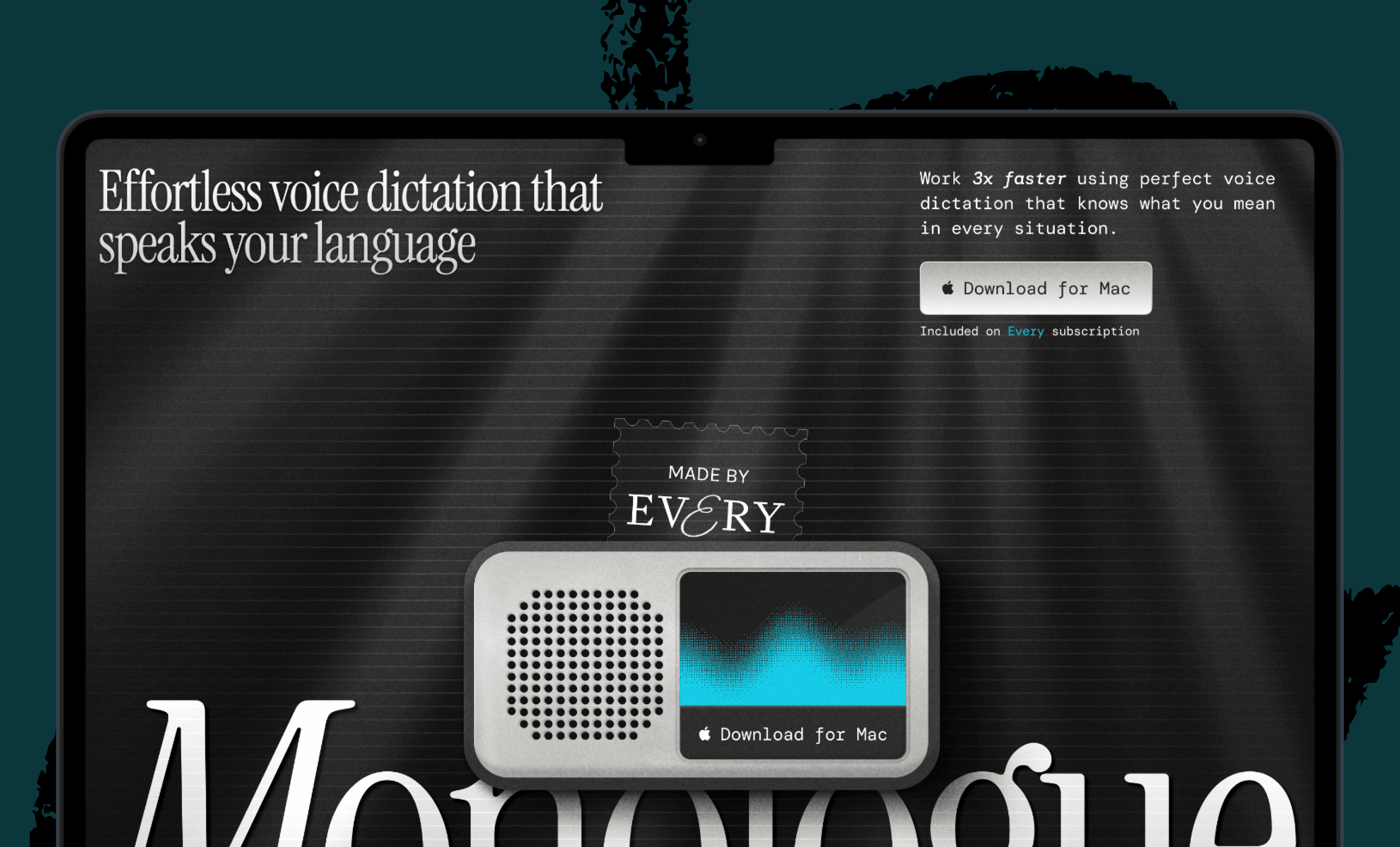
 Monologue
 Every Agent
Join 100,000+ leaders, builders, and innovators

Already have an account? Sign in.
What is included in a subscription?
Daily insights from AI pioneers + early access to powerful AI tools


 Front-row access to the future of AI
 In-depth reviews of new models on release dayPlaybooks and guides for putting AI to workPrompts and use cases for buildersIn-depth reviews of new models on release dayPlaybooks and guides for putting AI to workPrompts and use cases for builders
 Bundle of AI software






 Katie Parrott
 Every Staff
 Kieran Klaassen
Comments