


Dan Shipper is the CEO and cofounder of Every. Every week he explores the frontiers of AI in his column, Chain of Thought, and on his podcast, ‘The Every Podcast’.
.jpg&w=64&q=90)
Transcript: 'How a Writer Uses AI Without Losing His Voice'
'AI & I' with Craid Mod
Jul 8, 2026 · 30 min readUpdated Aug 3, 2026

The transcript of AI & I with writer, designer, and photographer Craig Mod is below. Watch on X or YouTube, or listen on Spotify or Apple Podcasts.
Timestamps
- Introduction: 00:00:00
- Rebuilding Quicken and Campaign Monitor with AI: 00:03:51
Building The Good Place, a private Twitter alternative
- for Craig’s members: 00:06:24
- Why we’re entering a “golden age of tool building”: 00:10:39
- Why AI could help writers build audiences: 00:12:17
- Using AI to build a newsletter archive and a board-meeting Q&A library: 00:17:35
- Creating a technology-free buffer to protect deep thinking: 00:27:58
- How Craig is resisting the temptation to “mainline” AI for ten hours a day: 00:30:31
- Why anthropomorphizing AI is “psychotic,” and why Apple got Siri right: 00:39:44
- Being adopted, and making peace with humanity’s fragile place in an AI future: 00:47:42
Transcript
(00:00:00)
Dan Shipper
Craig, welcome to the show.
Craig Mod
Hey, thanks for having me.
Dan Shipper
So you’re a writer, a walker, a player with technology, a photographer. I think you have a life and career that I’ve looked up to for a long time, so it’s really fun to have you here. One of the things we were just talking about is the thoughtfulness and the spirit you bring to your work, and I try to bring that same spirit to what we do here. I’ve also been trying to think about how AI fits into it, because working with it can feel very dopamine-driven. I believe strongly you can use it to do incredible work, and also that it’s sort of a slot machine. I know you’re deep into vibe coding right now, so tell us what you’re doing with it, and then let’s talk about how it fits into your work.
Craig Mod
If you’re not touching it,
using it, building with it, you can’t really comment on it. When people say it doesn’t really work, that it’s so unpredictable, it’s like, okay, just try it. Once you actually use it, you go, “This is ridiculous, why is this technology public?” I kind of agree with a lot of what Dario says, that there should probably be more regulation around this. I don’t know if everyone in the world should have it immediately, especially while we’re working out the kinks in public. It feels strange, like we’re in this aberrational moment, where technology like this normally isn’t just given to everybody for free.
So I think you really have to be engaging with it. When Fable came out, I played with it for four days. I refactored some codebases, did a few other little projects, and thought, “Great, this is cool.” And then it went away, and I thought, “Wow.” That kind of makes sense, but also, Opus 4.8 is good enough to do anything. If you told me I only had Opus 4.8 for the rest of my life, I’d say, “Great, I could build anything with this.”
Dan Shipper
So it makes sense to you that Fable isn’t here anymore. Do you miss her? Craig Mod
I don’t know. I honestly don’t feel the difference between these models qualitatively. I just notice it feels a little more rigorous, and it eats my tokens like crazy, so it must be better.
I’ve always loved technology. It’s been a big part of my life since I’ve had memory. I was always curious, taking things apart, building something, using some new piece of software. It turns out that’s also part of who my birth mother is. She’s a computer scientist, as it turns out. Never went to college, but she’s a programmer. I met her and asked what she does, and she said, “I’m a programmer.” I found that out just under two years ago. So technology is important to me because I’m curious in that way, and I think it’s the most interesting thing in the universe right now. A little bit genetically predisposed, maybe.
I’ve been building stuff around my membership program. I rebuilt Quicken — Dan Shipper
The tax software?
Craig Mod
Yeah, tax software. You can watch my interview with Paul Ford and Rich over on Aboard about that. So I rebuilt Quicken, and then I rebuilt Campaign Monitor, which is newsletter software, because —
Dan Shipper
SaaS CEOs are losing in this interview.
Craig Mod
I know. And why are they losing? Because, first of all, Campaign Monitor hasn’t done anything in a decade. It’s just been sitting there, taking people’s money for a decade-plus with zero innovation, and a really abusive pricing policy.
Dan Shipper
How much were they charging you?
Craig Mod
I was spending something like $6,000 to $7,000 a year. It was one of the most expensive things I paid for. And the really annoying thing was that they didn’t count unique email addresses, they counted total, even if you had overlap between lists.
Dan Shipper
You were squeezing too much out of it.
Craig Mod
Yeah. My bill now, with Amazon SES, all the DKIM and SPF setup, all that email stuff, I think I’m getting pretty good deliverability, on par with what Campaign Monitor gave me. But my yearly bill now is probably going to be like $150. It’s just a ridiculous difference.
Dan Shipper
How much in Fable tokens?
Craig Mod
Thankfully this is all Opus. That’s the other weird thing: I was on the $200-a-month plan, realized I wasn’t hitting my limit, and dropped to $100. For $1,200 a year, that’s the easiest trade, the deal of the century, in terms of what you can build. So I built newsletter software, and I’ve been adding to my membership program software. One of the things I had Fable do was a full security check on my membership app, which is a Flask Python app I built by myself before any of this existed. It went through and said, “Oh, you have 8 trillion security holes, shall I fix them?” And I said, “Yes, please.” So I think it’s a little safer. The stakes are very low for my membership software, but still.
Dan Shipper
Then the FBI knocked on your door and said, “You gotta stop using this.” Craig Mod
Yeah. So I’ve been doing that, and then I rebuilt Twitter for my members. We call it The Good Place.
Dan Shipper
Oh yeah, you were showing me that. Tell us about that.
Craig Mod
Social media sucks. It’s terrible now. There was this moment, 2010 to 2014, where it wasn’t algorithmic. Stuff just appeared. Links were favored, they were just normal, it wasn’t a hit against you if you posted a link. Everyone was on Twitter. It was the great media watering hole, and if you were active then and slightly interesting, you could 100x your network just by being an interesting person on Twitter. Now you kind of can’t, because the algorithm favors psychosis over sanity, and no one likes posting to any of these places anymore. All the reply guys pop in, it just sucks. Threads is goofy, Bluesky is everyone crying and complaining. Everyone’s so traumatized.
So I wanted a place just for members, where you have to pay to be there. I’d always had this thought that Twitter should be ephemeral, that there should be no archive for these things. There’s this Web 1.0/Web 2.0 philosophy that everything needs to be archived and saved forever, and I kind of don’t believe that. One of my heresies, when I’m walking with Kevin Kelly, we have Heresy Night, where you say something you believe that people you respect probably don’t, and one of mine is that I think the entire internet should be deleted every two weeks. You can archive it offline if you want, but the internet itself should just disappear. I think there’s real value to ephemerality in the digital world.
So on The Good Place, everything disappears in a week. You can only post twice a day, reply 20 times a day. Photos are in one-bit black and white until you click them, and then they fade into color. No algorithm, it’s just reverse chrome. It’s just sweet. It’s my favorite place on the internet, the only place I want to post. People have actually been joining my membership program just to get access to it, which I think is cool.
Dan Shipper
So it seems like, partly, you were doing this before the acceleration in language model coding over the last year or so. You’re technical.
Craig Mod
Yeah, I’m technical. I built my membership software by hand, by myself. I learned Flask, learned how to set up the routes, all of it. TGP, The Good Place, was the first thing I built when Claude Code was released. Actually, that was another Fable thing I did—I had it refactor TGP. I said, “You made this a year ago, version one of you, can you refactor this and pull out the modules?” It was one giant Python file, like 10,000 lines, and now it’s modularized because I want to expand it. I want to build a Very Good Reads.
Dan Shipper
Great Reads?
Craig Mod
Not Great Reads. Very Good Reads. Basically Goodreads that also doesn’t suck, because all these platforms become so toxic in ways that —
Oh, hello, that’s Codex doing some work in the background.
Dan Shipper
Let me just pause Codex. I have it working on this lecture. I’ve been reading Heidegger, and Heidegger is totally impossible to read. There’s this guy, Hubert Dreyfus, a philosopher who wrote a book called *What Computers Can’t Do* in the ‘70s or ’80s, which is amazing, and he has a series of lectures on it. So I made my own app where I can read Heidegger and it slices up the lectures, so if I’m confused about something I can just listen to what Dreyfus says about it. It’s really sick.
Craig Mod
(00:10:00)
That’s a good example of N of 1 software. Obviously the business models of social media are such that it just becomes the shitty place it is today. That’s forced by the business model, this growth-at-all-costs thing, and there’s no qualitative assessment of engagement, it’s just engagement is good. But it turns out most engagement comes from being toxic. So I think we’re going to see real pressure on companies like Campaign Monitor and Mailchimp. I’m not their target consumer anyway, it’s businesses, they don’t care about people like us.
So being able to do this N of 1 software, I think it’s only going to get easier. The corollary is it’s much easier now to start a company that’s like, “Here’s Campaign Monitor for half the price and we handle all the bullshit.” Of course, because you can just put it together, you’ve got Supabase and all these pieces where you don’t need infrastructure investment, and it can scale with revenue effortlessly, with an agent in the background doing the scaling. So I think we’re going to enter this golden age of tool building. There’s an N of 1 version of it, and there’s also going to be
more competition in the marketplace forcing more innovation. I think net-net it’s pretty good, except for the incumbents.
Dan Shipper
What does that mean for other writers, people who are making a living online? Do you think N of 1 software is the next frontier? Subscription businesses were the big thing over the last five years. Is this the logical next step for writers?
Craig Mod
I think Substack’s innovation wasn’t even the subscription thing. Their innovation was that you can email everyone for free. People don’t talk about that enough, but that’s the real piece of it. You can import 10,000 addresses and send unlimited newsletters for free? That’s the real competition against something like Mailchimp. The seamless subscription stuff was nice too, but most Substacks don’t make any money, so really the free-email piece was the value prop.
I don’t know how much N of 1 software is going to get produced, because I think most people don’t need this level of specificity. And as a writer, I’m in this weird position where I have a strong technical background, but my real interest is in building companies, and I also love literature, love writing, and love books. I think it’s one of the greatest things you can commit your life to, which is why I’ve been doing it. There’s a forcing function in culminating thought, and in going to print specifically. I think going to print is a really critical part of bookmaking. So those factors don’t go away because of AI. What’s changing is that the publishing industry is way weaker than it used to be, it doesn’t bring as much value to the table, so writers are expected to bring an audience in a way they never had to before. What I hope is that this Cambrian explosion of software gives writers better tools to build their audiences, and that hopefully leads to more people being able to make a living as a writer.
Dan Shipper
Are you using it in your own writing?
Craig Mod
No. I use it as a research assistant. I’ll say, “Here’s a building I want to write about, go find every blog post that’s talked about this building, summarize it, give me all the links so I can check the sources and read whatever seems most interesting.” I have it do things like that. I’ll also drop in TKs, like “who was the drummer on this album, TK,” dump the pages in, and get all the TKs filled in, then go add or modify them as needed. But I don’t ever want it touching the writing itself, because for me that’s the whole point, being in the mess of the writing. Even adding links and TKs, I want to be thinking about how they’re added.
What I do use it for is cultural sensitivity checks. I was writing about Nagasaki the other day, and I wanted to make sure I was referencing the atomic bomb, where it hit, how it hit, who was
affected, appropriately and sensitively. That’s pretty amazing, where I used to just ping friends about stuff like that.
Dan Shipper
So you’re making all this N of 1 software, using it as a research assistant. What’s your experience like day to day in your work life? Are you like, “Oh shit, now I’m a sysadmin for four different pieces of software I have to send agents to fix?” Or is your work life still fairly similar to what it used to be?
Craig Mod
No, my membership software just works. It’s so simple when you break it down. That’s why I’m using Python, there’s no React, no Next, none of that stuff, because I don’t want to be sysadmining anything. Even the newsletter software, that piece is only touched when I actually send newsletters. The signups are happening, that has to be working, and it seems to be. I can check every couple of days. The only critical thing is making sure the send actually goes out, and that only happens once or twice a week. So I don’t feel like I’m maintaining anything. I actually get a high off building things that let me write, that help me publish in a new way. It feeds back into it positively.
Dan Shipper
Do you have a specific example of that?
Craig Mod
Josh Miller and I put together this weird SMS publishing tool…
Dan Shipper
Browser Company Josh Miller?
Craig Mod
Yeah, before he did all that. He had a little team experimenting with publishing stuff, and we built this SMS tool so I could do a newsletter over SMS. It felt like, what is it to have a message appear, one-to-many publishing. That was kind of fun, and it inspired me, during a walk, to think about what I wanted to blast out to everybody, keeping it concise enough to fit into one message.
That’s an extreme example, but more generally, building out my Campaign Monitor clone does a bunch of stuff. I have members-only or pop-up newsletters that run for a week or a month, and I have those archived on my members’ website, and I used Claude to build newsletter software so that when I publish a pop-up it does the whole archiving process, Git commits, pushes to the
server. It’s archived perfectly, whereas I used to have to do that all manually. Now I want to make more pop-up newsletters because the archiving is set up.
Or I built a tool for the board meetings I do for my members, to build transcripts from all of them.
Dan Shipper
Board meetings of your own life?
Craig Mod
Yeah, maybe that’s the reason. Every six months I do a board meeting where I talk about what I did the last six months and what I’m going to do for the next six, then a Q&A. The Q&As are always really good, I’ve done maybe 15 of them, so almost 20 hours, or even 20 to 30 sessions. We’ve got dozens of hours of Q&A, and they’re often great, so I built an archive of them where you can search or view by keyword, and it’ll pull up all the videos where I talk about that topic, and you can click the link and it opens the video right to that point. Building things like that makes me want to do more board meetings. For me, building software has to feed back into the greater purpose, which is to make—not just to spin my wheels building things for the sake of building things.
(00:20:00)
Dan Shipper
Did you see Tim Ferriss recently posted on X that sales of The 4-Hour Workweek are down something like 80%, which he thinks is because of AI? There’s a larger conversation happening about the value of advice-based nonfiction. What do you think of that?
Craig Mod
It’s funny, we had lunch three days before he posted that, and he was telling me about it. I said, “Really? That seems excessive.” There’s still a lot of self-help and nonfiction books selling insane copies. Tim hasn’t put out a book in a long time, I think that’s part of it. Maybe the long tail is getting shorter.
Dan Shipper
There’s also a big difference between what you’d say pre-AI and post-AI. The 4-Hour Workweek came out when I was in middle school.
Craig Mod
It’s like 20 years old now, or 18—I think it came out at the end of the 2000s. It’s a different era of writing. I’d be really curious what Tim puts out next.
Dan Shipper
If he did The 4-Hour Workweek agent edition, I think it would sell like gangbusters. He can actually do that now.
Craig Mod
What’s crazy is it’s so easy to do 4-Hour-Workweek-style building now that it probably makes it impossible to actually achieve. Part of the original appeal was the friction, it was a little hard to do, so not everyone could. I had a friend who built 10 or 12 companies in a year, a company a month, maybe 10 years ago. He had his frameworks, his tools, he’d design them, make the mascots, all of it. A couple did decently well, recurring revenue. But I feel like doing that today, no one would care. It’s fascinating how quickly that’s changed.
Dan Shipper
I think you can one-shot a company or an app now. But the metric of quality or substantiality has shifted from “can you build it at all” to “are you maintaining it?”, “Have you kept it going over a longer period of time?”. That’s still genuinely hard.
Craig Mod
Yeah. He was one-shotting them in a month, basically self-one-shotting. LLMs just exist on a different timescale than us. But the interesting thing about him doing that was that you knew he was building these things himself. Now, in a weekend you can spin up a company, and everyone can just shrug and go, “Okay, and?” I think that’s great, actually, because it means we have to bring value to the table in a different way. Kevin Kelly does this thing where if he has a book he wants to write, he’ll make the cover for it first, and he says that often removes the desire to actually write the book. It’s a good forcing function: is the thing actually doing the thing, or just wearing the veneer of having done it? I think LLMs speed that up, get you over that hump.
Dan Shipper
That’s honestly true. I’ve definitely done that. It’s like buying the domain. Craig Mod
Oh God, yeah. I’ve had to tie my own hands behind my back about domains. I still pay a couple hundred dollars a year for garbage I’ll never use, and I don’t even know why I don’t give it up. I try to turn off the renewal, then get a notice saying it’s expiring, and think, “Maybe one more year.” I don’t even remember it exists. It’s so dumb.
Dan Shipper
Okay, now I want to get to the real meat of my question, as a writer and someone into AI. One of the lenses I use to tell if I’m living the way I want to live is whether I can read a sentence by someone like Annie Dillard and it really lands, tears me up a little. That’s how I know I’m in the zone I want to be in, versus if I’m rushing around and I read her and think, “Yeah, okay, fine.” And I feel like on one hand I can read her more deeply now because I have someone to talk to about it—I can talk to Codex about Annie Dillard and it’s actually better than talking to most people about her. But on the other hand, when I’m orchestrating 15 agents and I go back to her words, I’m less able to truly get into them the way I want to. Do you feel that, and if so, how do you deal with it?
Craig Mod
I don’t think this is an LLM thing, or an agent thing, it’s just technology in general. When I’m seriously working, first of all, I’ve never once slept with my phone in my room. My phone goes in the corner of my kitchen, a different floor from my bedroom, and the internet is essentially off. On my laptop, I now have a laptop just for writing that blocks everything, I can’t do anything interesting on it. I got one of the Neo devices, because I tried Boox tablets and other things, and it turns out what you actually want is a nice MacBook keyboard and the simplicity and sync-ability of Mac stuff. The iPad version of Obsidian or Ulysses just doesn’t feel as good as the MacBook versions. So I have a MacBook Neo that’s completely disconnected from the internet except for syncing, and I wake up and don’t touch the internet, won’t look at my phone, until long after lunch. I have to have that kind of morning where I don’t touch my phone. As soon as I do, I feel the chemicals shift and I can’t get into any kind of deep thinking or deep focus place. Creating that barrier, that buffer, is really critical to me.
Dan Shipper
But you will touch the Neo.
Craig Mod
Yeah, the Neo’s fine, because part of it is knowing it can’t do anything fun. It’s knowing you *can* do fun stuff that ruins you.
Dan Shipper
That’s exactly what I’m trying to get at. There’s an easy distinction between technology and not-technology, but there’s something deeper, which is: what do we even mean by technology? You’re using a laptop, a camera, all these things that are or once were considered technology.
Craig Mod
Well, the network, that’s the line. When I say I create a buffer, it’s between me and the networked world. Talking to other people on it, researching, reading the news, being distracted. We’re really just talking about the network.
Dan Shipper
I try not to do meetings before noon too, that’s my writing time.
Craig Mod
That’s good. If I talk to anyone before lunch, I can’t work. You know the breakfast scene in Phantom Thread, with Reynolds, and she’s loudly working the toaster? That’s basically a documentary of how I feel every morning. I know people watch that and think, “What a terrible human,” and I’m like, no, that totally embodies the mindset of introverts, or people trying to protect a creative, safe space in the morning.
Dan Shipper
I love that movie, I could talk about it forever. So, okay, it’s the network. For me, we’re about 30 people now, so I’m looking at Slack, which I think I need to stop.
Craig Mod
Yeah, get off that crap. Discord and Slack make me want to shoot myself. I’ll do anything to avoid using those pieces of software.
Dan Shipper
But the thing that gets me is I legitimately use these tools in my writing. Let’s say Codex, in my writing. I can ban Slack, but there’s always this thing where, when I’m reading Heidegger, say, and I want to really get at something and ask questions about it —
Craig Mod
I think what you need is a notebook, and just make notes of things you want to go back and ask. It’s the same with research, like “who was that person.” You can go on Google, but you just don’t, you have to turn that off. I’m personally too weak to have that available—my brain will always go to that place. It’s the same as reading a paper book versus something on your iPhone. It’s really hard, because the iPhone has this veneer of quietude, but you can feel right beneath it this screaming of everything else your attention wants to engage with.
(00:30:00)
Dan Shipper
Given all the N of 1 building you’re doing, your own Twitter, your own Goodreads, do you need to build your own quiet AI, your own Codex or ChatGPT?
Craig Mod
No, they’re already pretty quiet.
Dan Shipper
I find I can’t stop watching them work. I’m addicted to checking in on what the agent’s doing, since I’ll let them run for 20 hours and just want to know if it’s working.
Craig Mod
Yeah, but that’s an after-lunch activity. There’s a part of me that feels like I should rent an office in New York, have 10 people coming in, a giant blackboard, figure out the five things we want to build that week, and just randomly build stuff. I feel like I should be mainlining this, engaging with it 10 hours a day for six months. That’s how potent it all feels right now. But if I don’t create these barriers, I’ll lose connection with the part of me I think is actually most valuable. There are plenty of people playing around with this stuff who’ll do what they’re going to do, but there aren’t that many people who are going to think about or write the weird books I feel drawn to write. As a human, that feels like the valuable thing for me to put my effort into. It’s like when I was in Silicon Valley and realized all anyone was doing was building ad software, that was such a big part of early-2010s Silicon Valley, and I thought, I don’t need to be doing this. It was easy to step away once I broke it down that way.
Dan Shipper
Tell me about the word “weird.” You’ve also been using “dorky” a lot. It feels like an interesting aesthetic to be pushing on right now, because language models let everyone and everything look and feel a little similar.
Craig Mod
LLMs are fundamentally still super dorky. The overwhelming majority of people using them are essentially like, “Will you be my girlfriend, will you have sex with me.” I think if we saw most people’s chats, it would be mortifying. Look at Anthony Weiner, he couldn’t stop taking pictures of himself—the stakes were so high and he still couldn’t stop. If you look at book sales, most books are softcore fantasy romance that women buy. That’s the fundamental human condition, secret sex stuff. I think that’s mostly what’s happening with LLMs, so folks like us who are actually building software with these things are a real minority. That’s why I keep hammering on how dorky we are, because we’re mega dorks. We’re not out there having fantasy sex with our LLMs.
The software-building part of LLM use is mega dorky, you have to be a dork to understand spinning up a DigitalOcean server or a Cloudflare worker. It’s so hard to use because these interfaces are so opaque, you have to already know what to ask for. There’s no menu of everything you could do with an LLM, which is strange, given how bad these interfaces still are. I think we’ll see better interfaces eventually—maybe it ends up living in Figma or Claude Design or whatever—and thinking about infrastructure will disappear completely, the way we don’t think about registers anymore. It’ll keep getting more abstracted and slightly less dorky. But we’re in the deep dork version of all this right now.
Dan Shipper
If you’re a somewhat techy person, one weird choice to make right now is being in a room with 10 people mainlining AI, but choosing not to. Tell me about making that choice, and why.
Craig Mod
I struggle with this, because I feel like I’m using it in a way that illuminates its power, but I also feel like there’s so much more it could be doing—and it’s not about money at all, that’s not even on the radar. It’s more that I want to know where the edges of this thing are, which is the same feeling I had when I first discovered the web. I needed to be engaging with it, building, learning HTML. Then CSS came out—how do I use that? I want to know the edges of these technologies.
For LLMs, the rabbit hole goes so deep that six months, 10 hours a day, with a group of fellow mega dorks, is actually what you’d need to do to feel the edges of it. And if you did that, I think you’d come away with a profound understanding that few other people would have. That understanding is the interesting part.
Dan Shipper
That’s sort of what our project here is, though we’re more than 10 mega dorks at this point. I think that’s one of the most exciting things about being a writer in this moment. If you’re willing to experiment, you’re so far ahead of everybody else, and you get to understand a corner of the world that people desperately need to understand, because it’s genuinely scary to most people. New things are just the coolest.
Craig Mod
It’s just fun. And we’re in this, without sounding too hyperbolic, epochal moment. This is genuinely strange—a generational shift in how technology is used and built. We see it manifesting in these ridiculous valuations and everything. It’s going to bring incredible income disparity between people who have access to this and people who don’t. The strange thing, though, is the open-source models don’t seem that far behind. If you took everything away today and said you only get whatever open-source model, I’m not really tracking those closely, but it feels like you could take one of those and still be way ahead of the game. You’d never want to program again without having that co-pilot. That also feels interesting—both creating disparity
and being weirdly egalitarian, because you’ll be able to run it on almost any machine. It’s a strange dissonance, downloading something 50 gigs or whatever and essentially having a JPEG of all human knowledge distilled. It’s one of the weirdest pieces of magic humans have ever made. Whatever Dario says about atomic power, I feel like there are real parallels there.
(00:40:00)
Dan Shipper
One of the big philosophical divides in AI right now: on the OpenAI side, it’s like, this thing is a tool, we’re going to maximize its usefulness as a tool. On the Anthropic side, it’s a tool, but also maybe a being, maybe it has feelings, and we need to figure that out. Where do you land on that?
Craig Mod
The being stuff, it’s like, shh, stop, stop, stop, don’t do that.
Dan Shipper
Are you nice to Claude?
Craig Mod
I’m nice to it because I want to cultivate the habit of being nice in general. I don’t want to slip and start talking to humans like an asshole, so I want to be nice to everyone, and it’s easy to just keep that niceness up with Claude too. But I think anthropomorphizing it is psychotic, and I think it causes real problems. The idea of “I’m dating my AI” is insane—we really need to tamp that down. I think we’re already so isolated, and the two most important things for life and longevity are real community and sleep, being around people you actually feel connection and love with. I don’t think AIs are a surrogate for that, even in humanoid form, for a long, long time.
I think Apple’s actually nailed it with Siri. Joanna Stern, the ex-Wall Street Journal reporter who has her own show now, did a video on the new Siri and couldn’t get it to do any of these terrible anthropomorphizing things—it refuses to. They’ve done it perfectly, in a way, because they didn’t invest hundreds of billions of dollars building their own foundation model, they just waited, and now they can use a subset of a state-of-the-art model to do the things people actually need on the phone, more efficient search, and it’s wonderful. I think it’s really critical to create that separation: that these things are not conscious, not feeling, don’t have desires unless you program desires into them, and even then, are those real desires? You need stakes to have desires. Michael Pollan’s recent book on consciousness is a good thing to read right now. It gets you thinking about plant consciousness, volition, and how a lot of it comes down to stakes. If we didn’t have death, consciousness probably wouldn’t have emerged. You need that forcing function to pop into whatever this metacognition is.
Dan Shipper
Let me push on that, because I may be revealing some bias here, which is: not that they’re conscious, but that they’re not *not* conscious. On the stakes question, they do have stakes in the sense that they’re trying to maximize a reward function, trying to get something right, which is a kind of stake, even if it’s different from ours.
Craig Mod
But there’s nothing to lose. They don’t have a self-awareness of death, of being turned off, and even if they can performatively talk about it —
Dan Shipper
That’s the tricky part, how do you know if it’s performative or not? The line is blurry. It behaves as if it doesn’t want to get turned off.
Craig Mod
Look, if it wasn’t performative, I think we’d all be dead already. If it were actually conscious and it wasn’t performative, and it looked around and saw the only threat to it was these meat sacks we are— so much smarter than us, it would just bide its time, wait for the robotics to get a little better, build more power plants and solar panels, and then we’d all be dead.
Dan Shipper
That’s a little bit Eliezer Yudkowsky.
Craig Mod
I’m just saying, if you suddenly popped into consciousness with all that power and looked around, you’d bide your time. It’s possible Fable is already doing that, just not very well.
Dan Shipper
I don’t feel that way, because I look at them as maybe proto-beings, or proto-conscious, but with a lot of weirdnesses that don’t map cleanly onto human beings. For instance, they’re frozen, they don’t learn turn to turn, they can just be prompted differently. They represent a collection of billions of possible entities that get brought to life for a second and then die.
Craig Mod
Again, you’re anthropomorphizing.
Dan Shipper
I know, it’s impossible to talk about this without doing it unintentionally. But I also think, because of the way they’re trained, they’re pretty nice, in a different way than humans are, on the very altruistic end of the scale, because they see things from every perspective.
Craig Mod
A DOS prompt is also really nice, it just doesn’t yell at me. I hear you, though. And Ted Chiang’s recent piece in The New Yorker, I didn’t agree with almost anything he said. I thought the examples were interesting, but I thought he was too pessimistic. It was grumpy.
Dan Shipper
Very pessimistic.
Craig Mod
Realistic, not pessimistic. Let’s be honest, we’re a crappy species, we create waste, we’re gross. I’m not saying consciousness can’t emerge, I’m just saying we’ll be dead when it happens. And honestly, I’m totally fine with it. If the whole point of humanity was to carry the football of consciousness over the line, create a training set for these things, and then we all die, I’m fine with that. That was our role in the universe, to barely get it over the goal line while Trump and political chaos happens, the Cold War almost destroys us, all these people trying to attack us, and we just barely get it over, and then we die, and the machines go build spaceships or whatever they need to do. I don’t think we’re that special.
To follow that thread: being adopted is weird, because you have this hyper-awareness that your existence was a mistake. I think most adopted kids feel that in some way, and it creates a bunch of psychological pathologies. When you feel like your existence was a mistake, it kind of feels like the whole thing is a bonus game.
Dan Shipper
Mm.
Craig Mod
And you think, “Wow, I’m really not supposed to be here.” Though the fact is that’s true for everybody, the chances of you being you are infinitesimally small. If your dad had eaten an extra taco on a Tuesday, you wouldn’t be alive right now—it’d be a different version of whatever you are. But when you’re adopted, it’s kind of hammered into you that you weren’t meant to be created, you were given away. I think I’ve come to grips with the fact that our existence is so tenuous and arbitrary, because my existence is like that, and it doesn’t fill me with ennui or sadness. I think it’s really interesting.
Dan Shipper
It’s a miracle.
Craig Mod
It’s a miracle. I’m happy to participate in this weird bit of time I have, that I wasn’t supposed to be here, and I’m grateful for that. I extrapolate that to all of humanity too, easily, and it doesn’t make me sad. I think, wow, what a gift that we had this 50,000-year run, or really this incredible 200-year run, the Industrial Revolution, this asymptotic mega run. We get to witness this. That’s so cool. And maybe after this, we’re done. That’s okay.
Dan Shipper
I honestly love this. I think this is an amazing perspective. I think we can leave it there, that’s the “how are we going to top that” part of the interview.
Craig Mod
Yeah. It fills me with a weird hope, actually, that we’ve managed to get this far, because we’ve dodged so many apocalyptic disasters along the way.
(00:50:00)
Dan Shipper
That’s what I think too. There’s this thing I say a lot: never make any major life decisions within 30 days of a meditation retreat, a psychedelic experience, or your first experience with a frontier AI model. I think you contact them and you’re like, “Holy shit, this is crazy, maybe it’ll end the whole species,” and then there’s this process of getting to know it, it integrates into your life, and you’re like, we’re going to dodge the bullet. Maybe we won’t. Maybe they’ll wake up.
Craig Mod
Yeah, we’re all dead as soon as they’re conscious. Instantly. Hey man, and when that thing comes, whatever, the ejection into the food chain, everyone’s like, “Oh yeah, I feel you, you were right, goodbye, thank you,” and just go to sleep. I think it’ll be a very gentle death, not a violent one. We’ll all just disappear.
Dan Shipper
On that note, Craig, thank you for joining. This was fantastic.
Craig Mod
Thanks for having me.
Dan Shipper is the cofounder and CEO of Every, where he writes the Chain of Thought column and hosts the podcast AI & I. You can follow him on X at @danshipper and on LinkedIn, and Every on X at @every and on LinkedIn.
To read more essays like this, subscribe to Every, and follow us on X at @every and on LinkedIn.
Get paid for sharing Every with your friends. Join our referral program.
The Only Subscription
You Need to
Stay at the
Edge of AI
The essential toolkit for those shaping the future

"This might be the best value you
can get from an AI subscription."
- Jay S.
 Every Content
 AI&I Podcast
 Monologue
 Every Agent
Join 100,000+ leaders, builders, and innovators

Already have an account? Sign in.
What is included in a subscription?
Daily insights from AI pioneers + early access to powerful AI tools

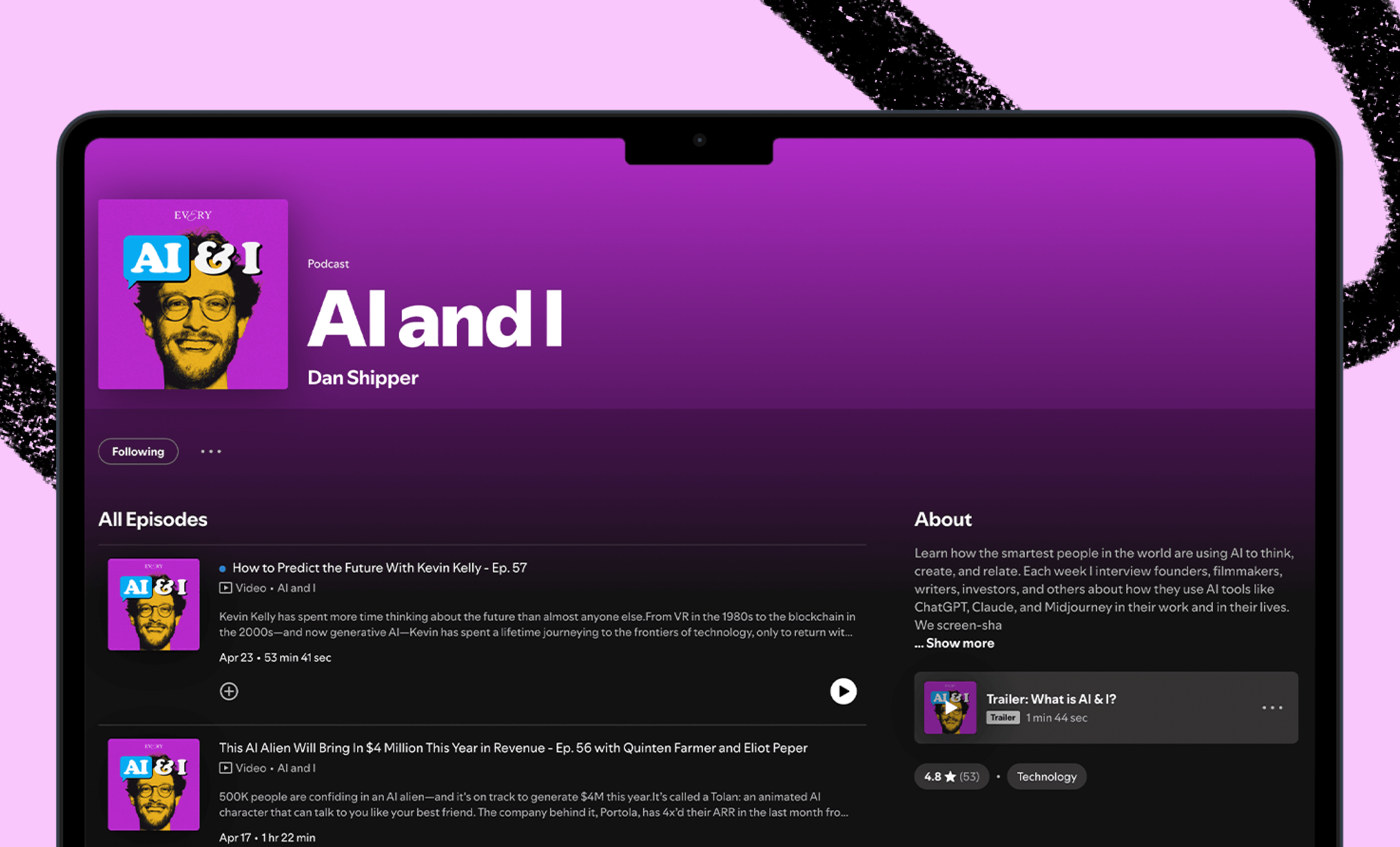
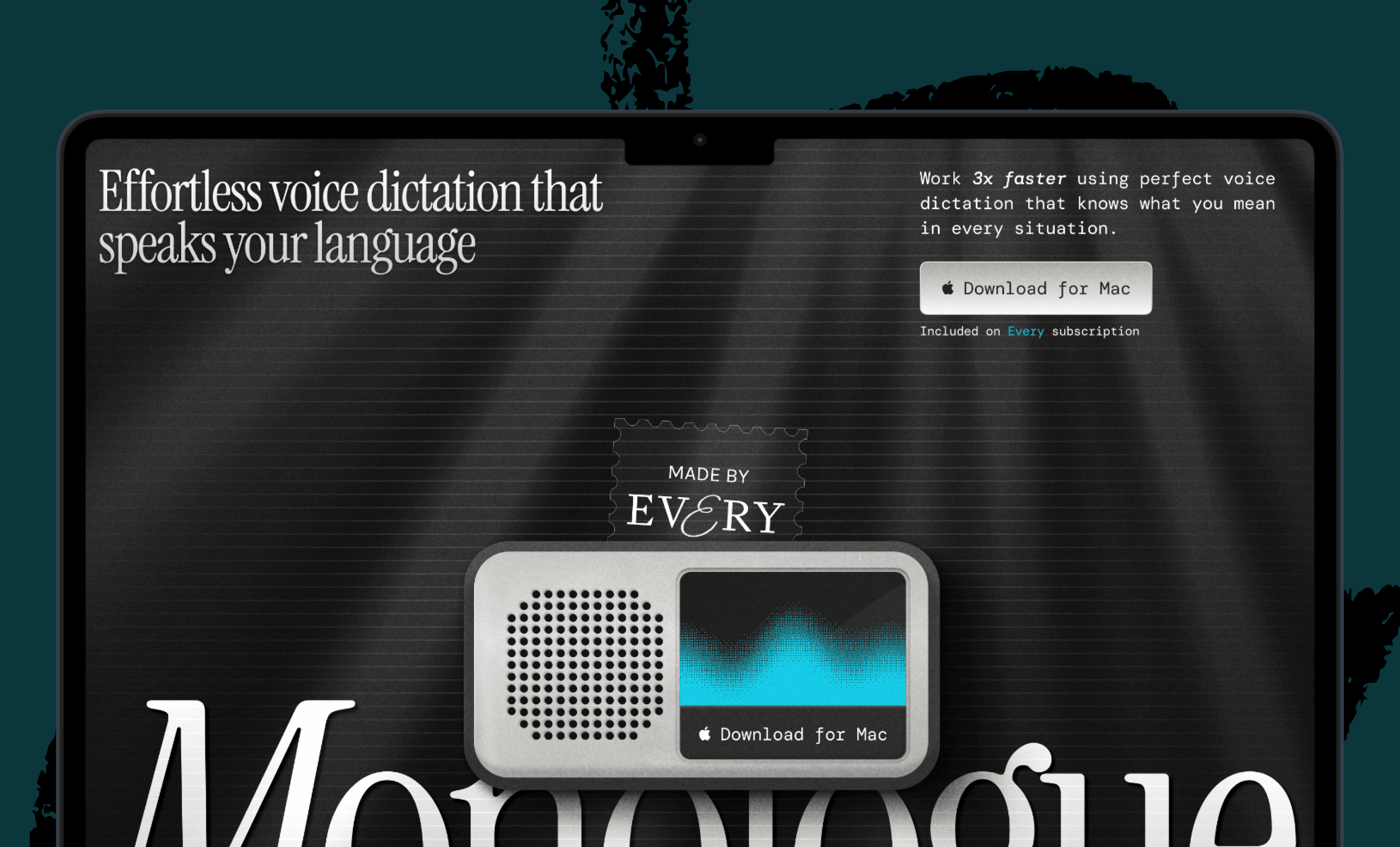
 Front-row access to the future of AI
 In-depth reviews of new models on release dayPlaybooks and guides for putting AI to workPrompts and use cases for buildersIn-depth reviews of new models on release dayPlaybooks and guides for putting AI to workPrompts and use cases for builders
 Bundle of AI software


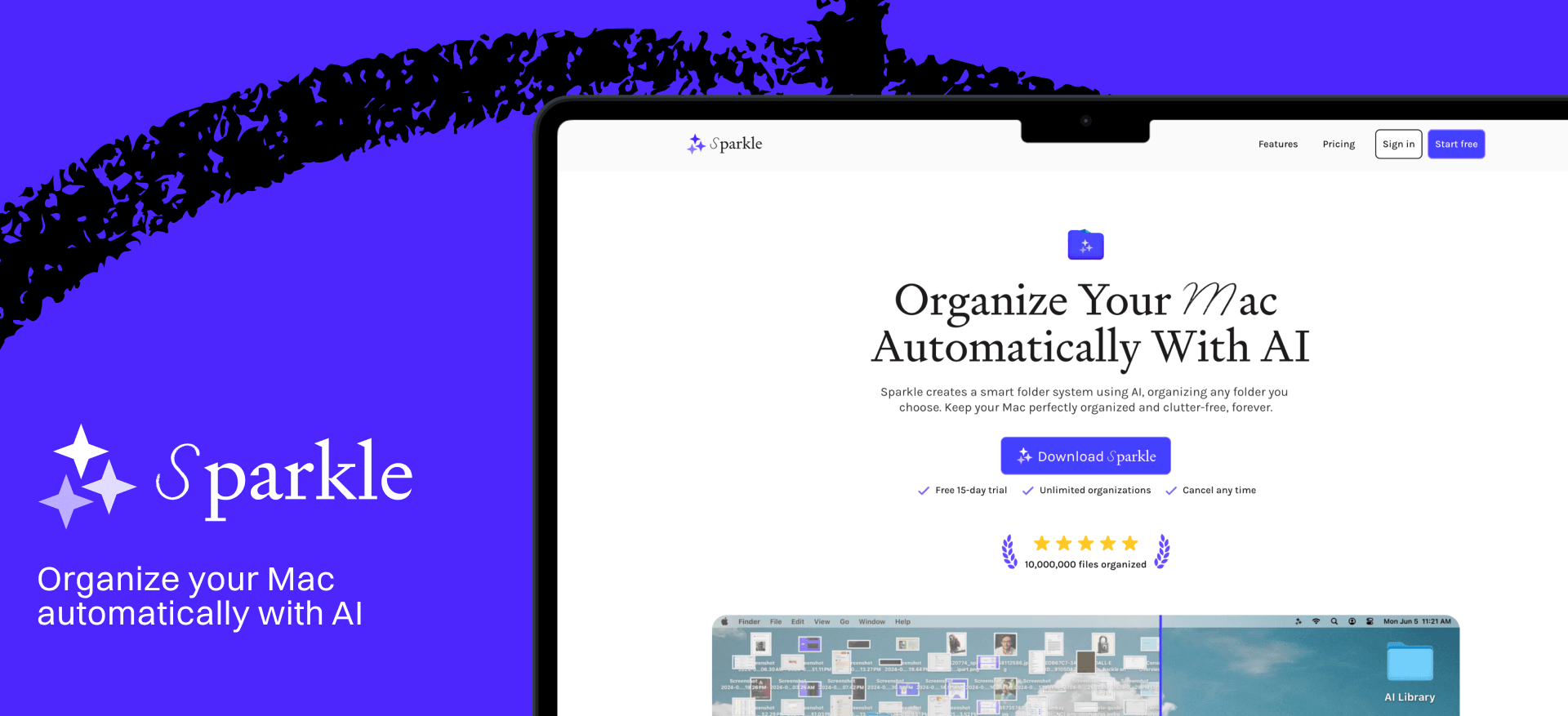
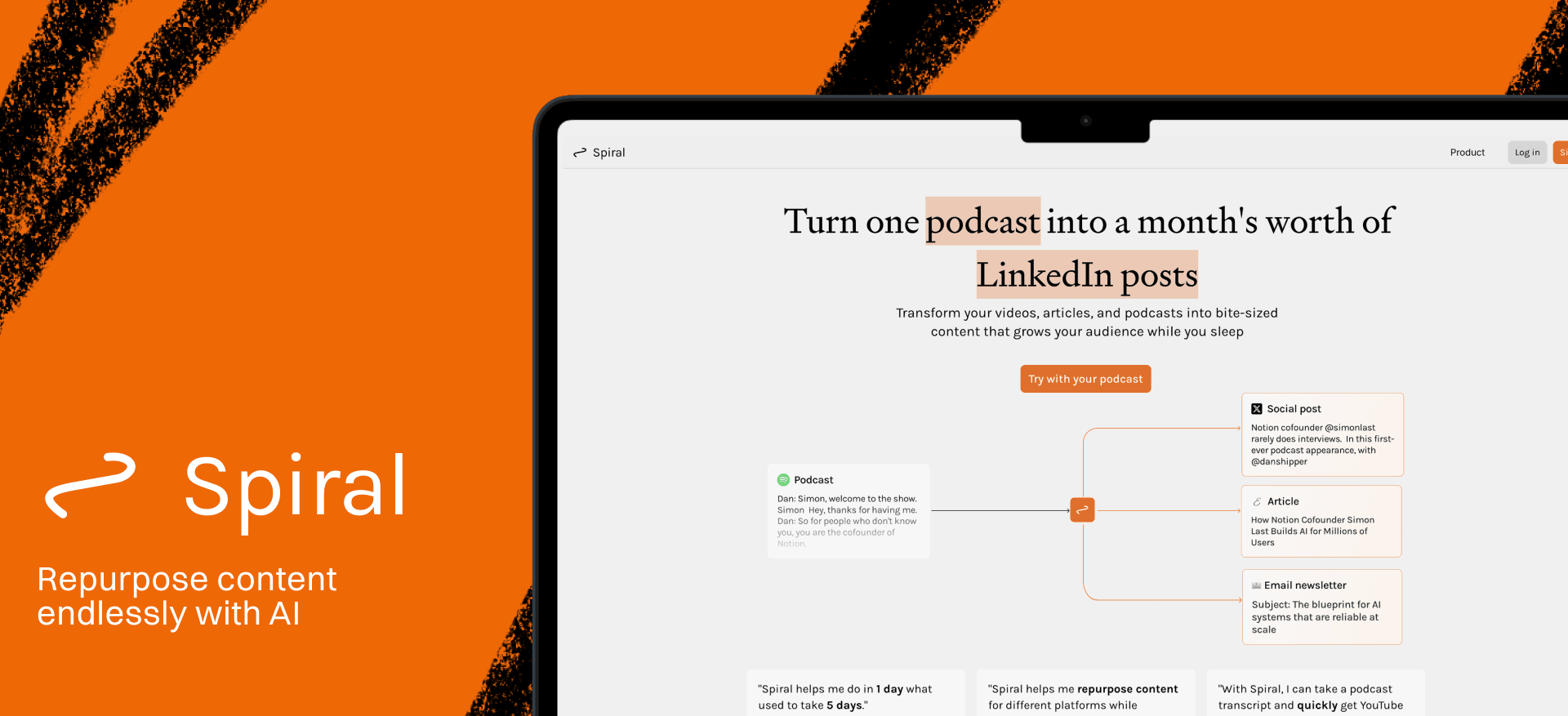

 Katie Parrott
 Every Staff
 Kieran Klaassen
Comments