





The transcript of AI & I with Natalia Quintero is below. Watch on X or YouTube, or listen on Spotify or Apple Podcasts.
Timestamps
- Introduction: 00:00:00
- Why successful AI adoption requires coordinated, top-down effort: 00:01:30
- How a private equity firm reduced investment memo creation from weeks to 30 minutes: 00:07:05
- The benefits of connecting AI to proprietary context: 00:13:30
- The plan-delegate-assess-compound framework for engineering teams: 00:15:20
- How non-technical team members are becoming vibe coding addicts: 00:17:55
- Building Claudie: an AI project manager from scratch: 00:20:50
- Why creative exploration time outside the 9-to-5 is essential: 00:23:00
- Live demo: How Claudie automates client onboarding and tracking: 00:27:50
- The human side of AI: spending less time in spreadsheets, more time with people: 00:38:40
Transcript
(00:00:00)
Dan Shipper
Natalia, welcome to the show.
Natalia Quintero
Hey Dan. Good to see you. Happy to be here.
Dan Shipper
Good to see you too. So for people who don’t know, you are the head of consulting at Every. We’ve known each other for a really long time. You’ve never been on the podcast even though you’ve been head of consulting for a while now. I think you’ve been with us for like nine months or so and you’ve done a fantastic job. So I’m just really excited to get you on the podcast and share who you are and what you know with people.
Natalia Quintero
Thanks. Yeah, I love our community and the podcast and I’m just excited to chat and also hear how other people are thinking about consulting and AI in their companies. So yeah, happy to be here.
Dan Shipper
Awesome. So one of the things I think could be super helpful for you to share is—over the last nine months you’ve had a front row seat talking to some of the top companies in the world about how they do AI deployments. Those are people that have reached out just to chat, those are clients that we work with. We do a lot of training and integration and implementation work with hedge funds, PE firms, Fortune 500 companies, and lots of name brands that you know about. And so I just feel like you’ve had this front row seat for what works and what doesn’t, and what the patterns are that the companies really doing well at AI adoption and AI transformation are following. I’d love for you to share some of those things.
Natalia Quintero
Yeah, that’s true. I think we have been in a really unique position in the consulting work that we do at Every. I personally have spoken to over a hundred companies in the past year hearing their concerns around how they could be using AI, trying to benchmark how other competitors might be using AI, and then trying to get a sense of what actually works.
It really comes down to two things. We talked about this in a post we did a few months ago about the learnings from those hundred or so companies we talked to. One is you really need an organized effort when it comes to using AI well in a company. For AI to be useful to a company, it needs to be a coordinated effort. For AI to be a high leverage tool at any given company, it needs to come from the top down.
Unlike historic software adoption—where someone heard that Asana was helpful, then they let the CTO buy it and hoped people would use it—if there isn’t a coordinated effort to understand what the possibilities are in using AI at a company, creating tailored opportunities to actually get leverage and value out of those use cases, tracking how people are actually using it, and then implementing the ways in which it works really well, AI really kind of goes nowhere. It ends up being that there are a few high-powered users that get a ton of leverage out of it, and then everyone else is sort of floundering.
So there’s really two things that we see working well at companies. One is it comes from the top down—leadership understands that this is a really high leverage tool and it’s fundamentally changing the way that we think and relate to work. And two, they’re really giving people an opportunity to become champions and owners of what it means to work with AI, and creative power to explore how to rethink their roles and how to train other peers and other people to use AI really effectively given this new paradigm that we’re in. It’s coming from the top down, there’s a coordinated effort, and AI champions are really being empowered to think creatively, try, experiment, fail around AI initiatives, and then really double down on the things that work.
Dan Shipper
Yeah, that makes a lot of sense. Some color I can give from my perspective— I don’t see nearly as much as you, but I do see a lot. On the top-down front, the CEOs that are actually doing it, not just sending someone else to do this, but actually doing it themselves—those are the companies that go the furthest. In terms of AI adoption, you’ll probably go as far as your CEO has gone. It’s not something that the CEO can delegate. The ones that are really far ahead, they’re in GPT, they’re in Claude Code, they’re trying new stuff and being excited about it. Toby from Shopify is a good public example where he’s just hacking on stuff on the weekends. You don’t necessarily have to be that far, but Shopify’s culture is a lot different and will be way different in a year because of that. And I think that’s really important. So that’s the sort of top down.
And then I think the bottom-up thing that you’re alluding to is that in any organization, there are people who are just natural early adopters. And your job as an executive who’s leading your org is to identify those people and spread what they know and elevate their status so that they can kind of pave the path for everyone else who is maybe super valuable but is not naturally just gonna try some new technology—but will use it if they’re shown, hey, this is actually something that is gonna help you in your job.
Natalia Quintero
I mean, Dan, I feel this with you all the time. A new model will come out and you’ll be like, why haven’t you run this through X model? And I’ll be like, you’re right, why haven’t I run it through this model? But also, I see it internally and the ways that it comes up naturally in our Monday standups. Someone will say they were tinkering with a whole new use case or application, and then the rest of us will sort of see there’s this new dimension of what is possible. And it’s exciting when it works. It’s exciting, but you need to be in this creative space where you’re trying, you’re failing, it’s not really working, it is really working, it’s really powerful. And then when you see what’s possible, then you really understand where you can go and just how far it can take you.
Dan Shipper
Do you have any specific stories? Obviously we can’t share from clients by name, but do you have any specific stories about unlocks that you’ve seen that were particularly powerful? Maybe it’s something that we’ve done with our clients or just something that you’ve seen that feels a little bit counterintuitive. I could imagine people listening to this and being like, yeah, that sounds good, generally it’s great, CEOs into AI, generally it’s great to promote your power users internally, but I wanna get down into the nitty gritty of here’s some actual concrete stuff that is maybe a little bit counterintuitive or is a really big unlock versus the effort required. What comes to mind?
Natalia Quintero
There’s two things that come to mind. One is with a private equity firm that we started working with last year that we’re still working with. That one comes to mind because our partner, kind of like our day-to-day liaison at that firm, is both brilliant technically, but his superpower is actually that he understands the people dynamics around AI really, really well. His role is one he’s taken upon himself to roll out AI at his firm. And he understands that it’s a technical challenge, but what he really understands is that it’s a people challenge.
Because he’s at a private equity firm, like a lot of other investment firms, there’s a lack of bandwidth. There’s a lack of capacity to try new technology, see it fail. There’s people that are more advanced, teams that are already using it in pretty advanced, interesting ways. There’s other teams that just haven’t had the capacity to implement it.
So one of the things we did together is we started out our work by having him sit down with the investors at his firm. He basically mapped out every single task that they do in the most detailed way—every single task from research to diligence, to market mapping, to portfolio management, to just kind of the day-to-day of running their lives as investors. What we ended up with was a very, very detailed view of what it looks like at this firm for an investor to do their job, and what that looks like by team, because it can vary quite a lot depending on what the strategy is.
Then we looked at that long list of tasks for that firm and went through and highlighted where there are opportunities to use AI that are really high leverage. What we ended up with is this map that we create for all of the clients that we work with, but it was so detailed that we could really be very precise about looking for solutions that would give the team not just bandwidth, but really high leverage in any of the training and work that we did together.
That’s the kind of work that’s only possible when you have someone on the inside who isn’t just describing the work and workflows that teams rely on generally, but very, very specifically the work that they do and the way in which they approach or think about their work. It’s made it so that in the training and the enablement and the tools that we’ve been able to develop together, there’s this aha moment that is wild—where investors will come and realize that there is a new way that they can write an investment memo that previously took two to three weeks and they can now get a really high quality draft in literally 30 minutes. And that’s only possible when you have someone on the inside who understands all of the elements.
(00:10:00)
Dan Shipper
That’s interesting. Tell me more about that moment and what that kind of automation or workflow looks like. Is that like they’re using ChatGPT? Are they using Claude Code? Go deeper into that.
Natalia Quintero
So in that case, it’s a few things. One is that this particular firm has a lot of resources in SharePoint around their investment thesis. This is kind of like the IP of the firm. They’ve spent a decade, if not more, really thinking about how they approach a particular area of investment. And when they’re diligence-ing a new company, they want to understand, given this repository of knowledge that they’ve accumulated over a decade, how they should be thinking about this opportunity beyond just the number crunching.
That’s something that is really quite onerous. It’s a huge task to take on to really read that and then digest how it compares. And of course that’s something that ChatGPT is able to do very, very effectively. So what it looks like for them is connecting the right context, the right sources of data, and then funneling it through a prompt that is trained to understand how they think about that particular investment strategy. Then basically just creating a set of GPTs and prompts that make it really easy to synthesize all of that information into an investment memo that gives them that general rubric of how that company compares to this broader opportunity and to the decade of information that they’ve collected.
That’s something that an analyst and associate principals spend two to three weeks to pull together before it goes to the IC, the investment committee. And now you get a really solid draft in like 30 minutes.
Dan Shipper
That’s really interesting. And I think that’s actually a broad general pattern that we see in a lot of companies, even in our own company. The first one, the obvious one, is connecting the AI to all your data sources, which is hard, but that’s sort of table stakes—it needs to be connected to the place where all the context lives.
But then the other thing that’s been happening, especially as our org and lots of other orgs are transitioning more into an agent-native world where they’re using Claude Code or they’re using Cowork or all these other kinds of tools where you kind of expect the agent to be going off and doing some work for 20 minutes, and it’s not necessarily a back and forth chat in the same way—once you have the connections to all the data, it’s really important to have the prompt or the skill that you’ve built be able to tell the AI, here’s how you find the specific thing that you want.
For example, for us, if you wanted to figure out what our revenue is, there’s like three different places you could go. You can go into Stripe, you could go into ChartMogul, maybe you could go into PostHog. But our head of growth, Austin, has a particular way that he’s defined what our MRR is. Instead of forcing the agent to figure that out from scratch every single time, putting into place “here’s how we think about what MRR is”—that transfers into consulting for one of these clients, like “here’s how we think about this sector and here’s where you get the data for this particular sector.” That’s where a lot of the value is, and a lot of what makes your use of AI different from someone else’s use of AI.
Natalia Quintero
Yeah, that’s totally right. I think it’s the hardest part of AI actually, and this is the part that has been so magical at this particular firm that we’ve been working with. Our partner, his name’s Jonathan—Jonathan basically interviewed every single investor and every single team to really understand the nuance in which a team collectively thinks about every part of the investment memo.
This work that we’ve been able to do together really would not have been possible if it didn’t have such a high degree of tailoring. This is like Savile Row prompt tailoring. It’s so, so specific—the way that numbers show up, the way that figures show up, the way that they express or think internally around this stuff, it’s really important. And the prompts reflect that. So the prompts really end up being this analyst that does really high quality work that is dependable. And that’s so cool.
Dan Shipper
That’s really cool. I know we’ve also done a lot of work with hedge funds and also with tech companies. Any other examples you wanna share in those domains?
Natalia Quintero
Yeah, let me think. There’s so many cool applications. Maybe I’ll speak to a really interesting pattern that we’re seeing at one of the tech companies that we’re working with right now.
We know that when it comes to working with engineers and with engineering orgs, there’s a four step process that works well when it comes to implementing AI: you plan, you delegate, you assess, and then you compound what works or the learnings of that particular session. When we spoke to the engineers in this particular org, we found that they were actually really effective at the delegating, at the assessment, and even the compounding. But there was no planning phase, and so they weren’t going very far. They were running into the same challenges over and over again because there wasn’t a good plan for them to really scaffold significant work around. So they could solve a lot of small issues, but they weren’t able to address these big, meatier problems that we kind of hope for AI to help with.
This is the kind of thing that only by understanding how that particular group of engineers was using AI could we really realize—you’re just missing the planning phase. We just need to do enablement around what good planning looks like. And we’re already seeing that, as I think we all know, it makes a huge difference. You can only really compound as much as you plan. Now that they’re starting to compound these big plans that are developing significant work, I think we’re starting to get that high leverage machine that we hope to see work in engineering orgs.
Dan Shipper
What do we think is possible here? What are the kinds of speedups that we expect?
Natalia Quintero
In engineering in particular? That’s a difficult question to answer, but I would say we are consistently seeing, when this plan-delegate-assess-compound framework is in place and used well, we’re frequently seeing engineers generate two weeks of work effectively in an afternoon.
And I wouldn’t be surprised if that continues to speed up.
Dan Shipper
Yeah. I mean, we see that too, and it definitely changes how we think about who we can hire on the technical side and what we are optimizing for and even how we do programming interviews and technical interviews. It’s a really interesting change.
But I think one of the more interesting ones is for you. I’ve just watched you and several other people who are not technical inside the org just get totally—your mind totally blown over the last like three or four weeks. It feels like there has been this massive phase shift where I would just message you and you’d be like, yeah, I’ve been up since 6:00 a.m. coding. Can you tell us about that? Because I think it’s really interesting and I think that you’re sort of the leading edge of the spear and there’s gonna be a lot of people coming after you that are feeling the same way. We’re gonna spread a lot of things that you’re learning right now to our clients and just really anyone who’s watching videos like these, because it’s a new way of working that’s really valuable.
Natalia Quintero
So I’ll be honest, I think I am a bonafide vibe code addict at this point.
The way this happened is funny. I actually realized I was starting to fall into a trap that I often see our clients fall into. At the end of last year, we had so many projects going on. We were supporting hundreds of people across organizations. Every day my day would start and I just had a bunch of meetings and a bunch of work to do, and so I didn’t really have time to play with a lot of these tools.
Going into this year, we realized with Natasha Agarwal, who is our applied AI engineer on the consulting team and is fantastic—he was previously an engineer at Cora and helped build this beautiful product and then moved into the consulting org to help amplify the work that we’re doing with our clients—we realized with Natasha that we weren’t going to move as fast and do the creative work that we wanted if we were scheduling the work to happen in the nine to five, if you will.
(00:20:00)
Natalia Quintero
And so we decided to start our day three hours early. We would meet at 6:00 a.m. and we would basically just vibe code from like six to 9:00 a.m. It all started with us asking, could we create this really ambitious project? Project management is really time consuming for any consulting business. Any great consulting business has an entire function around project management. It’s a real skill, but it also requires understanding a lot of moving pieces—how clients prefer information, how they are scheduling sessions, all of the nuanced things that are happening for any given project.
Natasha and I asked, do we think we could spin up basically an agent to be our project manager? And the answer really quickly was yes. But the framework for how to do that effectively—this is in Claude Code specifically—actually took a lot of iteration. I would say we got 85 percent of the way there three times and then had to scrap it given what we learned and then start again to get to a new framework that actually got us to a hundred percent.
It’s just been so fun. It’s so cool to really build something. I think it’s really creative work, and it’s also really clarifying work to think about the questions: What does it mean to be a good project manager? What does it mean to be a good project manager for me in the business that we are running? And how do I codify this into a series of instructions? We talk about using AI effectively being a lot about being a good manager. How can I be a clear communicator and provide clear instructions so that we can really create this agent we call Claudie to run on their own and do this work for us. And it’s just so cool to be a few weeks out from that and to really have this system working.
Dan Shipper
That’s really cool. I want you to show us the system. Before we get there, I wanna point out that interesting pattern, which is instead of just expecting it to happen inside your nine to five, you actually carved out three hours outside of your job to play.
I think that’s an interesting lesson that we definitely know ourselves internally inside of Every. We just got back from Things Week, which we do every six months where we were all in Panama together and we just got rid of all of our day-to-day work. The whole point was just to play around with technology, get to know each other, build interesting things. Just play. Do whatever you want. And I think that’s so important in a world where technology is changing so fast.
Because what you don’t wanna do is work really hard to be the fastest horse and buggy driver. And you can’t learn to drive a car until you take some time out of your horse and buggy race to be like, what is this car thing? I think you discovered that. I think that’s something that we’ve done inside of Every, and it’s also something that a lot of our clients and just generally companies that do this well know how to do—give people the space that they need in order to feel like they can try out new technology in a risky way where they’re not gonna get behind in their job. They can learn its ins and outs and fail. And then after a couple iterations of that, they’re like, holy shit, I’m driving a car now. I’m not driving a horse and buggy anymore. And I think that’s so valuable.
Natalia Quintero
And it’s really hard actually. Having that creative space is very counterintuitive to the way that we usually work. How much of our time is really spent in traditional jobs just figuring out if there’s a new way to do things? Historically, usually when you’re hired to do a job, you’re hired to do a specific set of functions that have been laid out to you that you’re supposed to do until you get to the next level, whatever that is.
For a company to be so bold as to say, hey, we think this is all changing and we don’t know exactly how it’s changing, but we trust that you can figure it out and you can figure out what this means to you, and maybe we’ll bring in outside partners to accelerate the way in which you do that—it’s really revolutionary.
Natalia Quintero
It’s really amazing. But also it can be a really creative space where you have to be at a company that’s willing to see things fail, to experiment. We had to throw our project manager agent away three times before we found this scaffolding that really works and that saves us so much time per week. But I’m not an engineer. I’m not a product manager. This isn’t my day-to-day job. And this is only exciting and possible when you put on this creative hat and just keep on tinkering until you find something that really works. For me, having Natesh, having these incredible resources—you and everyone on the Every team around me where I’m constantly seeing what’s possible—it just makes all of these things so much more achievable.
Dan Shipper
Yeah, I think that’s another really good pattern. You have Natesh, who’s an applied AI engineer who can literally sit with you and help you figure out, okay, given my workflow, how can I build this project manager? You have the expertise in what’s needed and he has the expertise in what’s at the edge of technology.
I think that’s another really good pattern I see a lot of CEOs doing. The company’s gonna only go as far as I go in terms of knowing how to use AI. I’m gonna have someone who knows what they’re talking about in AI literally sit with me and talk me through it. I have this project on my mind that I feel like would be really fun and really valuable if I got it done. It’s gonna be half learning, half just trying to knock out this really ambitious, interesting thing. And I think that’s actually a really good way to get yourself addicted—have someone who’s sitting next to you as you put your pill in the water.
Natalia Quintero
Yeah, absolutely. I’ll also say, I think there’s something to be said about—you need as much engineering power and AI know-how as you need an understanding of what good looks like, which is very specific depending on what it is that you do.
The different iterations of our agent that didn’t work—one was just too engineering focused. It was too focused on the framework and the strategy of how the data would be connected to each other. The other one was too focused on just what the work is, so it was kind of like a job description. It wasn’t until we realized it’s a mix of the know-how of what good project management looks like and what it looks like to us, which is the information and context that I have, and then also how tasks and agents and sub-agents and all of this Claude Code infrastructure can best be organized so that it serves the need that we’re specifically looking to solve—that it really came together and worked. You can have really great engineering power, but you also need to have the know-how to get to something useful.
Dan Shipper
That makes sense. Do you wanna show us a little bit of Claudie?
Natalia Quintero
Yeah, let’s do it. Okay, cool. Can you see my screen?
Dan Shipper
I can see your screen.
Natalia Quintero
All right. So welcome to the Every Consulting GitHub page. This is where Claudie lives. Claudie is our project manager for the consulting work that we do with our clients.
The first thing that I’ll show you is the architecture, which I think is pretty cool. This took two weeks to really refine and come up with to have it work. I won’t go too into the details of this—we actually have a great post that we’ll share that goes into the details of how this is set up.
But at the highest level, we have this Claude.md file that has the instructions, the context—I’ll share that in a second—basically the job description that Claudie has. Then we have a list of commands. Basically run Claudie. So if we wanna do a quality check on the data that’s collected, if we want a weekly update on what’s going on across clients, if we’re trying to set up a new client, if we’re onboarding someone new.
Then we have a list of tasks. Tasks came out fairly recently and they have been instrumental to Claudie being effective because tasks happen in phases. They manage dependencies and enable sub-agents to basically double check and triple check the quality of the work that’s being done before it comes back to us.
Then we have some general purpose agents—some skill files, general principles. We want things to be well formatted. We want things to be written in a way that reflects Every and our brand. And those are skills that we’ve enabled on the backend. And then this is maybe the most important part—the data sources.
(00:30:00)
So we enabled MCPs that connect to Gmail, to calendar, to Google Drive, and then to the meeting transcripts for the work that we do. At the highest level, this is the architecture of Claudie, our project manager. And these are some of the commands that help Claudie work effectively.
So if you’re watching this and you need a project manager, this is gonna be a pretty good template or model for how you can think about setting up a project manager that could work for you.
I’m actually going to now dive into what I’ll call the Claude.md file, and this is really the job description that we’ve given Claudie. This is a file that Claudie reads every single time we ask her to do something. We found this to be really important because if you are a project manager, you always know where you work, what your job is, what it means to do a good job, who you report to, and who your colleagues are. If you’re a person, you always know this information.
So we wanted to create a file that at its baseline always gave Claudie this information—to remember who it’s working with and where it could be drawing information from in order to do its work really well. It knows who we work with, it knows where to draw data from, and then it knows every time it encounters a dashboard, this is the general way in which we’ve structured information so that it can continue to populate and maintain that information with high fidelity.
There’s some ID conventions that I’ll actually mention really quickly because if you are creating your own project manager, we realized there are some principles of database management that actually help a lot in project management where you are relating different pieces of information to each other. Did this person attend this training session? Did this training session deliver prompts or agents or whatever it was? Creating ID conventions that are effectively like database management, that allow Claudie to connect who did what, where—that was a huge unlock for us to have this entire system work well.
Then we gave Claudie some principles to always keep in mind. Data accuracy, totally key. You have to be proactive, not reactive. Don’t wait—if you wanna be a good employee, you wanna be proactive. You don’t want to be asked to do things. So we kind of gave it that mentality. Every interaction builds or erodes trust. Formulas over manual entry. These are just good best practices that if you are a project manager or you deal with data, you really think about. And then when in doubt, escalate—just ask questions. These are some general principles that we’ve seen really help Claudie work very well.
What you’ll see here–I won’t go into the rest of the details—but this is actually a fairly concise file. We’re not giving a job description that is incredibly detailed. Claude is really, really smart. Opus 4.5 is what Claudie runs on, and it actually doesn’t need us to define what a project manager is or what it does. But these boundaries, conventions, and refining of sharp edges have really allowed Claudie to do really good work for us.
Dan Shipper
This is so cool. There’s so much in here. But what I wanna do is just show—I don’t wanna see it myself. I wanna see how it works in action? Maybe how it works to set up a new client. Because I know that’s one of those things where it’s like, okay, you sign a new client, it’s usually a big deal, it’s a lot of money, but it takes a long time to get them in all the systems so that we can actually execute the project. Can you take us through how that works?
Natalia Quintero
Yes. So let me take you—I’ll create a new Warp page here. All right. So we’re gonna open Claude.
Dan Shipper
Dangerously. Skip permissions. I love it.
Natalia Quintero
Always living dangerously. I wouldn’t recommend this to our enterprise clients, but no better way to do it. All right. So we are in Warp and I’ve just opened Claude. What we did here is if you go to our plugins, you’ll see that we have all of our plugins connected here in the Every Consulting folder. We have a few things that if you’re following closely, you might have also heard about—we have a PowerPoint skill, we have client work skill. Claudie actually lives in the workflow plugins, and that’s all updated.
So what we do is we go to Claude and let’s say we’re onboarding a new client. We would say new client setup and I’m gonna pretend like I’m onboarding one of my favorite clients that we’ve been working with for a little bit now, Headway. What you’ll see is it loads the skill, so now it knows what it’s doing. And it’s gonna read information as required by the handbook. So now it has really clear instructions on what to do when it’s setting up a new client.
Now, often with AI we think that things are going to be instantaneous. But I think this is just kind of a myth. For AI to be actually useful, it just takes time. You wanna do quality checks, so we’re probably gonna see Claudie work for a while. Last time we set up a client, I think Claudie worked for about 30 minutes.
But what you’ll see here is that we’ve instructed Claudie to do a lot of work in gathering information first. The first phases of the work are looking through my Gmail, looking through my calendar, looking through the Drive, looking through call transcripts—just to establish a foundational set of truths before it goes and starts populating information into a dashboard.
Dan Shipper
That’s so cool. It’s like, okay, you just launched five subagents or four subagents to look through your Gmail, look through your calendar, look through your Drive, look through your meetings to get on the project. I just wanna pause and be like, that is crazy. That’s kind of crazy. But that’s possible. And then it’s gonna go and gather that information and then put it in the right place into the spreadsheets that you use to run the business.
Natalia Quintero
That’s right. I mean the only thing that’s crazier is that the alternative to Claude doing this is me doing this.
Dan Shipper
Suddenly that feels crazy, but four weeks ago it didn’t seem so crazy. It was like, yeah, well that’s the job. But now it’s not. So what do you do with all your time, Natalia?
Natalia Quintero
Work with more clients, Dan, of course.
Dan Shipper
I think that’s actually really interesting though, because one of the most important things about doing change management inside big companies is this feeling that, okay, if I do something like this, if I set up an agent that does all this stuff—and legitimately it can do a good portion of a job at this point, not a whole job, but a good portion of it, or at least tasks of a job—what am I gonna do? And that’s where a lot of the resistance comes from—I don’t wanna give it up until I have a vision of what comes next.
What we’ve been doing inside of Every is on Things Week we had a day called Promote Yourself Day, where the idea is to literally figure out how to promote yourself so that you’re not doing your IC job anymore. You’re one level above. Framing it that way, it’s like, yeah, of course once you have hired a project manager, you wouldn’t expect—if it was a human, if you had hired a project manager—you would not expect to not have a job anymore. You would expect to be like, well now I manage the project manager and I can do a lot more stuff. And the same thing is true for this, which I think is really interesting to see.
Natalia Quintero
Yeah, definitely. There’s two truths to that that are maybe non-obvious. One is you are still managing something. Anytime Claudie inevitably makes a mistake or lacks sufficient information to have updated me in a way that I wish I had been updated, I have to go back and then give it context that will live somewhere in some command or maybe in the Claude file in order for it to do that in the future. This is the same way that you would build a relationship with any new staff member that you would bring on board. You’re really building and cementing that relationship, and you’re also investing in that relationship as being something that you can rely on in the future to get good work done. So that’s one thing—when you set something like this up, it’s an ongoing effort where we’re constantly improving it and constantly evolving it to meet your needs.
The second thing is, this is exactly where AI shines and this is where I get most excited about AI. My favorite thing about any of the work that I’ve ever done has been working with people. I love our clients. I love the companies that we get to work with. I love spending time with them. And any hour that I am not spending tabulating information, I am spending with the people that I get to work with. And that is so much more fun and so much more valuable to me as a person who gets to spend a little bit less time on an Excel sheet.
All right. So let’s see. This is a little bit of a dummy dashboard that we’ve set up for this demo, but this is effectively the structure of the output that we would get.
(00:40:00)
So here we have the total number of sessions that we might work to deliver with this client, the deliverables that we will ultimately give to them, any open items. These are tracked across the email, the Granola notes, or the Notion meeting notes that we take. So if I say in a call, okay, I will follow up with this, then that’s going to come up as an open item and how important it is that I track that open item. Those would be cataloged here.
Then we have the people—I’ve hidden columns that explain who the people are specifically. But I talked about this earlier. We have some database management principles here where every person has an ID, a title, and also a team ID. So we actually know how they map to each other and we understand how they’re moving across different initiatives that we’re working on.
We have a team summary, so we have a good sense of how many people are a part of a given team, how many sessions they’ve participated in, if there are any coming up. Again, this is all information that’s populated automatically.
Once we’ve delivered a training session, we have a session ID and then we know what team participated, what people participated, what we covered in that particular session, where it was delivered—in this case Zoom—who delivered it and how many people attended. This is information that’s really important to track over time so that we know what we’ve done. And it’s really quite tedious—it has been historically—to catalog this information and save it. Now it’s just populated automatically as a session is scheduled. And once it’s complete, it’s just automatically marked as completed.
Same for deliverables. Anytime that we deliver a workflow or training material or a curriculum, this is all tagged here. And then we have source materials that it finds and tags, and gives us a status for what’s going on. We have a feedback tab where that is also accumulated.
All of a sudden we’re going from a working relationship where I am looking for this information in my Drive and populating this dashboard manually, to I just open this Drive, I ask Claudie to update the dashboard based on what’s happened in the past week, and it proactively tells me how we’re doing with any given client.
Dan Shipper
Absolutely incredible. And how long would this normally take you?
Natalia Quintero
On any given week, I spend at least 10 to 15 hours on just project management. Now with Claude, I am collecting information for an hour a week.
Dan Shipper
That’s incredible. And then you’re spending an extra 15 hours vibe coding.
I love that, Natalia. This is so impressive. It’s so cool. The work that you’ve done in the last year has been incredible. I feel very lucky to get to work with you. And I’m super excited for what we’re gonna do this year. If people are interested in following you or getting in touch with Every to do consulting, where can they find us?
Natalia Quintero
They could find us on the Every site. We are at every.to/consulting. I will give lots of kudos to Natasha who’s just been an incredible partner to work with. We’re so lucky to have such an awesome team.
And then we have a really outstanding lead who runs our financial practice—Brooker Belcourt came to Every from Perplexity where he built and ran the finance arm there, and he now is in charge of all of the work that we do for hedge funds, private equity firms, and all of our finance clients. So if you’re a financial institution and need help thinking through your AI strategy, but more importantly implementing it, reach out to us.
Also if you’re a tech company that’s doing this for your org, we have a fantastic lead on the tech side that has been leading that effort and we’re excited to be doing more of that this year.
Dan Shipper
Awesome. Thanks Natalia.
Natalia Quintero
Thanks Dan.
Thanks to Scott Nover for editorial support.
Dan Shipper is the cofounder and CEO of Every, where he writes the Chain of Thought column and hosts the podcast AI & I. You can follow him on X at @danshipper and on LinkedIn.
To read more essays like this, subscribe to Every, and follow us on X at @every and on LinkedIn.
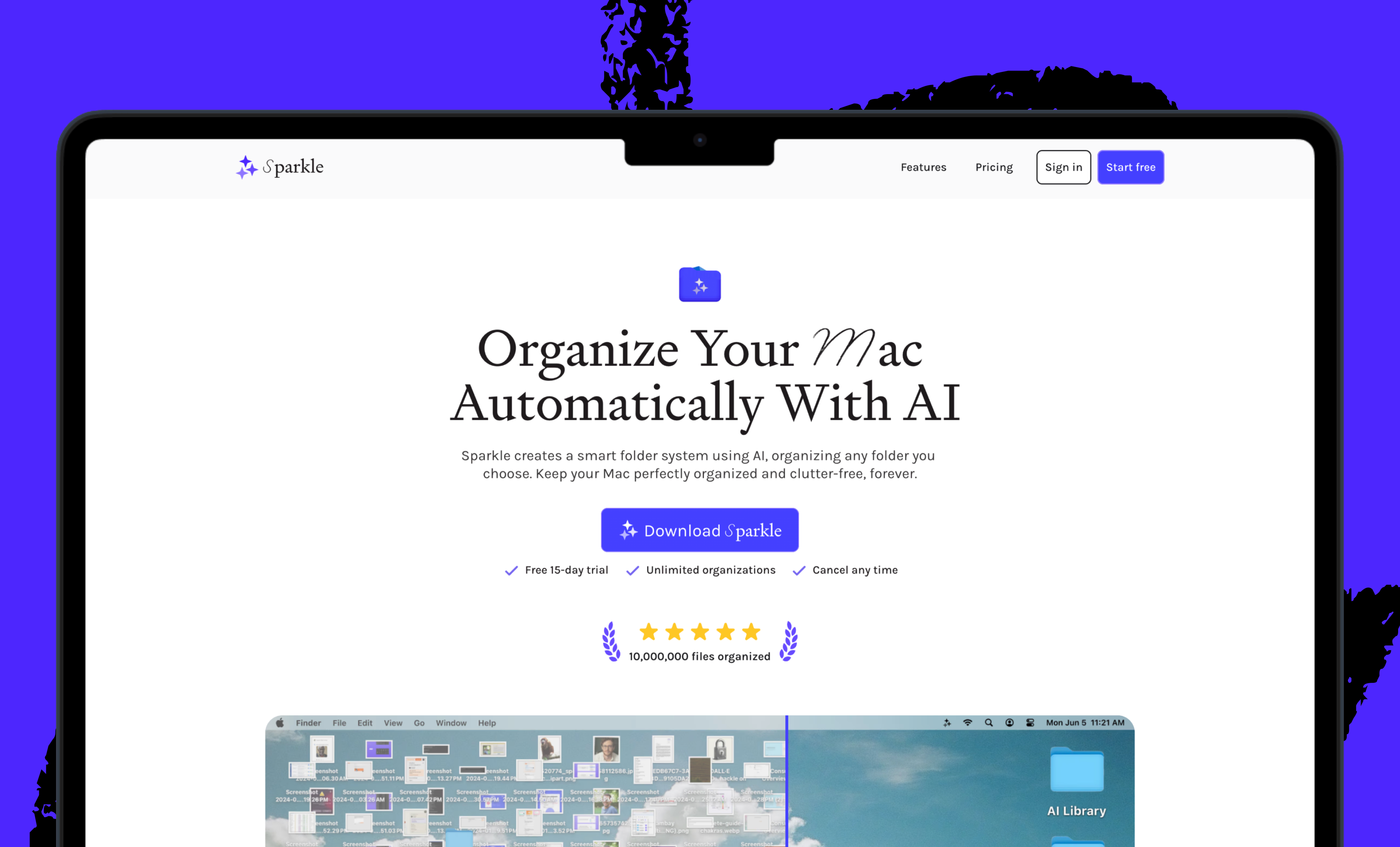
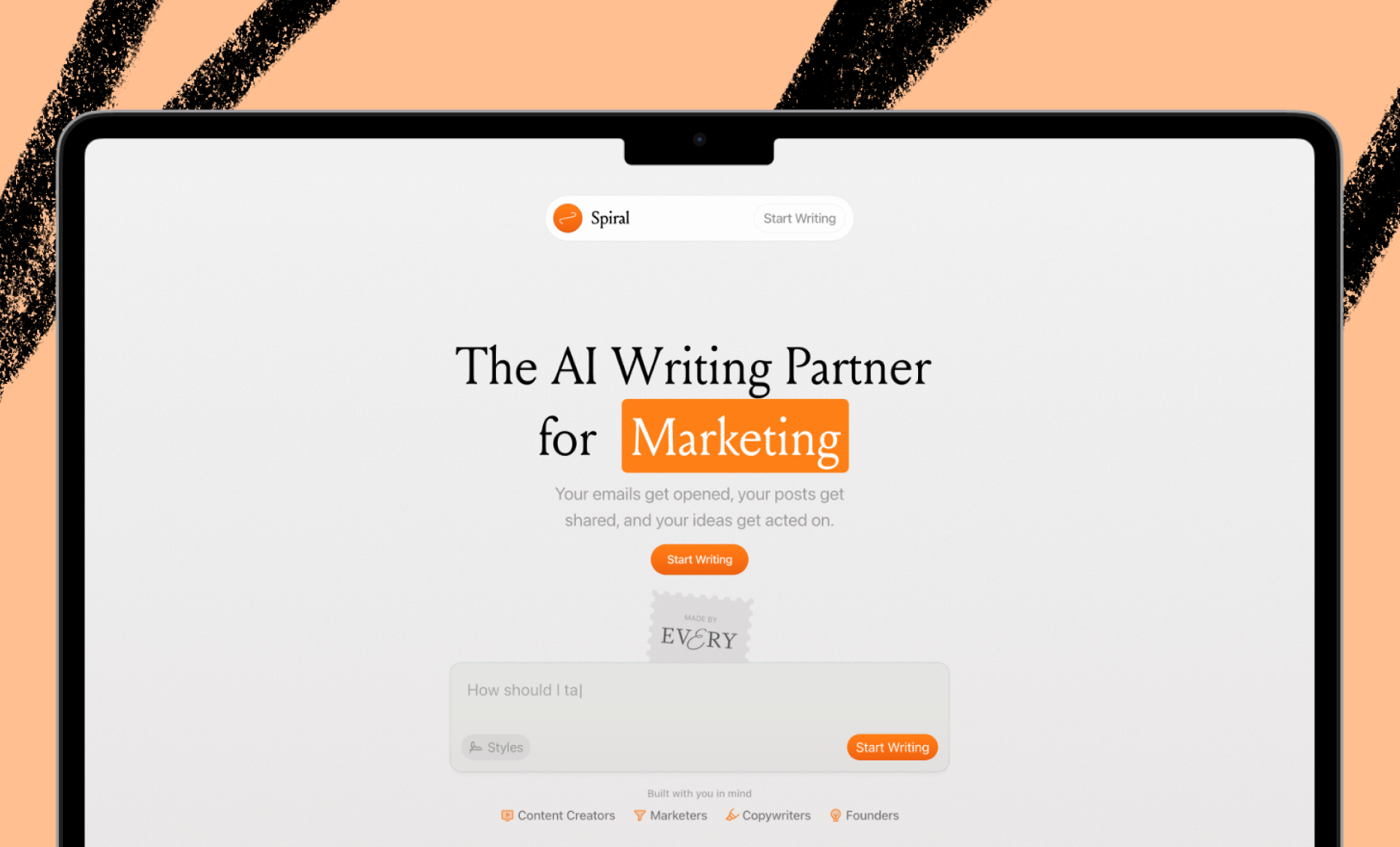
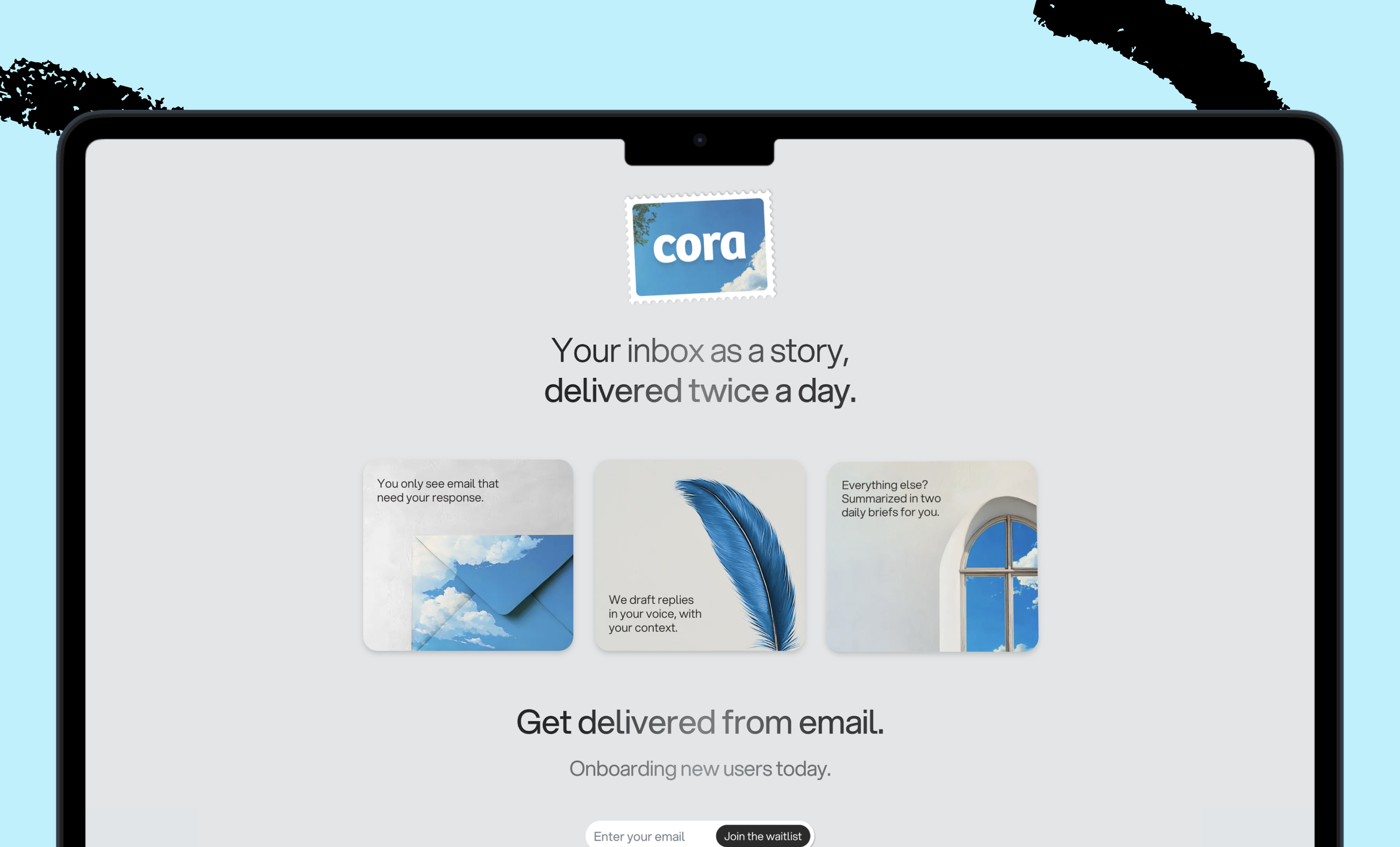
We build AI tools for readers like you. Write brilliantly with Spiral. Organize files automatically with Sparkle. Deliver yourself from email with Cora. Dictate effortlessly with Monologue.
We also do AI training, adoption, and innovation for companies. Work with us to bring AI into your organization.
Get paid for sharing Every with your friends. Join our referral program.
For sponsorship opportunities, reach out to [email protected].
Help us scale the only subscription you need to stay at the edge of AI. Explore open roles at Every.
The Only Subscription
You Need to
Stay at the
Edge of AI
The essential toolkit for those shaping the future

"This might be the best value you
can get from an AI subscription."
- Jay S.
 Every Content
 AI&I Podcast
 Monologue
 Cora
Cora
 Sparkle
 Spiral
Join 100,000+ leaders, builders, and innovators

Email address

Already have an account? Sign in
What is included in a subscription?
Daily insights from AI pioneers + early access to powerful AI tools

 Front-row access to the future of AI
 In-depth reviews of new models on release day
Playbooks and guides for putting AI to work
Prompts and use cases for builders
In-depth reviews of new models on release day
Playbooks and guides for putting AI to work
Prompts and use cases for builders
In-depth reviews of new models on release day
Playbooks and guides for putting AI to work
Prompts and use cases for builders
In-depth reviews of new models on release day
Playbooks and guides for putting AI to work
Prompts and use cases for builders
 Bundle of AI software




 Dan Shipper

 Reviews of new AI models on release day
Comments
Don't have an account? Sign up!