


Natalia Quintero is the head of consulting at Every.
I Talked to More Than 100 Companies About AI—Here's What's Actually Working
You can only automate what you can clearly define—and that's the opportunity most companies are missing
Dec 16, 2025 · 10 min readUpdated Sep 2, 2026

Natalia Quintero joined Every earlier this year as a consulting partner to build our consulting practice, and I’m excited to announce she’s now our head of consulting. Before Every, she led Silicon Valley Bank’s Latin America tech portfolio and was the senior vice president of technology and innovation at the Partnership for New York City. Since joining us, she’s built a seven-figure business leading AI training and adoption at some of the largest and most advanced companies in the world—and in her first piece for Every, she shares the patterns she’s seen.—Dan Shipper
Was this newsletter forwarded to you? Sign up to get it in your inbox.
Earlier this year, I joined Every as the head of consulting. Since then, I have had conversations with more than 100 startups, hedge funds managing billions, creative agencies, private equity firms, and media companies about their AI implementation challenges. I keep hearing the same thing: We have the tools. We have a few power users. We don’t know where to go from here.
It’s the same challenge I faced when I worked with the New York City subway in a previous role, creating a map that finally showed commuters trains and delays in real time. The technology exists. The information exists. But until you translate it into something people can use in their daily workflows, until you close the gap between what’s possible and what’s practical, nothing meaningful happens.
That’s why we see headlines like the MIT report that went viral earlier this year, claiming that 95 percent of generative AI pilots at companies fail. But this is not because executives have a technology problem. They have a clarity problem. They lack a view on what they’re trying to achieve, let alone how AI might help them get there.
The good news is that you’re not behind, even if it feels that way. It’s still so early that most people haven’t moved past using AI as a slightly smarter Google. The companies figuring this out aren’t always more technically sophisticated, but they are more aligned on a north star and committed to using all resources to get there.
Here’s what I’ve learned about the state of generative AI adoption—tools like ChatGPT, Gemini, and Perplexity—within companies, and what separates the companies where AI is making an impact from the ones where enterprise licenses gather dust.
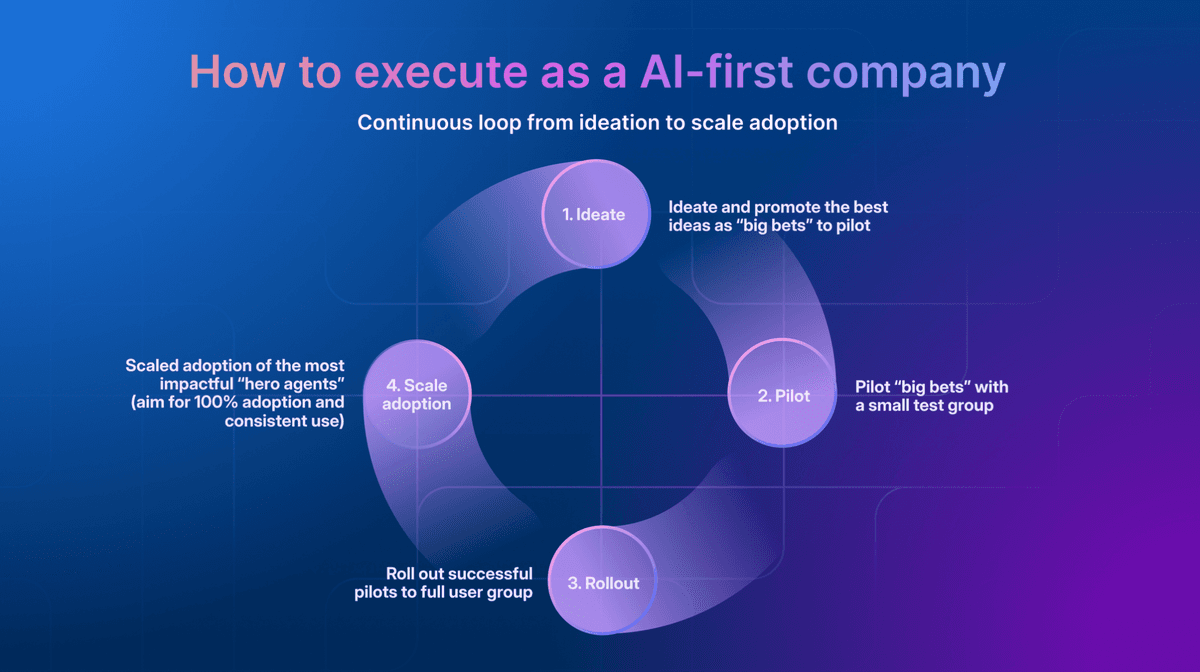
Executing an AI-first strategy with Box
Sixty percent of enterprises expect AI transformation within two years, and Box’s “Executing AI-First” series is the step-by-step playbook for empowering teams to thrive in the era of AI. In this series, you’ll learn:
- How Box approached becoming AI-first through its value realization strategy
- How to deploy agents with an ideate > pilot > rollout > scale plan
- How to be an AI manager
- How to measure what matters by tracking AI agent impact
Read the first article in Box’s series and follow along for actionable insights and downloadable templates.
Most people are still getting started
I’m still surprised that AI use is incredibly elementary. I don’t mean “people haven’t tried the latest model”-elementary. I mean a lack of basic prompting skills. No knowledge that different models exist, and you can choose among them. No understanding of when to use AI like Google versus when to build something that automates a whole workflow, like n8n.
Because we use AI so differently in our work at Every, the gap continues to catch me off guard. When I dig into why many people are not consistently using AI at work or haven’t found more sophisticated use cases, I find three personas:
The skeptics. They are uncomfortable with new technology and doubt that it will work at all. At many companies, initial engagement with AI tools is high, but usage drops off quickly. The excitement fades when reality sets in: This requires learning a new skill, and (like with any skill) it’s a time-consuming, ongoing effort.
The overwhelmed. They have the tools. They might even want to use them. But they’re drowning in existing work and have no bandwidth to experiment or even be excited about the idea of experimentation. Or as one person told me: “If you talk to me about prompt engineering, I’m going to cry.”
The tool-jumpers. This is analysis paralysis disguised as progress. They’re evaluating 30 different tools, switching platforms, and chasing the latest release, but never mastering any of them. One firm told me they “struggled to get documents into ChatGPT,” so teams switched to Perplexity. The tool changed, but the adoption problem was never solved.
Aside from the interpersonal dynamics that hold AI adoption back, there is also the issue that AI doesn’t spread like other software.
Think about Asana. If one person decides to organize their team’s tasks there, everyone benefits automatically because the work is more organized, and someone on the team has taken responsibility for that organization. You don’t need to learn the tool to get value from your colleague using it.
AI doesn’t work that way. If you develop workflows around how you work, that value doesn’t automatically translate to the rest of the company. Your prompts, your GPTs, your automations—they’re built around your context, your processes, and your way of thinking. They don’t transfer. This is compounded by the fact that employees at many big companies can’t always access generative AI tools for security or compliance reasons. They may be stuck using Copilot because their employer uses the Microsoft software suite, and can only use Claude or ChatGPT outside of work.
This creates a persona we see constantly: the lonely power user. Someone figures out how AI can transform their work. They’re getting real value from it. And they’re completely siloed, unable to spread what they’ve learned because AI adoption requires everyone to develop basic fluency, or their team is dragging their feet on allowing the use of these tools.
The recruiting firm that figured AI adoption out
So if the technology works but adoption doesn’t spread, what does?
Become a paid subscriber to Every to unlock this piece and learn about:
- Why one recruiter’s side project spread faster than any company-wide AI mandate
- The “lonely power user” trap—and why AI fluency can’t be borrowed
- What the companies getting value from AI wrote down before touching the tools
Thanks to our Sponsor: Box
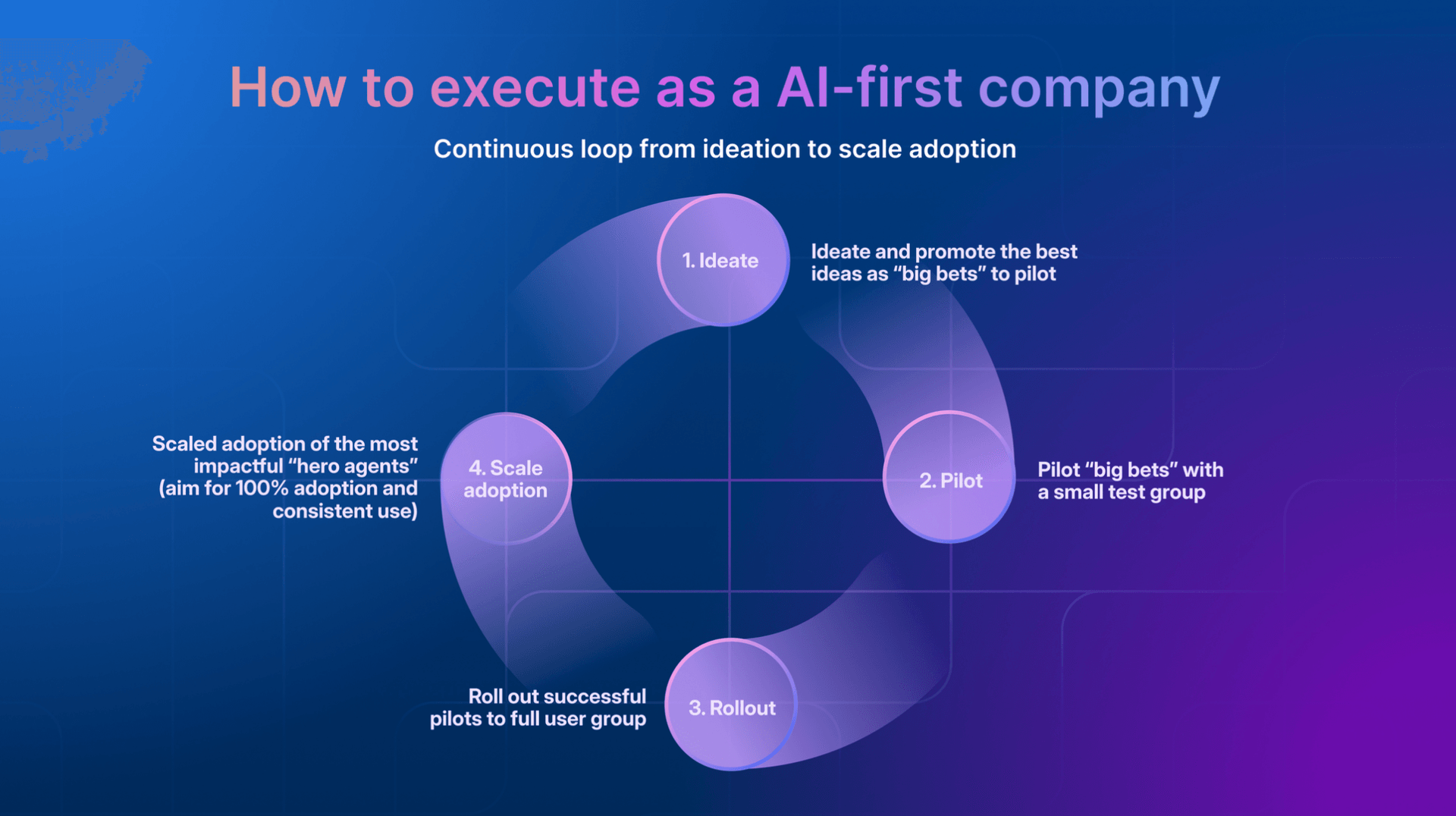
Executing an AI-first strategy with Box
Sixty percent of enterprises expect AI transformation within two years, and Box’s “Executing AI-First” series is the step-by-step playbook for empowering teams to thrive in the era of AI. In this series, you’ll learn:
- How Box approached becoming AI-first through its value realization strategy
- How to deploy agents with an ideate > pilot > rollout > scale plan
- How to be an AI manager
- How to measure what matters by tracking AI agent impact
Read the first article in Box’s series and follow along for actionable insights and downloadable templates.
 Create a free account to continue reading
The Only Subscription
You Need to
Stay at the
Edge of AI
The essential toolkit for those shaping the future

"This might be the best value you
can get from an AI subscription."
- Jay S.
 Every Content
 AI&I Podcast
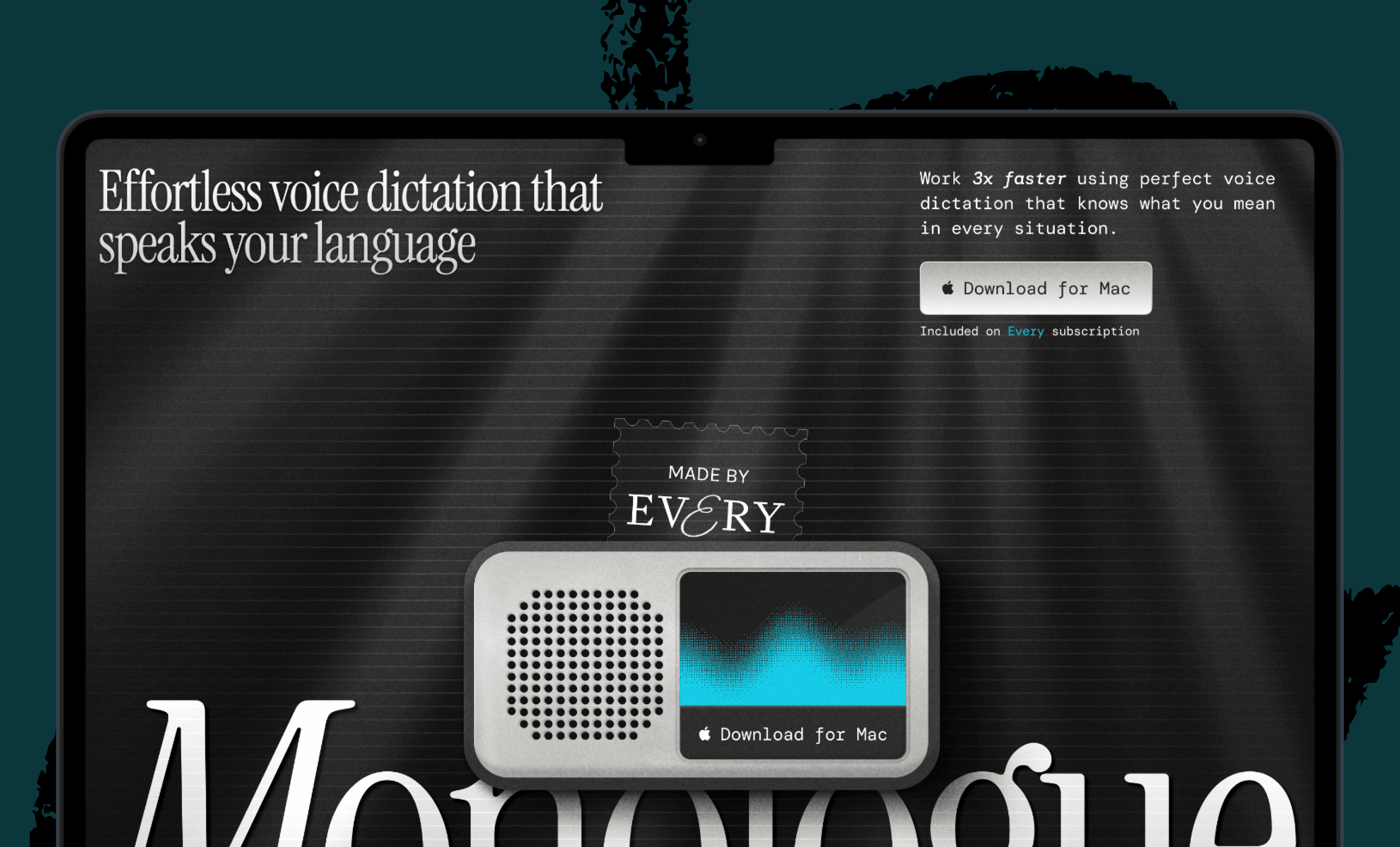
 Monologue
 Every Agent
Join 100,000+ leaders, builders, and innovators

Already have an account? Sign in.
What is included in a subscription?
Daily insights from AI pioneers + early access to powerful AI tools


 Front-row access to the future of AI
 In-depth reviews of new models on release dayPlaybooks and guides for putting AI to workPrompts and use cases for buildersIn-depth reviews of new models on release dayPlaybooks and guides for putting AI to workPrompts and use cases for builders
 Bundle of AI software





 Katie Parrott
 Every Staff
 Kieran Klaassen
Comments