



Codex Goes to Work
Plus: Agent-native product management, AI cost discipline, and medicine at the speed of software
May 3, 2026


Hello, and happy Sunday! Was this newsletter forwarded to you? Sign up to get it in your inbox.
Knowledge base
“A Guide to Agent-native Product Management” by Marcus Moretti/Guides: Marcus Moretti runs Spiral as a one-person team. This guide walks through the two new compound engineering skills that make it possible: /ce:strategy, which interviews you to produce a strategy document, and /ce:product-pulse, which replaces your analytics tools with a founder-style analyst briefing that saves to a folder as your product’s running memory. Read this to set up both commands for your own product and understand how they plug into the broader plan-ship-review loop. Plus: The one thing Marcus still writes himself is the roadmap. Read the accompanying essay for his full workflow, plus his two-part test for which SaaS products will survive the agent era.
“You Are the Most Expensive Model” by Mike Taylor/Also True for Humans: Most teams are routing entire workflows through frontier models when cheaper, faster alternatives would do the job just as well. The real cost isn’t the tokens—it’s your attention. Mike Taylor introduces incremental determinism: a four-level framework for deciding which tasks deserve Opus and which can be handed to Haiku, a script, or no model at all. Read this to know exactly which lever to pull when your AI costs start to add up.
“One App to Rule All Knowledge Work” by Katie Parrott/Context Window: Austin Tedesco now runs 80 percent of his daily workflow through Codex, a tool he called “trash” for non-engineers just months ago. Plus: why Austin reviews every agent output in its destination app, a prompt for letting agents design their own automations, and how to use Every’s compound knowledge plugin to catch confidently wrong data before a plan gets enacted.
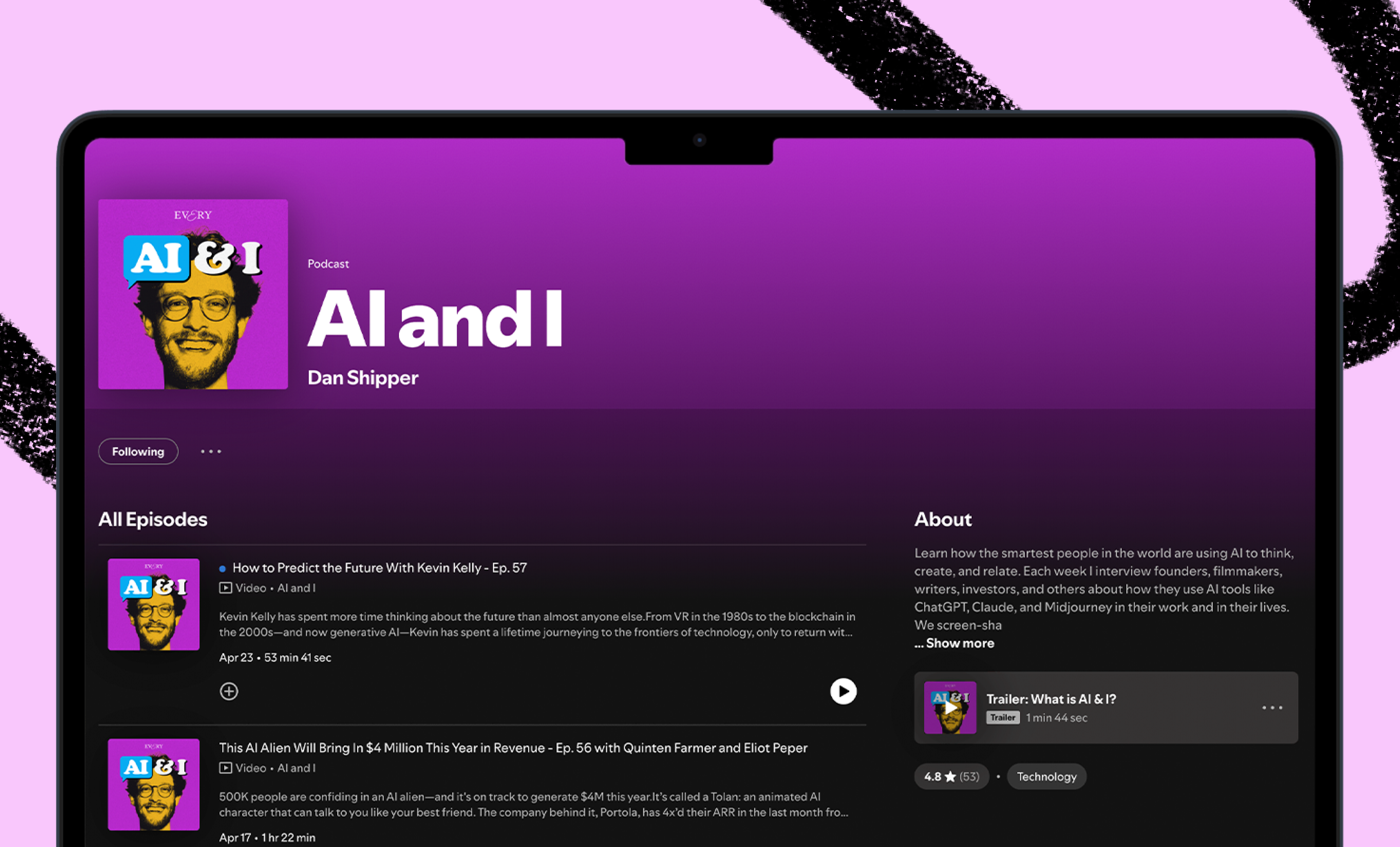
“Compute Is the New Cash” by Laura Entis/Context Window: On AI & I, Emily Glassberg Sands, head of data and AI at Stripe, talks to Dan Shipper about how agents are becoming economic participants—and why fraud is now a full-funnel problem, not just a checkout one. Plus: GitHub and Anthropic are both moving to usage-based pricing as flat-rate subscriptions break down under agentic workloads; Dan and Kieran Klaassen offer contrasting takes on whether you should talk to your agents or just let them work; and Naveen Naidu‘s three-step workflow for turning post-launch customer feedback into a product queue. 🎧 🖥 Listen on Spotify or Apple Podcasts, or watch on X or YouTube.
“Who Isn’t Using GPT 5.5” by Laura Entis/Context Window: One week after GPT-5.5’s release, the Every team checks in: Kieran is now splitting his time evenly between Codex and Claude Code, but Natalia Quintero ran a head-to-head proposal test and her Claude agent won. Plus: why six unicorn CTOs have stepped down to become Anthropic ICs; how Kieran hit 24 pull requests in a single day by having agents watch user complaint videos overnight; and Willie Williams on why AI has turned coding into a slot machine—and how to know when to walk away.
Log on
We host camps and workshops on topics like compound engineering and writing with AI to share what we’ve learned from training teams at companies like the New York Times and leading hedge funds, and by using and experimenting with AI every day ourselves.
Last week’s camp
- Codex for Knowledge Work Camp: Dan and Austin showed how to use OpenAI’s Codex for drafting, research, summarizing, running tasks in parallel, and building small tools to automate routine knowledge work. Watch the recording.
Recordings you may have missed
- Compound Engineering Camp: Cora general manager Kieran Klaassen and product leader Trevin Chow walked through what’s new, went deeper on the brainstorm and ideate steps, and shared examples of using the compound engineering plugin in product-focused workflows. Watch the recording.
From Every Studio
Spiral lets you browse and restore old draft versions
Spiral added version history—you can now see how a draft evolved and roll back to an earlier version with one click. It also shipped two lightweight API endpoints for quick rewrites and made the onboarding flow noticeably smoother.
Cora’s inbox has stars, voice dictation, and a smoother compose box
Cora’s inbox got a round of usability upgrades: a starred view for important threads, typed snooze durations, voice dictation, and a smoother compose experience. The app is also faster behind the scenes. Kieran is looking for a small group of alpha testers to help pressure-test the full inbox—if you’re interested, reach out to him at [email protected].
Monologue hands off recordings from Apple Watch to iPhone
Monologue can start a recording on your Apple Watch and keep it going on your iPhone without interruption. The Mac app also got better at meetings, with auto-stop when a meeting ends, more control over which apps trigger recording, and Webex joining Zoom and Teams as a supported platform.
Alignment
Downstream of speed. The Food and Drug Administration announced this week that two cancer drugs—one from AstraZeneca, one from Amgen—will stream their trial data to the agency in real time. Did a patient develop a fever? Did liver enzymes rise? Did the tumor shrink? Instead of waiting for clinicians to collect, clean, and submit these signals between phases, the FDA will see them as they happen. The agency’s chief AI officer estimates this could cut 20 to 40 percent off the time it takes to get a drug from the lab to the pharmacy shelf.
The downstream effect of a faster approval process is a faster way to find out if a drug does not work. Most of what happens inside a pharmacological company’s research and development budget is paying smart people to find out, slowly and expensively, that the molecule is a dud—which the current system is optimized to find out as late as possible. With real-time data, the failure might show up in year one instead of year three, giving precious time for a patient to be re-routed to something that might work.
Structurally, medicine is starting to behave like software. Silicon Valley says move fast and break things, while healthcare has always said the opposite, for the obvious reason that the thing being broken is a person. I’m starting to believe that AI might be the first tool that lets medicine have it both ways.—Ashwin Sharma
That’s all for this week! Be sure to follow Every on X at @every and on LinkedIn.
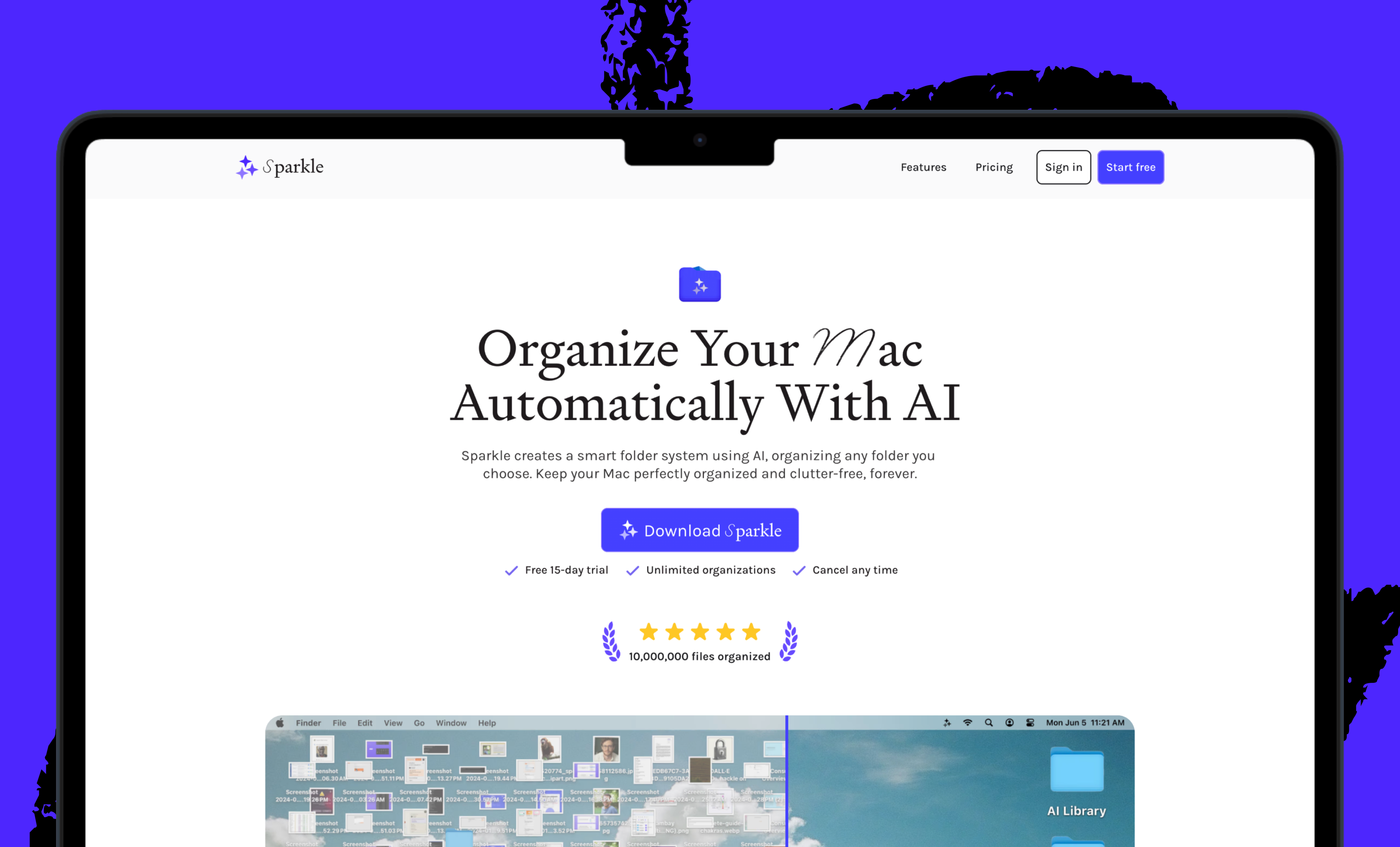
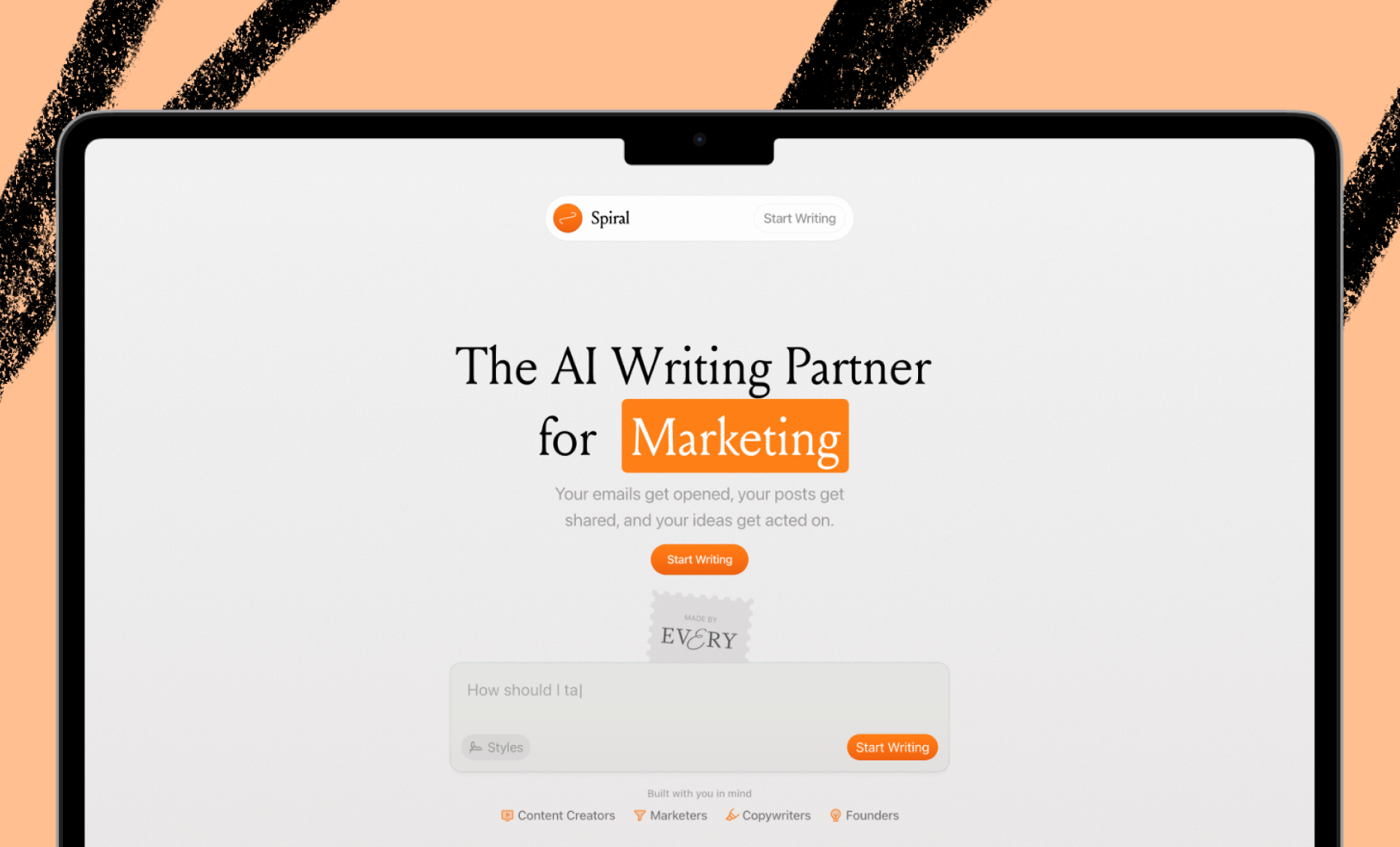
We build AI tools for readers like you. Write brilliantly with Spiral. Organize files automatically with Sparkle. Deliver yourself from email with Cora. Dictate effortlessly with Monologue. Work on documents with AI agents using Proof.
For sponsorship opportunities, reach out to [email protected].
The Only Subscription
You Need to
Stay at the
Edge of AI
The essential toolkit for those shaping the future

"This might be the best value you
can get from an AI subscription."
- Jay S.
 Every Content
 AI&I Podcast
 Monologue
 Cora
Cora
 Sparkle
 Spiral
Join 100,000+ leaders, builders, and innovators

Email address

Already have an account? Sign in
What is included in a subscription?
Daily insights from AI pioneers + early access to powerful AI tools



 Front-row access to the future of AI
 In-depth reviews of new models on release day
Playbooks and guides for putting AI to work
Prompts and use cases for builders
In-depth reviews of new models on release day
Playbooks and guides for putting AI to work
Prompts and use cases for builders
In-depth reviews of new models on release day
Playbooks and guides for putting AI to work
Prompts and use cases for builders
In-depth reviews of new models on release day
Playbooks and guides for putting AI to work
Prompts and use cases for builders
 Bundle of AI software





 Alex Duffy

.png)
 Every Staff
 Reviews of new AI models on release day
Comments
Don't have an account? Sign up!