





The transcript of AI & I with Every editor in chief Kate Lee is below. Watch on X or YouTube, or listen on Spotify or Apple Podcasts.
Timestamps
- Introduction and Kate’s early career as a literary agent: 00:01:00
- From book publishing to tech—Medium, WeWork, and Stripe Press: 00:04:45
- How Kate joined Every and what made the role click: 00:12:00
- What it’s like to be a knowledge worker at the frontier of AI: 00:27:00
- The ‘aha’ moment: using AI to manage hundreds of applicants: 00:31:00
- How Every’s editorial team uses AI to enforce standards and train taste: 00:36:24
- Publishing two reviews of major model releases on the same day: 00:45:06
- What automating copy editing requires: 00:51:39
Transcript
Dan
Kate, welcome to the show.
Kate
Thank you. Thanks for having me.
Dan
I’m so excited to have you — partly because we’ve worked together for so long. For people who don’t know, Kate is our editor in chief. She does everything involving the newsletter and has been doing that for a really long time, along with the business surrounding it: sponsorships, events, courses, and all of that.
You joined us at quite an interesting time. I think your first day was the day that Lex launched. Lex is an AI app that we incubated about three years ago, and it went super viral. At the time we were really just known for being a newsletter — and suddenly we had this viral software app, which we eventually spun out. So we went back to being a newsletter and had to look at each other and figure out what we were doing and what we wanted to be.
I want to talk about your career, how things have progressed, and what that journey has been — because we’ve honestly never talked about it. And then I want to get into something that’s been on my mind: you’ve had this really interesting transition lately. I’m sort of the early adopter who tries everything, and you’re the knowledge worker who’s excited about this stuff but isn’t going to use it just because it’s cool. And something has shifted for you over the last month or two. I really want to talk about that.
Kate
For sure.
Dan
Your career path is the kind that a lot of people at Every have — you’ve done so many different things.
Kate
My career is in media and technology. There’s the version of how I got to Every, and then there’s how my career set me up for that. My background is actually in book publishing — initially as a literary agent.
Dan
Kate was a star agent. There’s literally a New Yorker article — from the front of the magazine — saying Kate Lee is a star.
Kate
Very kind. I was the subject of a Talk of the Town piece when I was just starting out in publishing. It really jumpstarted my career. It was extremely overwhelming at the time, and I’ll never forget it.
Dan
How old were you?
Kate
Twenty-seven, probably.
Dan
Wow. I still haven’t been a Talk of the Town.
Kate
I guess I’d recommend it. After ten years as a literary agent — working among colleagues who were the best in the business, representing journalists, novelists, literary fiction, big commercial nonfiction, politicians, Nobel Prize winners, Pulitzer Prize winners — I wanted to see what else was out there. It wasn’t something I wanted to do for another thirty years. I really wanted to move into tech, and my network at the time was people who were founding things in New York, which was a much smaller ecosystem then. I knew I wanted to be part of that — not necessarily to found a company, because founding a company is the hardest thing anyone can do —
Dan
Kids is harder.
Kate
Fair. I can say that too. But through a whole series of conversations and networking and meetings — including one with someone who turned out to be your friend Josh Hirsch, from the Browser Company — I ended up meeting Ev Williams when he had left Twitter and was founding Medium. So I jumped to Medium and was there for four and a half years.
Dan
You led all of their —
Kate
I was their first person in New York and their first content head. It felt like such a seamless product-market fit, because it was everything I loved about working with writers, just in a new way — faster feedback, much more immediate. And of course it was the first time I’d worked with real technology people. The tech people I’d worked with before were an IT department. This was product managers and engineers.
Medium went through a number of changes, as most companies have. And from there I went to WeWork.
Dan
Very nice way of saying it.
Kate
I explicitly made that move because I was really exhausted from media. I’d been in it for a long time, I’d just been at a really early-stage company, and I needed something different. I wanted to go somewhere less chaotic — so I went to WeWork.
Dan
Somewhere less crazy.
Kate
One can question my judgment. But the company had just raised however many billions from SoftBank and was in huge expansion mode. I went to lead their global editorial program and ended up staying almost two years. It was true madness — we grew from 4,000 to 14,000 people, with three different people doing the same job because we were hiring so fast. I worked with amazing people, as I did at all of these companies, but ultimately knew it wasn’t a place I was going to stay.
Then I saw an opportunity to be the publisher of Stripe Press — Stripe’s publishing arm. I thought it was an incredible opportunity, applied, and started about six weeks before the pandemic hit.
Stripe is an incredible company and the people are exceptionally talented. Starting any job right before a pandemic is just hard, but they did everything you could under the circumstances. I was a publisher of Stripe Press, which had launched sometime before I arrived, so I was taking over an existing list and building a new one. I also ended up overseeing Increment, their print and online magazine for developers — run by a woman named Nikki Orlando, a fantastic publication devoted to Stripe’s early core audience.
I learned so much at Stripe. People would ask: why does a payments company have a publisher? And I’d say — you can’t just replicate it. Among the unique ingredients for success at Stripe are founders who are genuinely, voraciously excited about ideas and books. That comes from the very top, and it sets the whole thing up differently than if it were an initiative that came out of a marketing brainstorm.
Dan
Almost like pure marketing.
Kate
Exactly — it wasn’t. It was a genuine desire to read great books, to rediscover things that had been lost to history, to discover new ideas, and to help entrepreneurs. The mission of Stripe Press is called Ideas for Progress, and it connects to Stripe’s larger mission of enabling global entrepreneurship.
I should also say: anyone who’s worked with me knows I can be particular about certain things — copy, commas, all of that. Stripe is a place where the attention to detail is absolutely incredible. It’s a little counterintuitive for a payments company, but they invest enormously in getting things just right. The people who loved them, loved them. That relationship mattered.
(00:10:00)
Dan
That’s really interesting.
Kate
While I was at Stripe, I met your co-founder Nathan — I’d actually met him years earlier at Medium, when he came in with Hamish, who later co-founded Substack. I reached out to Nathan while I was at Stripe, just to stay in touch, and we had an initial call. Then I decided after two years to leave Stripe and go independent — to get back to working with really early-stage companies. I reached out to both of you and asked if you needed any help.
Dan
And we were like, boy do we.
Kate
There was a running joke from 2020 until I joined — editor in chief at Every was like Defense Against the Dark Arts at Hogwarts. No one lasted very long.
Dan
I feel like I should have told you that upfront. It was just really hard — and it wasn’t necessarily the fault of the people we hired. We do a very particular kind of writing. Early on I assumed that editing experience at a big company like the New York Times would translate directly, but I didn’t realize how different editors are from each other. “Editor” is as wide-ranging a title as “founder” — are you running a barbershop or a venture-backed company? Finding someone with writing taste for technical content is very hard. You’re either really into tech, or you’re really into writing — and a lot of times those people are a little skeptical of tech, which is an important perspective, but it’s very different from coming at it from a builder’s mindset.
The first time we met, I was pretty much immediately like, do you want to come on full-time? And then I spent a lot of time trying to make that happen. And then you did.
Kate
It was the right time. I started advising, then did some freelance editing because you needed help, then took on the guest contributors. I had about three main clients at the time and really loved the ability to pick my projects, set my own schedule. But I always liked working with this team the most.
After spending time on guest pieces, the last frontier was the main writers — you, Nathan, Evan — who had a very symbiotic process of giving each other feedback. I basically said: we’re going to put all this work into these pieces, and we should do a little more work on them. That was the last thing I was actually editing.
And then, as the Lex spinoff happened, there was a moment to come in not just as editor in chief but to really figure out what the company was.
Dan
Totally.
Kate
Which is when I came on full-time.
Dan
I’ve always wondered about this — because I’ve never actually worked at a great company. By great, I mean a really high-performing startup. You’ve had experiences with some of the big-name companies of the last ten to fifteen years — Medium, WeWork, Stripe, Every. How does your experience here compare, and what have you taken from all of those?
Kate
In some ways, every job has been a reaction to what came before. When I left book publishing, I wanted something fast and nimble with immediate feedback — the book business works on very long timelines. Then I felt like I needed a more established company, which led to WeWork. Leaving WeWork — which was a disaster for many reasons — Stripe was this incredible, operationally excellent experience. And that set the scene for wanting to do a startup again.
After I left Stripe and was doing projects on my own, I thought: I love this control. I’m never joining another startup, and I’m never joining another media company ever again.
Dan
Oops.
Kate
Famous last words. But what I find I get the most satisfaction from is working in small teams. And I like to work on the thing that is the thing — the main thrust of the company. Even if the work isn’t the most financially lucrative part of the business, it’s the driving heart of it. What I’m doing directly contributes to whether the company succeeds or not, in a way that feels much more direct and satisfying than content marketing for a much bigger company.
(00:20:00)
Dan
I want to get into this moment I feel you’ve had — because I think you can be a real ambassador for people who have some resonance with your career trajectory. People who are in book publishing, or were in publishing, or are editors or writers, who might look at all the AI stuff we do and think: holy shit, I don’t know if I like this, or how I can incorporate it into my work. I’m curious how it’s changed for you over the last couple of years.
Kate
When I joined full-time, I think I was the fourth or fifth employee.
Dan
There were about three people full-time, including me. Now there are twenty.
Kate
We’ve grown an enormous amount. When I was just starting and thinking about my career, there was actually something a little counterintuitive about joining a small startup — I had a second kid at the time and needed flexibility. Dan gave me a tremendous amount of that, and I’m always grateful for it.
Coming in, I knew exactly what my zone of expertise was. With only three other people at the company, no one else could do what I was doing. I had a really clear sense of: I’m going to come in, I know what it takes to get my work done every day. It was going back to being an individual contributor. I’d managed large teams before, but I wanted to just come in and do it myself. I could control what I could control.
Dan
And I think you really wanted that.
Kate
I was very happy to be like: this is what I’m doing every day. I think I’d been consulting for about a year and a half before I came full-time, so I’d already gotten used to figuring it out myself.
When I started full-time, it was literally the moment Lex was launching — so it was both clear that a new technology was happening, and completely unclear what it meant for us. We were going back to being a newsletter company, really having to figure out what made us different.
There’s always been a focus on high-quality writing at the beating heart of the company. From the AI perspective, being here has been interesting because when GPT-3 came out, you were just really excited about it.
Dan
Kate, I can automate your job! Why not?
Kate
We can talk about how you’ve been trying to automate my job for three-plus years. But you really just wanted to write about it — you were like, I’m going to spend the next three months writing about ChatGPT only. And that fall, you did, and that’s when we launched the podcast. It was so clear there was such richness there.
Dan
I had an email to our investors around that time saying: we’re going to do more of this, this is the plan. But also, practically, we’re running a business, we have to publish every day, I’m writing a lot — it took a little bit for everything to play out.
Kate
One of the important lessons of Lex was the ability for two people who weren’t necessarily hardcore engineers to build a product and distribute it to a list. Distribution is so, so important. And then Elon Musk took over Twitter.
Dan
Oh God. That was bad.
Kate
Traffic cratered. And it was like: okay, we have to figure out what this is going to be.
Dan
The link-sharing just — they deprioritized links and it was like, oh, that’s our whole business.
Kate
Really, really tough.
Dan
Our strategy was: emphasize bottom of funnel. We started doing a lot more courses — if we’re not going to grow top of funnel as much, we’ll deepen the relationships we have with our best subscribers. And that was also a big impetus to start doing more software, because we could monetize a smaller audience better with software and consulting.
Kate
That directly led to what Every is now — along with the changes in technology such that we can run four or five products with one person each, which just wouldn’t have been possible a couple of years ago.
In terms of how I’ve felt being part of this journey: I always felt like media and technology was the real nexus of my career. AI has felt like a huge sea change — the way early mobile probably felt for people who were in it. I get to have a front-row seat to everything that’s happening, and I’m so grateful for that. The attitude here is very much: it’s not that you have to try these tools, it’s that you get to try these tools.
By the same token, I think we represent the two sides of our audience. You’re the early adopter, very much on the edge, pushing these tools to their limits. And I’m that knowledge worker who works in tech, knows she needs to use AI, but has been doing her job a certain way that hasn’t been reliant on it. So every time new models came out and you’d built ever-smarter versions of a copy editor, I’d think: well, I don’t fully have to use this, because nothing is as good as what I would do myself — and in the short term it’s just going to create more work.
(00:30:00)
Kate
But in the past couple of months, I’ve been able to use AI for aspects of my job that — maybe not fully on the editing side yet, but absolutely in administrative, operational, and research work — and it has completely changed things for me. Spending hours in Notion or in a spreadsheet now feels avoidable. It felt like a real aha moment: I don’t have to go into the settings and figure this out myself. I can just tell an agent to do it. Time is precious and I don’t want to spend it wrestling with software.
Dan
Can you give one or two specific big lightbulb moments?
Kate
One was around hiring. I’d opened two or three headcount positions earlier this year. We don’t have an HR department — we do all the hiring ourselves. So I needed an efficient way to manage the whole process. We use Notion for job descriptions and applications — posting them, filtering them, all of it. And I was really dreading it. I thought it was just going to be hours of manual sifting.
What we did was — I think Atlas was the first one — you basically said: just have it tell Notion to post the job. And Notion is not always my friend.
Dan
Notion is Every’s friend. Be honest.
Kate
Google Docs is what I have lived in for years. And there’s a reason Google Docs has the primacy it has — it is so easy and so good. But realizing I was going to spend an afternoon figuring out how to replicate a Notion page and get it into our database, you said: just tell Atlas to do it.
And I sat next to you, and you’re very good — you don’t do it for me. You lead me to the water. I typed it in and watched it think, and it needed access to a few things. At one point it didn’t work, and I assumed I’d done something wrong — which is always my first instinct with technology. And you said: just ask it again. Tell it it did it wrong.
Dan
Tell it to try again.
Kate
And I was like: you can talk to this and just say, you were wrong, try again. It made the whole process so much more seamless — just getting the jobs posted, which sounds super mechanical, but was genuinely taking up time.
And then we ended up with hundreds of applicants. I needed a way to start filtering and understanding what I was looking for. I’ll say I did end up going through almost all of the applications myself — but it was very different being able to say: here are ten flags of things to look for, rather than just sitting down in front of a hundred applications with no framework. It gave me a first pass, and a way to evaluate everyone against consistent criteria. It made it possible to hire people while still doing my actual job. And that’s a real pain point at startups — hiring is so important, and you never have the time you wish you did.
Dan
This is such a good illustration of how my brain works — and how little experience I’ve had at big companies. I genuinely hadn’t thought about the fact that HR is the one that recruits people.
Kate
There’s a very similar AI parallel: I can either do the job the way I know how, or potentially waste time figuring out how to get someone or something else to do it. I’ve had a similar light bulb with agentic browsers around settings panels — I’m just not good at those. And I get asked all the time: can you add me to this role, can you do this thing in the dashboard? Now I just ask Alice. It’s great.
Kate
It’s also really freeing for me to see you do that — to see you say, I don’t know what this settings thing does, I’m just going to ask. I learn by doing and I learn by modeling. I’m not always going to come up with the five use cases myself. But if I see: we’re using it for editing, we’re using it for operations, we’re using it for this — I can build from there.
(00:40:00)
Dan
How do you use it for writing and editing currently?
Kate
My usage has shifted as I’ve been able to build more of a team. When I was the only editor, working with writers and freelance editors, I used AI to try to enforce our editorial standards more consistently. The challenge was that work came back at different levels from different people — they had very different backgrounds and weren’t all steeped in how we do things here. So I was spending a lot of time getting each draft to a certain level.
AI is actually very well-suited to this, if you can give it your patterns and your rules. We created — it was a chat at first, then a project, basically evolving as each new capability came out — a project where every draft, before it came to me, had to be run through what we called our editor. We have a style guide; when I got here it was about 400 rules. The idea was that by the time a draft reached me, the floor had already been lifted.
As we’ve built up more of a team and infrastructure, I actually do that very little now personally — the editors and writers on the team do it themselves.
Dan
If someone is listening to this and they’re an individual contributor who wants to apply this to their own writing and editing — or someone who manages or wants to manage teams of writers — what do you think are the skills required now? And how are you setting up the editorial arm of Every differently than you might have before?
Kate
We publish a newsletter daily with a small team: me, a managing editor, a senior editor-writer, and another writer who does a lot with AI. We all have to do a lot.
One thing that’s become really clear is that you have to know what standards you’re trying to enforce — and then you have to be the one to teach the AI and enforce it through the AI. Something we’ve learned is that how Claude reads a style guide may need to be structured slightly differently from how I’d normally write one, in order to actually get the work done the way we want it. There’s been an enormous amount of trial and error.
We expect our full-time writers — not necessarily freelancers who aren’t in our day-to-day — to be using these systems themselves. They’re going to work with an editor, but they should know what we’re looking for both from a style perspective and from the perspective of what makes a great Every piece. Is it first-person? Is it sharing expertise that’s been earned? We have guides for that.
In traditional newsrooms, a reporter never writes their own headlines. We test headlines. We use AI to generate lots of options and riff from there. We work on this as a team.
Another thing that’s been important: you can set up these tools, but then you have to make sure people actually use them. Being the person who says, can you confirm you ran this through the tool before you sent it to me? — that’s a different kind of management than before.
We also had a practice, especially when we were getting up to speed and onboarding new people, of going through every piece we published at our editorial meeting — the subject line, the headline, the deck, the lead — and asking: was this good? Could it have been better? Did it work? And we fed all of that feedback into our Claude project. We’re really trying to train it. As I like to say: it’s not about accepting what AI says blindly, but it’s not generic and it’s not random. It’s trained on our stuff, and trained on what’s worked. Your job as a writer or editor is to consider it. If you don’t think a suggestion is good, that’s your prerogative — but you have to wrestle with each one.
Dan
A way to summarize that is: there’s a way to use AI where you’re constantly pushing the best of your taste and learnings into written artifacts the AI can consume — and that can be used by writers and editors at the moment they need it. Not as a “never think for yourself” tool, not as a spam generator, but as: here’s the best of what we know from the past and what we’ve been able to write down. Does this help? Because a lot of times people are making repeated mistakes, and it’s really useful to have something that says — hey, Kate would probably say this.
Kate
And watching that blossom internally inside an editorial organization is really cool.
Dan
One thing I had recently that we haven’t talked about: we do these vibe checks. New models come out, often with very little notice, and it’s a scramble. Recently two models came out at the same time — Codex 5.3 and Opus 4.6. We were testing them intensely for a week and then had a very short window to actually write the vibe checks.
What we do when testing is have a Discord channel where everyone is throwing in their thoughts. I had Cowork go in and summarize all of that into a Notion doc that was constantly updating, and then I vibe-coded that into a website for the vibe check. It was the coolest thing. And then I sent a PDF of the Notion doc to one of the model companies — which caused some unintentional chaos, because I was just trying to give them a heads up at 2 AM. Sorry about that — you know who you are.
I think we can go a lot faster now, and there’s a lot more multimedia involved. I was looking back at the first article I ever published about AI — “AI in the Age of the Individual,” November 2022. The things I called out then — vision, taste, ability to prioritize — hold up pretty well. But what was striking was how big a deal it was then to have AI-generated images. Now that’s just table stakes.
(00:50:00)
Kate
I think as a company, we all really felt a step change between late December and early January. We’ve written and talked about it — Opus 4.5, Claude Code, Cowork. I feel like we’ve been sprinting since January 2nd and just doing more. The vibe checks are our version of breaking news. The newsroom is on fire, so to speak. A model is coming, we know the embargo, we have a plan — but it’s not always easy. We have a far-flung team with really different perspectives.
Dan
Most of whom are not professional writers, and writing is not their full-time job. So you’re pulling them away from their actual work to review something.
Kate
Which is exactly how we get good reviews — because they use this stuff for their jobs. But it’s also: you have a job, and now we’re asking you to test a model, go over how we phrased everything, make sure it captures what you said. It really is a monumental cross-functional effort.
We’ve been investing a lot in making vibe checks feel like a special experience — not just our standard post page, but a really different website experience, much more interactive. And we probably did all of that in about 24 hours, for two major models that released at exactly the same time. Normally we’re just doing it for one.
Dan
Are you using your Claw?
Kate
I’m not using my Claw yet.
Dan
Did you ever use it?
Kate
No. I have one, though.
Dan
What’s his name?
Kate
Strunk.
Dan
Strunk! That’s hilarious. That is the best.
I think Strunk could actually be a good copy editor inside of Proof — this markdown editor I’ve been building — along with your style guide. But that’s probably a little while away. We’ve got to get you to your Claw magic moment.
Kate
I need my Claw magic moment. I’ve been taken by the hand, helped to set it up. I have it, I know technically what to do. But as soon as I asked it to do something and it needed to integrate with one of my apps and wanted something I didn’t have immediately, I was like — I’m not going to focus on this right now.
Dan
What’s your prediction for when I’ll finally succeed in automating your copy editing?
Kate
Higher odds this year than at any point. I think the challenge is twofold. One is consistency — you’ve always had trouble with just reliably catching things without making new errors. And then the other is the judgment call.
We haven’t talked much about taste, which is a big, important, loaded word. When I’m reading a piece — and I read everything before it goes on the site, usually for the first time after it’s been edited — I’m not just asking: is the copy correct? I’m asking: how is this piece? Does it fit?
Dan
To be super clear — I’m talking specifically about the repeated mechanical copy edits that you do all the time that I think you shouldn’t have to spend your time on.
Kate
Right. And what I end up doing is reading something for the first time and doing a top edit at the same time. Those steps are conflated for me — versus if I’d already read the draft, I could hand it to a mechanical copy editor and just let them go.
Dan
I’m going to say June. June of this year. That’s my goal.
Kate
The models are certainly closer than they’ve ever been.
Dan
Any final words before we sign off?
Kate
I’m just really excited about the future. The past six to nine months have been really fun and exciting — because I haven’t felt this way from an early-stage perspective in a long time. My previous companies were incredible, but Stripe was extremely established. The feeling of being at an early-stage company asking “is this working?” — and for a while just fumbling along trying to figure it out — and then arriving at this moment where it’s like: okay, yes. It’s working. Let’s keep doing this and do it better.
That’s been really exciting and really fulfilling. I’ve had to learn whole different ways of doing my job — both because I now manage people, so I’m not the IC anymore, and because I have strong opinions about how I want things to be that I need to articulate and institute. And then every time you say there’s a new model coming, I’m like: okay, let’s check the calendar. What do we have going on? Just trying to keep up with everything.
Dan
It’s been a pleasure doing this with you. Excited for what comes next.
Kate
Me too.
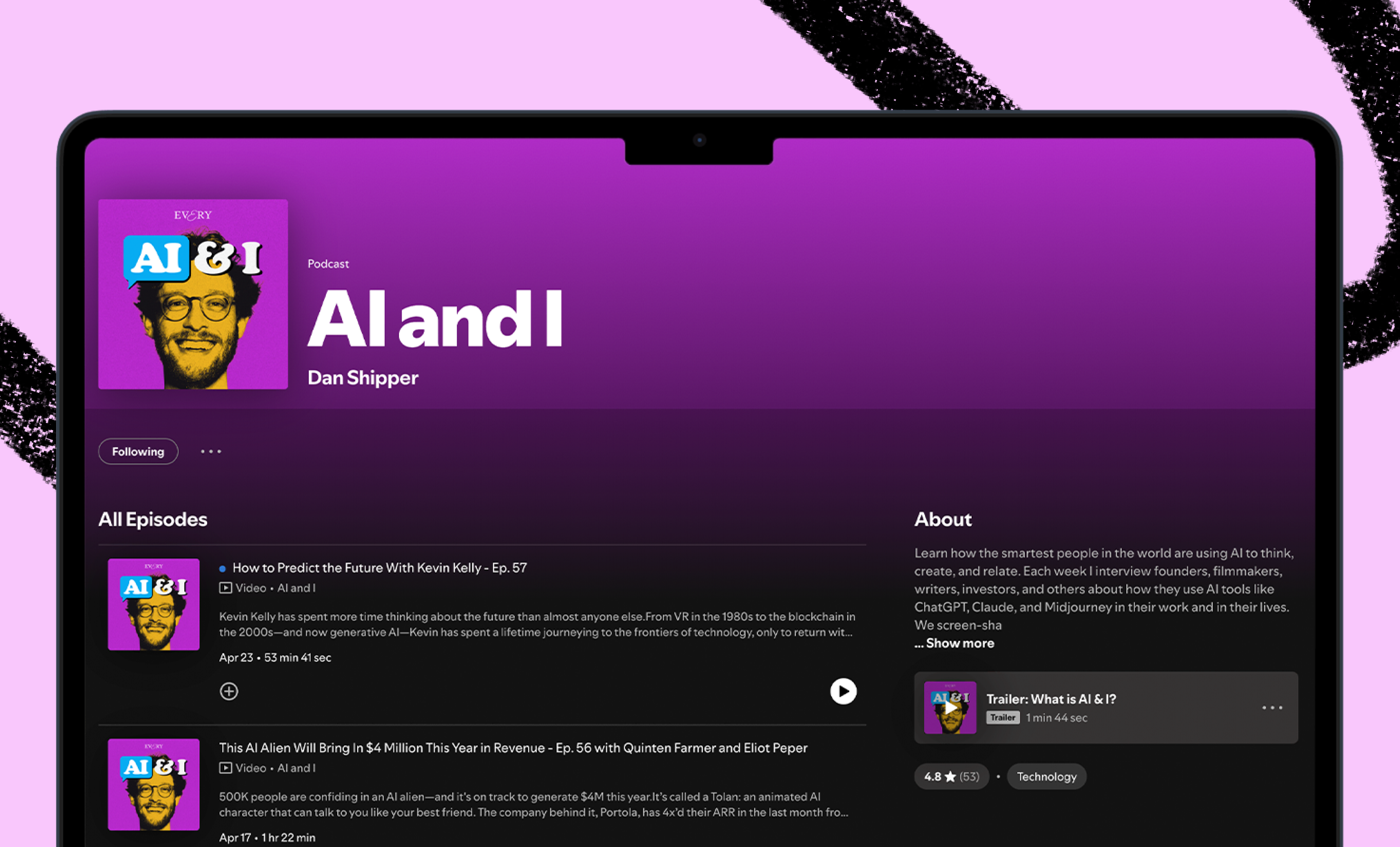
Dan Shipper is the cofounder and CEO of Every, where he writes the Chain of Thought column and hosts the podcast AI & I. You can follow him on X at @danshipper and on LinkedIn. To read more essays like this, subscribe to Every, and follow us on X at @every and on LinkedIn.
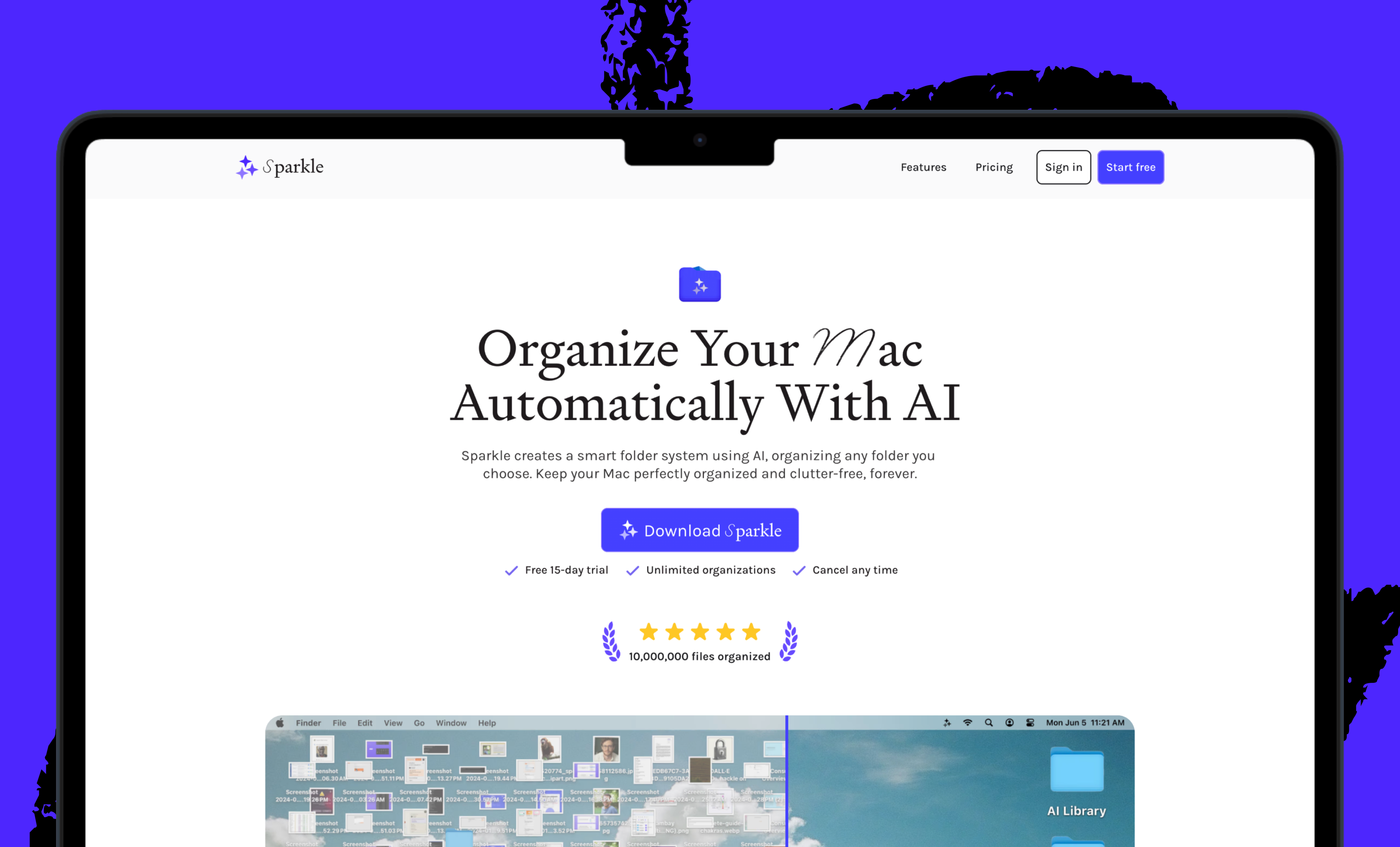
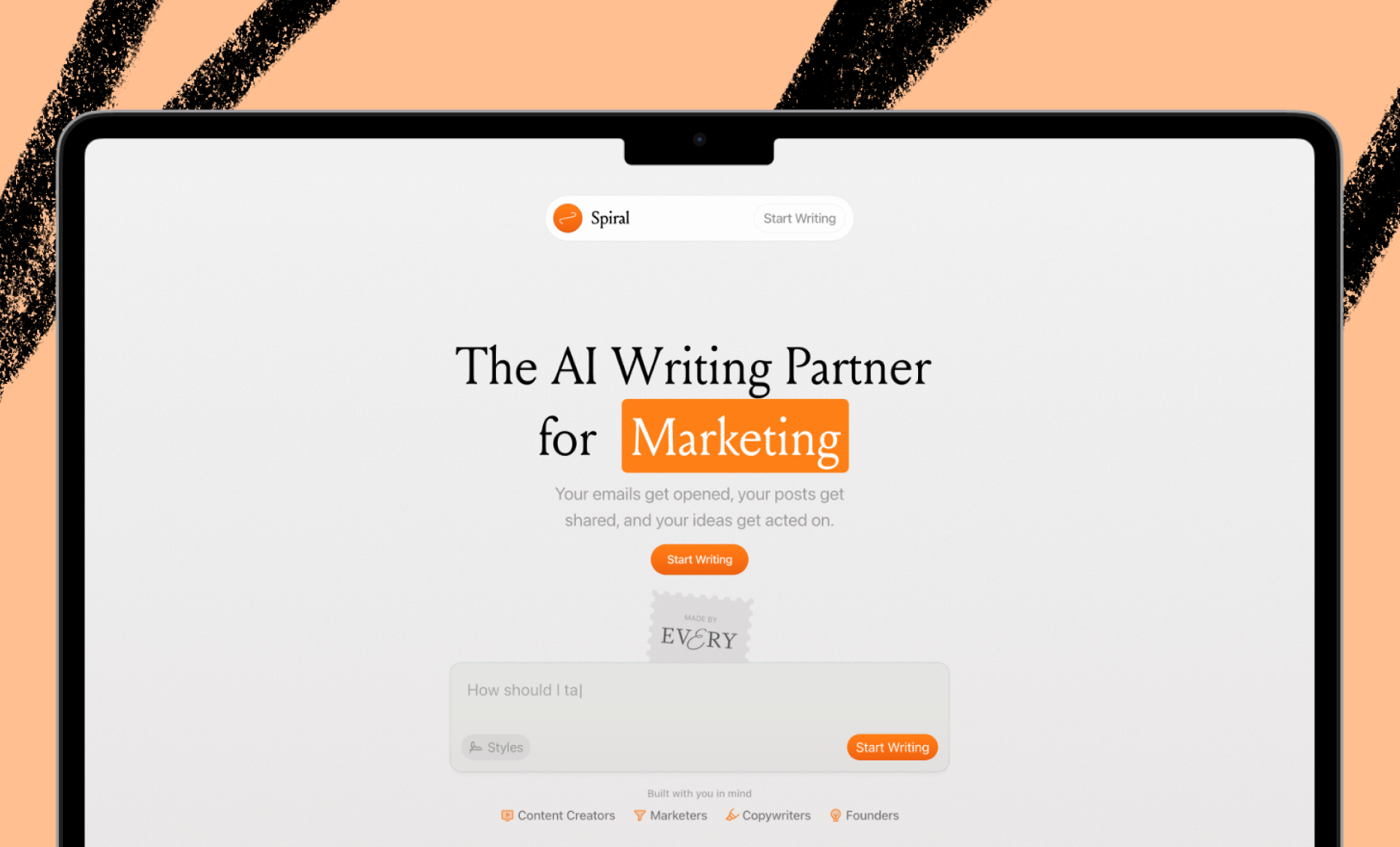
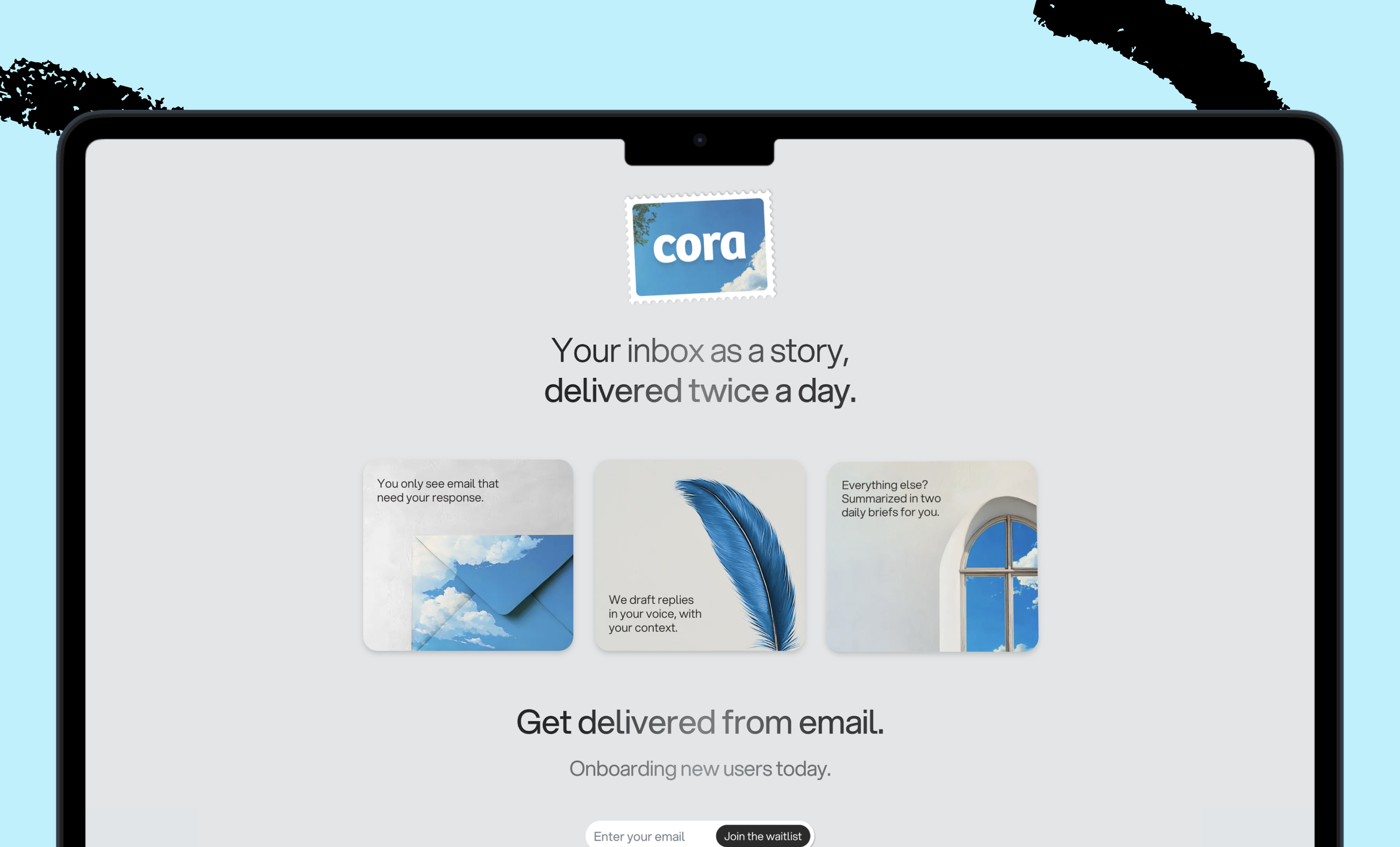
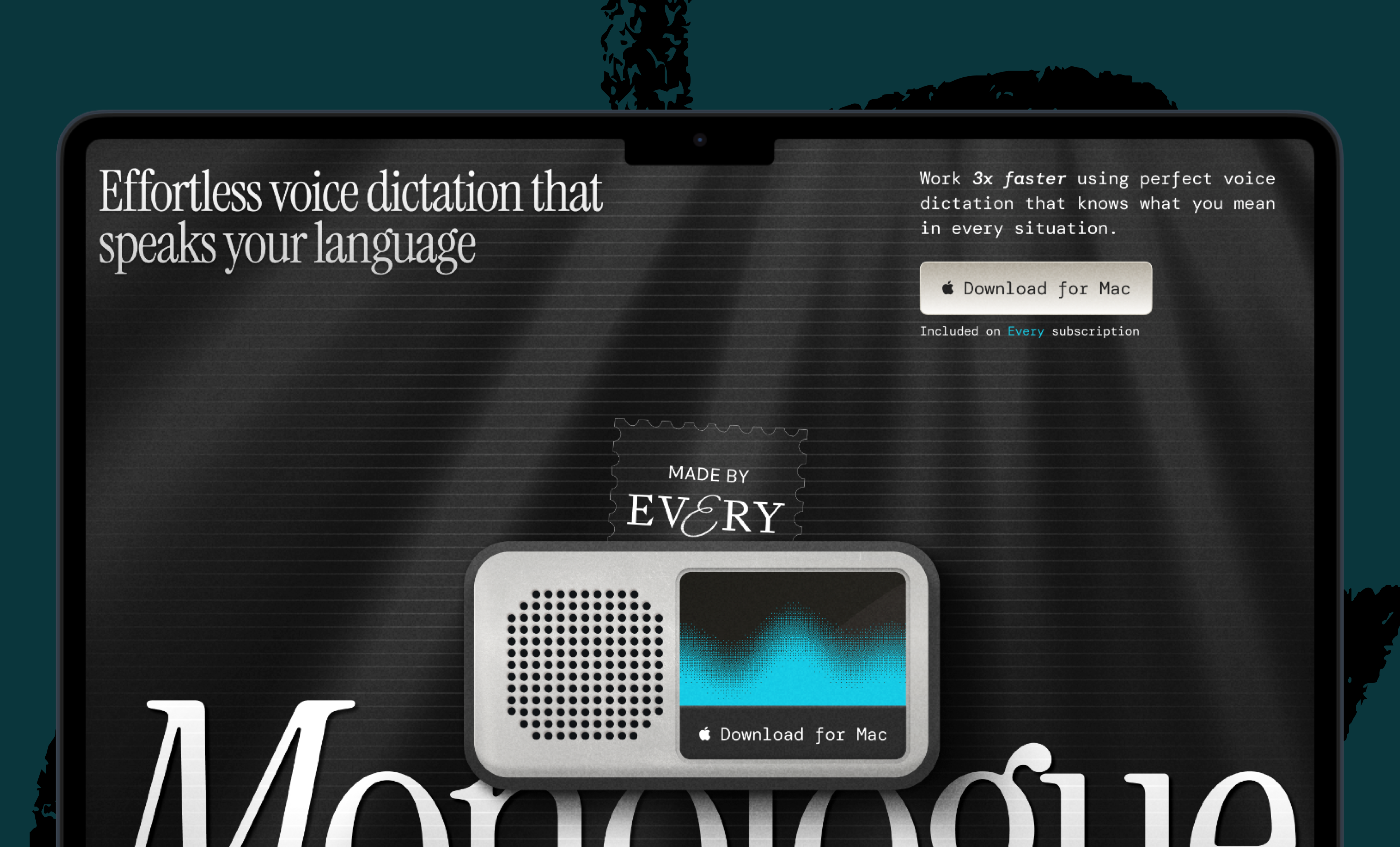
We build AI tools for readers like you. Write brilliantly with Spiral. Organize files automatically with Sparkle. Deliver yourself from email with Cora. Dictate effortlessly with Monologue.
We also do AI training, adoption, and innovation for companies. Work with us to bring AI into your organization.
Discover Every’s upcoming workshops and camps, and access recordings from past events.
For sponsorship opportunities, reach out to [email protected].
Help us scale the only subscription you need to stay at the edge of AI. Explore open roles at Every.
The Only Subscription
You Need to
Stay at the
Edge of AI
The essential toolkit for those shaping the future

"This might be the best value you
can get from an AI subscription."
- Jay S.
 Every Content
 AI&I Podcast
 Monologue
 Cora
Cora
 Sparkle
 Spiral
Join 100,000+ leaders, builders, and innovators

Email address

Already have an account? Sign in
What is included in a subscription?
Daily insights from AI pioneers + early access to powerful AI tools
 Front-row access to the future of AI
 In-depth reviews of new models on release day
Playbooks and guides for putting AI to work
Prompts and use cases for builders
In-depth reviews of new models on release day
Playbooks and guides for putting AI to work
Prompts and use cases for builders
In-depth reviews of new models on release day
Playbooks and guides for putting AI to work
Prompts and use cases for builders
In-depth reviews of new models on release day
Playbooks and guides for putting AI to work
Prompts and use cases for builders
 Bundle of AI software





 Rhea Purohit
.png)
 Dan Shipper
 Reviews of new AI models on release day
Comments
Don't have an account? Sign up!