


Katie Parrott is a staff writer. She writes Working Overtime and contributes to Vibe Checks, Source Code, and Context Window.

Mini-Vibe Check: Claude Design Isn’t for Designers—Yet
Plus: Vercel and Lovable’s security woes, and how to make your agent your watchdog
Apr 21, 2026 · 7 min readUpdated Oct 8, 2026

Was this newsletter forwarded to you? Sign up to get it in your inbox.
Introducing Monologue Notes
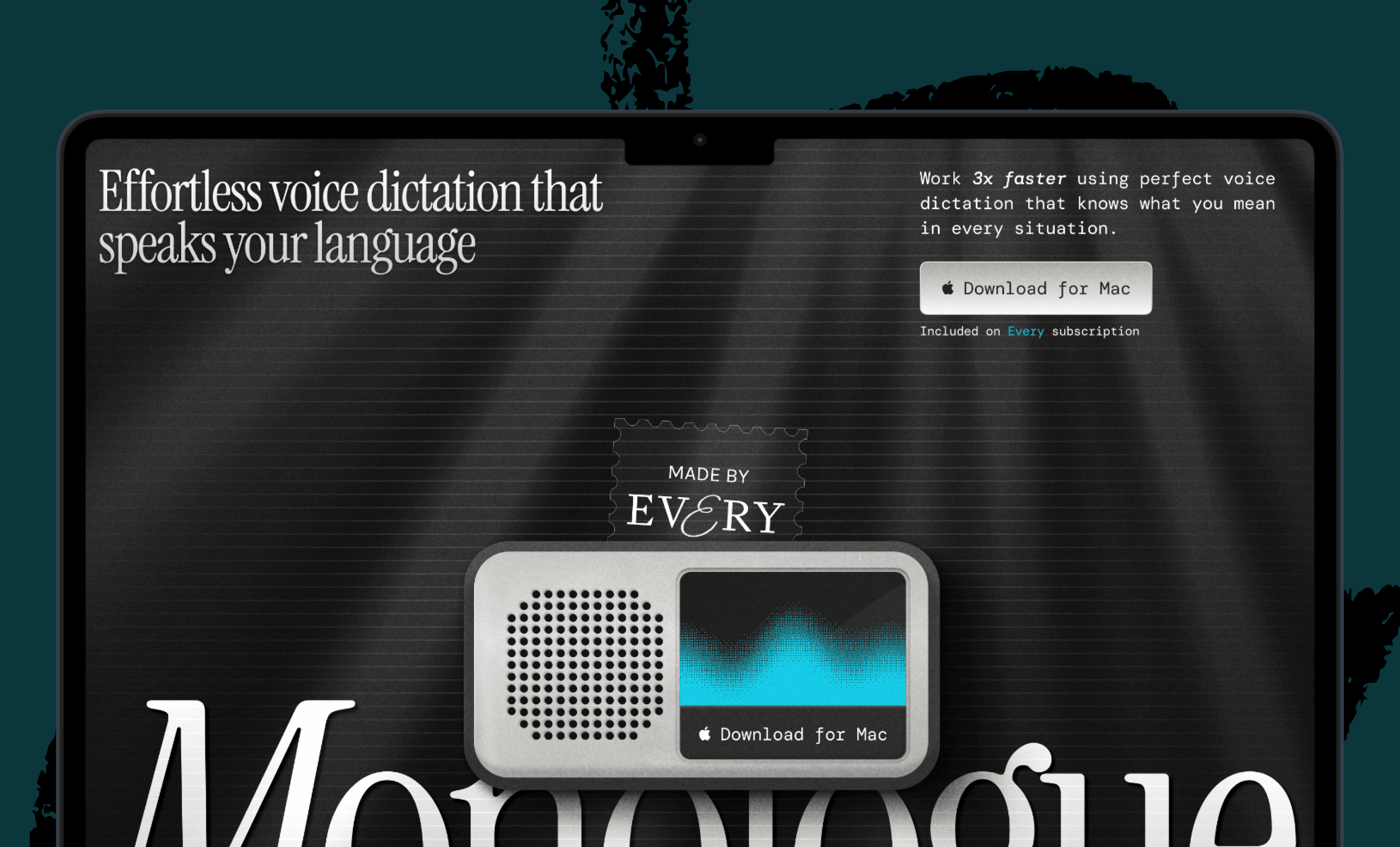
Today we’re launching Monologue Notes, which turns your calls, meetings, and voice memos into transcripts your agents can use. Naveen Naidu built Monologue to capture active work, where text has a clear destination. In six months it’s logged five million dictations and 250 million spoken words. Now, Notes captures the rest: the thinking that happens on walks, in calls, and in meetings. It transcribes everything and makes it available to any agent with API, CLI, or MCP access, across your Apple devices.
Mini-Vibe Check: Claude Design
Anthropic recently launched Claude Design, a web-based tool that lets you feed Claude a GitHub repo, Figma file, or brand kit and collaborate on interfaces, prototypes, slides, and one-pagers. It’s powered by Claude Opus 4.7 and lives only in Claude.ai.
The stock market read Claude Design as a threat to Figma, the incumbent design tool. But traders are not designers. Having played around with Claude Design, Every’s creative director Lucas Crespo characterizes Figma’s sliding share price as “a Wall Street reflex from people who have never opened either tool.”
Claude Design can do a lot well, but it wasn’t built for designers.
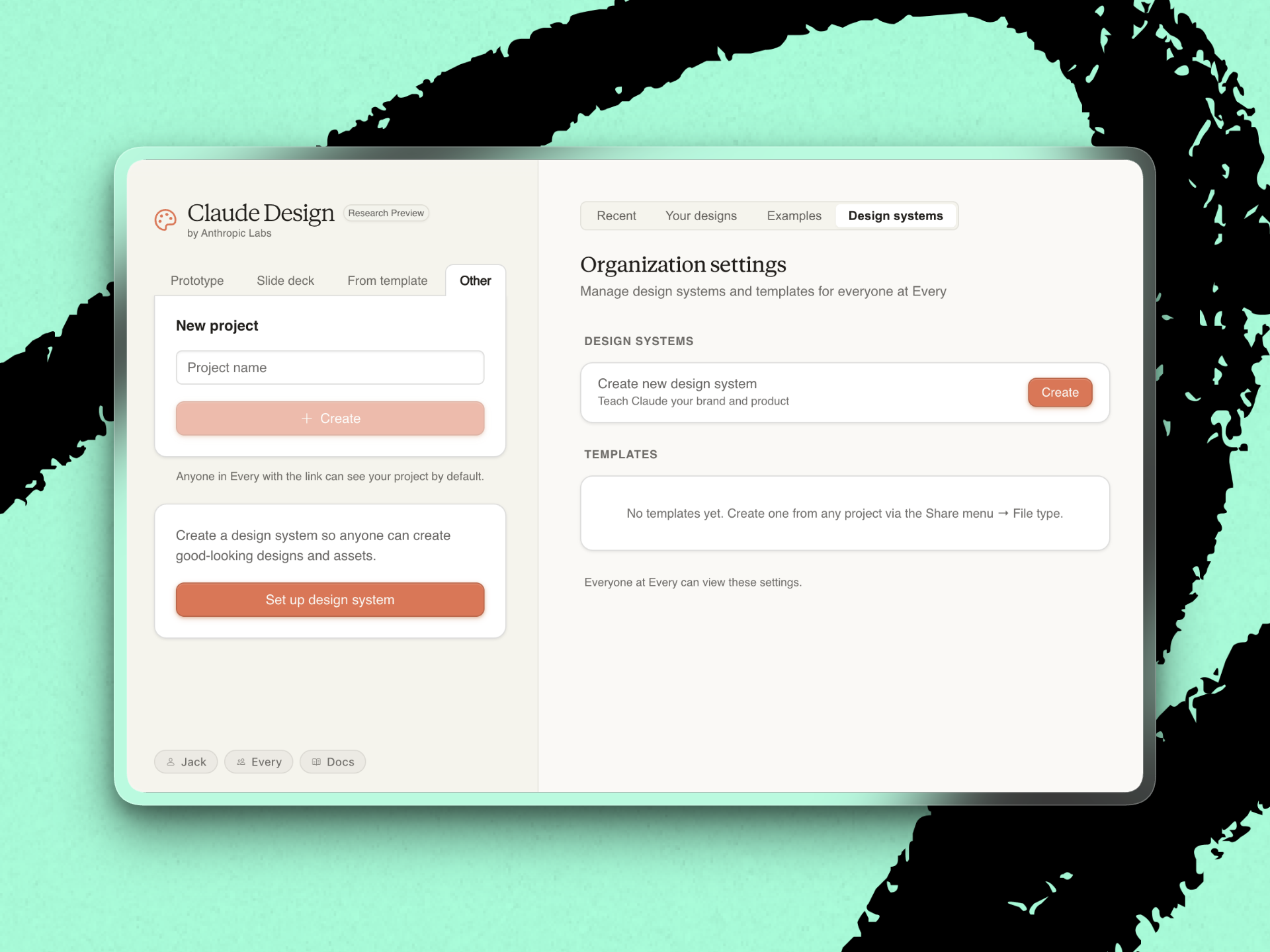
What works: Point Claude Design at a GitHub repo and it will extract a starting design system—the colors, typography, and reusable components that give a product its look. Non-designers can then extend that system. If head of growth Austin Tedesco wants to ship a careers page or a YouTube thumbnail in Every’s style without bothering the design team, Claude Design is the tool for the job.

Take full ownership of your digital privacy
Ever look yourself up and find databases of personal information you didn’t consent to? That information should belong to you, not to data brokers who make money off selling it without permission. With DeleteMe, privacy experts remove your data from hundreds of broker sites, send you a detailed report showing exactly what was cleared, and monitor websites continuously all year to keep it that way. Reclaim your privacy and keep it protected.
Claude Design’s live, generative interface is also a nice touch, Lucas says. The tool starts by asking you questions—layout density, accent color, whether to animate emojis—and you can draw or leave comments on top of the output, or click a specific element and edit it in place. The sketch-on-top feature is the closest Claude Design gets to feeling like Figma.
What could be better:
Become a paid subscriber to Every to unlock this piece and learn about:
- Where Claude Design breaks down under real use
- What weekend breaches at Vercel and Lovable reveal about the state of AI security
- A workflow that monitors your AI security stack overnight
Thanks to our Sponsor: Deleteme

Take full ownership of your digital privacy
Ever look yourself up and find databases of personal information you didn’t consent to? That information should belong to you, not to data brokers who make money off selling it without permission. With DeleteMe, privacy experts remove your data from hundreds of broker sites, send you a detailed report showing exactly what was cleared, and monitor websites continuously all year to keep it that way. Reclaim your privacy and keep it protected.
 Create a free account to continue reading
The Only Subscription
You Need to
Stay at the
Edge of AI
The essential toolkit for those shaping the future

"This might be the best value you
can get from an AI subscription."
- Jay S.
 Every Content
 AI&I Podcast
 Monologue
 Every Agent
Join 100,000+ leaders, builders, and innovators

Already have an account? Sign in.
What is included in a subscription?
Daily insights from AI pioneers + early access to powerful AI tools


 Front-row access to the future of AI
 In-depth reviews of new models on release dayPlaybooks and guides for putting AI to workPrompts and use cases for buildersIn-depth reviews of new models on release dayPlaybooks and guides for putting AI to workPrompts and use cases for builders
 Bundle of AI software





 Katie Parrott
 Every Staff
 Kieran Klaassen
Comments