
We use analytics and advertising tools by default. You can update this anytime.
Plus: We unpack LLM watermarks, a Codex editing workflow, and the week’s AI news

Was this newsletter forwarded to you? Sign up to get it in your inbox.
One of the most popular articles head of tech consulting Mike Taylor has published on Every was ghostwritten by AI, as were most of the posts on his personal blog; he revises sections and makes structural edits, but he doesn’t generate the majority of the text himself.
This is the kind of admission that makes the internet foam at the mouth. People really hate AI writing. The most common objection is simple: Writing is thinking. If you outsource the drafting process to an LLM, you have outsourced the reasoning and judgment critical to forming an original idea. Of course the result is slop. Stop wasting everyone’s time. But it’s not always that simple: Having something compelling to say doesn’t make you a great writer, just as being a great writer doesn’t necessarily mean you have something compelling to say.
Mike is the first to admit he’s more of a doer than a writer. He’s out in the world, teaching executives how to use AI at their organizations to get work done. He also tests new models before they are released and is currently building an evaluation set to automate CEO Dan Shipper’s judgment.
Mike would never prompt an AI to write about an A/B test he didn’t perform himself. “But if I’ve run the test, I think it’s completely valid for me to go to an AI and say, ‘I ran a test. Here’s what I did and how,’” he says. He’ll dictate everything, from setup to results, and then use AI to format it all into a post.
The process shrinks a full day of writing down to two hours and gets what he’s learned in front of more people more often. That—not beautiful prose—is the goal. (For the record, Mike also loathes posts where it’s clear the author didn’t bother to review what AI spat out; those two hours of his time include reading and revising.)
As a reader, he prioritizes functionality over style. “If you put this strict cap on it—‘You have to be a good writer to get your ideas out’—you miss almost all of the interesting things happening in the world,” he says.
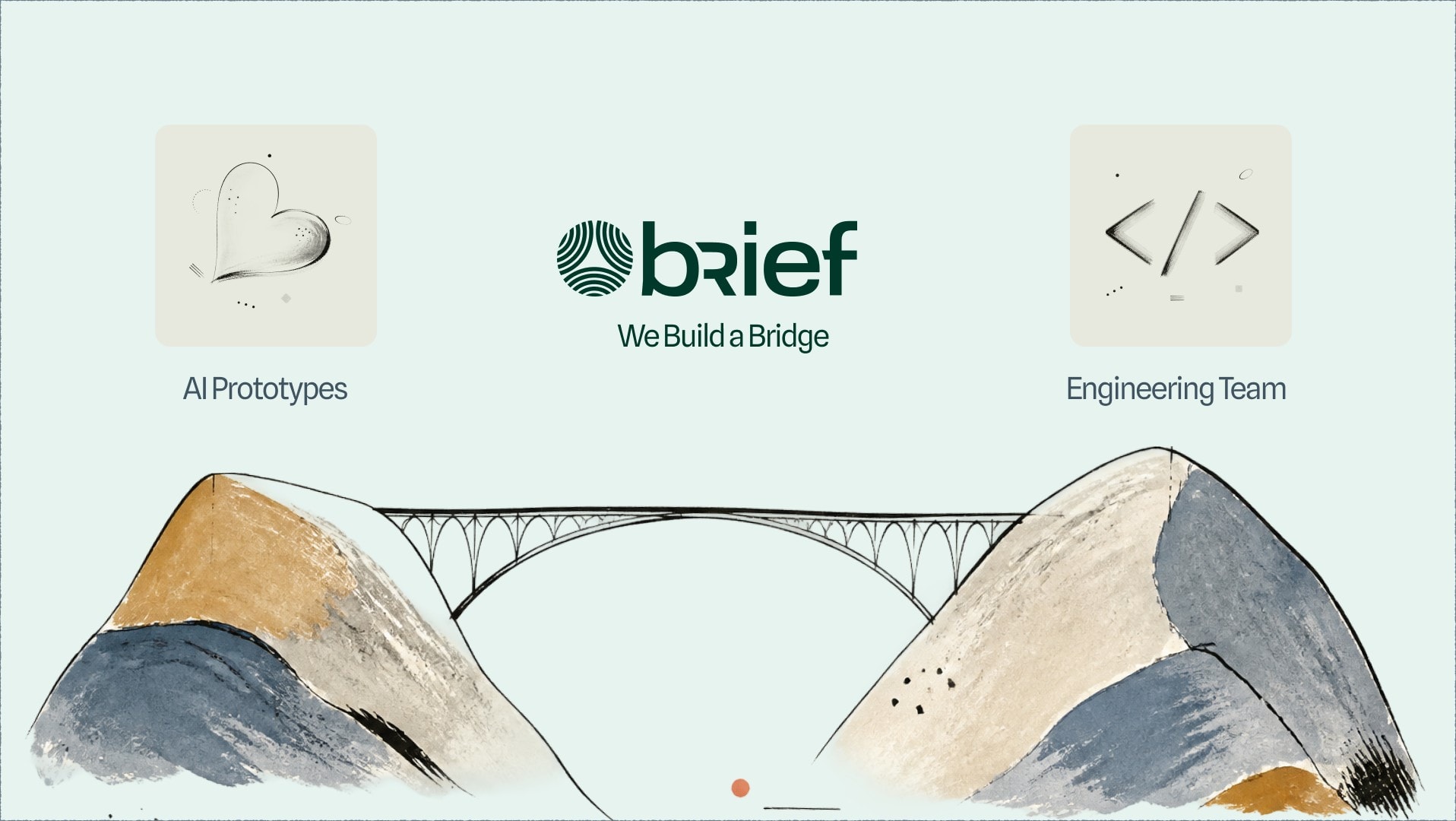
PMs can build strong prototypes around a clear customer need, but a prototype isn’t a system. It doesn’t carry the constraints, tradeoffs, or paths engineering tried and rejected.
Brief closes that gap. It keeps customer evidence, product decisions, and engineering constraints attached to work. So prototypes that reach engineering already reflect what the codebase can do.
What happened: Earlier this month, Anthropic said it would watermark text generated by future versions of Claude to comply with EU regulations. The company’s initial post was light on details about how this would work. Chaos promptly ensued on X. Much of the backlash was fueled by the fear watermarking would distort token selection; if the system nudged Claude away from the most natural word—for example, putting its thumb on the scale to describe the weather as “overcast” where it would otherwise choose “grey”—it could make the prose worse.
Anthropic later clarified that it will use a version of Google’s SynthID Text, which uses a secret key and the preceding text to determine how Claude chooses among plausible next tokens. The system is designed so it doesn’t impact how often individual words are selected: If, in a particular sentence, Claude assigns “overcast,” “grey,” and “cloudy,” respective probabilities of 70 percent, 20 percent, and 10 percent, SynthID is designed to preserve those odds on average—even though it may change which word is selected in a particular response.
Google has been watermarking Gemini outputs using SynthID since 2024, and research suggests that while there’s no noticeable impact on individual output quality, responses to the same prompt could become less varied.
The best way to understand the technique is to see it in practice. So we made a short explainer on how AI text watermarking works.
Why it matters: Anthropic’s follow-up post about its watermark technique—which proclaimed that “it doesn’t matter much to the reader” whether Claude chooses “overcast” or “grey” to describe the weather—did little to quell the outrage. (Writers are arguably even angrier now—John Gruber of Daring Fireball called Anthropic’s approach a “perversion of writing.”)
Another issue is what, exactly, the watermark proves when there are many mitigating factors and edge cases. Anthropic says AI detection doesn’t work well on small samples and factual passages that contain precise language. Heavy editing can weaken or remove the signal, and the watermark can’t identify AI-generated text from another model.
What it means: Mike’s initial fear that the current watermark would make Claude’s writing worse dissipated after he investigated how SynthID Text works.
He is still worried that the watermark will be treated as a way to stigmatize AI-assisted work, even though it can’t show how Claude was used—or how much human judgment went into the result. Meanwhile, users who provide detailed prompts, edit AI-generated text, or run outputs through another model can escape detection. (Developers have already built watermark-removal tools in anticipation of Anthropic’s rollout.)
He’s also concerned the labs won’t stop at subtle watermarking—stronger methods exist, and they visibly change word choice. ”Once you’ve accepted the concept of watermarking AI output, the response could become: ‘Now let’s make it stronger so it actually works,’” he says.
Senior editor Jack Cheng likes to read a draft twice before he makes any edits. “If I’m reading for places where the piece feels uneven or doesn’t make sense, I want to stay in that mode instead of switching into rewriting lines,” he says. However, during those two reads, he’s logging problem areas in his head.
Lately, he’s enlisted Codex as a co-editor to help identify problems without breaking this process.
Here’s the workflow.
Step 1: Open the Google Docs draft in a browser with the ChatGPT extension enabled. Then open the sidebar chat, which gives GPT access to the open document’s text and comments.
Step 2: Identify problems without stopping to address them. Comment as you go without worrying about the fix yet. For example: “This sounds like AI. I don’t know what the solution is,” or “Is there a more concise way of saying this?” To make a note without alerting the draft’s author, highlight the passage instead of commenting—the selection pulls into the chat composer, and you describe the problem in the sidebar.
Step 3: Instruct Codex to address all comments as a batch. Once you’ve read the piece to the end, tell Codex: “Look at all the comments I tagged you in and respond to those.” Review its proposed revisions, incorporate the ones that solve the issue, and refine those that aren’t quite right.
Try it this week: Open a draft, flag at least three sentences or paragraphs that feel uneven, make little sense, sound like AI, or could be more concise. Then ask Codex to respond to all your comments at once.
Get hands-on with Every’s AI workflows. These are the live camps, workshops, and meetups where team members teach the workflows behind our work.
Stripe buys OpenRouter for $7.5 billion. The Gen Z backlash against AI continues to gain steam. Google’s latest phone is packed with AI features. Your data probably isn’t worth as much as you think it is. Model releases are the new Taylor Swift albums. Can AI replace Every’s editor-in-chief? Gwyneth Paltrow is hosting an “al fresco dinner” in the Hamptons for Sam Altman. OpenAI unveils “ChatGPT for Teens.”
Everyone’s a builder now. Every All Access gets you the full membership plus the Builder Pack—$9,000+ in credits for the tools we build with.
Sign in to read for free and get your AI assessment prompt.
Continue with GoogleView all login optionsPMs can build strong prototypes around a clear customer need, but a prototype isn’t a system. It doesn’t carry the constraints, tradeoffs, or paths engineering tried and rejected.
Brief closes that gap. It keeps customer evidence, product decisions, and engineering constraints attached to work. So prototypes that reach engineering already reflect what the codebase can do.