


Katie Parrott is a staff writer. She writes Working Overtime and contributes to Vibe Checks, Source Code, and Context Window.

A Codex of One’s Own
Plus: The race for AI coding supremacy, the models Every is using, and a one-shot data visualization
Aug 6, 2026 · 5 min readUpdated Sep 3, 2026

Around here, rumors of a good AI workflow spread quickly. As soon as someone shows off their Codex setup, several other people rush to copy it—until they realize the setup was built around a person, not a job. You can borrow someone’s ideas but not their workload, their brain, or their life.
Plus: The models the team is driving this week, a workflow for making data visualizations, and the race for AI coding supremacy heats up even more.
Was this newsletter forwarded to you? Sign up to get it in your inbox.
Signal
What happened: After 16 years as CEO of Google DeepMind, Demis Hassabis is transitioning into a new role as chief scientist of Alphabet. Koray Kavukcuoglu, DeepMind’s CTO, will run the lab as senior vice president, overseeing Gemini model development, frontier research, and the Gemini app and developer teams while Hassabis continues as chairman alongside his chief scientist role.
Meanwhile, Meta launched Muse Code, its first terminal coding agent, in beta yesterday. Mark Zuckerberg wrote (on X, ironically) that the harness can tackle “complete software engineering tasks” such as planning, writing, and validating code “across large repos.” In other words, Claude Code or Codex, but make it Meta.
What it means: With OpenAI and Anthropic sprinting ahead in the AI coding race, both DeepMind and Meta have some catching up to do. CEO Dan Shipper saw in the “tea leaves” that Hassabis “believes different fundamental research directions…are more important to his long-term goal,” even if they are “less [important] competitively today.” The personnel shift appears to give the company the best of both worlds: a pragmatic play at the most lucrative space in AI today and a bid at looking farther down the road toward AGI. Meta—under pressure following a lackluster earnings report in July—seems to be making a similarly practical decision to go where the revenue is.
What to do: Adding Meta and a newly re-dedicated DeepMind to the mix (plus SpaceXAI, which is here, too) brings the total to five different frontier labs gunning for our mindshare and token spend. That’s either an overwhelming amount of choice, or Christmas has come early, depending on your perspective. Keep an eye out for reviews from sources you trust that can say plainly, and objectively, what is worth a look and what you can safely skip. Or if you’re feeling spendy, take the new models for a spin and become one of those sources yourself.
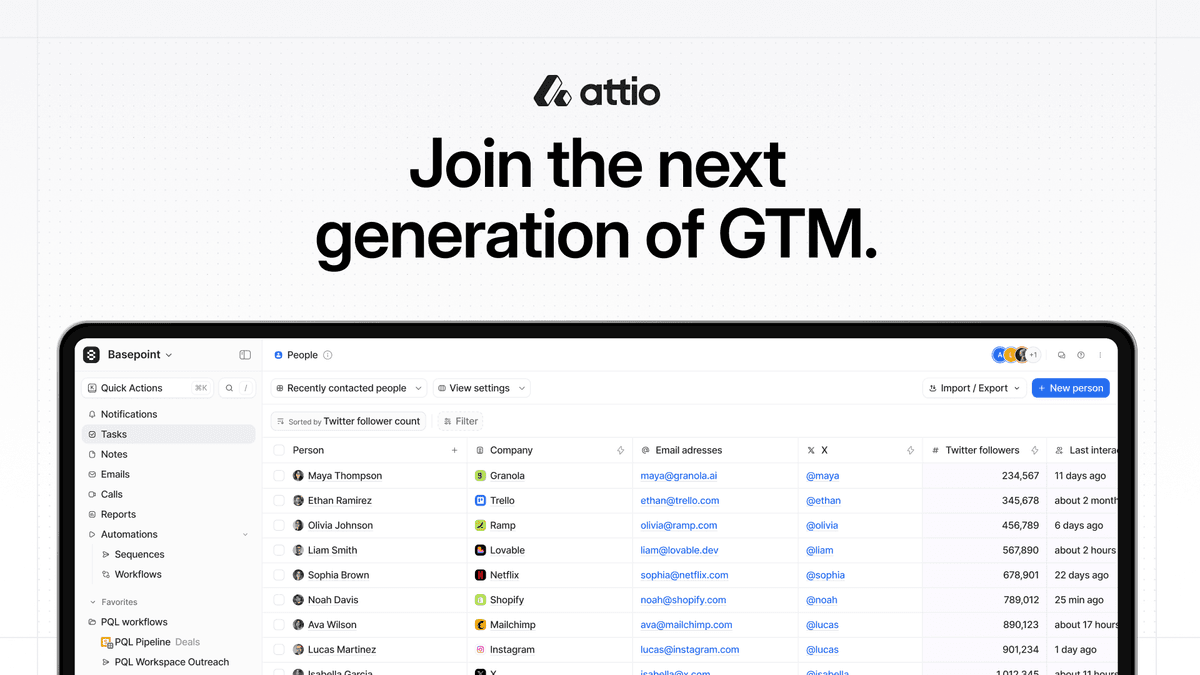
Attio is the CRM for teams who set the pace
It compounds every customer signal into context, then acts across your funnel to let you move at unmatched speed and scale. With agents and automations that build pipeline, chase signals, and move deals forward, Attio orchestrates your revenue work around the clock.
Loved by high-growth startups like Granola, Modal, and Wispr Flow, Attio amplifies what you can achieve.
Links worth a click
- Six AI agents were placed in a simulated economy organized around rights and resource constraints rather than the job titles.
- In MerchantBench, a test that puts AI agents in charge of a simulated online store for a year and then scores them based on the business’s final assets, the best model finished with only 27.3 percent of the net assets achieved by human operators.
- A paper on the “cognitive commons” argues that careless AI adoption can erode the expertise required to oversee AI systems.
- A new position paper asks what it would take for a model to produce a genuine scientific invention, rather than a plausible recombination of existing ideas.
Log on
Get hands-on with how Every uses AI. These are the live camps, workshops, and meetups where team members teach the workflows behind our work.
Upcoming events
- Voice Mode Camp (August 7). If you haven’t heard, the entire Every team has been ChatGPT Voice Mode-pilled. At this camp, we’ll share what we’ve learned and how we’re using Voice to delegate, orchestrate, and generally get stuff done, whether we’re sitting at our desk, lounging on our couch, or vacuuming our flat. RSVP.
Inside Every
Every Codex setup is a special snowflake
Last week, Every’s head of operations, Arielle Shipper, and head of consulting, Natalia Quintero, compared their Codex setups. “I find that how people use AI and how they set up their projects or file systems is a mirror of how they think,” Natalia says, and she wanted to see how Arielle—who she says is particularly good at “having minimal process while still executing on what needs to be done”—organizes hers. Whereas Natalia’s own setup involves detailed planning, context organization, and supervision of outputs, Arielle sets up reminders and messages “so that item can just get done without her having to track or pay attention to it,” according to Natalia.
Even if you borrow tips and tricks from someone else, it’s unlikely that any two Codex setups will look exactly alike. Everyone makes different decisions about what context the agent needs, what it can handle on its own, which tasks deserve a standing process, and when it has to ask permission. Seeing someone else’s setup can give you ideas—but it can’t give you their workload, their brain, or their life.
Codex is open-ended enough to live in one chat thread, sit on top of a carefully organized workspace, or become something in between. It also leaves you with the question: set it up for what?
For me, the answer started with an interview.
I told Codex I wanted help designing my workspace and asked it to interview me. It asked about my work, my needs, and the decisions I wanted the system to support. Then it turned my answers into a proposed desktop architecture and a set of pinned threads. Once we were done, I had a Codex setup that made sense for me—and I handed my approach off to fellow staff writer Laura Entis so she could go through the same process herself.
If I were starting over, I’d use this prompt...
Become a paid subscriber to Every to unlock this piece and learn about:
A prompt to help tailor a C
- odex workspace to your specific needs
- The models the Every team is using this week
- A workflow turn a public dataset into an interactive visual
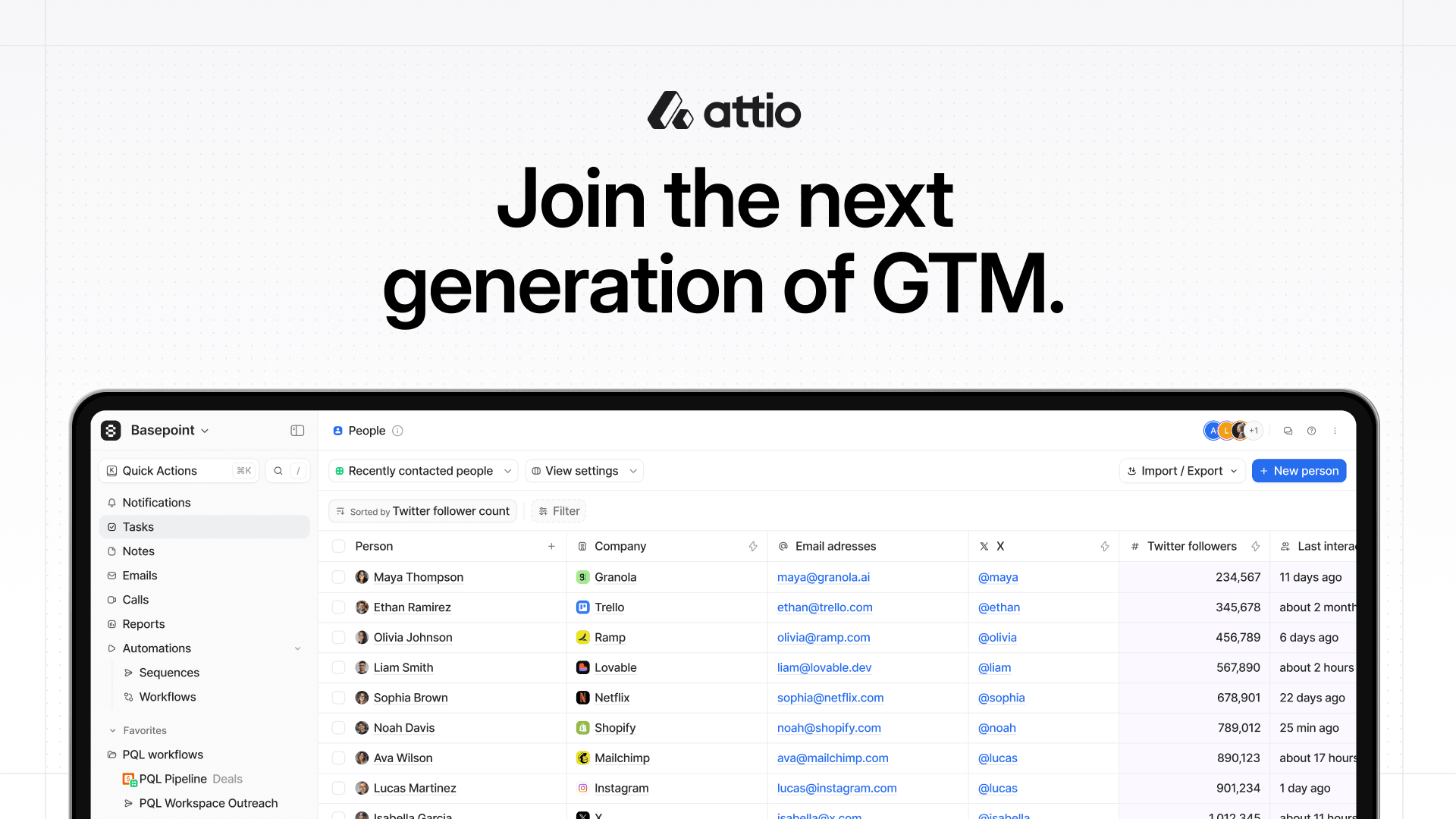
Attio is the CRM for teams who set the pace
It compounds every customer signal into context, then acts across your funnel to let you move at unmatched speed and scale. With agents and automations that build pipeline, chase signals, and move deals forward, Attio orchestrates your revenue work around the clock.
Loved by high-growth startups like Granola, Modal, and Wispr Flow, Attio amplifies what you can achieve.
 Subscribe to read the full article
The Only Subscription
You Need to
Stay at the
Edge of AI
The essential toolkit for those shaping the future

"This might be the best value you
can get from an AI subscription."
- Jay S.
 Every Content
 AI&I Podcast
 Monologue
 Every Agent
Join 100,000+ leaders, builders, and innovators

Already have an account? Sign in.
What is included in a subscription?
Daily insights from AI pioneers + early access to powerful AI tools



 Front-row access to the future of AI
 In-depth reviews of new models on release dayPlaybooks and guides for putting AI to workPrompts and use cases for buildersIn-depth reviews of new models on release dayPlaybooks and guides for putting AI to workPrompts and use cases for builders
 Bundle of AI software






 Katie Parrott
 Every Staff
 Kieran Klaassen