


Dan Shipper is the CEO and cofounder of Every. Every week he explores the frontiers of AI in his column, Chain of Thought, and on his podcast, ‘The Every Podcast’.

When Your Vibe Coded App Goes Viral—And Then Goes Down
Lessons learned when vibe code meets high load
Mar 20, 2026 · 6 min readUpdated Jul 28, 2026

Was this newsletter forwarded to you? Sign up to get it in your inbox.
At 4 a.m. on the day after we launched our agent-native document editor, Proof, I watched yet another Codex agent try to revive our server.
Over 4,000 documents had been created since launch, but the app had been mysteriously crashing all day. This left users with crucial documents that they couldn’t access, and me with egg on my face.
I hadn’t slept for almost 24 hours, and all I could do was nervously munch trail mix as Codex investigated yet another bug buried deep in a codebase that I didn’t understand. It felt less like programming and more like being the dumbest participant at a math Olympiad. Needless to say, I was reconsidering my life choices.
Today, almost a week later, Proof is more or less stable. And I’ve learned a lot about both building and launching a purely vibe coded app. Perhaps more importantly, I’ve also learned what happens once that app goes live—and then goes down.
My current opinion is this: If you can vibe code it, you can vibe fix it. You just might not be able to fix it quickly.
Software engineering is changing rapidly as a discipline. The days of typing code into a computer manually seem to be over, and the current conversation on X is around “zero-human startups.” My experience with Proof, though, is a good reality check.
It demonstrates both what is truly possible with vibe coded apps, and where human engineers will continue to be critical now and in the future.
Auto-scale AI workloads with ease
Traditional databases struggle with unstructured data, slowing AI workflows. MongoDB natively handles JSON-like, unstructured data, giving you freedom to store, query, and scale diverse datasets—whether text, images, or sensor data—easily and flexibly, without rigid schemas.
What’s possible at the edge
I’ve been writing about how AI is changing programming for a few years now, and my experience with Proof confirms a lot of my thoughts...
Become a paid subscriber to Every to unlock this piece and learn about:
- What it took to bring a crashing, vibe coded app back from the brink
- The specific failure modes coding models keep hitting
- Why allocation is the new key skill for human engineers
Thanks to our Sponsor: MongoDB
Auto-scale AI workloads with ease
Traditional databases struggle with unstructured data, slowing AI workflows. MongoDB natively handles JSON-like, unstructured data, giving you freedom to store, query, and scale diverse datasets—whether text, images, or sensor data—easily and flexibly, without rigid schemas.
 Create a free account to continue reading
The Only Subscription
You Need to
Stay at the
Edge of AI
The essential toolkit for those shaping the future

"This might be the best value you
can get from an AI subscription."
- Jay S.
 Every Content
 AI&I Podcast
 Monologue
 Every Agent
Join 100,000+ leaders, builders, and innovators

Already have an account? Sign in.
What is included in a subscription?
Daily insights from AI pioneers + early access to powerful AI tools

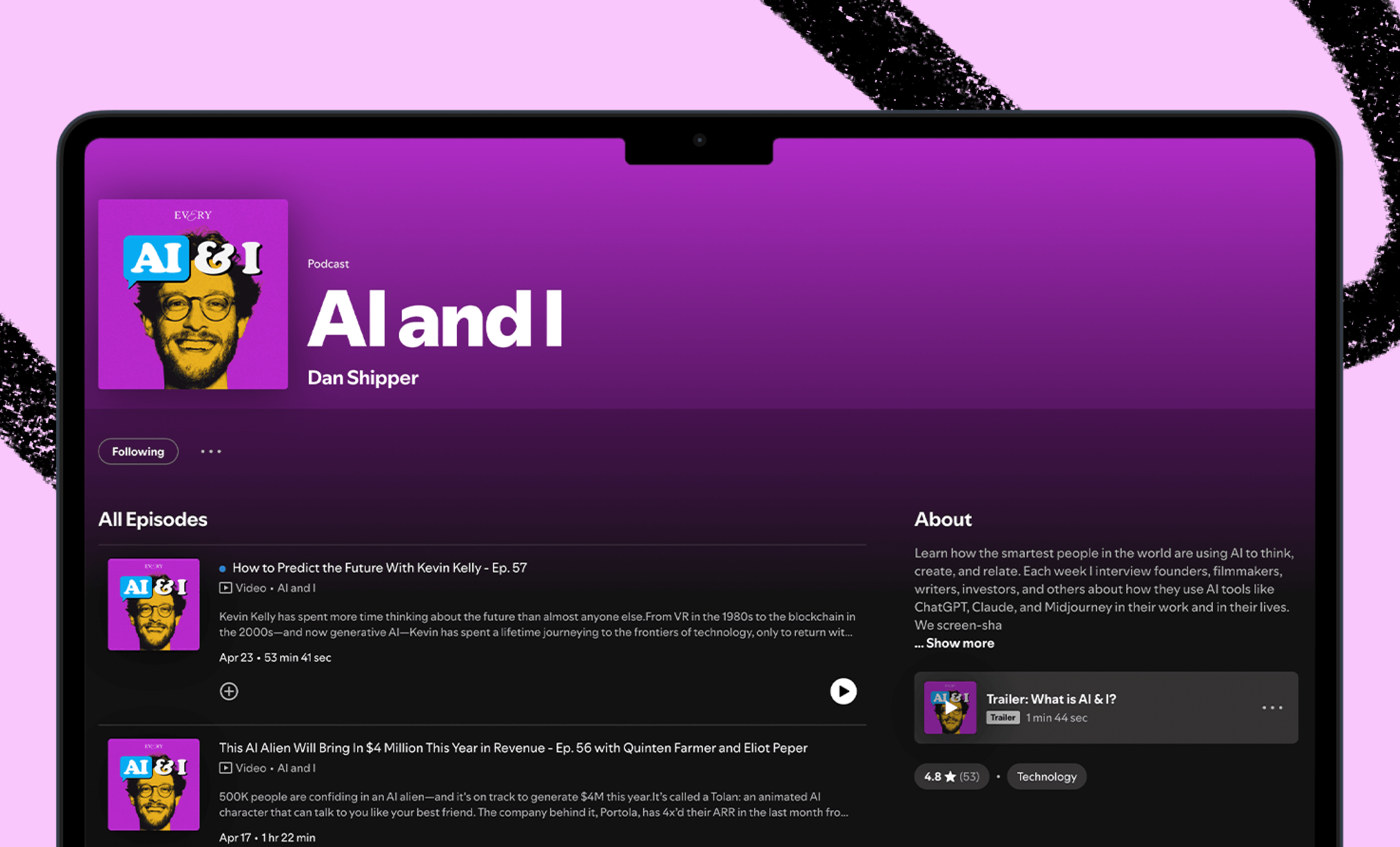

 Front-row access to the future of AI
 In-depth reviews of new models on release dayPlaybooks and guides for putting AI to workPrompts and use cases for buildersIn-depth reviews of new models on release dayPlaybooks and guides for putting AI to workPrompts and use cases for builders
 Bundle of AI software





 Katie Parrott
 Every Staff
 Kieran Klaassen
Comments