

Katie Parrott is a staff writer. She writes Working Overtime and contributes to Vibe Checks, Source Code, and Context Window.

It’s Me, Hi. I’m the Vibe Coder.
I never meant to build software. Then AI made it easy.
May 1, 2025 · 8 min readUpdated Jul 10, 2026

Was this newsletter forwarded to you? Sign up to get it in your inbox.
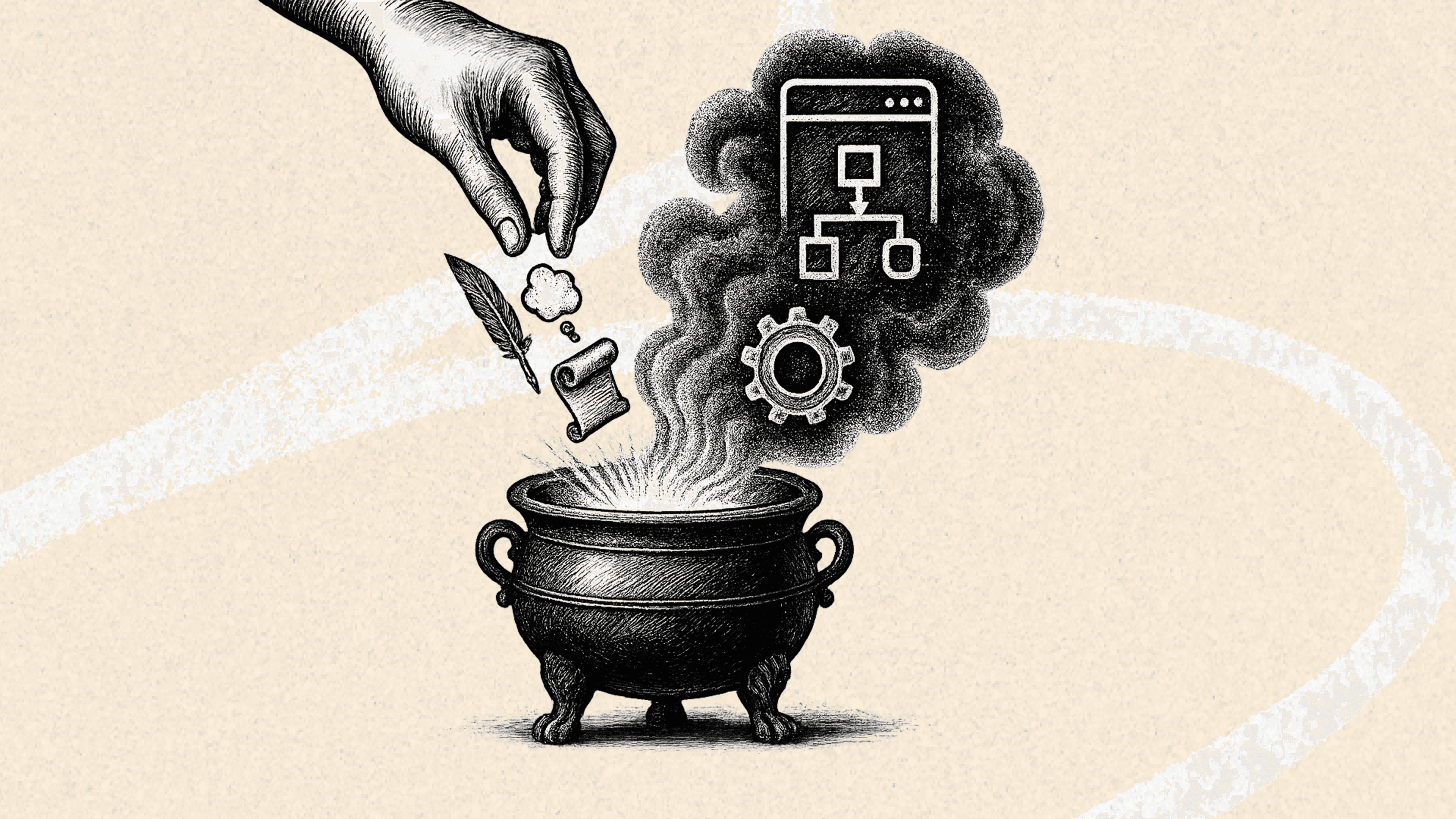
I was taking a break one Saturday morning from building a workflow tool for Every when an X post about “vibe coding” crossed my feed: "There is no consumer desire to 'make apps,'" the post proclaimed. "Vibe coding," it went on, only appeals to those already motivated to code "the old way.”
Here I was, spending my sacred weekend hours vibe coding an app with no coding background—yet according to this tech observer, the 1,000 people who liked his post on X, and everyone who’s ever derisively posted that people should “learn to code,” I didn't exist.
(Quick aside: “Vibe coding” is a term coined by OpenAI founding team member Andrej Karpathy to describe coding with AI-powered tools like Cursor that convert natural language instructions into working code. The idea is that you “fully give into the vibes… and forget the code even exists.”)
It's flattering to imagine myself as this tech industry cryptid. But on a deeper level, the facile binary is irksome. Unfortunately it’s also fairly common in tech: technical versus non-technical. Builders versus users. "Real" developers versus everyone else. These false dichotomies scared me off from coding as much as the code itself; after all, it’s hard to feel invited into a clubhouse that has a “no liberal arts grads allowed” sign out front.
Even within tech’s walled garden, though, the binaries are beginning to blur. Venture capitalists now say they prefer “architect mindsets” and domain know-how over raw coding ability, crediting AI tools that let non-technical founders ship products.
And then there are people like me, who aren’t chasing entry into the engineer club or a seven-figure seed round. We're writers, designers, business owners, and domain experts motivated by specific problems we deeply understand, empowered by AI tools that finally speak our language.
Vibe coding hints at a future where software emerges from the inside out—from the people closest to the problems. As AI lowers the technical barrier, we may see more tools built by marketers, editors, researchers—anyone with deep context and a persistent itch to fix things.
Here’s one vibe coding cryptid’s perspective on what vibe coding looks like from the inside, who it's for, and why people who subscribe to the traditional division between builders and users are missing what makes this moment unique.
Who actually wants to build?
The discourse surrounding vibe coding tends to polarize into two extremes: Either vibe coding will revolutionize everything and "everyone will be a developer," or it's a brittle parlor trick—diverting at best and disastrous at worst.
Neither view is quite right. Vibe coding won't turn everyone into a full-stack engineer overnight, just as YouTube didn't turn everyone into a filmmaker. But neither is it just a toy for those who already write JavaScript in their sleep.
Become a paid subscriber to Every to unlock the rest of this piece and learn about:
- The advantages of being a non-coder who builds apps
- Three features of vibe coding tools that build confidence in "building"
- Real-world examples of vibe-coded apps in action
 Create a free account to continue reading
The Only Subscription
You Need to
Stay at the
Edge of AI
The essential toolkit for those shaping the future

"This might be the best value you
can get from an AI subscription."
- Jay S.
 Every Content
 AI&I Podcast
 Monologue
 Every Agent
Join 100,000+ leaders, builders, and innovators

Already have an account? Sign in.
What is included in a subscription?
Daily insights from AI pioneers + early access to powerful AI tools
 Front-row access to the future of AI
 In-depth reviews of new models on release dayPlaybooks and guides for putting AI to workPrompts and use cases for buildersIn-depth reviews of new models on release dayPlaybooks and guides for putting AI to workPrompts and use cases for builders
 Bundle of AI software



 Katie Parrott
 Every Staff
 Kieran Klaassen
Comments