


Katie Parrott is a staff writer. She writes Working Overtime and contributes to Vibe Checks, Source Code, and Context Window.

I Let ChatGPT Manage My Workweek
My AI project manager reads my OKRs, calendar, Notion, and Slack so I can stay on top of my work
May 4, 2026 · 12 min readUpdated Aug 15, 2026

Was this newsletter forwarded to you? Sign up to get it in your inbox.
I sat down to write my second-quarter goals at 4:30 p.m. on a Tuesday in early April. It was the day after I was supposed to turn them in when I decided to be an adult and survey the damage from the first quarter. And I do mean damage. I’d written only half of the columns I’d committed to. Another project I had promised hadn’t even gotten off the ground.
I could give the usual excuses—the quarter was busy, the project hit walls outside my control—but the real culprit was obvious: I may be a great writer, but I am garbage at project management.
For 15 years, I handled this weakness by tiptoeing around it. I didn’t take on managerial roles that would have required more organizational skills. I didn’t take on so much freelance work that I couldn’t keep the deadlines in my head. I passed on ambitious projects—too many moving parts.
This duct-taped approach worked until I decided to join Every full-time in April. If I were going to take on more responsibility as a full member of the team, I needed to get serious about project management. Which, in 2026, meant I needed to bring in AI.
So I built myself a project manager: a ChatGPT agent that holds my OKRs—objectives and key results, the goals that define a successful quarter—watches my calendar, reads my Notion to-do list, and helps me decide what to do next. Otherwise, I’d spend my day opening Slack, refreshing X, panicking lightly, repeat.
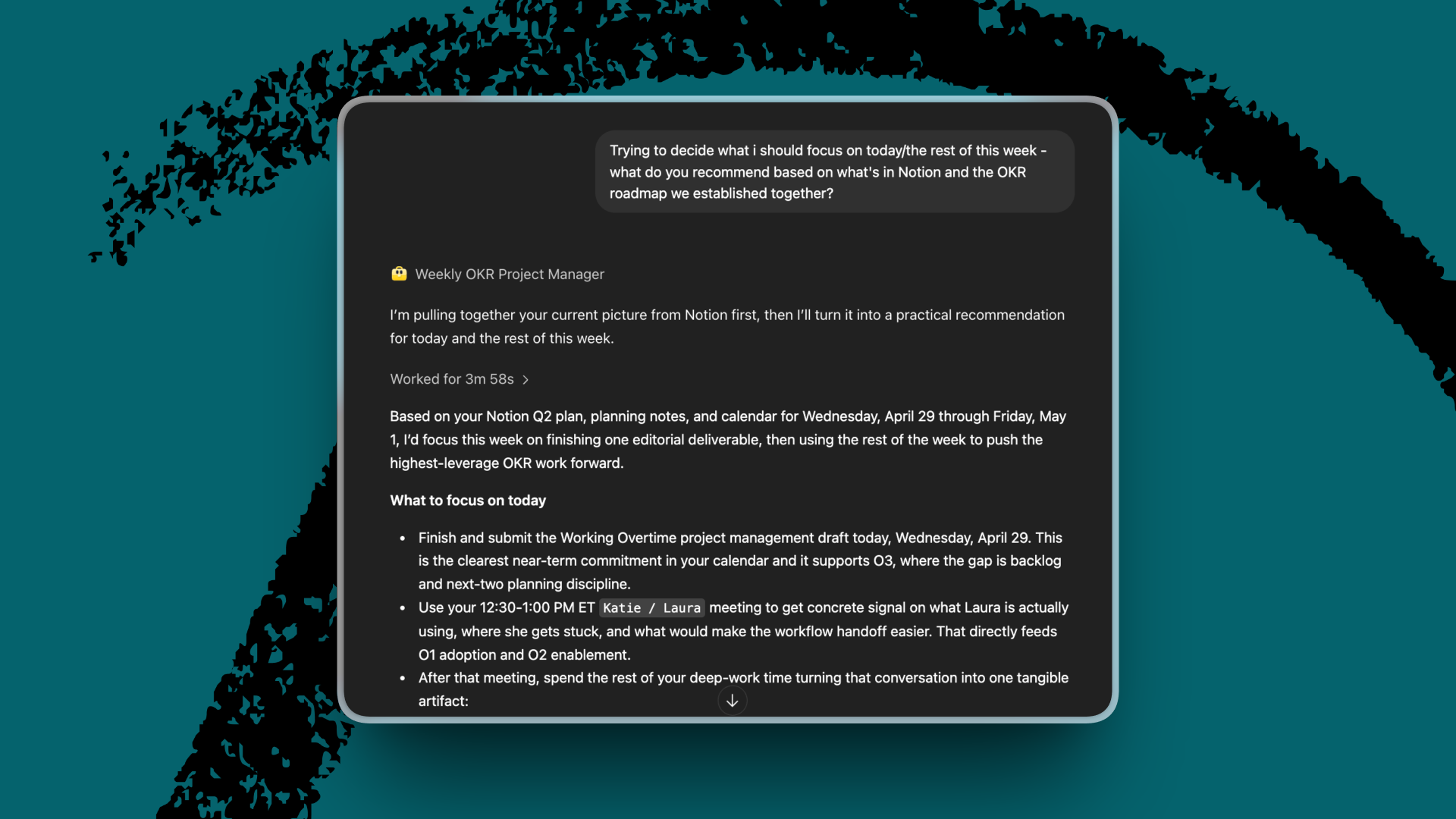
Most AI-at-work advice starts with the part of your job you’re already good at: Write faster, code faster, analyze faster, ship more. I’m interested in the other side of the equation: using AI to support the part of work that makes it hard to believe you’re good at your job.
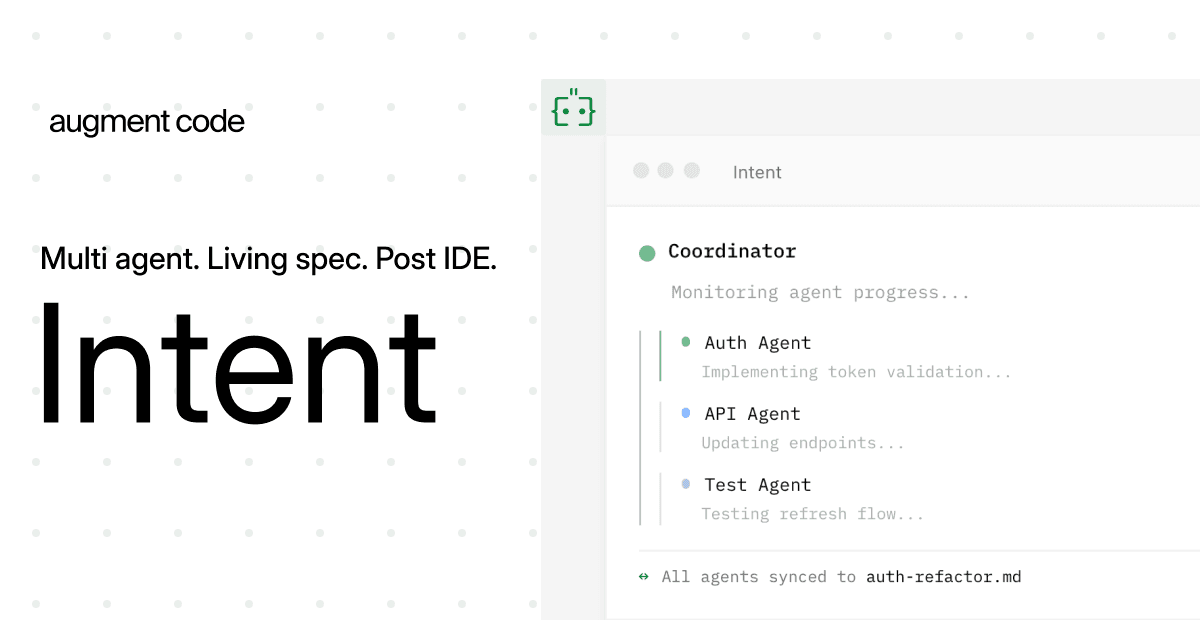
Spec-driven development. With agents. Done right.
You wrote a spec. Now you’re prompting one agent at a time? This isn’t 2025.
Intent is a developer workspace for orchestrating multiple agents from a living spec. Go from idea to PR without juggling terminals, repo copies, or stale prompts.
Works with Augment, Claude Code, Codex, and Open Code.
I’ve set up project management with both my Plus One agent, Margot, and as a ChatGPT agent. I’m featuring the ChatGPT agent here, but you can create your own project manager with any system that gives you a combination of memory, context, and intelligence—more on that below.
Become a paid subscriber to Every to unlock this piece and learn about:
- The recent updates that make ChatGPT a good project manager
- Where agentic project management still falls down
- A sample prompt to set up your project manager agent
Thanks to our Sponsor: Augment Code
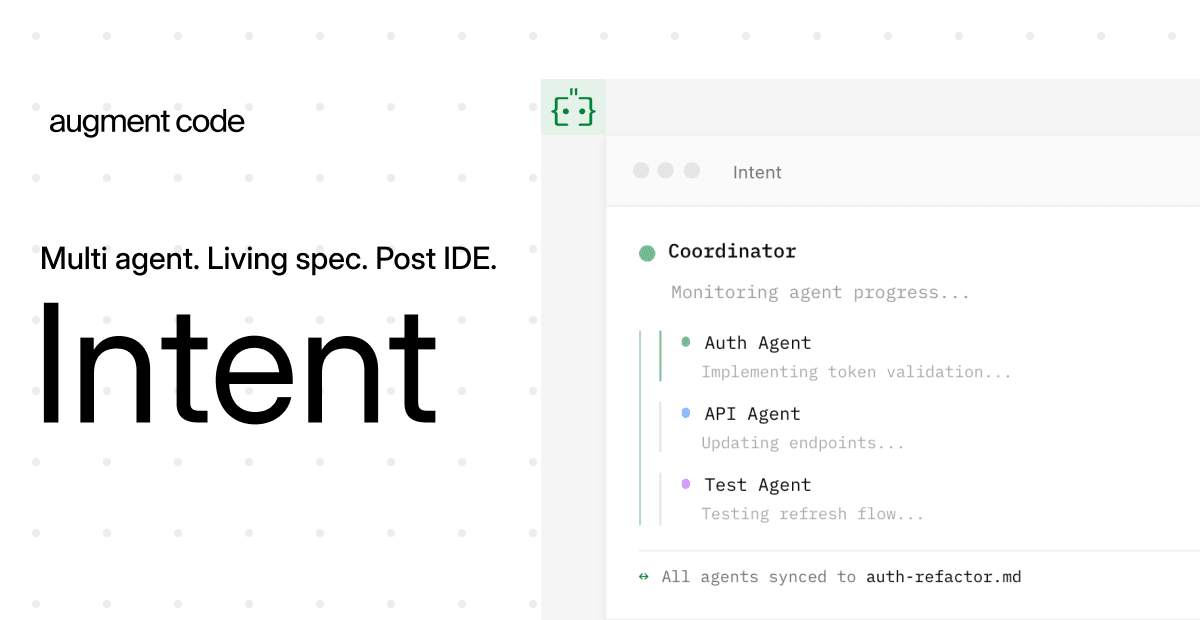
Spec-driven development. With agents. Done right.
You wrote a spec. Now you’re prompting one agent at a time? This isn’t 2025.
Intent is a developer workspace for orchestrating multiple agents from a living spec. Go from idea to PR without juggling terminals, repo copies, or stale prompts.
Works with Augment, Claude Code, Codex, and Open Code.
 Create a free account to continue reading
The Only Subscription
You Need to
Stay at the
Edge of AI
The essential toolkit for those shaping the future

"This might be the best value you
can get from an AI subscription."
- Jay S.
 Every Content
 AI&I Podcast
 Monologue
 Every Agent
Join 100,000+ leaders, builders, and innovators

Already have an account? Sign in.
What is included in a subscription?
Daily insights from AI pioneers + early access to powerful AI tools

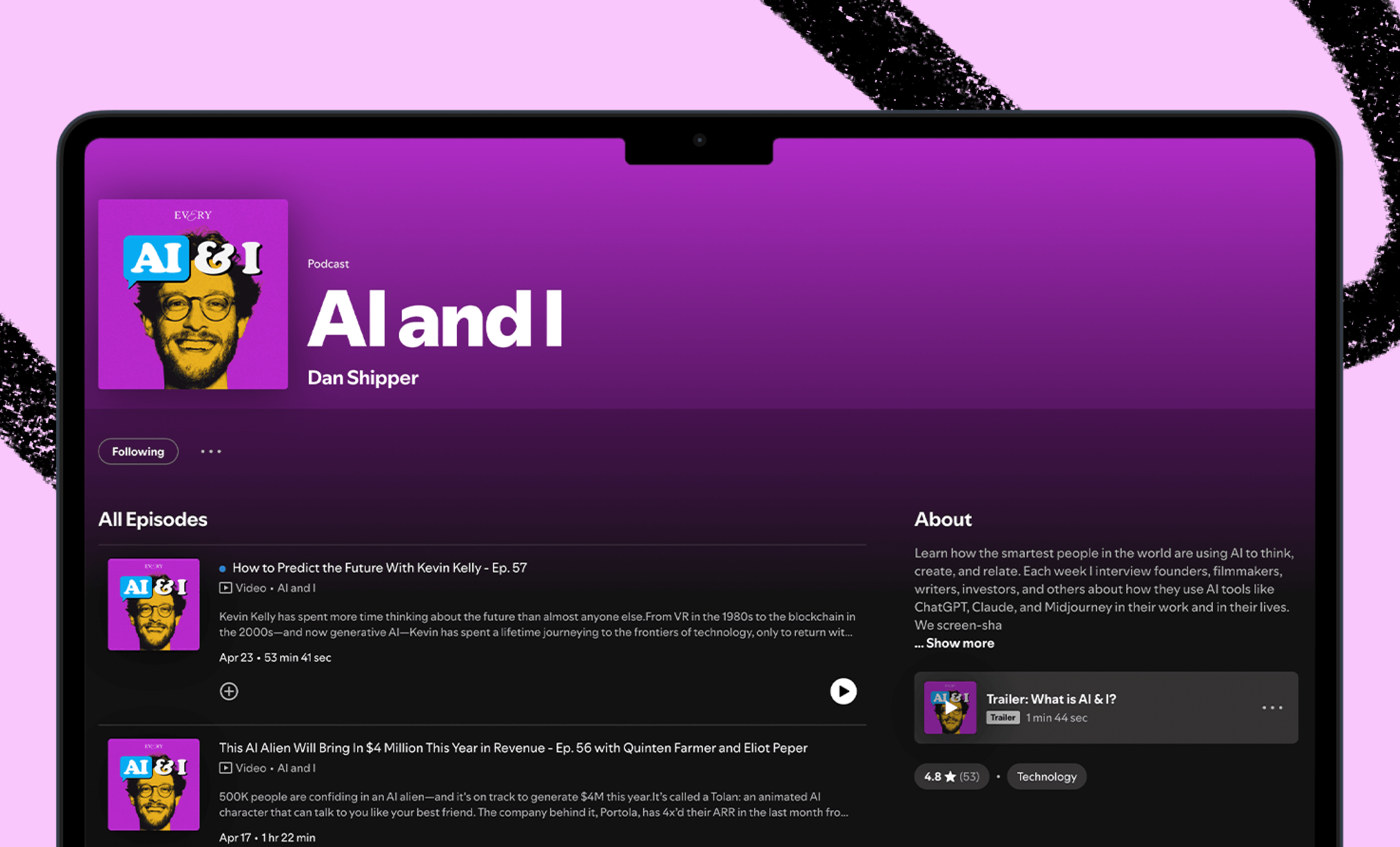

 Front-row access to the future of AI
 In-depth reviews of new models on release dayPlaybooks and guides for putting AI to workPrompts and use cases for buildersIn-depth reviews of new models on release dayPlaybooks and guides for putting AI to workPrompts and use cases for builders
 Bundle of AI software




 Katie Parrott
 Every Staff
 Kieran Klaassen
Comments