

Katie Parrott is a staff writer. She writes Working Overtime and contributes to Vibe Checks, Source Code, and Context Window.

What the Team Behind Cursor Knows About the Future of Code
Cursor team members share their thoughts on building software with AI and why model selection beats prompting tricks
Jan 22, 2026 · 10 min readUpdated Jul 11, 2026

Happening now: We’re hosting Vibe Code Camp with the world’s best experts pushing the limits of what’s possible. Watch live now until 6 p.m. ET, and catch the recordings. Also: This article is based on a sponsored event. Cursor provided $100 in credits to attendees and made this camp possible.—Kate Lee
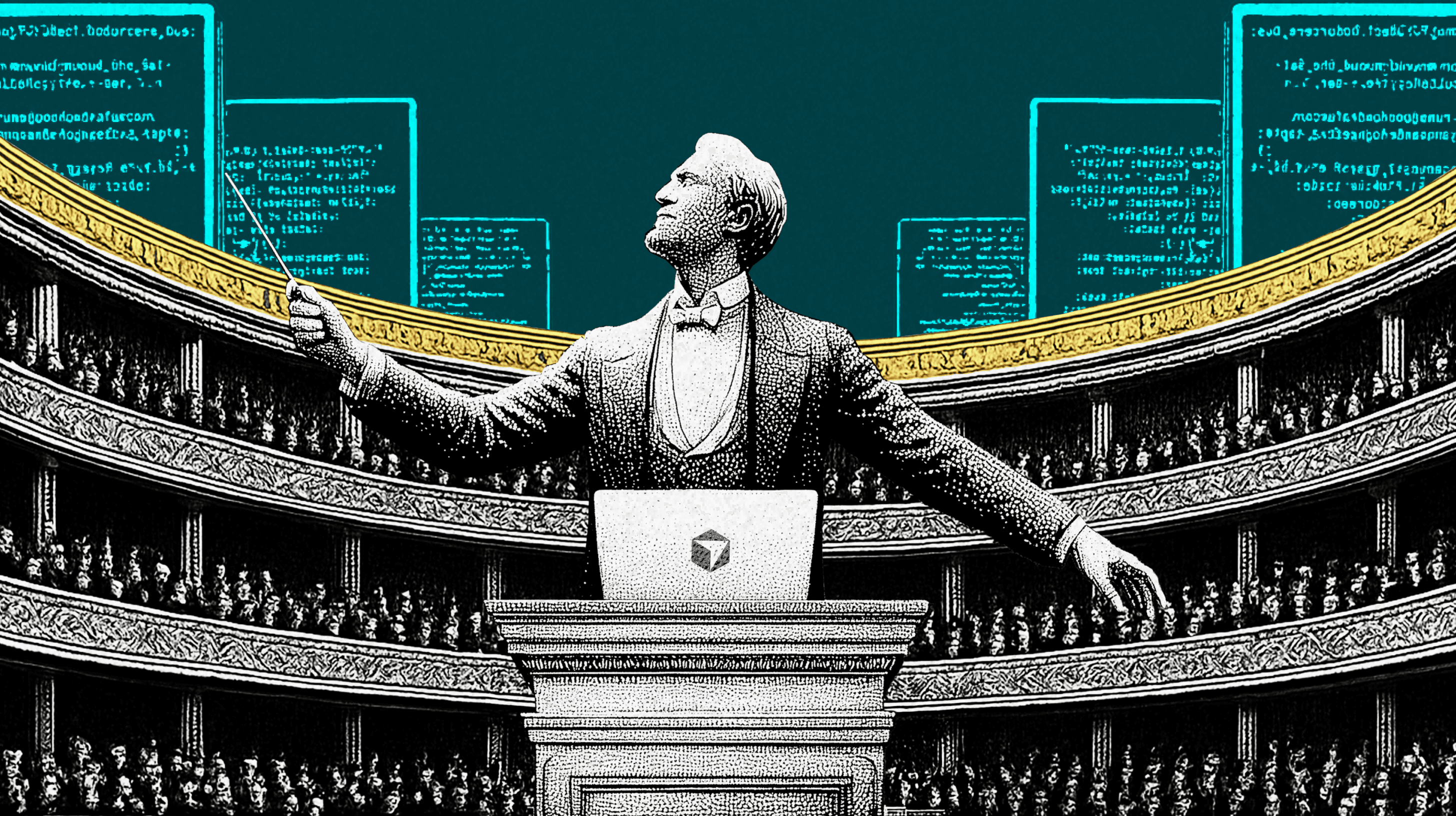
A few minutes into Every’s first Cursor Camp, Cursor developer education lead Lee Robinson made a bold declaration: “The IDE is kind of dead.”
IIDE stands for “integrated development environment”—basically Microsoft Word, but for code. It’s where programmers type, organize files, and run programs, and for decades, it has been the center of a programmer’s world.
Now, that model is breaking down. The center of gravity has shifted from typing code by hand in an IDE such as Visual Studio Code to managing AI agents that write it for you with a tool such as Cursor.
In this session, Lee and Samantha Whitmore, a software engineer at Cursor, walked us through how they work in a post-IDE world. What follows are the workflows, model-selection strategies, and honest limitations they shared—plus where this leaves you if you’re trying to figure out what the future of code looks like.
Key takeaways
- The agent is becoming the core. Writing and editing code by hand is shrinking as a percentage of the work. Developers are now spending more time telling AI agents what to build and reviewing their output.
- Cloud and local agents are merging. You’ll soon be able to start an agent on your computer, hand it off to remote servers when you close your laptop, and pick it back up later—no context lost.
- Model choice matters more than prompting tricks. Prompting gimmicks like, “I’ll pay you $1,000,” which some AI users swore could make AI provide a better output, don’t work anymore. You need to choose the right model for the job—say, one for brainstorming, another for deep bug-hunting.
- Agents can run for weeks. Cursor’s research team built a working web browser from scratch using AI agents that ran for days, producing 3 million lines of code. It cost $80,000 in tokens (the units AI companies use to measure and charge for usage). It’s a research project that’s not available for public use—for now. But it shows where things are heading...
Become a paid subscriber to Every to unlock this piece and learn about:
- The $80,000 experiment that reveals where AI-powered coding is headed
- How a Cursor engineer decides which AI “brain” to deploy, and when to pit them against each other
- The type of coding work where AI tools still can’t beat a human
 Create a free account to continue reading
The Only Subscription
You Need to
Stay at the
Edge of AI
The essential toolkit for those shaping the future

"This might be the best value you
can get from an AI subscription."
- Jay S.
 Every Content
 AI&I Podcast
 Monologue
 Every Agent
Join 100,000+ leaders, builders, and innovators

Already have an account? Sign in.
What is included in a subscription?
Daily insights from AI pioneers + early access to powerful AI tools


 Front-row access to the future of AI
 In-depth reviews of new models on release dayPlaybooks and guides for putting AI to workPrompts and use cases for buildersIn-depth reviews of new models on release dayPlaybooks and guides for putting AI to workPrompts and use cases for builders
 Bundle of AI software






 Katie Parrott
 Every Staff
 Kieran Klaassen
Comments