





The transcript of AI & I with Andrew Wilkinson is below. Watch on X or YouTube, or listen on Spotify or Apple Podcasts.
Timestamps
- Introduction: 00:01:07
- Why Opus 4.5 feels like the iPhone moment for vibe coding: 00:02:48
- Why designers have a unique advantage with AI: 00:08:31
- How Andrew built a custom email client with Claude Code: 00:14:10
- An AI trained on your relationship that predicts your fights: 00:18:13
- Using AI meeting notes to make your life better: 00:30:40
- Don’t inject your opinion into prompts: 00:35:11
- Andrew’s Claude Code tips and workflows: 00:40:21
- Your personal stylist is a prompt away: 00:47:59
- How AI is changing the way Andrew invests in software: 00:53:17
Transcript
(00:00:00)
Dan Shipper
Andrew, welcome to the show.
Andrew Wilkinson
Great to be here, dude. Big fan.
Dan Shipper
Good to see you again. We’ve spent a good amount of time over the last six months or so, which has been really nice. You’ve been kind enough to invite me to a couple different things that were really fun events, so I’m really glad that we get to take this relationship to the pod. I love the facial hair and the haircut. You look great.
Andrew Wilkinson
Thanks, man. Thank you. I’ve been growing it out. You know why I grew out facial hair?
Dan Shipper
Why?
Andrew Wilkinson
I had ChatGPT do an analysis. I put my face into Pro and I said, I want you to looksmax me. And it told me to grow a beard, and now I’m refining the mustache length vs. the beard length and dialing it in. But yeah, it’s pretty crazy how much of my life is now AI automated.
Dan Shipper
That’s really interesting. I gotta do that. I’ve done that for coloring. So I’m wearing these greens and these browns because apparently that’s good for my hair color, which has a little bit of red and brown in it. But I have not asked it to looksmax me like that. So I’m down.
Andrew Wilkinson
Dude. I mean, for beard grooming alone, I have a little blank spot where I can’t grow. And so it was like, oh, take a tiny amount of tinted gel and just put it over there. And I was like, oh my God, I don’t have the spot anymore. And then it was like, oh, you want to cut your beard in this particular way? And it’s unreal. I’m so excited to tell you about all the weird little automations I’ve built, because most of them have been in my personal life. And then there’s a bunch of other ones that are work. But man, it’s so fun.
Dan Shipper
What’s the next one on your mind? What are you working on? What are you thinking about?
Andrew Wilkinson
So I would say about a year and a half ago, two years ago, I got obsessed with Replit and it was like seeing the future, but it was using a Palm Treo, right? Not an iPhone. And I found that it was, I mean, it was so exciting to just be able to say what you want and manifest it and have something come out that worked, but it was always impaired in some way or it didn’t work or it’d be in a bug loop. And so I kind of put vibe coding aside and mostly focused on Lindy and more traditional AI agents and stuff over the last year and a half.
But over the last two weeks, I’ve been playing with Claude Code with 4.5, and I am just blown away. I feel like I have a $100,000 a month payroll of engineers working for me 24/7. And it’s really confirming, I have this whole thesis that basically all the tools are going to go away over time and it’ll increasingly just be a single command line. And then eventually it’ll be a single voice that you interact with. And Claude Code, because it’s so extensible and can access your system and configure things and run scripts, I’m just finding I’m using it for almost everything now work-wise, and I’m just blown away.
And so the thing I’ve been hacking on is me and my girlfriend were talking about how nice it would be to have a GPT that’s trained on our relationship. And so I asked, I said, look, if you were a therapist and you wanted the best picture of a couple, what would you want? And so it listed this huge — it was like 20 different tests, like multiple choice tests and inventories. And so I just went to Claude and I built this tool that basically — I called it Deep Personality. And it does a deep analysis on your personality and your relationship, and then it tells you the problems in your relationship and how to solve them. And it was scary. We sat down and we read it out together and we were laughing because it predicted every single fight that we have in our relationship. So I’ve just been loving that and I’m actually releasing that to the public really soon. So I’m excited to do that. But dude, I’m just having so much fun building.
Dan Shipper
That’s awesome. Okay, so I want to talk about this thing that you built, but let’s back up to just the Opus 4.5 thing. It is such a moment and there are some people like you that just get it and just know that we’ve just reached this new level. And then I think there’s most of the world, even people who are really into tech and AI, that just have not felt it yet. And it’s so interesting how long it takes for people to catch up.
Andrew Wilkinson
It feels like we’ve achieved AGI or ASI in programming. It’s just the first bastion of that. And so I think you get two different archetypes of programmers, those that lean into it and love it and realize that they’ve given up on the fact that they need to program themselves. And now they’re just kind of an architect or an engineer and they’re excited. And then the other archetype I meet is — there’s a good Upton Sinclair quote that hits on this. It’s never expected for a man to understand something that his paycheck depends on him not understanding. And I feel like a lot of people are just kind of in denial, but I think Dario is correct. There will be no programmers, not in the way that we understand them, in two or three years.
Dan Shipper
It is so interesting how fast it happened. And also there’s this interesting thing happening with Gemini 3 is out, ChatGPT 5.2 is out, and those models are good and they’re really smart and sometimes I actually use them for a really hard bug fix that Opus 4.5 can’t get. But it’s wild how Anthropic seems to have figured out how to simultaneously max the engineering brain of this thing and also its human empathy, sort of like common sense-ness. I think a lot of the models, as they get better at programming, they’ve gotten worse at other things and that has held them back from being this sort of general purpose engineer. And Anthropic just figured it out in a way that Opus is just this sort of ergonomic, human-like thing that also doesn’t get lost in bugs and just builds and builds and builds and builds. And I’ve been noticing for myself, I’m curious if you feel this, I have to block Claude because I’m spending more time on Claude than maybe I would on X or whatever. I’m not doing my other stuff because I can’t stop being like one more prompt, bro. One more prompt.
Andrew Wilkinson
100 percent. Dude, it’s so funny you mentioned Gemini 3 because there’s this hilarious cycle that you’re very familiar with. Every quarter you look on X and suddenly all the frontier models start releasing the new version. And it’s mind blown emoji, they cooked with this one, blah, blah, blah. And I’ve seen a lot of them. And don’t get me wrong, they’ve been getting better. But I tried Gemini 3 and I used it to build the first version of this app. And it is incredible, but the tooling is just not as good. It doesn’t sound right. It doesn’t feel right to use. And I ultimately just switched to Claude Code. And Claude Code was so much better at understanding my intent and doing long run tasks. I feel like it can do — if I gave it enough instructions, it could work for four hours and keep going.
And dude, I’m with you. I’ve never been this excited about work. When I think about — originally, I don’t know if people know my background, but originally I was a web designer and my happy place was headphones on, Photoshop and CSS front end. But I would always get so frustrated because from the moment that I produce the style sheet and the HTML, I can’t follow through. I can’t execute the web app. And now I feel like I can really move at the speed of thought. There’s a great tweet by a guy. He said I finally feel like AI enables me to move at the speed of my ADHD. And I feel that. So I’ve actually been — I’m someone who sleeps nine hours a night and I wake up to pee at like four in the morning and I just get out of bed because I’m so excited to work on this. And it just feels like I have 30 free employees and they’re just working 24/7 and I’m paying them like $40 a day. It’s crazy.
Dan Shipper
It’s crazy. This is actually one of my predictions for 2026 that I think you’re an interesting case for. I think the undersung group of people that are going to be most affected and empowered by this era of new software with Opus 4.5 are designers. And there’s this group of designers, so I think you’re in this category. There’s someone that works for me, our creative lead, our creative director, Lucas. Where they’re like, I’ve been able to make beautiful things for forever, but I’ve always, as soon as it got to coding, it wasn’t something I could do. And so I had to depend on all these other people to do it. And especially in a world where code is cheap and anyone can make a vibe coded app, designers who know about how to make a great experience that makes you feel something now have these superpowers where they can just take it end to end. And I think some of them are just going wild and they’re so excited about it. And I think you’re one of those people.
Andrew Wilkinson
Well, even if you think about chunking. So I would do a wireframe and then I would do a Photoshop mockup and maybe in the Photoshop mockup I have filler content and then I gotta spend four hours doing the copywriting. And I’m really just doing the same principles, like I’ve read all the books and let’s say that I’m writing something, I’m going to be like, how would Jason Fried put this? Or what are the principles in Made to Stick or Nir Eyal’s Hooked? I’m just going to run that algorithm in my brain and then I’m going to have to spend a bunch of time doing it. I find the copy even perfect. And so it just feels like — I’m somebody that doesn’t like coordination problems. I don’t think anyone does. But I get particularly frustrated and I usually throw my hands up and don’t follow through as a result.
(00:10:00)
And the way that’s played out in my business life is that I love building software, but I’ve ultimately decided that’s my hobby.
Because I get too frustrated doing one-on-one and product management meetings and all that stuff. And so I’ve delegated that and now I’m going like, wow, I don’t need to delegate it. I can build automated systems to do all of these things.
Dan Shipper
I’m curious, do you have other examples of creative people that you’re hanging around with that are using AI in interesting ways?
Andrew Wilkinson
Let me think about that. Most people I know are still afraid or they don’t know how easy it is. I think when you talk to someone, even for me, I was like, oh, Claude Code, that’s intimidating. I don’t know how to set up an environment or dev server. I don’t understand any of that. And I think even — I did a workshop for fun with a bunch of my friends where I invited the team from Lindy to come to Victoria, and we got a group of about 50 people together, and people were blown away by how easy it was to build automations and started building all sorts of cool stuff. But what’s crazy is Claude Code can build things that are 100 times more powerful. It’s easier, in my opinion, it’s even easier than building a Lindy automation. And I find that’s the gap right now. It’s almost like everyone is using the Yellow Pages and you’re like, dude, just use Google. And they’re like, oh, I don’t know. That’s like for hackers.
Dan Shipper
Yeah. You’re totally right. So I taught this course maybe like three weeks ago for people called Claude Code for Beginners. And it was just a one day course. And it was so cool because it was really for people who are not technical, intimidated by the terminal, from all walks of life. And seeing people for the first time be like — the demo app was to make an expense tracker for me, using my credit card data to help me budget and whatever. The first time people just typed that in and waited 10 minutes and then had a full featured app that was theirs. It was just mind blowing. I’m getting chills thinking about it because it was just such a beautiful, amazing moment. And by the end of the day, they had all pushed it in all these different directions that were for them. One person, she built this calendar view that tracked her streaks of no spending days. And then other people had — it was like I’m saving for a couple of big purchases, how close am I? There’s all these different ways that people make software their own once they have these powers that are just not possible today. And it’s so cool to see them be empowered in that way.
Andrew Wilkinson
I kept making the mistake when I started vibe coding of being like, hey — I always joke like when you start anything, you don’t want to be the guy who walks into the gym and tries to deadlift 300 pounds on day one. And I’ve been amazed. I think in my early vibe coding, I would just be too ambitious and then it would be a disaster. And now I’m realizing that it can meet my ambition. So for a long time, I’ve struggled with email triage. I have a very particular way of doing it, and I use Superhuman extensively, but it doesn’t meet my needs. And so I’ve tried to build stuff in Lindy. I’ve tried custom triage systems with my assistant. Finally, the other day I just said to Claude Code, here’s my Gmail credentials. I want you to build an email triager, here’s how I want it to work. And it basically spit out a pretty simple, web-based version of Superhuman that met my exact workflow integrated with Google. It’s not perfect, but in like a week, it’s gotten to the point where I can use it every single day. And that is astounding. Anyone who’s technical knows how astounding that is and how frustrating it is to build an email client. It blows my freaking mind.
Dan Shipper
Yeah, I think for a comparison, Superhuman spent — and if you’re from Superhuman and you’re listening to this, and I get this wrong, please correct me in the comments — but I think Superhuman spent like five years in beta because just getting to the point of okay, we’ve gotten the basics done of a good email client is so hard. So I think the thing I’m curious about with this email client is what is the workflow that you came to that is better for you in this new world where you’re able to invent your own email client? How does it work?
Andrew Wilkinson
So, I get a lot of emails. I get 200 to 300 emails a day. And so it previously was a full-time job for one assistant, sometimes two, and then it was a full-time job for me. And I would wake up every day feeling like — I don’t know if you ever watched I Love Lucy, but there’s that scene where she’s in the chocolate factory and she’s trying to keep up with the conveyor belt and she just gets so overwhelmed. I felt like that at all times. And so what I did that helped me a lot is I built a Lindy automation where every single email that comes in gets processed and routed. So depending on what it’s related to, it gets routed. If it’s anything that’s sales or marketing or anything like that, it automatically gets archived. And then the routing probably reduced my email load by about 50 percent because most things I was just sending on to other people.
And then what it did for a long time was it would come up with a choose your own adventure. So let’s say you email me and you say, hey Andrew, I was thinking about coming and visiting you in Victoria. Or you could come to New York or we could do a Zoom. What do you want to do? It would just send me an email and say, here’s who Dan is, here’s what he wants. You can choose one, two, or three, and I would just respond to the email with one, two, or three, and the agent would send a really nice, friendly email to you.
That was good. But the problem I run into is often there’s edge cases or I want to tweak what it’s going to say or whatever. And then for a more complex email — so let’s say you sent me an email and you said I want to come to Victoria, but I’m thinking about one of these five hotels, and do you want to do a workshop or do you want me to maybe do some public speaking or should we do a meetup or whatever? Like, let’s say there’s 10 questions embedded in it. So what I did is I basically created an interface where it finds all the emails that are in my email that are not archived, that require a response. It then ranks them based on priority and importance based on time and kind of who the person is and what the request is. And then it gives me an interface where I can either multiple choice respond, or I can go into Q&A mode and it can say, here’s all the questions Dan asked. And I can say, no, or put in my own thing, and then it creates the draft and does it. And so it just has — it’s something that I wasn’t able to create using Lindy, but now I can do it in my own web app.
Dan Shipper
That’s so cool. Oh, man. I want to — I’m excited to see this.
Andrew Wilkinson
I’ll send you a demo. It’s really cool.
Dan Shipper
Yeah. Okay. Awesome. Well, let’s go back. I want to go back to the relationship thing. So just to make sure I understand. So basically you created a relationship coach with Claude Code that you can load in all the context of your relationship. And then it did sort of a diagnostic about here are probably the main conflict areas that you’re able to — that sort of predicted them without you necessarily telling it — that you’re able to use in your relationship. Or help me see what it’s—
Andrew Wilkinson
Yeah, let me screen share. Can you see this?
Dan Shipper
It’s loading. I can see it.
Andrew Wilkinson
Great. So all this copy is written by Claude. So this started out as a bare bones multiple choice quiz, and it would produce a JSON file. So where it started was I was like, man, there’s all these services out there where I can do a bunch of these tests, but they cost a bunch of money, or they’re only available to therapists. So I just said Claude, I want you to run me through the following tests, build a simple interface and combine them all and make sure that it’s clinically validated, and then spit out JSON. So that’s where we started. And me and my girlfriend both spent 40 minutes doing it and then it spat out the analysis.
So where I’ve gotten to today is where I’m going to sign in.
Dan Shipper
Let me just stop you right there. So let me go back. I want to go back to the homepage real quick or just open up the homepage for people.
Andrew Wilkinson
Sure.
Dan Shipper
You can. Yeah. Cool. So first of all, for people listening, you’re on an app, it’s called Deep Personality. The first thing that jumps out to me is the headline. It says, in 25 minutes, you’ll understand yourself better than a therapist would after 10 sessions. That is a great headline. How did you get it to generate that?
Andrew Wilkinson
So I created a — or I just used a prompt. I basically said I really admire the writing of Jason Fried and Chip Heath. Chip Heath and Dan Heath wrote a book called “Made to Stick,” and the idea is that you have one shot to capture someone’s attention. And the book is incredible for anyone who hasn’t read it. “Made to Stick.” I still remember the first line of the book. The first line of the book is: I woke up in a bathtub full of ice and realized that somebody had taken my kidney. So it’s the most striking opening line ever in any book. And then it talks about the principle that you really only have a second to grab somebody. And so I used that as a prompt and I said, I want it to emotionally resonate. And so you can see in the background it’s added all these little, what is it? What work would energize me? What do I actually want? What makes me unique? Why do I self-sabotage? So immediately we’re trying to grab someone and go, oh, I relate to this problem. And then a lot of people also are intimidated to go to a therapist, but also they feel like their therapist maybe doesn’t get them.
(00:20:00)
So I felt this would grab me if I saw it. From there it kind of breaks down reassuring people. Data’s encrypted. It only takes 25 minutes, no payment. And then here’s all the things you can discover. So why do you love the way you do, why some work drains you and other doesn’t. The gap between how you feel and how things look. And then it kind of shows a demo profile sample of what you get. So you get this crazy, like 45-page AI generated analysis that breaks down all the gifts and challenges of your personality, your romantic partner, your ideal jobs, all that kind of stuff.
And anyway, I mean, this is a website that I probably would’ve previously paid $20,000-$25,000 for, if I had a designer work on it with me. Maybe less, maybe five grand if I was being really cheap. But I made this website in two hours, I think, just prompting while I was building other stuff.
So let’s go ahead and log in. So basically you do a big assessment. It’s a multiple choice quiz, and you can just see what it ends up giving you. So I’ve already got mine, so I’m going to go to my results. So basically you get this huge document that analyzes you in crazy levels of depth.
Dan Shipper
Wow.
Andrew Wilkinson
And then below it, you can also train your personal AI, so it gives you prompts for ChatGPT.
Dan Shipper
Whoa.
Andrew Wilkinson
For Opus. And it basically gives you a prompt that breaks down all of your scores and stuff. That’ll help create a great virtual therapist. And then it gives you these cards that kind of explain the best way to work with you. You could give your boss, you could give your partner. This is amazing. What you need, your attachment style. And then here’s just a bunch of stats about me. So I’m agreeable, very low conscientiousness, which means I don’t like details. Very extroverted, secure attachment, blah, blah, blah. And it goes crazy deep. Even dark triad, narcissism, all sorts of stuff. So it’s just like the most personal therapy session you can possibly do privately with yourself in 40 minutes.
Dan Shipper
That’s really cool. One thing that I kind of want is I want it to, in addition to my self-assessment, give me some prompts I can give to Claude or ChatGPT to say based on what we’ve talked about, what do you think of Dan? So I can get a little bit of an objective — not objective, but another source of information in there that’s not just me.
Andrew Wilkinson
Yeah, I mean, so here’s my girlfriend Zoe. So I added that. And then you can say, analyze us as romantic partners or for everything. So romantic partners and then it’ll go off and do this. And this was scary — I won’t show this just because it’s private, but this was just so wild. I mean, we were reading it out together and just laughing our heads off because it was like all the things we fight about perfectly laid out. And then when we put it into our GPT, we have had a few little arguments lately, and it’s been really helpful where I can go to it and say, oh, Zoe’s upset at me about this.
And the biggest problem in any partnership is people fight on the surface about other things where it’s like the classic line is it’s not about the dirty dishes, it’s about not feeling seen or it’s about some childhood thing. And so where it’s been really helpful is building empathy for one another and putting that into words.
So we did this and we were having a fight and it said — I was like, what can I tell Zoe that will make her get this? And it broke it down. It was like, Andrew, when you do this, it triggers this. And because of that, it triggers this thing with his mom. And when he was a kid, he felt that when he did this, he was unlovable. The moment I said that, she softened and we were like, oh my God. That’s crazy. So it’s just pretty profound.
We’re talking about the implications for programming, and this is obviously a great demonstration of its programming prowess. But even for psychology, therapy, anything. So here’s our relationship blueprint, how we match, where we’re compatible, where it’s difficult. That kind of thing. So it’s just super cool and I’m really excited to share this with everybody because I think it’s a super useful tool. And I’m just trying to figure out, what do I do with this? Is it a corporate tool you might use to figure out how to work together? Is it just about romance, is it about everything? Do you use it to figure out if you should hire someone? I don’t know yet, but I’m realizing I have a software company here that I just dreamed up out of nowhere.
Dan Shipper
That’s really cool. I think the answer is probably yes, and it’s really easy to spin up five different versions for different verticals. Which is pretty cool. And yeah, there’s something — it’s something that I’ve been doing with GPT-3. I was feeding my journals into it and stuff. I don’t know if you remember that. And it’s so interesting that I think the overall discourse is very like, okay, ChatGPT psychosis and all that kind of stuff. And look, if you have real mental and emotional problems, ChatGPT should not be encouraging delusions for sure. But if you’re thinking about a technology that can get the best things that we know about relationships and emotions and psychology into everybody’s hands, there’s no better tool than this, I think. I’ve seen a lot of therapists. I think that you’ve seen at least some therapists. And it’s hard to find a good therapist and a good one is 10 times better than your average one.
Andrew Wilkinson
Well, the great one is about 300 bucks an hour too. If you go high end, it’s very expensive.
Dan Shipper
It’s expensive. And even if it’s expensive, it’s not a guarantee that it’s good. And I think these tools are the best way to get that kind of thing. It’s not the same thing as therapy, but the best way to get people into that pipeline that has ever been invented, and it’s also super useful. My experience is just taking some of this stuff to therapy and being like, hey, I was talking to my best friend Claude, and Claude said this. Some therapists are going to be like, I hate this, but at least my therapist is very open to it. Because I think he’s realized over time that there’s actually some really good insights there and you can use it at the time that it happens. Instead of a week later you’re reporting it in therapy. You can just be like okay, this thing just happened.
Andrew Wilkinson
Do you have a Limitless pendant?
Dan Shipper
I don’t, but some people that I work with do.
Andrew Wilkinson
You gotta get one. I’ve been wearing this thing, so it’s a little — I don’t have it on me, but it’s this little black circle and you just pop it on. I usually wear it in my jeans pocket all day. A lot of the time I do meetings in person and I’ll be working with somebody and I have ADHD, so I have very bad memory. So my girlfriend, for example, will say — there’ll be something, let’s say something around the house, right? And I talked to the contractor for 20 minutes and he says, oh, we gotta do this in the plumbing or whatever. And then Zoe says, oh, what did you talk to the contractor about? And I’m literally like, I have no idea. And so having this perfect memory at all times has been incredibly valuable.
I’ve done that same thing sometimes with therapy or if me and my business partner are dealing with a hard thing, I’ll record it and then I’ll put that into AI and say, what do you think he’s getting at? Or, what do you think he needs to hear in order for us to resolve this? Or whatever it is. And so I think over time you can just see this world where — right now, I mean, first of all, I just want to say it’s hilarious that people are getting caught up in the psychosis stuff. It reminds me a little bit of when the iPhone came out and it didn’t have an app store, and people were like, whoa, it’s never going anywhere because you can only build web apps on it. And it’s like, hmm. I think they might resolve that. Technology might get better.
But I can see a world where we all get very comfortable wearing an Apple Watch that records everything all day, or the new OpenAI device or whatever it is. And suddenly we have complete context on all of our lives. And I think the challenge right now is that the context window is too small. I’d say Claude Code does a very good job of context window management, and so does ChatGPT, but it loses the plot too quickly. And I’m excited when we can have a 5 million, a 10 million context window because then you’re going to be able to really incorporate every conversation you’ve had this year.
Dan Shipper
Yeah, I think the thing that I use for this mostly is Granola. Have you used them or heard of them?
Andrew Wilkinson
No, I use Otter. I actually built a custom Lindy, which I’ll talk about later, but for meeting notes as well. But I generally use Otter for recording meetings.
Dan Shipper
Got it. The interesting thing about Granola for me is, I mean, they did the whole thing where it just records everything you’re in and there’s no extra bot or whatever. It’s just recording on your computer, which is really nice. But the interesting thing about Granola is it has a really good, pretty good AI assistant inside of it that — I did this the other day because we’re at about 20 people at Every, and so I’m starting to think about, okay, what does onboarding new employees look like?
(00:30:00)
And what is our handbook — what is our culture and whatever? And so I just asked Granola, if you were going to write a handbook for new employees with here’s how stuff works at Every that no one will actually say, but is definitely how things work, what would you write? And use my last 25 meetings to do it.
Andrew Wilkinson
Wow.
Dan Shipper
It was pretty good. I probably wouldn’t just put it into every employee’s hand immediately, but you have the ground truth for it to start working from, and so it’s amazing for that. It’s really good. You said if you have a real personnel issue, these conversations are so difficult and you’re always wondering as a CEO or any sort of leader, okay, how did I handle that and is there a way I could have done better there? And that’s the post-game analysis. And then there’s also the pre-game analysis. Take a look through our previous conversations, what should I think about, or how should I handle this kind of situation? Executive coaches are like 5K for a session or whatever to get someone really good. And it’s so good for that. I’m such a better manager than I would be because I don’t have to make things up all the time.
Andrew Wilkinson
I have two things that I think you would get a lot of value out of. I don’t know if you’re already doing this, but one is I created a custom Lindy agent that records all my meetings. So it takes meeting notes, but the most useful feature that I added was I do a lot of meetings with people that are pitching me on things or I don’t know, and I have a tendency to really enjoy narcissists. I don’t know why, but I really love narcissists. I’m drawn to them. And I’ve dealt with all sorts of interesting characters over the years in business where psychology is probably the most important skill in business. And flagging something like covert or grandiose narcissism or a paranoid personality or someone who’s being manipulative is very important.
And so my Lindy agent actually texts me after a meeting if there’s any red flags. So recently I had a meeting with a contractor I was working with, and I was quite upset because he had said he would deliver something on his schedule. And then he didn’t do it. And instead of — I was pretty calm, but I was just holding him to account — and instead he started like, you’ve really, you were so rude and kind of really, really harsh to me back about it. And I actually left the call feeling really upset at myself. And then I got a text from my Lindy agent about a minute later and it said, hey, I just wanted to make you aware this person was using some manipulation tactics. They were gaslighting, they were reframing in this particular way. And it was really helpful. And I’ve used that a couple times where I’m interviewing somebody and it just says, hey, this person is highly, highly, highly anxious and needy, and that’s okay, but you should know that’s going to be part of working with them or whatever it is. So I found that incredibly useful.
On the flip side, for employee feedback, I use SuperWhisper. I have the action button on my phone launch SuperWhisper, and I don’t know if you’ve used it, but you can basically — and I think you guys built a tool like this.
Dan Shipper
We did.
Andrew Wilkinson
So I should switch to yours, but basically you can create prompts. The most simple one is just like, hey, turn this into a good text. But I have one called A Good Boss. And so I basically can go into it and just be like, what the fuck? You didn’t do this thing. You said blah, blah, blah, blah, blah. All the harsh stuff I think. And it converts it into what a good boss would say and it just tones it down and it makes it more mature. And I’ve found stuff like that really, really useful.
Dan Shipper
It’s the best. I love it. On the narcissism thing to go back there, A, that sounds awesome. B, I’m curious. For myself. One thing that I’ve noticed, which I think is sort of important because I’m currently grappling with this, is sometimes I’ll put it in for maybe an interpersonal situation in my personal life or in my work life and maybe I’m feeling upset about something. And I’ve noticed that it will maybe subtly reinforce my interpretation of things. And then something will happen later that breaks my interpretation. I’m like, oh wow, I was thinking about that totally wrong. And then I go back to it and I’m like, what the fuck? And it’s like, oh yeah, you’re totally right. Blah, blah, blah, or whatever. And there’s something about that I think is interesting. There’s an interesting question of AI hygiene, right? When we have these things that can do some of this identification, and also it’s really hard, even if it’s super smart. It’s really hard with a limited set of information to be able to draw lots of conclusions. And that doesn’t mean you shouldn’t use it, but it does mean there’s this thing of how do I hold what it’s giving back to me so that I think of it in a skillful way. Where it’s like sometimes they were actually being super manipulative or in my case, maybe it’s like they don’t want to be friends with me anymore, or something like that. Our relationship is strained. And sometimes it’s something else that a further conversation or more context would reveal. Have you noticed that and how do you deal with it?
Andrew Wilkinson
Well, you have to be very careful to the point where you can’t inject any of your own opinion into the prompt. So for example, the prompt that I’m using is very much like a high bar. You have to analyze every single word in this thing and you only flag it if it reaches a critical point. I get one of these notifications maybe once every two to three months.
Dan Shipper
Interesting.
Andrew Wilkinson
So it’s a very high bar. And I think it’s a little bit like body language. Have you studied body language at all? There’s a — it’s all about patterns. But if you — I studied it a lot because I do a lot of in-person meetings and stuff and really my job is to assess people and then try and figure out what they’re thinking. So for example, I’m meeting with a founder and when I ask them about a certain thing in their business, they’re scratching their neck a lot and they’re crossing their arms and getting defensive or whatever. You have to also understand their pattern of behavior in general. So for example, my dad, he just always crosses his arms all the time. So if I met with him, I can’t say, oh, he’s closed off. It would just be that he crosses his arms probably because he’s a big guy and it feels good, or something like that. So I think it’s just data. I think over time as the thinking models can do more and more analysis and have more and more data, it’s just going to get better and better. And I’d say I probably wouldn’t make a hire and fire decision entirely on that, but it will often confirm a feeling. It’s usually like I feel cognitive dissonance and then I get one of those texts and I’m like, okay, that’s what’s going on.
Dan Shipper
Yeah. I think there’s also that thing about usually it’s working from transcripts and there’s a lot that’s not in a transcript about how something was said or how long the pause was between certain words or between when someone stopped speaking and someone started speaking. All that stuff gets lost. Or what’s on the person’s face. All that kind of stuff. Which I think we’re getting there. And there are some models that are actually doing — they can do real-time detection of emotion, which is pretty freaking cool.
Andrew Wilkinson
That’s crazy.
Dan Shipper
Based on your facial expression and how you say things. And they have an API, so I think you would probably be into this. It’s called Hume. And I think that’s another level of, yeah, they’re crossing their arms and obviously you have to take into account what are their personal habits and what’s the context of the situation, but also, yes, in general crossing your arms, there’s something — you’re closed off. And maybe that’s about this person or maybe there’s something else going on. It’s such a fascinating world.
Andrew Wilkinson
I’ve had times where I’m depressed or anxious or vulnerable or sleep deprived or just stressed out about business, and I make bad decisions usually during those times. So to me, it’s like that extra buddy who’s sitting there watching and maybe watching out for me a little bit. But yeah, I wouldn’t make a lot of decisions entirely based on AI analysis.
Recently I was like, oh, can you audit this company and just look for any suspicious transactions? I realized we hadn’t done an audit on it and hadn’t been paying attention to the company or whatever. And I made the mistake of prompting it as if I was suspicious. It was like, oh, there’s mass fraud in this company. There’s been $90,000 of fraud. And I looked at it and it was like an employee had purchased a bunch of Starbucks gift certificates. And it’s like, no, a bunch of employees went to Starbucks and bought coffee. I prompted it the wrong way. So yeah, you gotta be really careful with this stuff.
Dan Shipper
Yeah. Do you have any Claude Code workflow things that you’ve picked up over the last couple weeks that have helped you or things that you’ve learned not to do?
Andrew Wilkinson
I would say the thing I’m playing with a lot right now is skills. Skills basically — for those that don’t know, you can kind of say whenever you do a thing like this, reference this skill. So a skill might be copywriting. So some of the principles I talked about earlier, I’ve been thinking about turning into a skill where every time I ask it to write copy, it just knows all the books I like and the tone I like and that kind of stuff. I’m trying to think of what else. I mean, the biggest thing I’ve done is I’ve created a sync across all my computers so that a cron job runs on every Mac that I have and just makes sure that if I open Claude Code, it gets back to where I was on any computer. And that’s been huge. And then I’ve been using all sorts of MCPs and stuff.
(00:40:00)
I mean, MCP — I find it’s still early and some of the integrations suck and they’re too slow, but you can really see how it’s going to be this kind of tentacle monster that touches all of your software. And what I wonder about is like, for example, why do we need software at all eventually? Claude will be capable of building anything you need and probably doing anything you need. And so will ChatGPT. And so ultimately, I really wonder what software continues to exist vs. what just gets built on the fly for you.
Dan Shipper
It’s a really good question. Obviously, I think the rules are changing a lot. On the skills topic, have you tried our Compound Engineering plugin?
Andrew Wilkinson
No, I just read about it yesterday actually, but I was like, I don’t do a lot of pull requests and stuff because I’m just working by myself. So I was like, it’s probably overkill and I’m going to mess my system up. But I’d love to hear about it.
Dan Shipper
You should check it out. I think you could use it for specific things that won’t mess your system up. So specifically, for example, as you’re getting more complicated in your app, planning is really important. And the plan function in this thing spits off like five different subagents that research all the best practices for the problem that you’re working on and research your current code base and find other code examples from open source and kind of puts it all together into this big plan that has technical requirements and acceptance criteria and all that kind of stuff. That helps kind of keep it on track. It’s overkill for the first 20 hours of a project, but as you’re getting into a big code base, it can be really helpful.
Andrew Wilkinson
So it’d be like keep security in mind, write tests, that kind of thing. Oh, that’s cool. I’m definitely going to check that out.
Dan Shipper
Check that out. And yeah, I think to your point on future of software stuff, my quick take is that there are these new architectures for software that I’ve been calling agent native architectures. And you can think of that as being every piece of software is just Claude Code in a trench coat where when you are using an app, you press a button in the UI that’s just kicking off an agent to go do the thing in the background. And the really interesting thing about that kind of software is that every feature is a prompt. And if every feature is a prompt, then it’s much easier for users to customize their features. And it’s much easier for developers to make their software more flexible and grow because you can be like, okay, I’m seeing a lot of people are customizing our software in this particular way with these kinds of prompts. I’m just going to build that as a feature. Really all I’m doing is taking the prompts that they’ve created and pushing it into main and pushing it out to everybody else.
So there’s this whole new kind of more flexible way of building software that’s really agent native where anything that a user can do in an app, the agent can do. And once you’re there, it just opens up this whole new thing. And so that’s kind of all we’re doing in 2026 is agent native architectures. And I think that’s a big thing. And then yeah, what needs to be software vs. what should just be something that ChatGPT does is another really interesting open question.
Andrew Wilkinson
You guys are building in production and I know you guys have a whole suite of software. What are you guys finding is the current gap at 4.5? What are you hoping for 5 or 6 to be able to do?
Dan Shipper
I think that we don’t know what the gap is yet because we’re just like, holy shit, we’re just flying. I would guess one of the bottlenecks right now is you can produce so much code that the bottleneck is reviewing what it built to make sure it works. And a lot of what we do is — today, for example, I’m building this personal reader app to help me read better. And it’s an agent in an app. It’s super cool. I built it myself in between meetings. It’s the best. And I have all these little things that as I’m using it every day I’m like, I want this to be better. So I have an Apple Note with a bunch of little things. And I was at breakfast today and before I started eating, I just popped off a bunch of Claude Codes on my phone to do like 15 different —
Andrew Wilkinson
You just SSH into your computer. What do you do?
Dan Shipper
So we have that, but the Claude Code — in the Claude mobile app, there’s a code section and you can just talk to it and say, hey, I want you to go do this, and it will pull down your repo and start it in a virtual machine and then create a pull request for you.
Andrew Wilkinson
Oh shit, I haven’t tried that yet. That’s cool.
Dan Shipper
You should check that out. It’s pretty cool. I think what you have is actually a bit better, but for quick things that you want to do on your phone without messing around, the Claude app is actually pretty good. So I spun up a bunch of parallel things to fix a bunch of little bugs that I found and little features that I wanted changed. And I finished breakfast and I was like, cool, now I’m going to test all this. But that’s a lot of work to test everything and to make sure each thing is done right. And especially for a mobile app, it’s hard to wire that up where Claude tests itself, but I think Claude is good enough to do it. So I think the big bottleneck is closing the loop on everything that you build so that by the time it reaches a human, it’s pretty much good and it’s working as intended. It used to be the bar was, can it get to the human without any errors? And that’s basically solved and now it just has no errors. But the next bar is does it actually work well? And that’s, I think, still an open question.
Andrew Wilkinson
Yeah. It seems like the big problems that I notice are like right now I’m using Supabase and Vercel and there’s things that you still need to go and configure. And I do wonder if over time Anthropic can just launch their own database product and their own hosting product and then you just have this one sandbox you work in and it does absolutely everything. That would be really incredible.
Dan Shipper
I think they probably will. One thing that I love is I’ve been using Chet’s Atlas browser. Have you ever tried it?
Andrew Wilkinson
I love it. I use it every day.
Dan Shipper
Isn’t it sick? And so for anything where you’re like, oh, I’m configuring Vercel, I just open up the HMO and I’m like, go do this thing. And I just never touch a settings dashboard ever again. And it’s so good.
Andrew Wilkinson
It’s amazing. It’s so cool.
Dan Shipper
Atlas is amazing. Everyone should try it. I know you have a couple more automations to show. I’d love to see them.
Andrew Wilkinson
Sure. Let me — can you see my window?
Dan Shipper
I can.
Andrew Wilkinson
Have you seen the movie “Clueless”?
Dan Shipper
No.
Andrew Wilkinson
So “Clueless,” that’s this rich girl. And there’s this funny scene where she goes into her wardrobe and she has this computer and the computer automatically matches all her outfits and stuff like that. And I’ve basically created the modern AI enabled version of that. So it’s called Personal Stylist.
Dan Shipper
Amazing.
Andrew Wilkinson
And let me pull it up here.
Dan Shipper
You’re really good at doing this for your personal life.
Andrew Wilkinson
Dude, it’s really where I use it the most. So one problem I’ve had is like so many guys, you want to look good, you want to dress well. I don’t understand color theory, I don’t know what fits. I don’t know what looks good. And so probably four years ago I was newly single. I got divorced and I was like, I gotta look good. And so I hired a personal stylist, which is actually not that expensive. It was like a couple thousand bucks, and this lady basically made a bunch of outfits and sent me stuff, but it was a total pain in the butt because she’s shipping me stuff. It doesn’t fit. I’m not choosing any of it.
And so what I did is I basically created this AI automation. So you can see every day at seven in the morning, it goes and checks the weather in Victoria, and then it generates outfit recommendations. And it has access to a Google sheet called Andrew’s Wardrobe. And you can see in here, I basically just took photos using Claude and then had it turn it all into a CSV file.
Dan Shipper
Wow.
Andrew Wilkinson
So you can see these are all the clothing that I own. And then what it’ll do is it goes to Nano Banana, it creates four outfits. It goes to Nano Banana, and then it generates a rendering of those outfits. So let me see if there’s one — here’s one with me. So I basically gave it reference images of me. Then it sends me this. I get this as a text using Twilio and it says, wear this watch and this outfit, and here’s the different clothes. And it has really helped me up my game. It’s been awesome. It’s just one of those really dumb, fun things that everyone kind of goes, man, I wish I could do that. And now it’s like Uber. Everyone has a personal driver now. Well, everybody has a personal stylist if they want one. So that’s been a really fun one.
Dan Shipper
That is amazing. And I will say you dress well.
Andrew Wilkinson
Thank you.
Dan Shipper
Yeah, I like the —
Andrew Wilkinson
Thank ChatGPT though.
Dan Shipper
ChatGPT’s got your wardrobe, got your face. Yeah, it’s amazing.
Andrew Wilkinson
I’ve also got a custom GPT, and so I can just take a photo of like, hey, what goes with these jeans? Or tweak this outfit or tell me — it’ll be like, oh, you should French tuck that shirt or do these things. So that’s been really cool.
Another one that I created that I absolutely love. So you don’t have kids, right?
Dan Shipper
No.
(00:50:00)
Andrew Wilkinson
Those of the listeners with kids will relate to this. But at my kids’ school, it is a full-time job keeping up with the emails. There’s emails about trips and things I need to sign and lunch on certain days and all this stuff, and I really get overwhelmed by it. And so as part of my email automation, I basically have it ingest all those emails, and then it texts me and says, hey, heads up, Peter needs a packed lunch tomorrow, and here’s the link to sign the field trip notice. And then it also puts it all on my calendar. And having it just automatically get added to our parenting calendar and everything being organized has just been incredible. And it’s one of those things where you probably don’t get it, but if you talk to a parent, they’re just like, shut up and take my money. How do I do this?
Dan Shipper
Amazing. Okay, so now I think we can get a little bit philosophical. How has this changed your whole view of the world and of software and of businesses? A couple things that I’m interested to hear from you. One is as we’ve talked about this over the last six months, I think this is actually the first time we’ve talked about it where you seem so energized and so psyched. Most of the other times I think you’ve always been excited about it, but you’ve also been anxious about it. How does this affect the world and how does this affect business? And are things changing in a way that our jobs are going to exist in five years, more or less? So how do you feel right now about that? How has your thinking evolved and then how does that layer down into software businesses and how you think software businesses are going to exist or work and what that means. For example, for Tiny, where you own a bunch of software businesses. So I’d love to hear your take on all that.
Andrew Wilkinson
So yeah, I think I talked to you maybe a year ago. I called you and was like, dude, are you freaking out or what? And I think I was really struggling with the idea that all knowledge work could go away or radically change. And so I carry two different feelings. One, as a creative person and entrepreneur, I’m incredibly energized and excited. I feel like I’m more competent and I can create so much more and I can communicate better. So I’m very excited about building things and how we can use these tools in our businesses.
But it definitely changes things in terms of buying businesses. So we have really slowed down on buying technology companies and software companies. I think unless you have a distribution moat or a hardware moat or something like that, I think most software businesses are just thin wrappers. If your business is a database call or an AI call, I just think it’s not that it’s going to go to zero, it’s just there’s going to be a lot of competition.
And I think about it like pizza restaurants, right? So pizzerias — let’s say that somebody makes a machine that can create incredible pizza, the world’s best pizza, and anyone can buy it for $10,000. Are there never going to be any more pizza restaurants? And will the world of the pizza business go away? No. Consumers will benefit because there’s going to be amazing pizza everywhere, but business owners will really struggle because the margins will go down, right? Maybe you used to be able to charge 10 or 15 percent margins on a slice of pizza, but when the cost of the pizza goes way down and the quality goes way up, the consumer benefits and the business owner, their margin goes to like 1 percent or 2 percent basically.
And so I think that’s going to happen all over the place. I remember like a year and a half ago, people were getting very excited about all these calorie tracker apps. Kid vibe codes a calorie tracker and makes a million dollars a month, and it’s like, that’s fine. He picked up some pennies in front of the steamroller, but what happened in the next three months, everyone who could just copied him. And the moat for software used to be that there’s only so many programmers. Programming is hard to learn and takes a long time to learn, and it’s very expensive to hire them. And now it’s basically free. So your moat has to come from something else. You have to have a brand or a distribution mechanism or hardware lock in or something, because I just don’t see them being very good businesses in the long term.
Dan Shipper
I think that makes sense. I really like the pizza analogy, especially because what constitutes great pizza is also sort of up for debate. And yeah, maybe it can make great Neapolitan pizzas, but maybe you like deep dish and so there’s endless complexity to the economy and so it doesn’t get rid of pizza restaurants, but yeah, it sort of changes the landscape.
How do you think about that — I think probably a lot of people listening own software businesses or are five or 10 years into software businesses that are not necessarily AI native. How do you think about your own businesses and how to face that future where things change like this?
Andrew Wilkinson
Well, I think it’s a little bit like owning a water powered factory. If you have something that’s powered by a windmill, you better convert it to electricity pretty quick, otherwise you’re going to be out of business. And it’s really hard to do that because you have a lot of sunk costs. The beauty of a software business is you can actually replace a lot of the human work.
But the question is, where do humans go? And who are the consumers that are going to be buying all this pizza and all this software, and how do they make money? And historically, the way that it’s worked is that the bar just gets raised. So in the pizza analogy, pizza shops all look the same. But someone’s really creative and they spend more money and they make an amazing space and they get on TikTok and they’re able to kind of build something different. And the standard of what people expect when they enter a restaurant just goes up. So that’s certainly a possibility.
But the problem is that AI compounds in all industries at the same time. And so what I worry about is not so much long term — I think in 20 years we’re going to be fine. What I worry about is another great depression where you have suddenly all these white collar employees getting laid off from previously very lucrative jobs like lawyers. Probably not doctors, but maybe doctors. Anything that is knowledge work, programmers. And where do they go? I think a lot of them will probably go to blue collar work. Right? So maybe you go start an HVAC company because people need air conditioning. But what happens in HVAC when 100 people all start an HVAC company in your city at the same time because they’ve all been laid off? Well the margins go to zero or they go very low. So again, they’ll have jobs and then you start thinking about robotic automation and you can go down a whole other rabbit hole.
So I’m not there yet. But I am thinking about how do you protect yourself from that? And I really believe that if you have money to invest, I think owning a computer or computer power is probably one of the only ways to own a toll bridge in the future. So I think part of the reason I feel calmer is I’ve also made a bunch of investments in frontier models and in data centers and that kind of stuff. So I think my butthole relaxed a little bit, but I was pretty freaked out and I think a lot of people should be pretty freaked out.
But I live in the Pacific Northwest and everybody knows there’s going to be a super thrust earthquake at some point in the next 50 to 100 years. We live with that every single day. But there’s very few people I know who are obsessed over it. In my basement, I’ve got earthquake stuff, I’ve got a Starlink dish, I’ve got food. And so what I’ve realized about AI is all you can really do is educate yourself and prepare and then not worry about it. And so that’s kind of what I’ve been doing and just enjoying it.
Dan Shipper
For someone who maybe has some money to invest but doesn’t have access to a lot of private deals that you might have access to, what are ways to buy, for example, compute?
Andrew Wilkinson
So I actually just made a large investment in a company called IREN in January. And IREN is just a — it’s actually a Bitcoin mining company that had a shitload of data centers and power. And they realized, oh my God, this is really valuable for AI. And so they pivoted to AI and so I was able to buy it at a valuation where it was being valued like a Bitcoin miner. Not very highly. I think I invested at a $10 share price and now it’s at $35 and recently it was at $70. So that I look at it as a bit of a hedge that anyone can access. And there’s a lot of those businesses, you just gotta be careful to figure out which ones are real and which ones are kind of made up.
Dan Shipper
I love that. Andrew, I love hanging out with you. I always learn so much from our conversations. Thank you for sharing and would love to have you on again soon.
Andrew Wilkinson
Yeah, that was awesome dude. Anytime.
Thanks to Scott Nover for editorial support.
Dan Shipper is the cofounder and CEO of Every, where he writes the Chain of Thought column and hosts the podcast AI & I. You can follow him on X at @danshipper and on LinkedIn, and Every on X at @every and on LinkedIn.
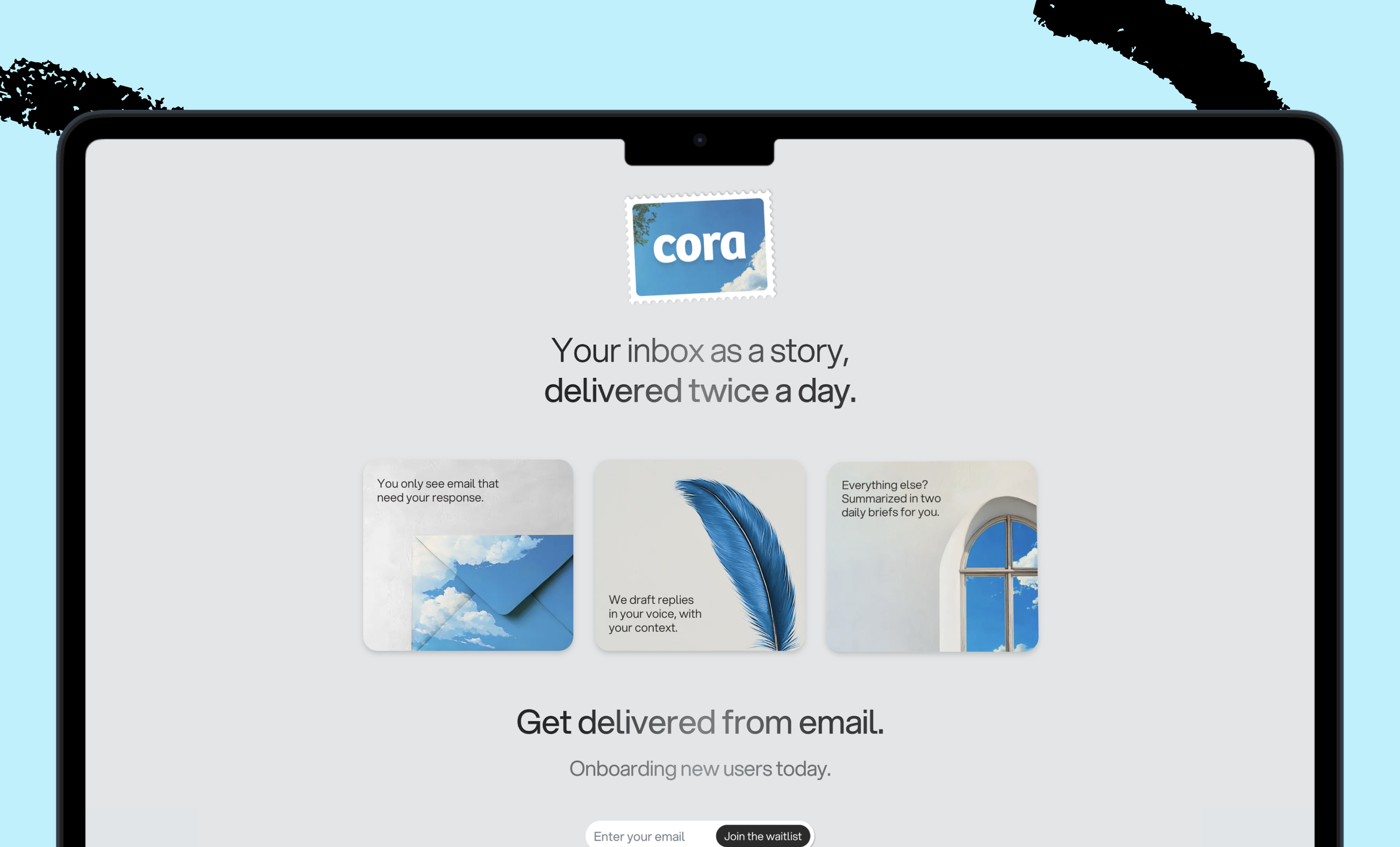
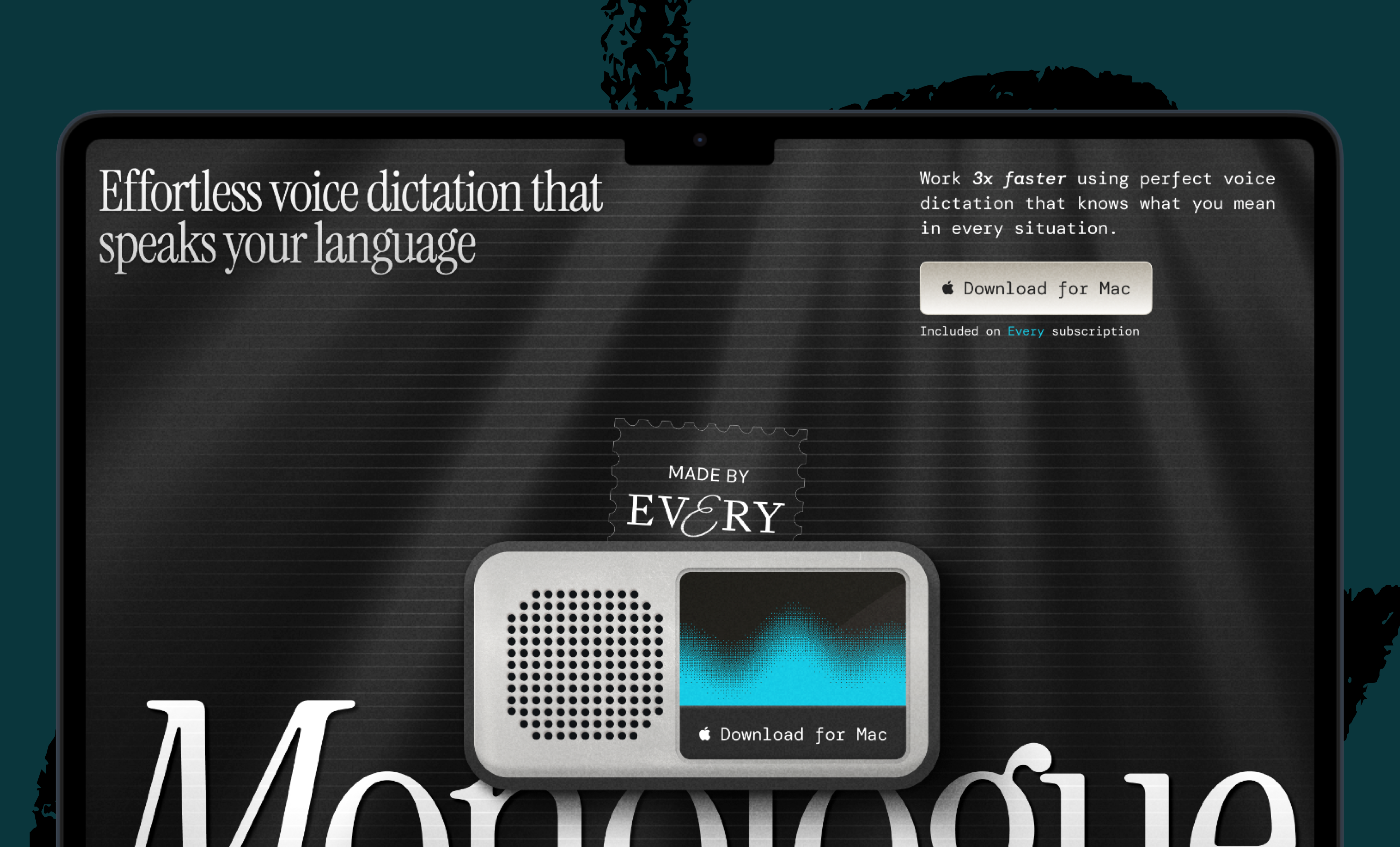
We build AI tools for readers. Write brilliantly with Spiral. Organize files automatically with Sparkle. Deliver yourself from email with Cora. Dictate effortlessly with Monologue.
We also do AI training, adoption, and innovation for companies. Work with us to bring AI into your organization.
Get paid for sharing Every with your friends. Join our referral program.
The Only Subscription
You Need to
Stay at the
Edge of AI
The essential toolkit for those shaping the future

"This might be the best value you
can get from an AI subscription."
- Jay S.
 Every Content
 AI&I Podcast
 Monologue
 Cora
Cora
 Sparkle
 Spiral
Join 100,000+ leaders, builders, and innovators

Email address

Already have an account? Sign in
What is included in a subscription?
Daily insights from AI pioneers + early access to powerful AI tools
 Front-row access to the future of AI
 In-depth reviews of new models on release day
Playbooks and guides for putting AI to work
Prompts and use cases for builders
In-depth reviews of new models on release day
Playbooks and guides for putting AI to work
Prompts and use cases for builders
In-depth reviews of new models on release day
Playbooks and guides for putting AI to work
Prompts and use cases for builders
In-depth reviews of new models on release day
Playbooks and guides for putting AI to work
Prompts and use cases for builders
 Bundle of AI software





 Dan Shipper
.png)
 Rhea Purohit
 Reviews of new AI models on release day
Comments
Don't have an account? Sign up!