


Dan Shipper is the CEO and cofounder of Every. Every week he explores the frontiers of AI in his column, Chain of Thought, and on his podcast, ‘The Every Podcast’.
.jpg&w=64&q=90)
Best of the Pod: Vercel’s Guillermo Rauch on What Comes After Coding
As AI writes code, developers must become better product thinkers
Aug 11, 2025 · 6 min readUpdated Jul 7, 2026

Our podcast is on hiatus for the month of August, so we're re-upping some of the best interviews we've done on AI & I. Today we're featuring Dan Shipper's conversation with Guillermo Rauch, the cofounder and CEO of Vercel, a cloud platform for hosting and deploying web applications. We get into how AI creates new levels of abstraction in coding, Guillermo's take on the allocation economy, and why specialized agents are the future. As always, you can watch on X or YouTube, or listen on Spotify or Apple Podcasts. Here’s a link to the episode transcript.
Was this newsletter forwarded to you? Sign up to get it in your inbox.
Guillermo Rauch's code is everywhere.
OpenAI’s website is hosted on his company’s platform, Perplexity’s real-time chat feature is powered by his open-source tool, and if you’re building a new website or coding real-time features—like live notifications or instant messages—there’s a good chance you’ll use his code too.
Guillermo has been coding since he was 10 years old. He’s now the cofounder and CEO of Vercel, a platform that helps developers build fast, personalized web experiences. He’s also the creator of open-source tools like Next.js and Socket.IO.
The thing is, he doesn’t think of himself as a coder.
“I don't think I would identify… as a coder, even though that’s what I obsessed about for years,” he says, sitting opposite me wearing a black sweater, groomed moustache, and wry grin.
A successful software business is about a lot more than just code, he says; it’s about having the drive to build a practical, useful product. “Coding is a specific skill, and when things are specific skills, machines tend to take them over time,” he says, “so what I try to separate is, what are the meta skills… not as easily replicated by machines that you should still nurture?” Meta skills, Guillermo believes, “tend to be more around very high-level conceptual thinking.”
In a world where AI can handle routine coding work, Guillermo has noticed developers at Vercel becoming more full stack. “I think it’s an important asset to have… with [Vercel’s AI coding copilot] v0 for example, they can do design. They can bring context, data, copywriting into their creations that otherwise would have required chatting with other people and crowdsourcing ideas.
“The trend has been away from the implementation detail, which is the code, and toward the end goal, which is to deliver a great product or a great experience.”
I spent a fascinating hour talking with Guillermo. The whole conversation is riveting, and you can check it out here:
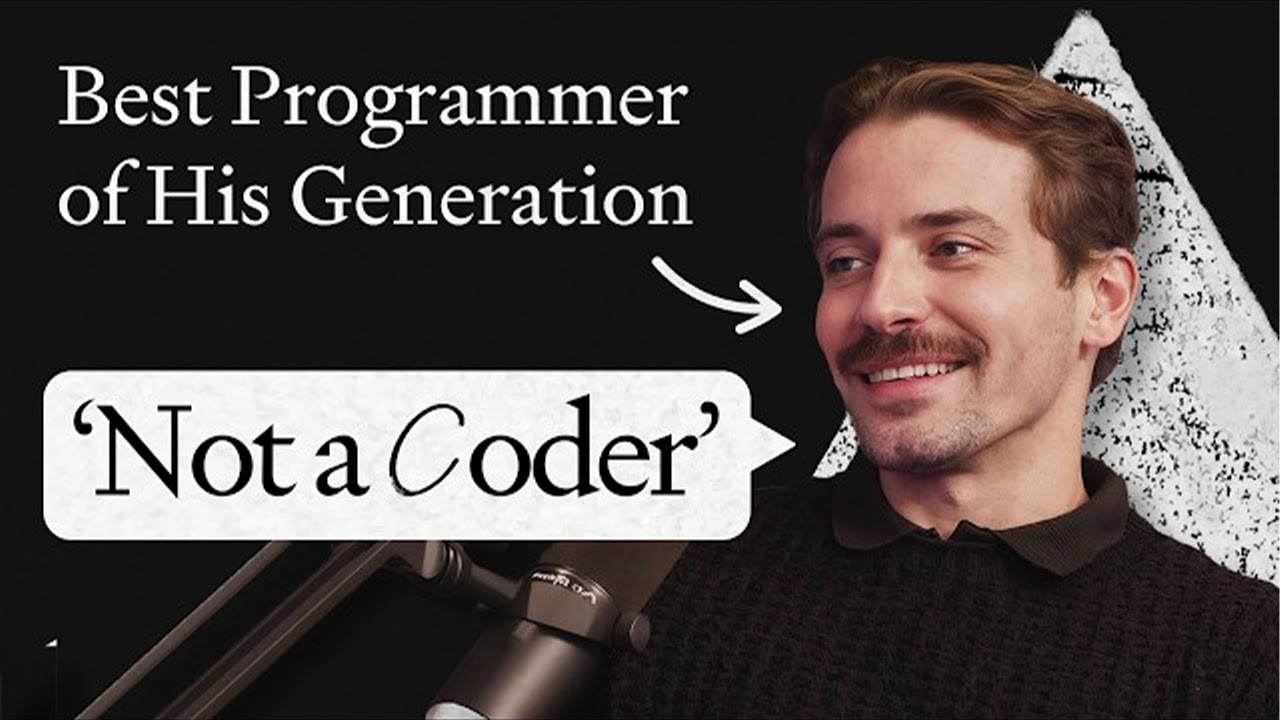

If you want a quick summary, here are some of the themes we touched on related to building great products and lasting companies:
Seeing beyond the rough edges
Guillermo stresses the importance of being able to see the potential in the nascent, unpolished versions of new technology. Around the time GPT-3 was released, when LLMs were barely coherent in generating code, the Vercel team was already thinking about building an AI copilot, which would later become v0.
Live the product you’re building
At Vercel, Guillermo says, “we’re always customer zero.” He takes the example of AI SDK, the company’s open-source library that helps developers build AI products, explaining that the project developed organically as his colleagues at Vercel built AI products themselves, whether it was v0 or demos of how to use Next.js with AI.
Pick apart great products to shape new ones
Guillermo is always on the lookout for good products, ones that make him stop and wonder how the developers built them. He says creative people often unconsciously ask themselves, “Okay, how did they build that?” He encourages them to tap into this “primal instinct.”
Founder mode, at scale
According to Guillermo, “founder mode fundamentally doesn't scale if your aspirations are very large—the total output and creative output of a company cannot just be limited to the founder.” He describes a theory he has around “recursive founder mode,” which focuses on scaling “founder mode” to create an environment conducive for more people to build great products.
The new economics of AI
Guillermo interprets my theory around the allocation economy as a metaphor for how much compute one would allocate to a given task. He explains that while traditional software tools often bill customers using a subscription-based model, AI tools are shifting to consumption-based billing. For users, as these tools consume compute resources on demand, “you have to think like a capital allocator and you have to think like a manager of these agents.”
The future is AI that knows when to ask
Guillermo thinks that it won’t be long before AI agents will be able to classify how difficult a task is and determine how much user input is necessary to proceed. For more complex problems, agents will come back to the user and ask for feedback often; less so with simpler problems.
AI agents with deep focus
Guillermo believes the future of AI is “domain-specific agents that are infused with taste, tools, and knowledge” for specialized tasks. While you could theoretically use ChatGPT as a generalist to do everything, it will become more efficient to turn to agents that are already primed to deliver high-quality results in their area of expertise.
New intelligence that runs on old foundations
Guillermo believes that we have to think about AI in collaboration with infrastructure and platforms that already exist. “Very much like a Waymo self-driving car needs to operate with the real world, we couldn’t modify the streets and say we’re going to build new streets for self-driving [cars]... we needed to put the cars on top of that infrastructure.”
This episode is a must-watch for anyone thinking about the future of software development. Here’s a link to the episode transcript.
You can check out the episode on X, Spotify, Apple Podcasts, or YouTube. Links and timestamps are below:
- Watch on YouTube
- Listen on Spotify (make sure to follow to help us rank!)
- Listen on Apple Podcasts
Timestamps:
- Introduction: 00:01:33
- How to spot trends early: 00:03:18
- Why you should be your own customer: 00:07:34
- How to create an ecosystem of talent and ambition: 00:14:55
- Why Guillermo doesn't identify as a coder: 00:17:29
- AI is gearing us toward an allocation economy: 00:20:50
- How Vercel’s copilot compares with other coding agents: 00:28:34
- Guillermo’s advice on having better taste: 00:40:35
- The future of AI agents is specialized: 00:42:46
- How AI startups can compete with big tech: 00:47:50
What do you use AI for? Have you found any interesting or surprising use cases? We want to hear from you—and we might even interview you. Reply here to talk to me!
Miss an episode? Catch up on my recent conversations with star podcaster Dwarkesh Patel, LinkedIn cofounder Reid Hoffman, a16z Podcast host Steph Smith, economist Tyler Cowen, writer and entrepreneur David Perell, founder and newsletter operator Ben Tossell, and others, and learn how they use AI to think, create, and relate.
If you’re enjoying my work, here are a few things I recommend:
- Subscribe to Every
- Follow me on X
- Subscribe to Every’s YouTube channel
Thanks to Rhea Purohit for editorial support.
Dan Shipper is the cofounder and CEO of Every, where he writes the Chain of Thought column and hosts the podcast AI & I. You can follow him on X at @danshipper and on LinkedIn, and Every on X at @every and on LinkedIn.
We build AI tools for readers like you. Automate repeat writing with Spiral. Organize files automatically with Sparkle. Deliver yourself from email with Cora.
We also do AI training, adoption, and innovation for companies. Work with us to bring AI into your organization.
Get paid for sharing Every with your friends. Join our referral program.
The Only Subscription
You Need to
Stay at the
Edge of AI
The essential toolkit for those shaping the future

"This might be the best value you
can get from an AI subscription."
- Jay S.
 Every Content
 AI&I Podcast
 Monologue
 Every Agent
Join 100,000+ leaders, builders, and innovators

Already have an account? Sign in.
What is included in a subscription?
Daily insights from AI pioneers + early access to powerful AI tools
 Front-row access to the future of AI
 In-depth reviews of new models on release dayPlaybooks and guides for putting AI to workPrompts and use cases for buildersIn-depth reviews of new models on release dayPlaybooks and guides for putting AI to workPrompts and use cases for builders
 Bundle of AI software




 Katie Parrott
 Every Staff
 Kieran Klaassen
Comments