


Eleanor Warnock is the managing editor at Every. She has been a business journalist and editor at the Wall Street Journal and the Financial Times-backed Sifted, and is an advisor to Bek Ventures.
What Comes After LinkedIn
In an AI world, knowledge workers must prove their judgment. Portfolios are one answer.
Mar 16, 2026 · 8 min readUpdated Jul 30, 2026

Whether or not you believe that flawed Anthropic graph or Jack Dorsey’s stated reasons for laying off 40 percent of his staff at Block, the message is the same: AI is doing more of the rote click-work that sustained the laptop class. The knowledge workers who thrive will be the ones who can add something extra—judgment, taste, and expertise.
The problem is that most of us have no good way to prove those things, and we’re not very good at it. For decades, brand names did the heavy lifting. Previous experience at McKinsey or Goldman Sachs were buzzwords that signaled to a hiring manager: This person can build a model and make slides, and someone selective chose them.
But brand names don’t work as a heuristic for expertise anymore. Was that Google alumnus a pixel pusher or a genuine decision maker? The soft skills that matter most in an AI-augmented workplace are invisible on a traditional resume.
One answer is portfolios. Not a portfolio in the sense of a portfolio career—a word that many knowledge workers have embraced as they move away from relying on one employer and pick up advisory roles and solopreneurship. I mean a portfolio as a body of work that proves your value beyond your work history. A collection of artifacts that show how you think, just like creative professionals showcase their design or artistic work.
As a journalist and editor, I write a newsletter about people using writing to build things, and I post on LinkedIn, all of which I consider to be part of my portfolio that helps people evaluate me beyond the names of my previous employers. Whether it is writing on platforms like LinkedIn or building interactive tools on their personal websites, knowledge workers need something similar. AI can make this process fun and creative, and help people experience your expertise without having to meet you.
Wasn’t personal branding supposed to fix this?
Even before anyone was worried about ChatGPT taking their job...
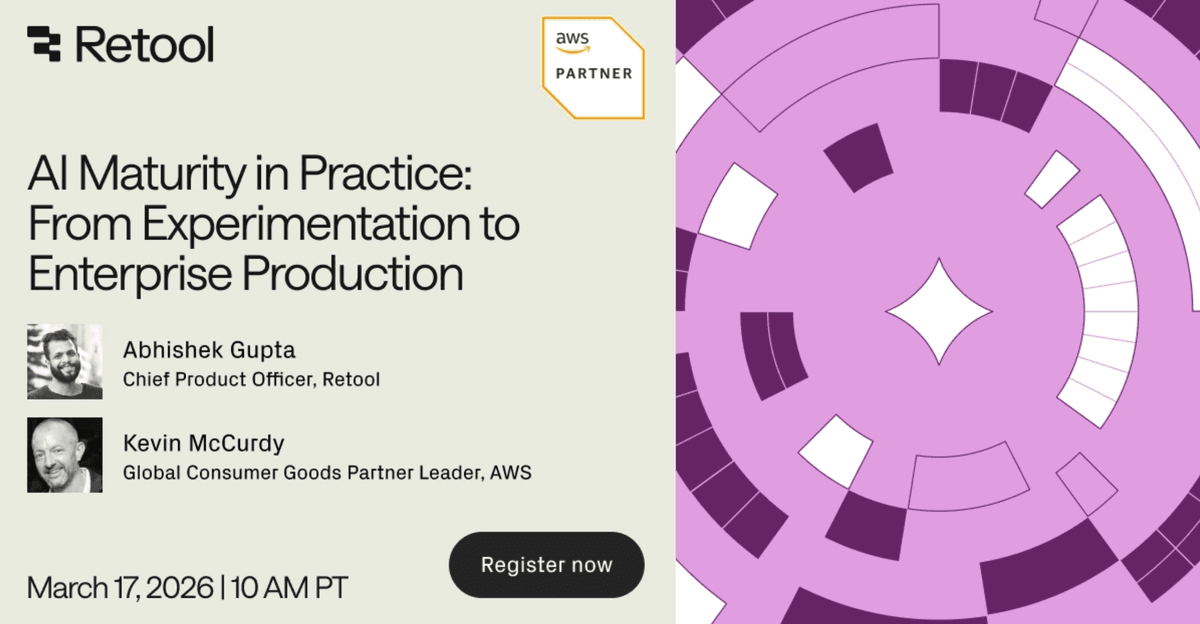
AI maturity in practice: From experimentation to enterprise production
Join us on March 17 at 10 a.m. PDT as Kevin McCurdy (AWS) and Abhishek Gupta (Retool) unpack a practical AI maturity progression that takes you from early experimentation to agent-driven, production-grade workflows. We’ll cover:
- The phases of AI maturity: what it takes to move from experimentation to enterprise-scale outcomes.
- How to tie AI to business outcomes: strategies for measuring real impact across capacity, cost, and throughput
- Scaling AI responsibly on AWS: embedding intelligence into core workflows in a way that’s governed, measured, and built to last.
Retool is trusted by 10,000+ companies, like Ramp, which saved $8M and increased efficiency 20%.
Become a paid subscriber to Every to unlock this piece and learn about:
- Why the knowledge workers worth following are abandoning LinkedIn
- How AI lets professionals build portfolios that prove how they think
- How Every staff writer Katie Parrott built her personal website and the unconventional feature she added
Thanks to our Sponsor: Retool
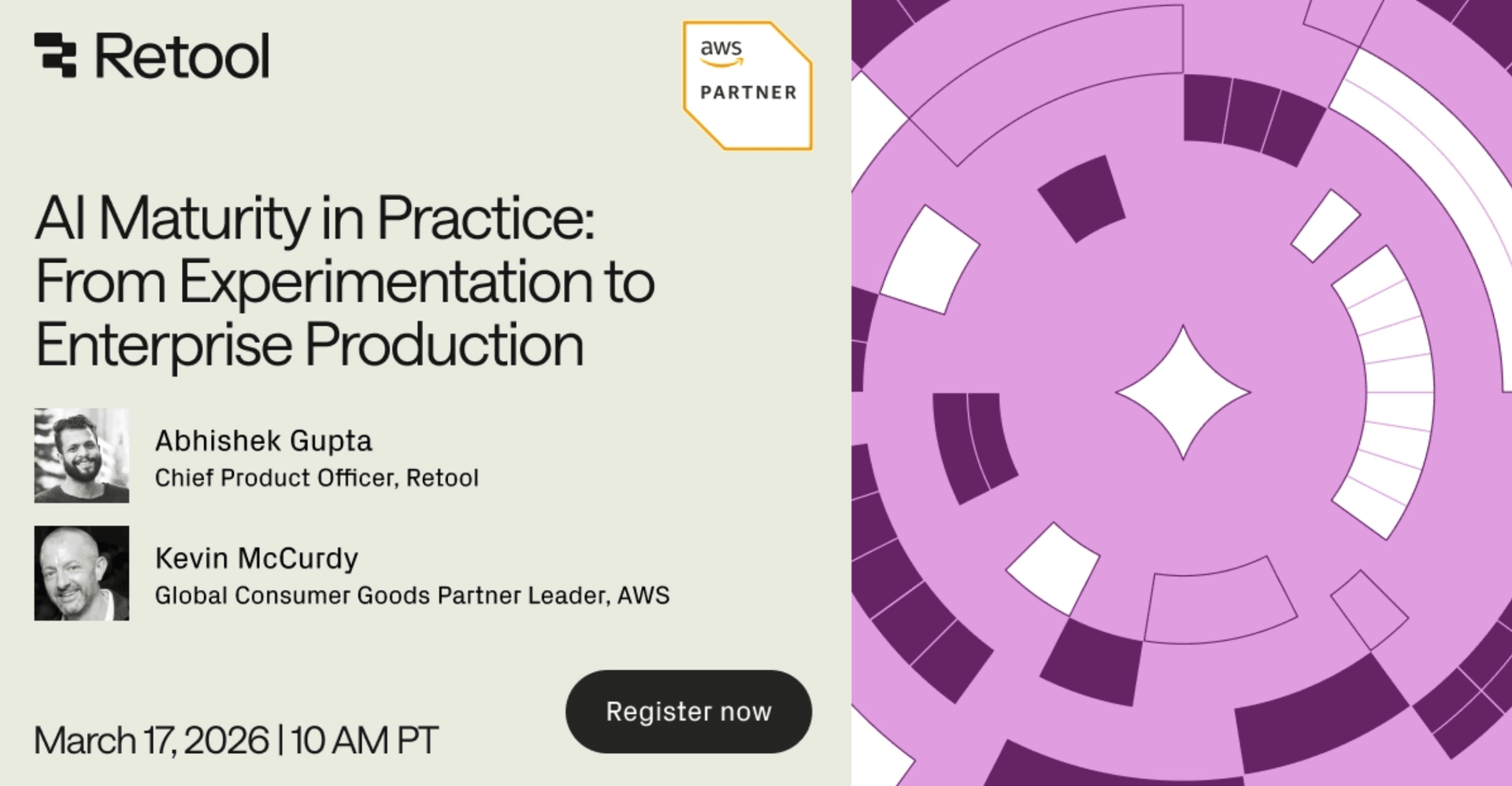
AI maturity in practice: From experimentation to enterprise production
Join us on March 17 at 10 a.m. PDT as Kevin McCurdy (AWS) and Abhishek Gupta (Retool) unpack a practical AI maturity progression that takes you from early experimentation to agent-driven, production-grade workflows. We’ll cover:
- The phases of AI maturity: what it takes to move from experimentation to enterprise-scale outcomes.
- How to tie AI to business outcomes: strategies for measuring real impact across capacity, cost, and throughput
- Scaling AI responsibly on AWS: embedding intelligence into core workflows in a way that’s governed, measured, and built to last.
Retool is trusted by 10,000+ companies, like Ramp, which saved $8M and increased efficiency 20%.
 Create a free account to continue reading
The Only Subscription
You Need to
Stay at the
Edge of AI
The essential toolkit for those shaping the future

"This might be the best value you
can get from an AI subscription."
- Jay S.
 Every Content
 AI&I Podcast
 Monologue
 Every Agent
Join 100,000+ leaders, builders, and innovators

Already have an account? Sign in.
What is included in a subscription?
Daily insights from AI pioneers + early access to powerful AI tools
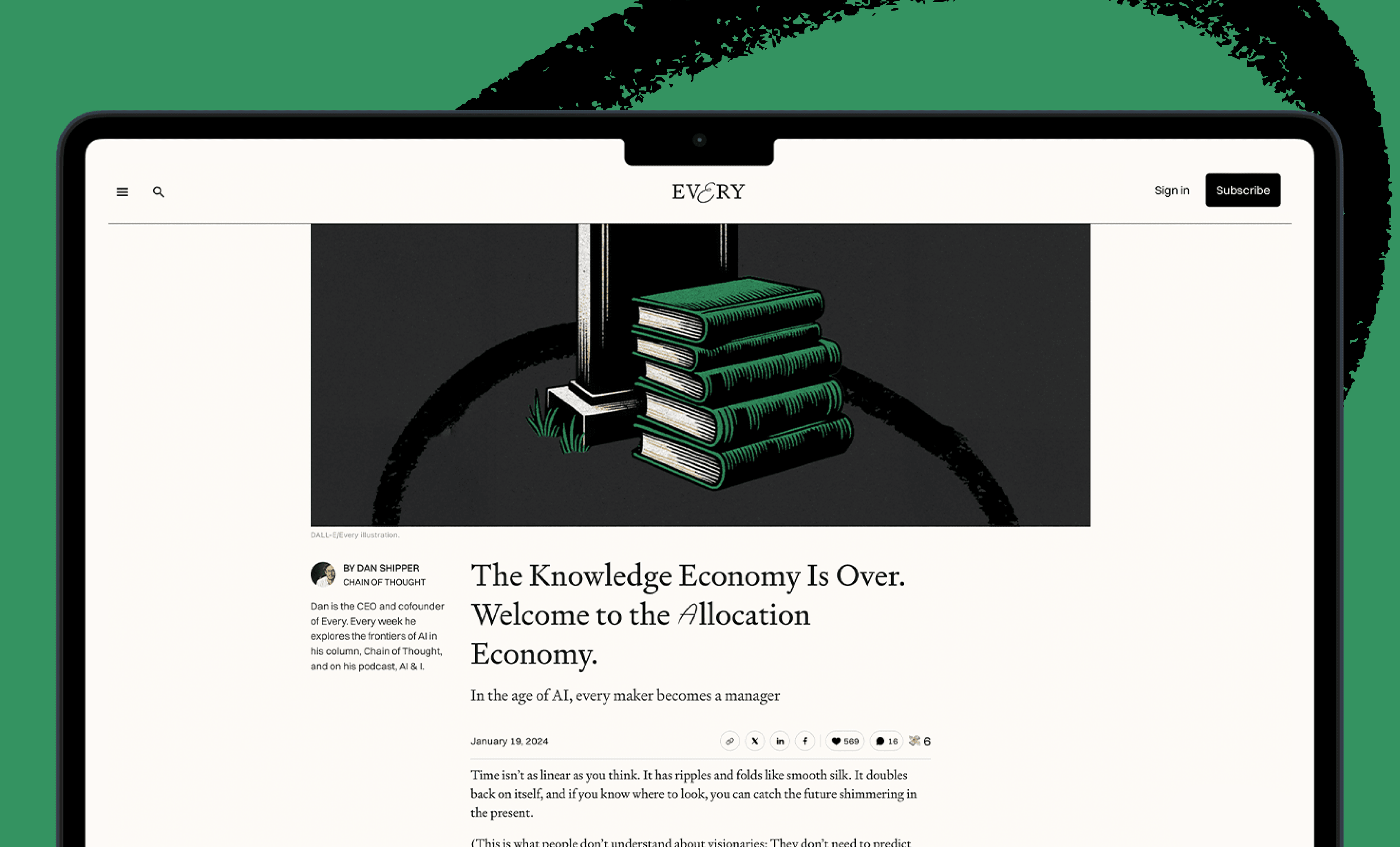
 Front-row access to the future of AI
 In-depth reviews of new models on release dayPlaybooks and guides for putting AI to workPrompts and use cases for buildersIn-depth reviews of new models on release dayPlaybooks and guides for putting AI to workPrompts and use cases for builders
 Bundle of AI software



 Katie Parrott
 Every Staff
 Kieran Klaassen
Comments