


Eleanor Warnock is the managing editor at Every. She has been a business journalist and editor at the Wall Street Journal and the Financial Times-backed Sifted, and is an advisor to Bek Ventures.
Socrates as a Service
The best stories live in people—and getting them out is still a human job
May 11, 2026 · 7 min readUpdated Oct 11, 2026

Was this newsletter forwarded to you? Sign up to get it in your inbox.
I’m a journalist and a communications expert. My job, in both roles, is to find ideas that people haven’t yet put into words—the anecdote that could become a front-page story, the framing that could crystallize a founder’s philosophy into something a customer remembers.
In an hour interview with someone, it might not be until minute 45 that we start getting into the good stuff. In two hours, there may only be one thing that stands out to me—a side story, a detail, some color. A little piece of gold dust. An investor I’ve worked closely with calls these “extraction sessions.” I call the people who do them well Socrates-as-a-service.
Those details and stories aren’t on the internet. They’re not in any model. And the model hasn’t replicated yet how I pull them out of people. The gap between what AI can do and what a great human questioner can surface is still wide—and it’s the gap where the best stories live. If you don’t have some way to surface that information in your organization, your brand and messaging are going to sound like all the other twice-boiled content out there.
Osakan bread and the wisdom within
The stuff that I’m looking for has a name in management theory: “tacit knowledge.” The term comes from scientist and philosopher Michael Polanyi, who defined it with the phrase, “We can know more than we can tell.” It’s the expertise and intuition that lives in our bodies and resists being turned into a document.
In a frequently cited 1991 article, Japanese management expert Ikujiro Nonaka argued that while Western companies excelled at “information processing,” Japanese companies specialized in the “creation of knowledge,” through a feedback loop that turned tacit knowledge into a competitive advantage. His most memorable example: In the 1980s, the Osaka-based Matsushita Electric Company was struggling to get the kneading right in a bread machine. They sent a software developer to apprentice with a baker at a local hotel famous for its luscious loaves. The knowledge she brought back helped the team perfect the dough-stretching technology inside the machine and ultimately create a top-selling device.
I am sure that the lucky engineer asked the baker a lot of questions, but there was certainly a lot she absorbed just from watching. Indeed, Polanyi argued that tacit knowledge exists outside of numbers or symbolic language—the kind of systemization that AI requires to ingest information.
Many “bakers” from whom we try to extract tacit knowledge often don’t even know the depth of expertise they carry. And they certainly couldn’t tell you what questions you need to ask to access it.
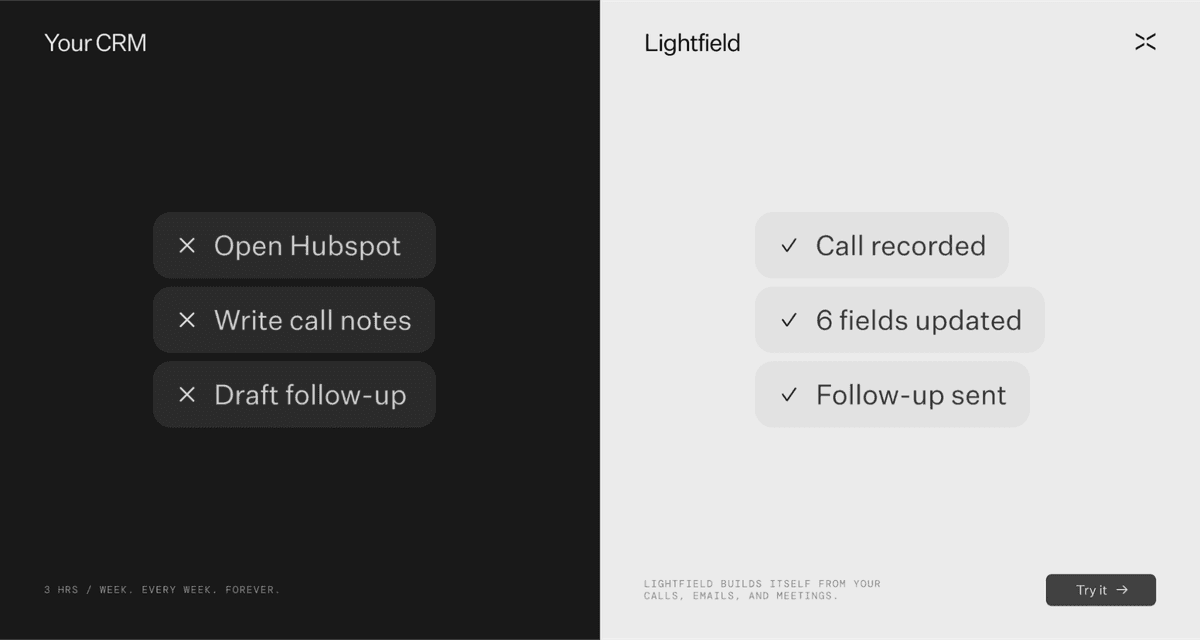
Your CRM is programmable now. In English.
You’ve done the same pre-call routine hundreds of times: LinkedIn, Crunchbase, inbox, last transcript. Fifteen minutes, every time. Lightfield is an AI-native CRM that just shipped Skills. Describe any workflow in plain English—call prep, deal scoring, account research, pipeline forecasting—and the agent learns it. “Prep me for my call with Acme.” One sentence pulls every email, transcript, and deal note and writes your brief. The agent runs against your full CRM data graph with code execution, web search, and file I/O. More than 3,000 startups are already on the platform. Use code EVERY13 for 3 months free.
AI as an imperfect interlocutor
AI can do some of that questioning and, in some cases, do it well. At Every, we have an AI agent ask us questions when we write OKRs...
Become a paid subscriber to Every to unlock this piece and learn about:
- Seven techniques to ask better questions and extract wisdom from others
- Why watching podcasts isn’t the best way to learn how to ask better questions
- The interviewing approach Eleanor has stolen from Lenny Rachitsky
Thanks to our Sponsor: Lightfield
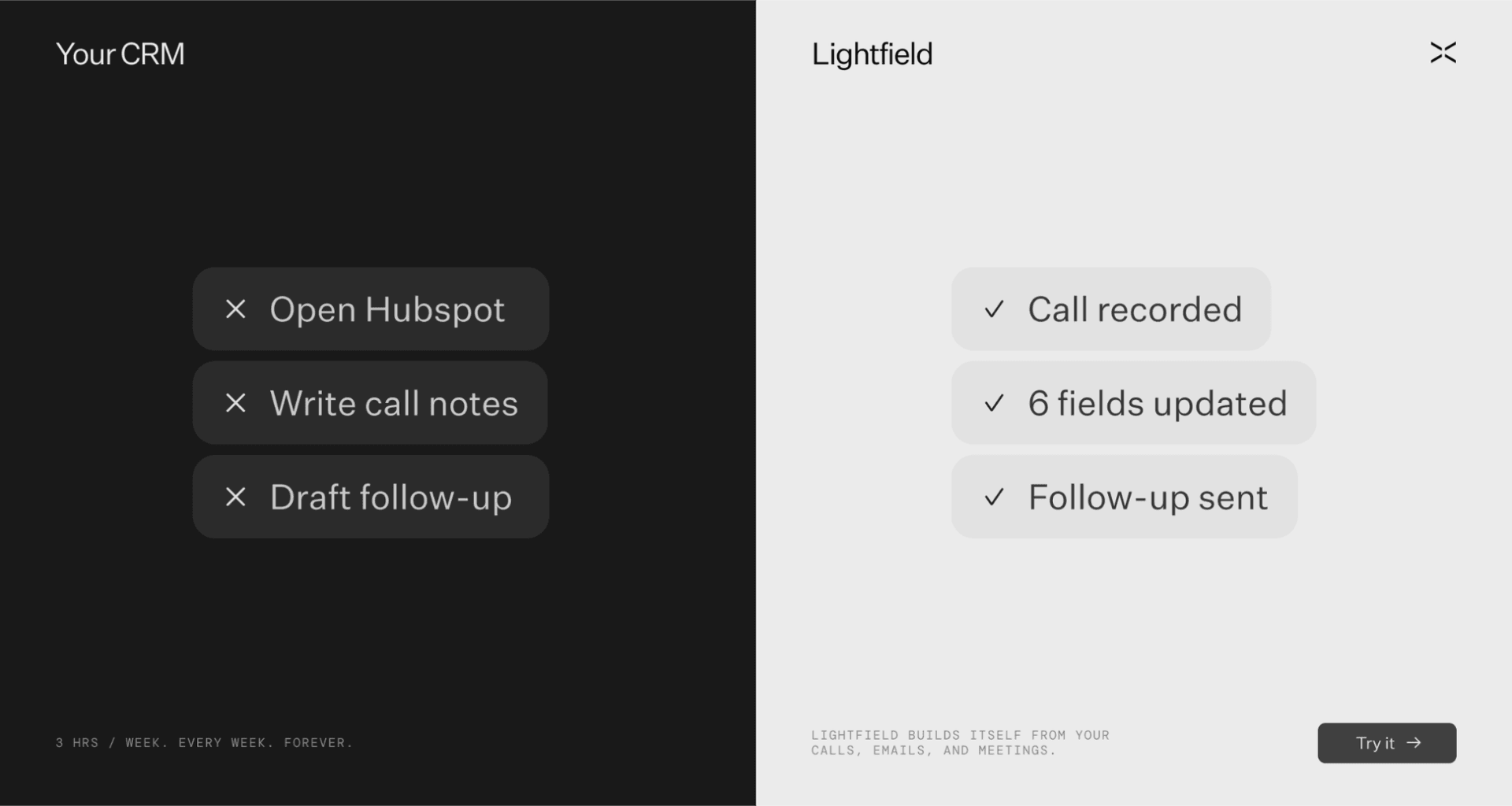
Your CRM is programmable now. In English.
You’ve done the same pre-call routine hundreds of times: LinkedIn, Crunchbase, inbox, last transcript. Fifteen minutes, every time. Lightfield is an AI-native CRM that just shipped Skills. Describe any workflow in plain English—call prep, deal scoring, account research, pipeline forecasting—and the agent learns it. “Prep me for my call with Acme.” One sentence pulls every email, transcript, and deal note and writes your brief. The agent runs against your full CRM data graph with code execution, web search, and file I/O. More than 3,000 startups are already on the platform. Use code EVERY13 for 3 months free.
 Create a free account to continue reading
The Only Subscription
You Need to
Stay at the
Edge of AI
The essential toolkit for those shaping the future

"This might be the best value you
can get from an AI subscription."
- Jay S.
 Every Content
 AI&I Podcast
 Monologue
 Every Agent
Join 100,000+ leaders, builders, and innovators

Already have an account? Sign in.
What is included in a subscription?
Daily insights from AI pioneers + early access to powerful AI tools
 Front-row access to the future of AI
 In-depth reviews of new models on release dayPlaybooks and guides for putting AI to workPrompts and use cases for buildersIn-depth reviews of new models on release dayPlaybooks and guides for putting AI to workPrompts and use cases for builders
 Bundle of AI software



 Katie Parrott
 Every Staff
 Kieran Klaassen
Comments