



At Every, we are always looking for companies that want to sponsor our smart long-form essays on tech, business, and productivity.
B2B brands that partner with us are able to reach the inbox of key decision-makers in companies of all sizes, from startup founders to global executives. B2C partners are able to reach investors of all types as well as operators in the tech industry.
If you are interested in partnering with us or just want to learn more, click the link below:
Running a technical writing agency for the last year and a half has made me realize how much I hate negative feedback. But runing an agency business has made getting poor feedback unavoidable. If you run a software business, and your software is buggy or your service is bad, your customers churn or never show up to begin with. The negative feedback is implicit, and in order to receive explicit criticism, you have to conduct user interviews and surveys.
When you run an agency business, your clients have no problem giving you negative feedback directly. You’re easier to reach, and the service interface is less clearly defined than in software, creating more opportunities for misaligned expectations. Moreover, engagements are mostly on a contract basis, and clients are a lot more willing to fire their agencies than their full-time employees—raising the stakes.
To run an agency business is to strip the work relationship down to its essence: money in, service out. Negative feedback that has to be couched in careful, empathetic terms to a full-time employee can be communicated more bluntly to an agency.
When I started working I wouldn’t even look at my performance reviews because I was so scared that it would contain criticism. Growing up in a Chinese immigrant household, I often received severe reprimands, and I still associate negative feedback with failure, fear, and being unloved. But being forced to confront negative feedback is one of the best things that could have happened to me. People say that you should run towards the things you’re scared of. I’m scared of negative feedback, and now I’m doing a job where even if I don’t want to run, I’m being pushed towards it.
I’m scared of negative feedback because I tend to catastrophize it: I’ll leap to the thought that my business is collapsing. Not only is this histrionic, it also absolves me of the responsibility to fix the problem—if the business is collapsing, who cares! In fact, things are not nearly as dire as I think, and the most productive thing to do is to address the feedback, reflect on what longer-term changes can be put in place to ensure it doesn’t happen again, and move on.
Tips for dealing with negative feedback
Now that I recognize that my problem is mostly in the emotional externalities of negative feedback, I’ve come up with some solutions to deal with it. These include:
- Ask for specific examples and feedback.
- Cross-check negative feedback against historical pieces of negative feedback that I’ve received. If multiple people have given me the same piece of negative feedback independent of each other, I’ll take it seriously.
- Put processes in place for improvement in the future and communicate that to the feedback giver.
- Separate out the feedback itself from the way it was delivered. Delivering negative feedback is just as, if not more, difficult than receiving it. Very few people are good at it. If the feedback giver is a poor communicator, impatient, hyperbolic or rude, it’s easy to dismiss it. But what they say likely has a kernel of truth.
- Realize that people mean different things by different words. Just because they used a word I’m sensitive to doesn’t mean it was intentional.
- Scope the feedback and don’t rush to generalize it. Just because I did a bad job on a particular task doesn’t mean I’m a bad person.
- Physically break up my spirals of negativity by going for a walk.
- Draw on prior experience to remember that negative feedback, while meaningful and important to take into account, is rarely the end of the world, or even a career or contract.
- Talk it through with loved ones. A lot of the bad feelings around negative feedback have to do with shame. Being transparent about the negative feedback I’ve received with people I trust releases some of that shame and provides another perspective as to whether it’s valid.
- Don’t procrastinate on addressing negative feedback. The longer I wait, the larger it looms in my head, when often it’s a relatively small thing.
- Vent! Go home and yell and complain to your therapist, partner, or someone else you trust. This process is cathartic and therefore necessary, but afterwards, center yourself and try to see the situation with clear eyes.
A script for responding to negative feedback
Depending on whether you received the negative feedback verbally (synchronously) or in writing (asynchronously), having playbooks ready to go has helped prevent hasty and potentially ill-advised gut responses.
If the feedback was delivered verbally:
At Every, we are always looking for companies that want to sponsor our smart long-form essays on tech, business, and productivity.
B2B brands that partner with us are able to reach the inbox of key decision-makers in companies of all sizes, from startup founders to global executives. B2C partners are able to reach investors of all types as well as operators in the tech industry.
If you are interested in partnering with us or just want to learn more, click the link below:
Running a technical writing agency for the last year and a half has made me realize how much I hate negative feedback. But runing an agency business has made getting poor feedback unavoidable. If you run a software business, and your software is buggy or your service is bad, your customers churn or never show up to begin with. The negative feedback is implicit, and in order to receive explicit criticism, you have to conduct user interviews and surveys.
When you run an agency business, your clients have no problem giving you negative feedback directly. You’re easier to reach, and the service interface is less clearly defined than in software, creating more opportunities for misaligned expectations. Moreover, engagements are mostly on a contract basis, and clients are a lot more willing to fire their agencies than their full-time employees—raising the stakes.
To run an agency business is to strip the work relationship down to its essence: money in, service out. Negative feedback that has to be couched in careful, empathetic terms to a full-time employee can be communicated more bluntly to an agency.
When I started working I wouldn’t even look at my performance reviews because I was so scared that it would contain criticism. Growing up in a Chinese immigrant household, I often received severe reprimands, and I still associate negative feedback with failure, fear, and being unloved. But being forced to confront negative feedback is one of the best things that could have happened to me. People say that you should run towards the things you’re scared of. I’m scared of negative feedback, and now I’m doing a job where even if I don’t want to run, I’m being pushed towards it.
I’m scared of negative feedback because I tend to catastrophize it: I’ll leap to the thought that my business is collapsing. Not only is this histrionic, it also absolves me of the responsibility to fix the problem—if the business is collapsing, who cares! In fact, things are not nearly as dire as I think, and the most productive thing to do is to address the feedback, reflect on what longer-term changes can be put in place to ensure it doesn’t happen again, and move on.
Tips for dealing with negative feedback
Now that I recognize that my problem is mostly in the emotional externalities of negative feedback, I’ve come up with some solutions to deal with it. These include:
- Ask for specific examples and feedback.
- Cross-check negative feedback against historical pieces of negative feedback that I’ve received. If multiple people have given me the same piece of negative feedback independent of each other, I’ll take it seriously.
- Put processes in place for improvement in the future and communicate that to the feedback giver.
- Separate out the feedback itself from the way it was delivered. Delivering negative feedback is just as, if not more, difficult than receiving it. Very few people are good at it. If the feedback giver is a poor communicator, impatient, hyperbolic or rude, it’s easy to dismiss it. But what they say likely has a kernel of truth.
- Realize that people mean different things by different words. Just because they used a word I’m sensitive to doesn’t mean it was intentional.
- Scope the feedback and don’t rush to generalize it. Just because I did a bad job on a particular task doesn’t mean I’m a bad person.
- Physically break up my spirals of negativity by going for a walk.
- Draw on prior experience to remember that negative feedback, while meaningful and important to take into account, is rarely the end of the world, or even a career or contract.
- Talk it through with loved ones. A lot of the bad feelings around negative feedback have to do with shame. Being transparent about the negative feedback I’ve received with people I trust releases some of that shame and provides another perspective as to whether it’s valid.
- Don’t procrastinate on addressing negative feedback. The longer I wait, the larger it looms in my head, when often it’s a relatively small thing.
- Vent! Go home and yell and complain to your therapist, partner, or someone else you trust. This process is cathartic and therefore necessary, but afterwards, center yourself and try to see the situation with clear eyes.
A script for responding to negative feedback
Depending on whether you received the negative feedback verbally (synchronously) or in writing (asynchronously), having playbooks ready to go has helped prevent hasty and potentially ill-advised gut responses.
If the feedback was delivered verbally:
Say, “Thank you for your feedback.” Take a moment to breathe. Stay calm.
If you agree with the feedback:
- Acknowledge it.
- Ask if you can brainstorm some solutions for the future.
- Ask if they’d like to discuss further.
- “Thank you for letting me know—I appreciate it. Now that I have this feedback, can we set benchmarks so I know I'm achieving my goals properly?”
If you don’t agree with the feedback:
- Ask for specific examples, and write them down.
- Ask for specific solutions/action items, and write them down.
- “Thanks for letting me know—I appreciate it. Can I have a few days to reflect on this feedback, and then we can schedule a follow-up meeting?”
- After the meeting, go through your notes. For every sentence you have written, match the relevant example. Evaluate whether the feedback was warranted.
- At the follow-up meeting, review each point and calmly either acknowledge or rebut the feedback. The idea is not to get into a debate, but rather to agree on expectations for the future.
If the feedback was delivered in writing:
You have a bit more control over your response since you didn’t have to respond live. Again, take a moment to breathe. Since you’re not in front of your manager, allow yourself to experience your emotions. Don’t respond immediately.
Follow the instructions in the first script depending on whether you agree with the feedback or not, and craft an email response. The goal of the email should be to set clear expectations to which both parties can be held in the future. It should include:
- “Thank you for your feedback.”
- Responses to the specific examples given, or a request for more examples.
- Reference to your willingness to change/improve.
Rejecting negative feedback
While it would be great if all negative feedback was given kindly and thoughtfully with the intention of helping you grow and improve, sometimes that’s not the case. The feedback giver may have their own professional or personal problems, and may be unfairly blaming you for something that isn’t your fault or is beyond your control.
I’ll reject negative feedback if the feedback giver:
- Is unable to provide concrete examples.
- Is unable to provide actionable solutions or improvement plans.
- Is someone who I don’t respect professionally. If I don’t respect the feedback giver professionally, but I do respect them as a person, I’ll try to give the feedback consideration.
- Provides concrete and actionable feedback, but it’s incommensurate with the stated expectations of the job or role.
Feedback as learning
There are real physical and emotional reasons why it’s so difficult to receive negative feedback. For those with childhood trauma or social anxiety, it can be especially triggering. And yet processing it is how we get better and grow.
Exposure therapy helps me in that the more regularly I receive negative feedback, and the more I expect it as a default, the easier it gets. Running my agency has been a good forcing mechanism in this sense.
Finally, I’ve been trying to practice receiving negative feedback, seeking it out when I perceive the stakes to be lower, like exercise classes or poker games. In these more educational environments, where no one expects me to be perfect, negative feedback is reframed. It’s not criticism; it’s teaching.
Yiren Lu is a writer and software engineer currently running Frindle, a technical writing agency. She lives in Greenwich, CT.
 Create a free account to continue reading
Ideas and Apps to
Thrive in the AI Age
The essential toolkit for those shaping the future

"This might be the best value you
can get from an AI subscription."
- Jay S.
 Every Content
 AI&I Podcast
 Cora
Cora
 Sparkle
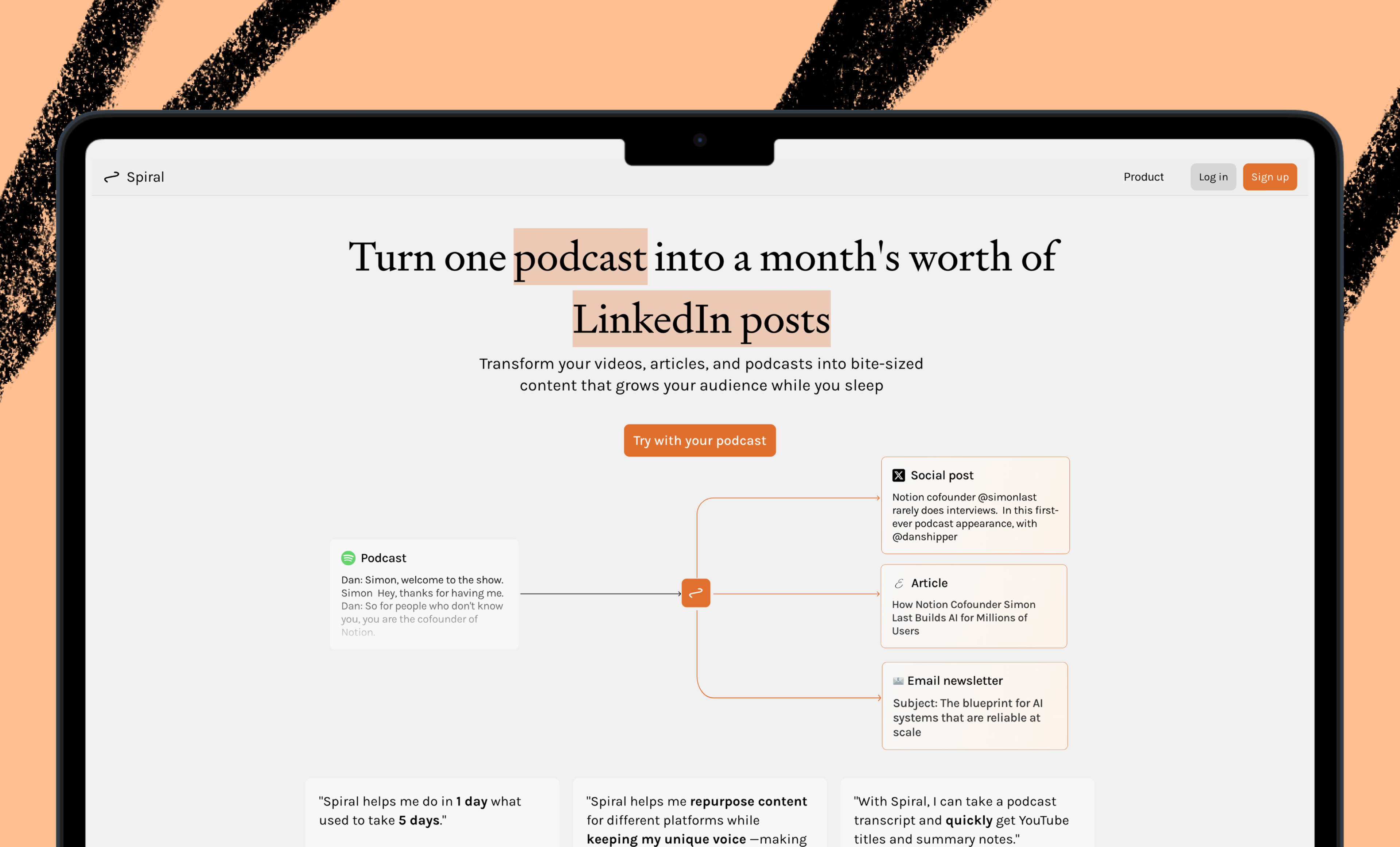
 Spiral
Join 100,000+ leaders, builders, and innovators

Email address

Already have an account? Sign in
What is included in a subscription?
Daily insights from AI pioneers + early access to powerful AI tools




 Front-row access to the future of AI
 In-depth reviews of new models on release day
Playbooks and guides for putting AI to work
Prompts and use cases for builders
In-depth reviews of new models on release day
Playbooks and guides for putting AI to work
Prompts and use cases for builders
In-depth reviews of new models on release day
Playbooks and guides for putting AI to work
Prompts and use cases for builders
In-depth reviews of new models on release day
Playbooks and guides for putting AI to work
Prompts and use cases for builders




Ideas and Apps to
Thrive in the AI Age
The essential toolkit for those shaping the future
"This might be the best value you
can get from an AI subscription."
- Jay S.
Every Content
AI&I Podcast
Cora
Sparkle
Spiral
Join 100,000+ leaders, builders, and innovators
Email address
Already have an account? Sign in
What is included in a subscription?
Daily insights from AI pioneers + early access to powerful AI tools
Front-row access to the future of AI
In-depth reviews of new models on release day
Playbooks and guides for putting AI to work
Prompts and use cases for builders
In-depth reviews of new models on release day
Playbooks and guides for putting AI to work
Prompts and use cases for builders
 Reviews of new AI models on release day
Comments
Don't have an account? Sign up!