
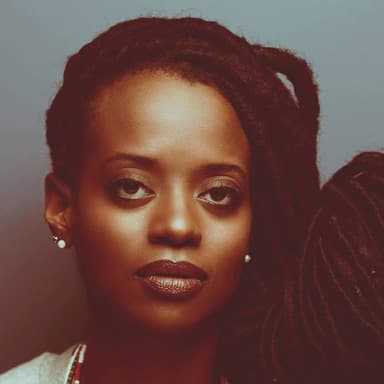


Doers, Makers, and Manifesters: Talking with Cannaclusive founder Mary Pryor
Despite its transformative potential, the cannabis industry has a huge equity problem.
Apr 20, 2021 · 16 min readUpdated Jul 20, 2026

The cannabis industry is failing to deliver its greatest potential for transformative change—economic justice. The so-called “War on Drugs,” initiated by Richard Nixon in 1971, has targeted Black communities in the U.S. for the last fifty years. Black people are arrested for cannabis use alone at four times the rate of white people, despite nearly identical patterns of use, and are more likely to be arrested than white people even in states that have legalized weed. Black people are six times as likely to be incarcerated for drug offenses, and prosecutors are twice as likely to seek mandatory minimum sentences for Black defendants in cases involving drugs, including cannabis. The War on Drugs has cost the country an estimated $1 trillion since the early 1970s; the cost to Black families is incalculable.
At the same time, the rapidly expanding legal cannabis market is dominated by white—and largely male—entrepreneurs and investors.
And it’s a huge market. Colorado and California, two of the most established legal weed economies, saw sharp increases in sales in 2020. Colorado reported a 25 percent year-over-year increase in sales, to $2.2 billion. California’s sales for 2020 totalled $4.4 billion, a 57 percent increase over 2019. According to Marijuana Business Daily, sales elsewhere rose steadily, if not as astronomically, and Americans spent a collective $17.5 billion on cannabis in 2020. New businesses, services, and products have emerged as states steadily legalize medical and recreational usage, retail sales, and as the hemp market expands.
The legacy of half a century of drug policy that targets Black and brown communities has made access to the wealth required to start a cannabis business far more challenging for BIPOC folks. “A lot of the capital needed to be in this business is ruled by white supremacy and white men,” says Mary Pryor, co-founder of Cannaclusive, and chief marketing officer of Tonic CBD and Tricolla Farms. Although state-by-state legalization often includes release from prison and record expungement, in some states people who have been convicted for drug crimes cannot get a license for a cannabis-related business. All of this adds up to a missed opportunity for economic reparation of the many harms of policing around drug sales and drug use. While the available data on cannabis business ownership is outdated, a 2017 industry survey found that less than a fifth of people with ownership stakes were BIPOC, and less than 5 percent identified as Black. In Denver, 30 percent of the population is Latinx, compared to 13 percent of cannabis business owners and 12 percent of industry employees statewide.
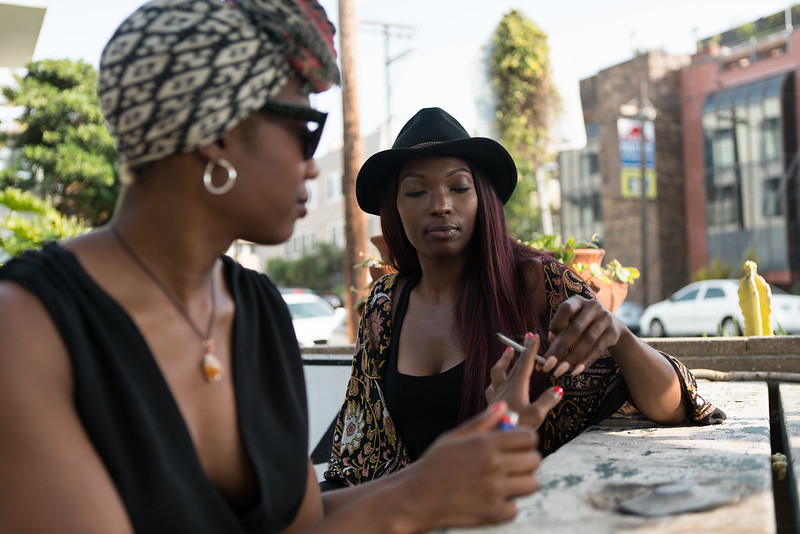
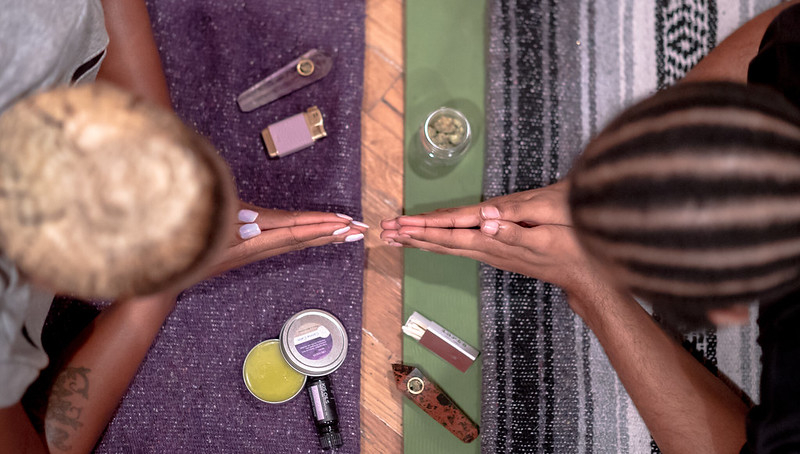
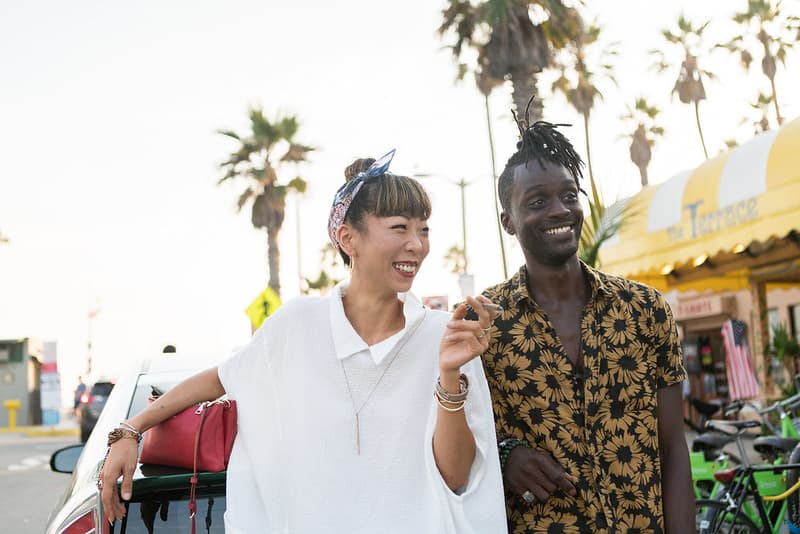
Pryor co-founded Cannaclusive to make entrepreneurial projects in the cannabis space more accessible to people of color, with the idea that these businesses could be a portal to building generational wealth. To counter stereotypes that portray cannabis use as a criminal, marginal, or fringe activity, Cannaclusive created a free library of stock images of BIPOC folks just chilling with a vape, smoking in a low-key setting, or using cannabis medicinally, for companies and media outlets to use. In the summer of 2020, Cannaclusive started The Accountability List, a document that tracks the statements and promises that hemp and cannabis companies have made to communities of color, as well as links to their diversity reports, value, number of employees, and other company details.
“We have 700 businesses and we're trying to get to 2,000 by the end of the year because there are more businesses launching,” Pryor told Free Radicals. “We’re also coming up with two more database projects, and hopefully, we will have a data partner.” Her goal is to expand access to entrepreneurship opportunities for people of color, and also to make it clear which companies consumers can support if equity matters to them.
Pryor has worked in music, fashion, tech, and wellness, and she co-founded Fit for Us, a forum for Black fitness professionals and influencers to talk about representation, and Breaking Bread, a food scarcity non-profit that delivers vegetarian meals and groceries. Still, Pryor considers herself a learner more than a leader: “I'm always kind of looking around like, wait, y'all think I'm a leader? I'm trying to figure this out just like you. I don't consider myself a leader because I'm always still a student, still learning,”
A fearless digital strategist and an excellent Twitter follow, Pryor connects the dots between different industries and worlds with a clear drive to see access, equity, and representation evolve. Sherrell Dorsey spoke with her about accountability, the parallels between cannabis and tech, and how she keeps moving forward.
You have such an interesting voice and perspective on what's happening in the cannabis industry. And your takes across social media are very poignant—you say the thing that people are thinking but don't really want to express. How did this idea of inclusiveness in the cannabis industry come about for you?
Whether you’re working in music, fashion, advertising, or tech, there's always been this duality that you have to have, if you care enough, because intention does matter here, where you're the Black Person at the Table. I would be the Black Person at the Table and be like, I'm the only Black person y'all could find for this table? Why? Even in high school, I said, Where's the inclusion at? Why am I the only person here? Don't talk to me like I'm the well-spoken Negro here. This is weird.
I'm going to be very honest here, I think the tech space is a mix of three different types of melanated people, and when I say melanated, I'm also thinking about our Asian, South Asian, and Indian brothers and sisters. One: The ones who don't want to make too much noise. Two: The ones who make a lot of noise, but the frustration burns them out, and they end up crashing. Three: The ones who are dedicated to trying to make a difference. However, they know that it's a jig, and they have to keep trying to make a difference in the midst of the jig.
You see people who are melanated being part of this tech revolution from the receiving end, and not given as much grace from the starting end. You also see that they're being forced to be cogs in the server end, where you're training people how to code, but you don't teach people how to lead in a startup and to have real skills and dedicated time and resources.
In cannabis, it's the same thing times ten. Except in cannabis, most melanated people are still locked up. Most melanated people do not have chances to be operating in this space due to capital, classism, lack of resources, lack of education, and a whole propaganda war that was targeted toward melanated folks based upon racism that was used to create and support crazy fucked up laws for the War on Drugs.
There’s so much space to think expansively in a way that centers Black and brown people in the world of cannabis, to address the massive harm of the War on Drugs. But that is not what is happening. Why? How can it be different?
Well here’s the thing that white people do. White people will be like, Yeah, let's get Black and brown people and anybody, white folks included, out of jail and get their records expunged. That's good. But where are the jobs at? Where are the opportunities, and where's the ladder to working in the industry or ownership? If you're just getting me out to train me to go trim for you, that's not ownership. So when people expunge your record in cannabis and there isn’t any connection to a job, someone's going to go repeat that crime. You're keeping that circle going.
It's a problem when we assume that melanated people are good to be in the cog, but not leading the cog.
That's what a lot of tech programs do as well when they train people to work for someone without giving them the power to understand that you can work for someone to get the skill to start something on your own. You’re also talking about the fact that you can have an exit or the fact that there are Black folks who run amazing apps.
What’s a direct action folks can take to support equity in cannabis?
Support our equity organization support coalition, Cannabis for Black Lives. We do take donations, and this is a coalition founded and led by members of Cannaclusive, CANN, Eaze, Besito, Sweetflower, Vertosa, Canndescent and more major and small brands that raise funds to support on the ground equity leaders across the nation. I also am part of the Hood Incubator accelerator program alongside several affiliates in major cities, and we're expanding nationwide starting with providing classes and courses. We're doing equity and civic justice training on how to start a business, advocate for cannabis equity, and be in the cannabis space, mostly gearing toward melanated folks. I'm the fundraising director where I’ll be leading a lot of strategies. If people want to put their money where their mouth is, they can talk to us.
There's a lot of ways for people to go beyond just thinking about, Yeah, let's get people out of jail. What happens after? There aren’t any available opportunities once they’re released. That's the circle jerk that just recreates the prison pipeline, because there's no jobs for people to have in a space where you're making millions of dollars selling cannabis. That just seems so wild to me.
I want to touch on the accountability list that Cannaclusive dropped last summer, when companies were, very publicly, promising to do better by Black and brown people in this country. You also wrote an open letter to the industry.
As we found out this year, a lot of those statements were very empty. Have you seen impact in the industry as a result of the Cannaclusive Accountability list? What do you see as the future from an accountability standpoint?
I borrowed the idea from the list you started last year because we need to do the same thing in the cannabis space. We're releasing what we’re calling The Grading System in April, listing options where you can buy cannabis and hemp from people who are actually doing what they need to do.
We just want people to know you don't have to buy from these folks banking off of an audience that's been severely disenfranchised.
People are like, Cannabis is racist. I'm like, No, every industry is racist. A lot of these industries have not fulfilled any of their statements, their long tweets, their commercials, whatever, to do something in regards to the disparity, the disenfranchisement, and the total stigma and the lackluster effort to support Black and brown people.
We received death threats. We had white people calling us saying that we were ruining their businesses or that we were not understanding them. It definitely put a lens on people realizing that they aren't doing the work. We signed contracts with businesses to do things, and they stalled and just paid us thinking that we were going to remain silent.
We're still getting shortchanged in every industry, from fashion to media. You know, #Oscarssowhite didn't do a damn thing, because it's still white. There's still a lot of stuff that has not moved the needle. The inclusivity issue in cannabis and what Cannaclusive cares about is a big problem. Only four percent of the businesses in the industry are owned by Black folks, and that number is fluctuating more and more as the industry increases. Money and access to money, the eradication of the middle class, this current pandemic, and issues with finances and inflation are making things way more intangible for everybody, especially folks of color.
How are you thinking about that, that changing the industry or what is really going to be required to hold people accountable, and pursue this idea of equity?
I don't think that we talk to each other enough about the players in the space that aren't doing what they might have emailed you or me about. I don't think that we do that as leaders. We don't talk to each other enough about the type of emails and messages that we're all getting. They don't think that we talk to each other, and that’s how they benefit.
The idea of the consumer, doing what they need to do to let these companies know that they're listening, has not been taken seriously. And it's not continually effective. Whenever we ask for a boycott, or the idea of a boycott, it fizzles, it doesn't stay. Other things come in to distract. [See more on boycotts of non-equitable cannabis companies from Cannaclusive here and here. For a deep dive on how boycotts do, and don’t, achieve their stated goals, listen to this episode of Freakonomics.]
A lot of people, when they talk about what boycotts can do, lose the historical context and ramifications of how real boycotts worked in the 50s and the 60s and what it actually did to progress Black needs and ideas in the movement. The Montgomery Bus Boycott didn't end because white people felt bad. The Montgomery Bus Boycott was one of the most organized boycotts ever created, because you had Black people figuring out ways to drop off the kids at school and then picking up Black and brown folks and taking them to work. You had actual Black riders not going on any buses in a town that was majority populated by Black people. You had people who were creating other avenues to get people where they needed to go to make sure that it was effective. It wasn't until the Montgomery bus company realized that they were losing a lot of money, and they were like, We have to stop what we're doing because we're losing money. And there was a concentrated and consistent effort that made it work. We don't do that.
It's not to be a judge against us. I just feel that every summer we see public lynchings on social media of Black folks getting killed, and every summer, we get mad. Every two to four years, we go out in the streets and protest. It's a pattern that we repeat over and over again, but we don't keep it consistent and there are reasons why. We have a lot to deal with as people from decades of being traumatized and unable to work, being tired and frustrated. We have all the evidence and data to know what that does to us physically and mentally. We need to be more intelligent and mindful and more cohesive to work together in all the industries that we're in to make a definitive difference.
I come from the Twitter space, and I know what it is like to be an influencer. Unfortunately, the only way you get people to change is through calling them out. I don’t believe in cancel culture. It's not real at all. People need to see the reality of what's happening, and we have to use as many tactics as possible.
How you are leading through those challenges, those traumas, those realities? Less than a year ago, companies were making it rain because they heard that racism was a thing. And then we got last-minute calls to speak for Black History Month about being Black, and there’s no budget. We're never going to get the same dollars that white influencers get…
No conference is going to make that happen.
How do you still say, I'm going to found this, I'm going to publish this, I'm going to build consortiums, I'm going to move forward? How do you wake up every day with the philosophy that even if we're inching forward, we cannot stop? How do you keep momentum?
Therapy. I've had this issue for a while being in my thirties—I think that people in our thirties fucked up with supporting Generation Z in a way that we won't admit. I tell people all the time, Nah, we fucked up. And so I do it for that. I don't even do it for millennials.
I think Gen Z is ready. They need the information to do what they want to do. There's something special about being so raw, ready and energetic, and we need to tap into and to support them with the right details of how to do those things. I do it because I'm thinking about the generation behind me. I think that my generation, people that are acclimated and scared of taking risks, is done.
Do you think the scared part just comes from what we stand to lose versus gain? Can you kind of dig into that a bit more?
We, as a people, have been so conditioned to lack so that's the first place we go to instead of opportunity. When you have a generational, 100 years of absence and disenfranchisement, you as someone who is choosing to speak up in this realm have to negotiate as an individual every day. That in itself is its own item that we don't talk about as people who are currently aware of what's going down. There are more things that we thought were one way but are really not how it seems based upon the truths that the digital age has given us.
The scary part is that we weren't prepared for the unknown. We didn't know that this is what work culture is, based upon what we were shown on TV, told in college, or shown from our parents. We weren't shown this part of the work culture game.
There’s a lot from a systematic brain overload involved. I think that we, in ourselves, don't understand how traumatizing it is to be in this time, where there's more truths that we have access to versus what our parents had access to.
What is governing the way you're thinking about moving forward in your business endeavors for the year ahead?
Flexibility, integrity, communication, education, and sustainability are the biggest thoughts I consider when moving forward with my business endeavors. Boundaries are incredibly important as well. I think that we're in a time now where people are not respecting boundaries, because we're all seemingly at home and constantly stuck in a Zoom call or GoToMeeting. I’m still trying to navigate this new scope of working and creating those boundaries so that I can have personal breathing air. This is something that people have to start doing more of within the business realm, and I aim to do in my personal partnerships.
I'm doing whatever I can to make myself open to an incredible man and having a baby. That flexibility thing is real, and I will not break away from that. Creating those boundaries is crucial, especially as doers, makers, and manifesters. If you don't create that boundary for yourself, you're going to end up sacrificing your own self-care. That's what I refuse to let go of, especially in this time, and I'm grateful for realizing this need during the pandemic.
I want to touch more on the pandemic and get more insight into how that may have changed your thinking or sense of urgency on some of these issues, or any kind of influence on the businesses and initiatives you're part of.
This pandemic is showing us that there's an importance in how you utilize your time, knowing what matters to you, who really aligns with your energy, and how you can make those relationships matter the most. This is a time to define your values, and how you can operate with them by protecting those you love, but also protecting yourself and understanding the mental and physical support you need. It’s all about rethinking your work and priorities.
That is why I choose joy, while still being mindful of so much loss. I think that energetically I've tuned into my instincts and my intuition way more than I ever have. If it wasn't for the practice of listening to my ancestors, I wouldn't have been as prepared as I was.
I also think that I have a responsibility to give back, but giving back doesn't mean sacrificing yourself. I’m trying to find more ways to have everyone together from different industries so we can encourage the next generation to use and embrace these tools in giving back to the community.
Am I tired of having some sleepless nights? Am I sad that I've lost relatives and friends? Yes, and I'm angry. I'm also very aware that this is a mass movement of energy and loss and showing people how politics are embedded in our everyday decision-making. I would hope that people would try to figure out ways to utilize this as a way to help others outside of themselves. Is that happening? I don't necessarily know, but I know I'm choosing to do that. I hope to align myself with others who are as well.
This interview has been edited for length and clarity. Photos are from the Cannaclusive stock photo library.
The Only Subscription
You Need to
Stay at the
Edge of AI
The essential toolkit for those shaping the future

"This might be the best value you
can get from an AI subscription."
- Jay S.
 Every Content
 AI&I Podcast
 Monologue
 Every Agent
Join 100,000+ leaders, builders, and innovators

Already have an account? Sign in.
What is included in a subscription?
Daily insights from AI pioneers + early access to powerful AI tools
 Front-row access to the future of AI
 In-depth reviews of new models on release dayPlaybooks and guides for putting AI to workPrompts and use cases for buildersIn-depth reviews of new models on release dayPlaybooks and guides for putting AI to workPrompts and use cases for builders
 Bundle of AI software



 Katie Parrott
 Every Staff
 Kieran Klaassen
Comments