



OpenAI Flips the Script
Plus: Permission to skip model-migration anxiety, why being an early adopter is overrated, and the importance of curiosity in an AI-saturated world
May 6, 2026 · Updated May 13, 2026


There’s no resting on your laurels in the AI race: OpenAI’s Codex went from trailing Anthropic’s Claude Code to pulling ahead in functionality, at least for now, in a matter of months. Today, Every CEO Dan Shipper explains why OpenAI’s coding app has become his daily driver for work, head of growth Austin Tedesco shares his no-nonsense advice for switching over from Claude Code, and Spiral general manager Marcus Moretti argues it’s OK—good, even—to let some AI trends pass you by.
Was this newsletter forwarded to you? Sign up to get it in your inbox.
‘AI & I’: Why we switched from Claude Code to Codex
Codex takes the lead
If you’re looking for evidence of AI’s unrelenting pace, here it is: In January, Dan wrote that whoever wins vibe coding wins how you work on your computer—and that OpenAI had some serious catching up to do.
Three months and the release of OpenAI’s latest model later, Codex is there, and in a new episode of AI & I, Dan and Austin get into why they do much of their knowledge work in Codex now. They cite the power of GPT-5.5, paired with a desktop app that is faster and more powerful than Claude Desktop or Cowork.
Watch on X or YouTube, or listen on Spotify or Apple Podcasts. You can also read the transcript.

Here are a couple of Dan and Austin’s favorite current use cases for Codex:
- Austin uses Codex for strategy docs. Austin needed to write a go-to-market plan for a new Every product but kept getting pulled away by other work. So he pointed Codex at the team’s Notion meeting notes, Slack threads, and his preferred template and told it to pull together content where they’d discussed strategy and transform it into an action plan. What came back was 80 to 90 percent of the way there.
- Dan uses Codex for recruiting. When he is recruiting people to work at Every, Dan starts with a sense of where strong candidates might have learned the skills Every needs, instead of looking for a specific job title. He then asks Codex to find people who match that career arc—for example, to find someone to help scale Every’s courses, he looked for candidates who had worked at education startup General Assembly before transitioning into AI.
Miss an episode? Catch up on Dan’s recent conversations with LinkedIn cofounder Reid Hoffman; the team that built Claude Code, Cat Wu and Boris Cherny; Vercel cofounder Guillermo Rauch; podcaster Dwarkesh Patel; and others, and learn how they use AI to think, create, and relate.

Write at the speed of thought
That gap between your brain and your fingers kills momentum. Monologue lets you speak naturally and get perfect text three times faster, and your tone, vocabulary, and style are kept intact. It auto-learns proper nouns, handles multilingual code-switching mid-sentence, and edits for accuracy. Free 1,000 words to start.
Migration anxiety
Claude Code-to-Codex
If you want to switch to Codex or any other coding app, how should you think about migrating? When your setup includes app-specific project folders, skills, plugins, or integrations, it can be daunting.
Austin’s migration from Claude Code to Codex was disarmingly simple: He opened his Every work project in Codex, told it he typically worked in Claude Code, asked it to inspect the folder, and told it to update anything that should work differently in Codex.
When Codex got something wrong, he handled it in the moment and told it, “This doesn’t look great. Can you fix it?” And it did.
Before GPT-5.5, staff writer Katie Parrott hadn’t used ChatGPT for writing in almost a year.
Now, she splits her writing sessions between Claude Code and Codex. She moved over by giving Codex the writing and editing skills she had already saved as Markdown files on her computer and asking it to adapt them for its own environment.
Steal this workflow
Join the early majority
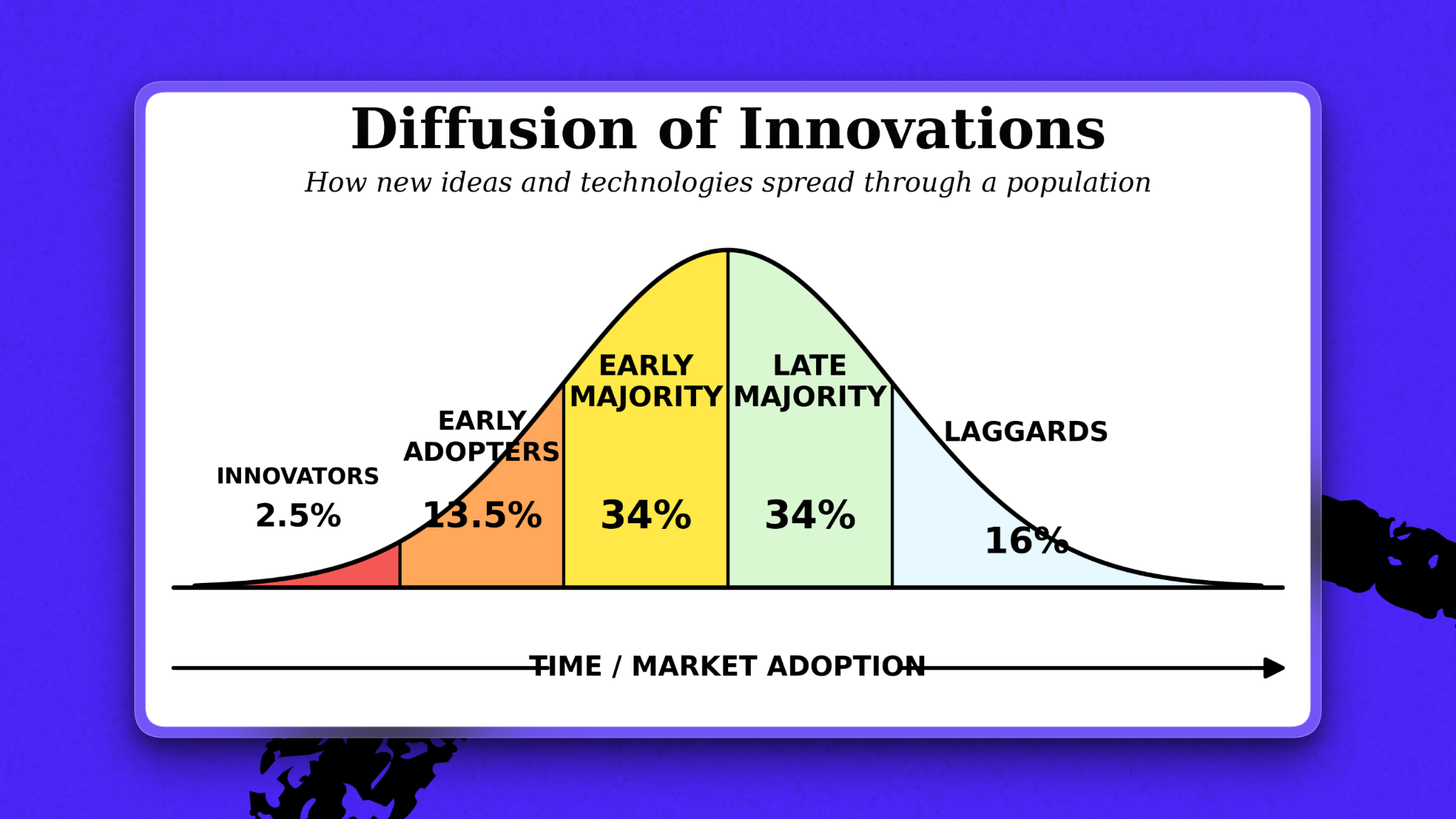
Spiral general manager Marcus is OK with letting most AI hype—managing a swarm of OpenClaws each running on its own Mac Mini, for example—pass him by. Earlier in his career, he was an early adopter of new tools and technology trends, but these days, he finds himself closer to the early majority section of the adoption curve. As the one-man team behind Every’s AI writing product, he has a lot to do—if he’s going to add something new to his workflow, it has to clear a high bar.
Here’s Marcus’s strategy for determining what’s worth testing.
- Start with a real problem. A useful filter is to focus only on tools or services that solve an existing issue. For example, Marcus decided to test out Stripe’s token-based billing feature—which allows you to measure how much users cost you in tokens—because of a genuine challenge he was facing: Spiral needed a better way to track AI usage costs across models.
- Don’t fall for productivity theater. Marcus ignores demos that brag about how many machines or agents someone is running simultaneously. He doesn’t care about what the setup looks like; what matters is whether it will make his life better.
- Sit back and see what pans out. Marcus generally waits to try a product until there’s evidence that companies he respects are using it in production, even by checking for logos on a tool’s homepage showing which brands are using it. Even better if the product is from a company he already knows and trusts, like Stripe or Anthropic. With the Stripe use-based billing example, the calculus was simple: “Great company solving a real problem I have—I’ll try it,” he says.
Test it out for yourself:
Pick one AI tool you feel vaguely guilty for not trying and write one sentence: “Before this tool, I _____. After this tool, I can _____.” If you cannot fill in both blanks, let yourself off the hook.
Alignment
Every’s COO Brandon Gell on cultivating curiosity in an AI world
My son was born eight months ago. Since then, I’ve asked myself regularly: How can I teach him to lead a fulfilling life, especially when it comes to technology?
I’m a computer native, born in 1994, the year Netscape was first released. My son was born in 2025, the year Claude Code was invented. The world I grew up in rewarded people with the fortitude to find answers. The world he’s growing up in has made that table stakes. So if the answers aren’t scarce anymore, what is?
Curiosity. Knowing what to ask next—having the instinct to push further, to connect unexpected dots, to wonder about something nobody else paid attention to—is what’s scarce.
It’s also distinctly human. It causes us to make connections between unrelated ideas and connect dots that don’t follow obvious patterns. It brings our personal values and lived experiences into what we explore, shaping not only what we discover but why it matters. It pulls us toward questions we find fascinating—not because they’re useful, but because we can’t stop wondering.
AI can’t replicate that. Curiosity requires perspective and taste, things that are difficult to instill in a model. And even if you could, it would never be as diverse as the perspectives of 8 billion humans, each one shaped by a different life.
I want my son to be insatiably curious, and I’ve realized that to instill that in him, I need to cultivate it in myself. Which means developing it and maintaining it, like a muscle. Here’s what that looks like:
Lesson 1: Use AI to go deeper on something you already care about
After I sold my insurance company, Clyde, I realized how disconnected I had become from my creativity outside of work. The same curiosity that drove me to explore the idea that had become my company had gone dormant as I focused singularly on its success. I realized just how lost I was while driving and listening to music. I could hear the music, but I could no longer feel it.
Not long after this drive, my friend Mike showed me some speakers he had built. I realized in order to truly hear the music, to find my curiosity, I had to build a pair of speakers and a subwoofer. The project would combine my interest in architecture, experience with woodworking, and total lack of knowledge in audio engineering.
Next thing I knew, I was hours deep into a ChatGPT conversation about sound waves and acoustic design, learning how.
Lesson 2: Use AI to build something you wouldn’t otherwise make
For the past 15 years, I’ve on and off tried lucid dreaming. So when I saw the Dream Recorder GitHub repository, an open-source project that uses video AI models to visualize your dreams as cinematic reels on a bedside device, I knew I wanted to make one for myself. The problem? I’d never built any hardware, didn’t have a 3D printer, and calling myself a front-end developer would be generous. So I used AI to help me adapt the open-source repository and build something I’d never otherwise be able to make. I bought a 3D printer, improved the original code, and spent many long nights perfecting my dream recorder.
I still don’t know how to code. But that doesn’t matter. In both situations, I used AI to leapfrog the unknown and explore my curiosity and my dreams. AI was a learning partner, not an answering machine. It taught me the things I don’t know, and I combined that with the skills I already had to build something new.
What this means for all of us
In a world where the “right” answer is one AI prompt away, we need to stop rewarding our kids and our students for getting the answer right and start rewarding them for the quality of their questions, the depth of their curiosity, and their resilience to ask the next question when in uncharted territory. Curiosity is what separates the people who use AI as a crutch from the people who use it as a rocket.
In a world where there’s always an answer, let the next question be your guide.—Brandon Gell
Laura Entis is a staff writer at Every. You can follow her on LinkedIn.
To read more essays like this, subscribe to Every, and follow us on X at @every and on LinkedIn. For sponsorship opportunities, reach out to [email protected].
Help us scale the only subscription you need to stay at the edge of AI. Explore open roles at Every.
The Only Subscription
You Need to
Stay at the
Edge of AI
The essential toolkit for those shaping the future

"This might be the best value you
can get from an AI subscription."
- Jay S.
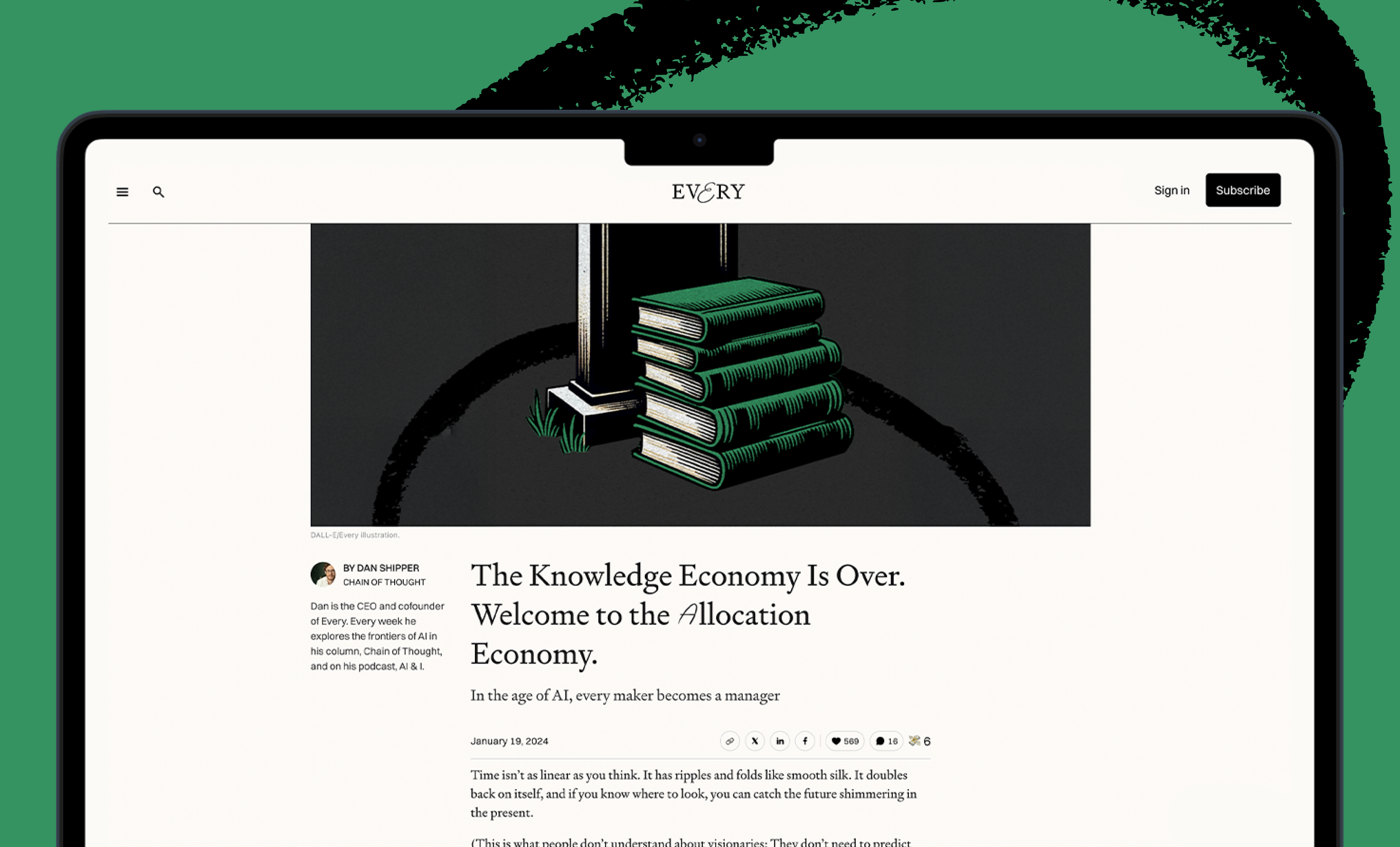
 Every Content
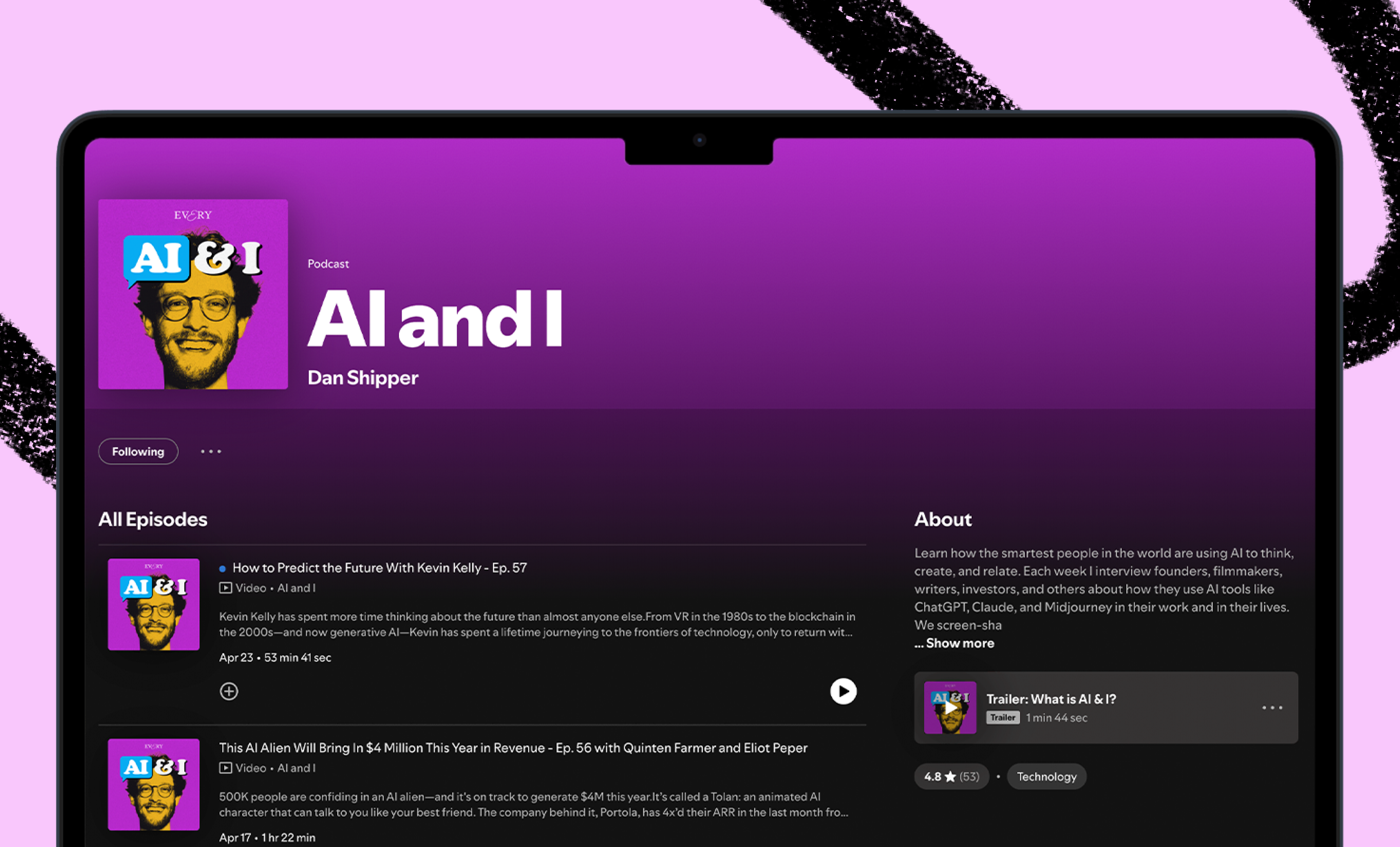
 AI&I Podcast
 Monologue
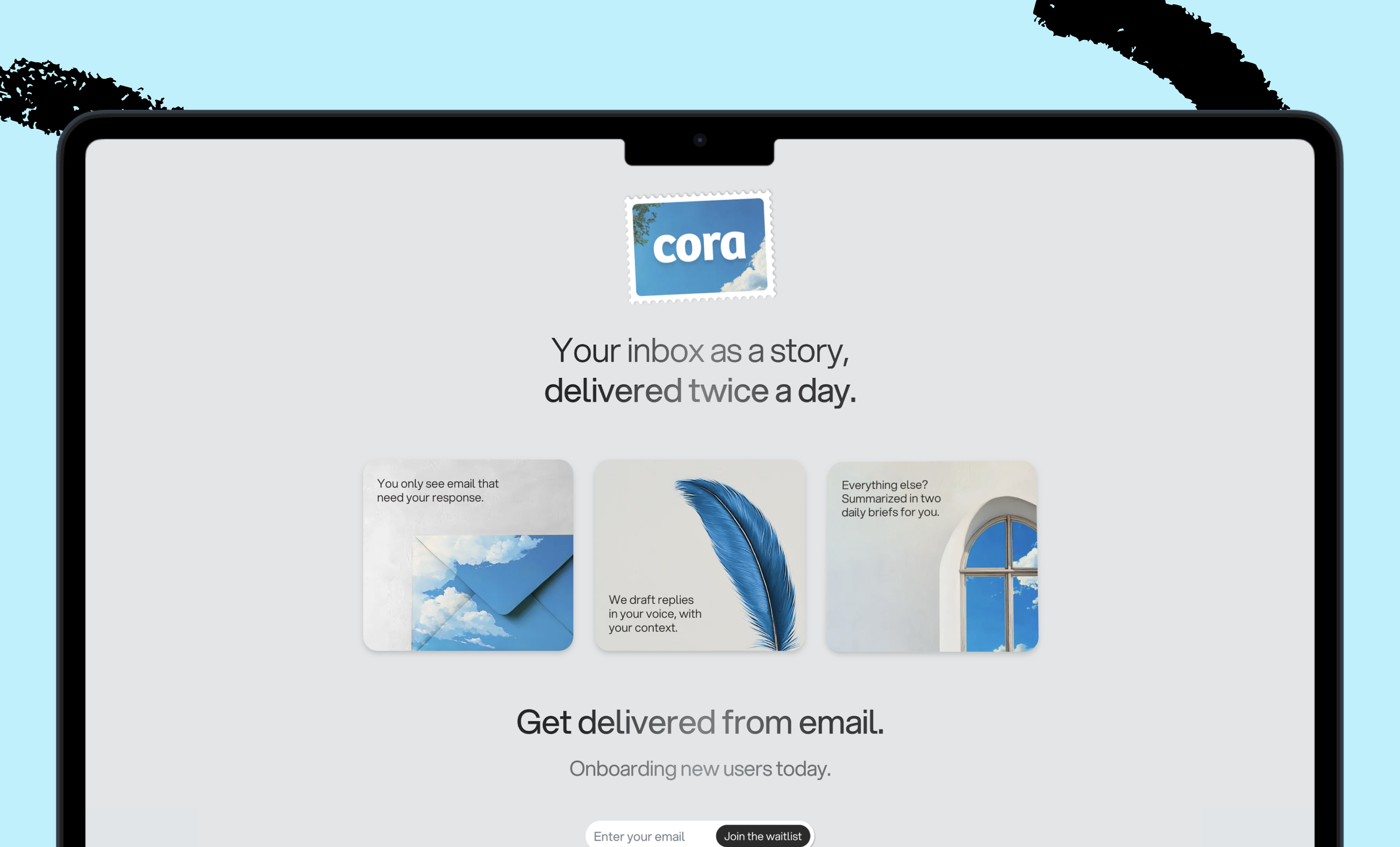
 Cora
Cora
 Sparkle
 Spiral
Join 100,000+ leaders, builders, and innovators

Email address

Already have an account? Sign in
What is included in a subscription?
Daily insights from AI pioneers + early access to powerful AI tools

 Front-row access to the future of AI
 In-depth reviews of new models on release day
Playbooks and guides for putting AI to work
Prompts and use cases for builders
In-depth reviews of new models on release day
Playbooks and guides for putting AI to work
Prompts and use cases for builders
In-depth reviews of new models on release day
Playbooks and guides for putting AI to work
Prompts and use cases for builders
In-depth reviews of new models on release day
Playbooks and guides for putting AI to work
Prompts and use cases for builders
 Bundle of AI software





 Every Staff

.png)
 Reviews of new AI models on release day
Comments
Don't have an account? Sign up!