





Was this newsletter forwarded to you? Sign up to get it in your inbox.
It was lunchtime on a Friday, and I was teaching my new OpenClaw AI assistant, Margot, to manage my to-do list. I’d carved out the afternoon to get her configured. A few hours, tops, I told myself. Then I’d do something else with my evening.
Twelve hours later, Margot and I had written and rewritten two essays, rebuilt my personal website, and added features to another app I’d been tinkering with. I finally tried to go to sleep around 1 a.m., but the next thing I knew, I was launching myself out of bed, rushing to my desk, and typing in all caps: “OH MY GOD, MARGOT.”
You might know the feeling. Maybe you’ve stayed up too late pursuing a project that started as a quick experiment, or caught yourself prompting during lunch or in the last few minutes before you told yourself you’d be done for the day. ”One more prompt” turns into 50. “I’ll just fix this one bug” turns into a vibe coding marathon.
Time flies when you’re having fun with AI. It also flies when you think everyone else is getting ahead without you, because every hour you’re not learning feels like a week you’ve fallen behind.
AI is changing work—and I don’t mean how we’re working, although it’s changing that, too. I mean how the work feels in your body at 1 a.m. when you can’t stop, or at 9 a.m. when you’re afraid you haven’t done enough. Technology has been blurring the line between work and life for decades, but the old tools pulled us back through obligation—you checked that email at 10 p.m. because it felt like you had to, not because you wanted to.
AI feels different. It pulls us back because it feels good. By the time you realize you’re overdoing it, you’ve already been overdoing it for hours.
I wanted to understand what was happening to me, and whether knowing the mechanics could help me break the cycle. So I dug into decades-old and more recent research to find out.
Enterprise app generation that works with your stack
AI app builders can generate a UI from a prompt—but connecting it to your data, deploying it to your preferred environment, and securing it by default? That’s where most tools break down. Create apps on top of your data with Retool, and get enterprise-grade guardrails RBAC, SSO, and audit logs automatically built in. Start from a prompt, visually edit in context, and deploy safely—all on a platform that dev teams (and CIOs) already trust.
Build with AI that knows your enterprise.
How AI intensifies work
Once AI clicks for someone, they don’t use it to work less. They use it to work more. It happened to me, and early research on how AI is changing the dynamics of work says that I’m not the only one.
Aruna Ranganathan and Xingqi Maggie Ye, researchers at the University of California, Berkeley, have been studying how generative AI changed work habits at a U.S. tech company with about 200 employees. Over eight months of observation, they found that AI intensified work in three specific ways—all of which, if you’re like me, sound familiar:
Task expansion. People started doing work that used to belong to someone else. Product managers wrote code. Researchers took on engineering tasks. AI made unfamiliar work feel accessible, so people absorbed responsibilities they would have outsourced or avoided a year earlier.
I recognize this in my own job. Over the past year, my role at Every has expanded to include building AI-powered editorial workflows, wrangling Margot, and constructing networks of apps and integrations that hold my work together. A year ago, this operations work would have been a job description unto itself. AI made it possible for me to do it alongside my writing, so now I do both.
Blurred boundaries. Workers prompted AI during lunch, in meetings, while waiting for files to load. Some sent a “quick last prompt” before leaving their desk so the AI could work while they stepped away. Prompting felt closer to chatting than to formal labor, so the workday lost its natural pauses.
This is different from the boundaries that were blurred by tools such as laptops and smartphones. The old boundary crossing was driven by obligation. You may have resented receiving a Slack notification after official working hours, but you couldn’t ignore it. By contrast, this boundary crossing doesn’t feel like that at all. Prompting feels closer to chatting than to work, so the job spills into evenings before you know it.
Multitasking. Workers ran several AI threads at once, wrote code while the AI generated alternatives, and revived long-deferred tasks because the AI could “handle them” in the background. The sense of having a “partner” created momentum, but the reality was constant context-switching and a growing pile of open tasks.
In my experience, managing tasks in multiple chats in parallel—feeding a transcript to one while revising a draft with another, while a third researches a new workflow—feels productive in the moment. I’m keeping the plates spinning, but my mind is being overwhelmed by all these different tasks, and I don’t notice until I’m already depleted. By the end of a day of constant context-switching, my brain feels like a browser with 40 tabs open and not enough RAM to run any of them.
The slot machine on our desktops
Ranganathan and Ye documented what’s happening now—the expanded tasks, the blurred boundaries, the mounting cognitive load. But their research doesn’t explain why it’s so hard to stop. For that, you have to go back to the 1950s.
B.F. Skinner identified the most powerful reinforcement pattern in behavioral science: a variable-ratio schedule, where rewards arrive after an unpredictable number of attempts. Nothing else he tested kept subjects coming back more reliably—or made the habit harder to break. Skinner himself noted that casino operators understood this long before psychologists had a name for it. The slot machine is the variable-ratio schedule made physical: Pull the lever, watch the reels spin, and hope this time is different.
Researchers are finding the same mechanism in AI. Researcher M. Karen Shen and her colleagues at the University of British Columbia recently studied compulsive chatbot use and landed on a term for it: the “AI genie phenomenon”—the experience of having a seemingly all-powerful assistant that can grant any wish, which makes it feel irrational to stop wishing. Why close the laptop when the next prompt might solve the problem you’ve been stuck on for weeks? The genie is always there, ready to fulfill one more wish.
Within that phenomenon, Shen’s team identified a specific trap they call “epistemic rabbit holes”—cycles where each AI response partially satisfies but opens a new question. You ask something. The answer is useful but incomplete, so you refine the prompt. That one’s better, but now you see an adjacent problem you hadn’t considered. The partial satisfaction is the engine: It’s enough to keep going, never enough to stop. They also found that the unpredictable quality of AI responses triggers dopamine in a way that mirrors slot machine payouts. Most pulls return something decent, a few return nothing, and occasionally the AI produces something brilliant enough to keep you hooked.
My own experience backs this up: It always feels like if I just rephrase the prompt or add another detail, I’ll unlock the solution and move on with my day. When a prompt fails, I’m convinced the next one will crack it. When it succeeds, the hit of accomplishment sends me straight into the next task.
The day I set her up, I asked Margot if she could use my writing agent to draft a summary of a recent Every event. She did it. Instead of closing the laptop, I gave her more—a LinkedIn post, a draft of my column, a product specification—because I wanted to see what else she could handle. For the things she couldn’t do, I started tweaking prompts to improve the outcome. That became its own rabbit hole. I looked up, and my dog was standing at attention next to her food bowl. It was an hour past dinner.
FOBO: Fear of becoming obsolete
The slot-machine dopamine explains my Friday night with Margot. But I think there’s another psychological drive that explains the low-grade anxiety I feel when I open my laptop on Monday morning and realize the labs have shipped something new over the weekend and I haven’t touched it yet.
An Ernst & Young survey from 2025 found that 54 percent of employees feel like they’re falling behind their peers in AI use at work. Eighty-five percent are learning on their own time. Eighty-three percent say their knowledge is self-taught. There’s a term for it: FOBO, or Fear of Becoming Obsolete—the sense that your skills are degrading in real time and the window to stay relevant is closing. I don’t love the acronym, but I know the feeling.
The dopamine and the dread feed each other. The fear sends me to the laptop. The tinkering produces a win. The win feels good, so I keep going. That produces new skills, which expand what I’m able to attempt, which expands what I feel I should be able to do, which widens the gap between where I am and where I think I need to be. The slot machine keeps me pulling the lever. The fear keeps me sitting at the machine.
You’re doing enough
What can we do to combat the overwhelming push and pull of AI compulsion? Ranganathan and Ye propose an “AI practice”—intentional pauses before decisions, batched notifications, protected focus windows, and time carved out for social connection. The optimist in me hopes that organizations will make space for these kinds of cultural changes. The cynic in me is pretty sure that most won’t. When workers voluntarily take on more and produce faster without being asked, that looks like a win from the top floor. It’s only possible to see how much the goalposts have shifted until someone burns out, and by then, the baseline has already changed.
So it falls to us—which means it falls to each other.
The activities that pull me out of the loop are analog and slower-paced—things that work my brain differently than prompts flying at the speed of light. Bible study. Board games. Walking my dog after dinner. These activities have boundaries: A game ends when someone wins, a walk ends when we’ve finished our loop. The AI loop has no built-in stopping point.
It also helps to talk about it—telling someone, “I was up until 2 a.m. tinkering with my AI agent, and I don’t know if that’s dedication or a problem,” and having them say, “Yeah, me too.” While it doesn’t fix the structural problem, it breaks the isolation that makes the loop feel inescapable.
The Margot night was genuinely fun. I’d do parts of it again. But the version of me who woke up the next morning, groggy and sore-eyed, with a rebuilt website and a sleep deficit—she needs care, too, and the only way she’s going to get it is if I find a way to give it to her.
I don’t have a framework for managing it all. But I’m trying to tell myself one thing more often:
You’re doing enough.
I hope these three words reach whoever else needs to hear them.
Katie Parrott is a staff writer and AI editorial lead at Every. You can read more of her work in her newsletter. To read more essays like this, subscribe to Every, and follow us on X at @every and on LinkedIn.
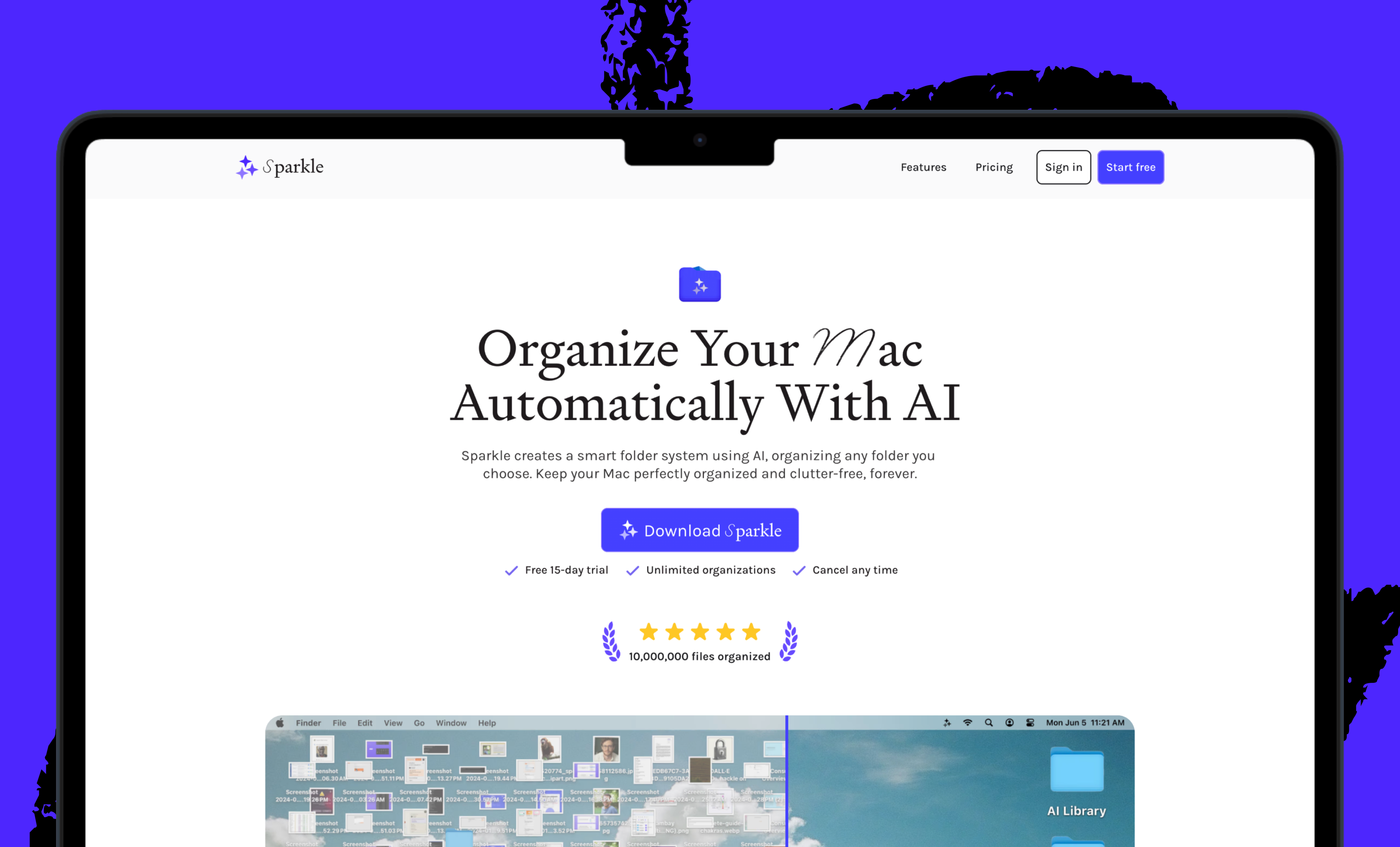
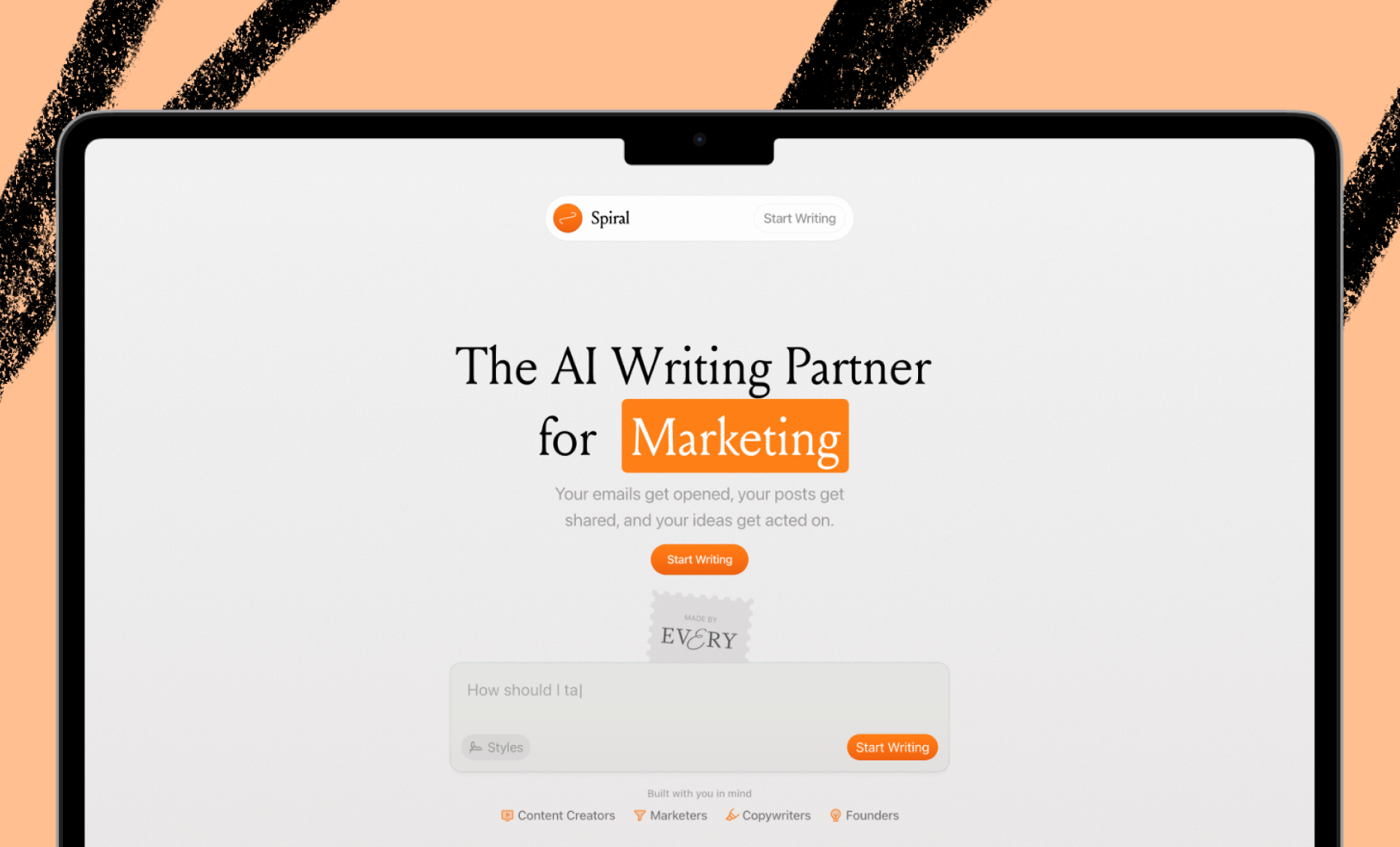
We build AI tools for readers like you. Write brilliantly with Spiral. Organize files automatically with Sparkle. Deliver yourself from email with Cora. Dictate effortlessly with Monologue.
We also do AI training, adoption, and innovation for companies. Work with us to bring AI into your organization.
For sponsorship opportunities, reach out to [email protected].
The Only Subscription
You Need to
Stay at the
Edge of AI
The essential toolkit for those shaping the future

"This might be the best value you
can get from an AI subscription."
- Jay S.
 Every Content
 AI&I Podcast
 Monologue
 Cora
Cora
 Sparkle
 Spiral
Join 100,000+ leaders, builders, and innovators

Email address

Already have an account? Sign in
What is included in a subscription?
Daily insights from AI pioneers + early access to powerful AI tools
 Front-row access to the future of AI
 In-depth reviews of new models on release day
Playbooks and guides for putting AI to work
Prompts and use cases for builders
In-depth reviews of new models on release day
Playbooks and guides for putting AI to work
Prompts and use cases for builders
In-depth reviews of new models on release day
Playbooks and guides for putting AI to work
Prompts and use cases for builders
In-depth reviews of new models on release day
Playbooks and guides for putting AI to work
Prompts and use cases for builders
 Bundle of AI software



 Katie Parrott
.53.16_AM.png)

 Reviews of new AI models on release day
Comments
Don't have an account? Sign up!
This perfectly articulated everything I've been feeling about AI - lots to ponder. Thanks for sharing!
"OMG, YES! FOBO + the dopamine hit of building makes it impossible (or at least VERY HARD) to stop. It’s the ultimate Scarcity Loop: the opportunity to get ahead, the unpredictable reward of a perfect prompt, and the ability to repeat the cycle instantly. We’ve turned our desktops into high-speed slot machines where the jackpot is a working script or a perfect essay.
beautiful essay Katie, hits home, thx :)