




Was this newsletter forwarded to you? Sign up to get it in your inbox.
It was lunchtime on a Friday, and I was teaching my new OpenClaw AI assistant, Margot, to manage my to-do list. I’d carved out the afternoon to get her configured. A few hours, tops, I told myself. Then I’d do something else with my evening.
Twelve hours later, Margot and I had written and rewritten two essays, rebuilt my personal website, and added features to another app I’d been tinkering with. I finally tried to go to sleep around 1 a.m., but the next thing I knew, I was launching myself out of bed, rushing to my desk, and typing in all caps: “OH MY GOD, MARGOT.”
You might know the feeling. Maybe you’ve stayed up too late pursuing a project that started as a quick experiment, or caught yourself prompting during lunch or in the last few minutes before you told yourself you’d be done for the day. ”One more prompt” turns into 50. “I’ll just fix this one bug” turns into a vibe coding marathon.
Time flies when you’re having fun with AI. It also flies when you think everyone else is getting ahead without you, because every hour you’re not learning feels like a week you’ve fallen behind.
AI is changing work—and I don’t mean how we’re working, although it’s changing that, too. I mean how the work feels in your body at 1 a.m. when you can’t stop, or at 9 a.m. when you’re afraid you haven’t done enough. Technology has been blurring the line between work and life for decades, but the old tools pulled us back through obligation—you checked that email at 10 p.m. because it felt like you had to, not because you wanted to.
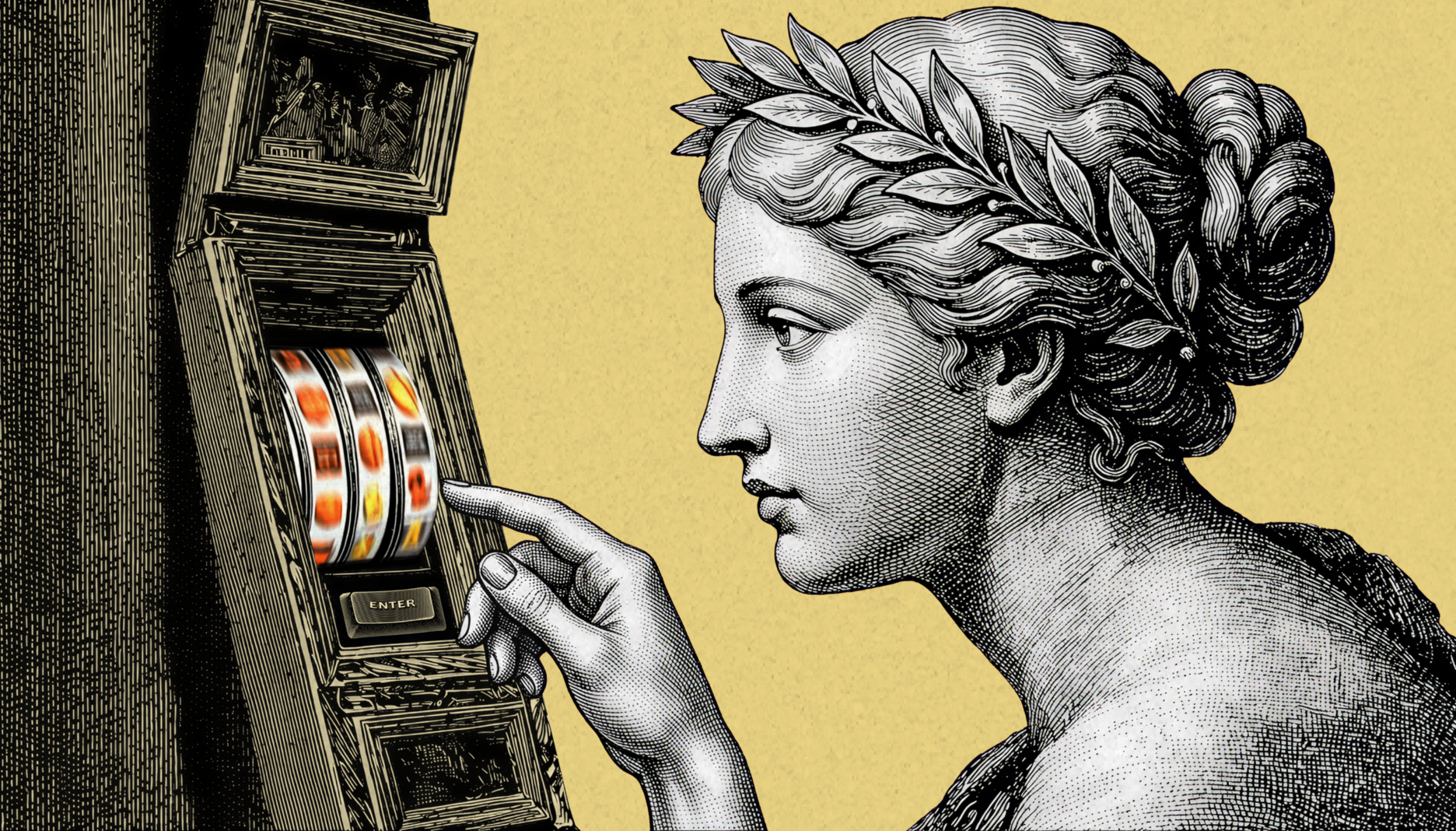
AI feels different. It pulls us back because it feels good. By the time you realize you’re overdoing it, you’ve already been overdoing it for hours.
I wanted to understand what was happening to me, and whether knowing the mechanics could help me break the cycle. So I dug into decades-old and more recent research to find out.
How AI intensifies work
Once AI clicks for someone, they don’t use it to work less. They use it to work more. It happened to me, and early research on how AI is changing the dynamics of work says that I’m not the only one.
Aruna Ranganathan and Xingqi Maggie Ye, researchers at the University of California, Berkeley, have been studying how generative AI changed work habits at a U.S. tech company with about 200 employees. Over eight months of observation, they found that AI intensified work in three specific ways—all of which, if you’re like me, sound familiar:
Task expansion. People started doing work that used to belong to someone else. Product managers wrote code. Researchers took on engineering tasks. AI made unfamiliar work feel accessible, so people absorbed responsibilities they would have outsourced or avoided a year earlier.
I recognize this in my own job. Over the past year, my role at Every has expanded to include building AI-powered editorial workflows, wrangling Margot, and constructing networks of apps and integrations that hold my work together. A year ago, this operations work would have been a job description unto itself. AI made it possible for me to do it alongside my writing, so now I do both.
 Create a free account to continue reading
The Only Subscription
You Need to
Stay at the
Edge of AI
The essential toolkit for those shaping the future

"This might be the best value you
can get from an AI subscription."
- Jay S.
 Every Content
 AI&I Podcast
 Monologue
 Cora
Cora
 Sparkle
 Spiral
Join 100,000+ leaders, builders, and innovators

Email address

Already have an account? Sign in
What is included in a subscription?
Daily insights from AI pioneers + early access to powerful AI tools
 Front-row access to the future of AI
 In-depth reviews of new models on release day
Playbooks and guides for putting AI to work
Prompts and use cases for builders
In-depth reviews of new models on release day
Playbooks and guides for putting AI to work
Prompts and use cases for builders
In-depth reviews of new models on release day
Playbooks and guides for putting AI to work
Prompts and use cases for builders
In-depth reviews of new models on release day
Playbooks and guides for putting AI to work
Prompts and use cases for builders
 Bundle of AI software




 Katie Parrott
.53.16_AM.png)

 Reviews of new AI models on release day
Comments
Don't have an account? Sign up!
This perfectly articulated everything I've been feeling about AI - lots to ponder. Thanks for sharing!
"OMG, YES! FOBO + the dopamine hit of building makes it impossible (or at least VERY HARD) to stop. It’s the ultimate Scarcity Loop: the opportunity to get ahead, the unpredictable reward of a perfect prompt, and the ability to repeat the cycle instantly. We’ve turned our desktops into high-speed slot machines where the jackpot is a working script or a perfect essay.
beautiful essay Katie, hits home, thx :)