


Andy Rossmeissl is the cofounder and CEO of Faraday.
How Luxury Handbags Can Help Solve AI's Context Problem
Go from knowing everything about a customer to knowing the one thing that moves them
Feb 20, 2026 · 7 min readUpdated Jul 31, 2026

TL;DR: If 2025 was the year every business got an agent, 2026 is the year they realize what those agents are missing: the right context. This is a problem that entrepreneur Andy Rossmeissl has spent his career on before LLMs even entered the picture. Knowing the right information about your customers, he argues, is key to making their buying experience feel bespoke. That can be as small as knowing when they are going for cocktails on Friday. His practical playbook to curating context shows you how to go from knowing everything about a customer to knowing the one thing that moves them.—Kate Lee
Was this newsletter forwarded to you? Sign up to get it in your inbox.
Next time you find yourself in New York City, stand in the line on 63rd Street, just east of Central Park. Wait long enough with the other well-heeled shoppers, and they will let you in. You will be greeted by a sales representative who will plug your contact information into a discreet handheld device and encourage you to hold one of their handbags. Thus begins your journey as a client of Goyard, the legendary luggage-makers.
You may, like me, leave empty-handed—they are pricey, after all. But Goyard has not forgotten you. Your rep will text you later with a picture of you holding your favorite bag, taken with that handheld device earlier. The text arrives at just the right time—8 p.m. on a Friday. You’re out with friends, on your second cocktail, and in the warm glow of the evening, the bag suddenly feels affordable. It feels necessary.
This is not an accident, nor is it magic. Your rep texted you on Friday at 8 because you told her you’d be out drinking cocktails on Friday at 8. And when you’ve inevitably purchased your handbag on Saturday afternoon, you’ll finally understand the Goyard rep’s superpower: her ability to collect, curate, and employ context.
This anachronistic sales methodology is called clienteling. Sending perfectly timed texts pays off in a world of six-figure accessories, but for software or sunglasses, it’s not a scalable approach. Cracking that conundrum—making sales feel personal at scale—has been at the core of my career as CEO of Faraday, which helps brands predict what their customers are likely to do next and reach them in the right moment.
Now we have AI agents, and with them, companies have the chance to guide every customer along a bespoke journey. The raw LLM muscle can make every experience feel like Goyard’s—without the line. All you need is surgically precise context. The good news is that the context you need to succeed, whether you’re selling handbags or software, is all around you. Here is how to harness it for your business.
Context: It depends
What’s the best music? Swifties aside, most people will say, “It depends.” Reveilles and lullabies suit different times of day, and you wouldn’t play a funeral dirge at a birthday party. The song isn’t inherently good or bad; it’s good or bad for this moment, this listener, this mood. That’s context.
Most of the modern work you and I engage in is made up of “it depends” questions: Which message should this person see? Which feature should we highlight? Call or text? Knowledge alone rarely answers these questions. You also need to know who you’re dealing with and what surrounds the decision.
My company, Faraday, spends its time solving one particular version of this problem: helping consumer brands use context to decide how to engage each customer. But the pattern isn’t unique to marketing. A founder launching a product, a writer telling an interactive story, a developer tuning onboarding flows—they’re all, in one way or another, trying to get from “It depends” to “Do this next.”
Once you understand the importance of context, you will understand that every customer interaction takes place in that 63rd Street showroom. Your moment with the customer is an arena, a stage, and when you summon or solicit context, you can shape the experience for them. You’re aligning your product, content, or itinerary to the customer rather than the other way around. In the case of Goyard, that means aligning with a customer who is willing to wait in a line outside a boutique in one of Manhattan’s most expensive streets.
Enter agents
By this point, whatever your line of business, you will have been met by a profusion of agentic tools offering to handle technical support, sales, marketing, finance, legal—you name it. Broadly speaking, these tools, or at least the reputable ones, work. Agents, armed with tools, working together in a loop toward an objective, can accomplish routine tasks.
Become a paid subscriber to Every to unlock this piece and learn about:
- Why even the most capable agentic tools are missing the one thing that drives customer behavior
- The counterintuitive reason feeding agents more customer data makes them perform worse, and the filtering technique that fixes it
- Why 2026 is the year access to AI stops being an advantage—and what the real edge looks like
 Create a free account to continue reading
The Only Subscription
You Need to
Stay at the
Edge of AI
The essential toolkit for those shaping the future

"This might be the best value you
can get from an AI subscription."
- Jay S.
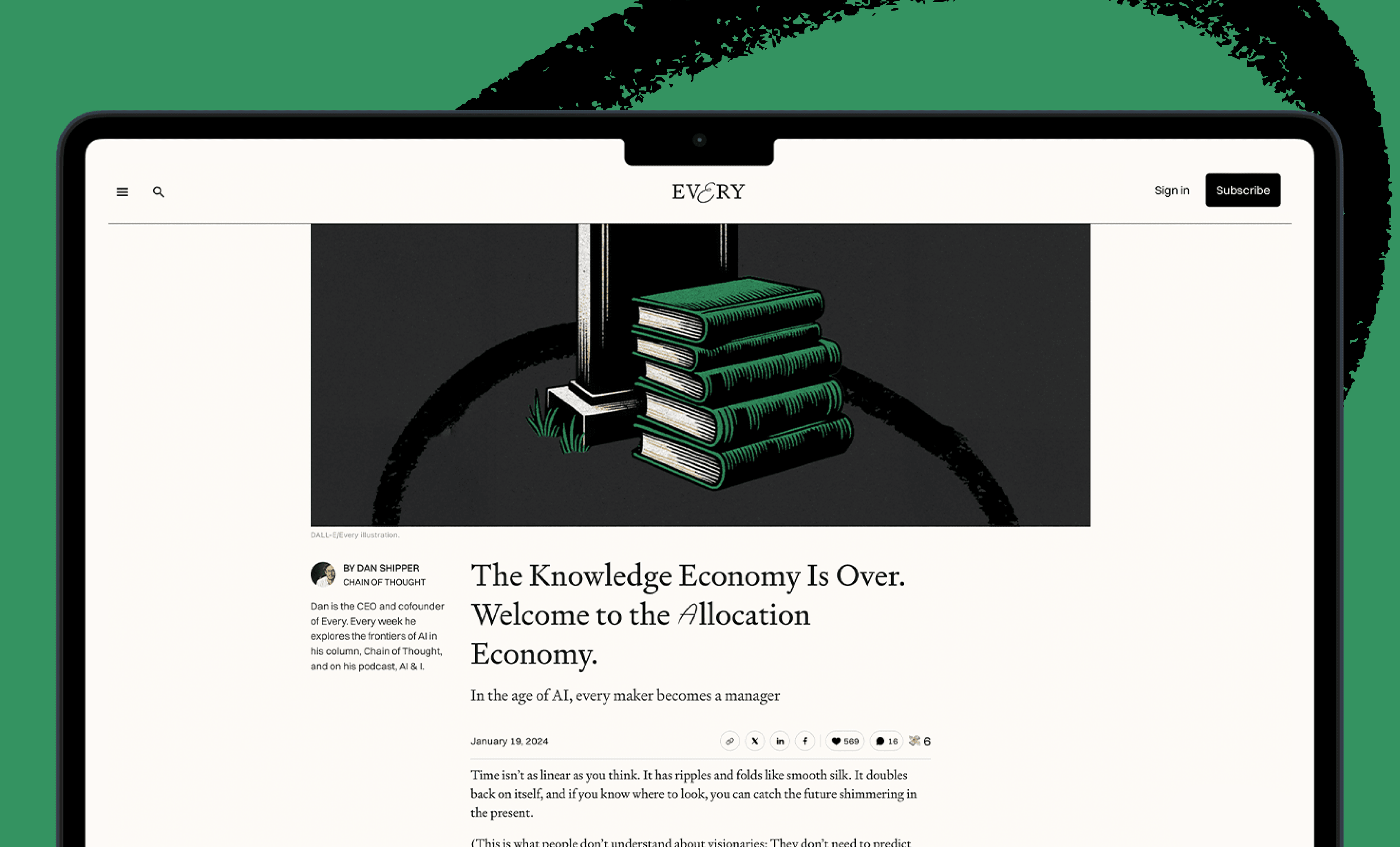
 Every Content
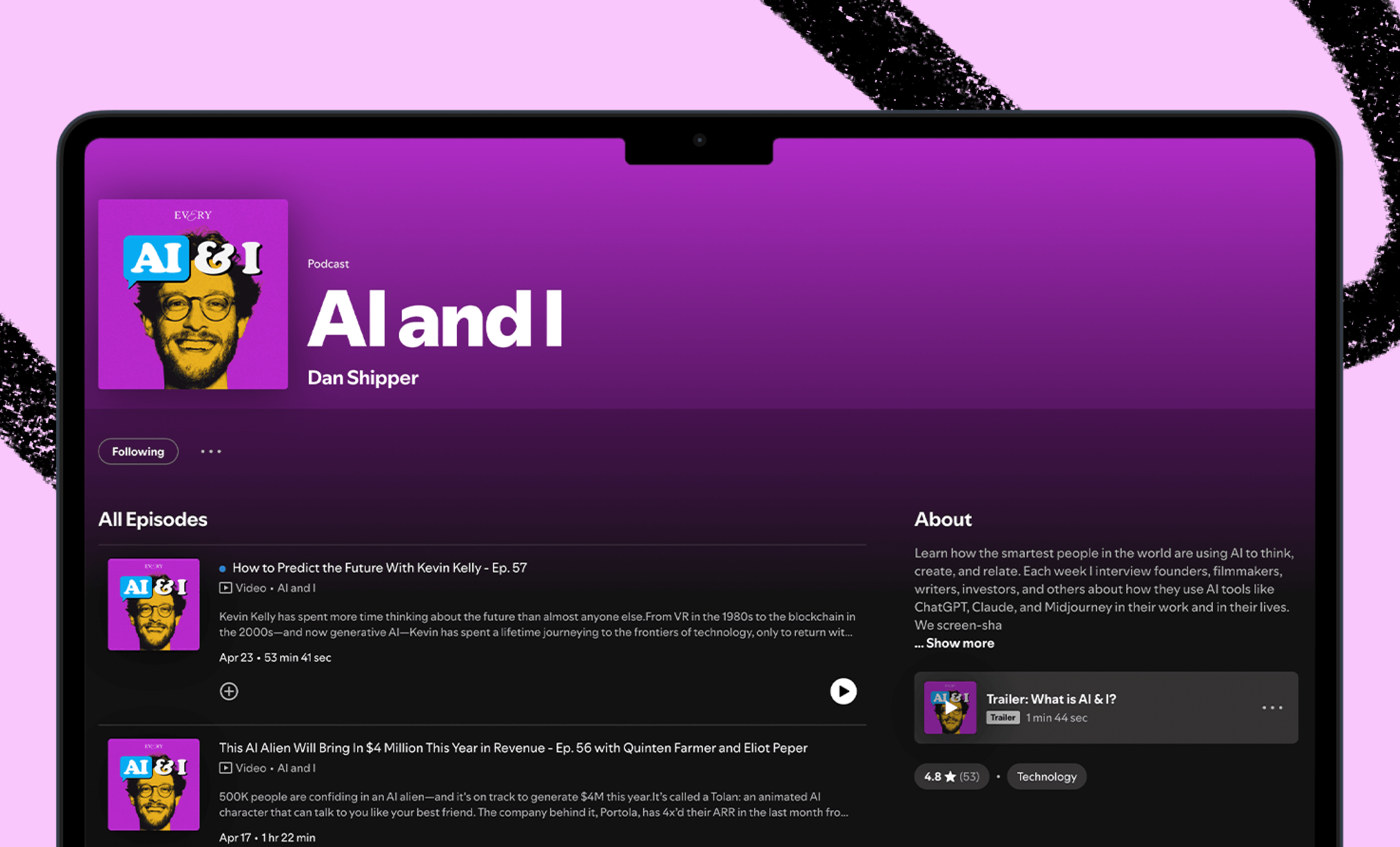
 AI&I Podcast
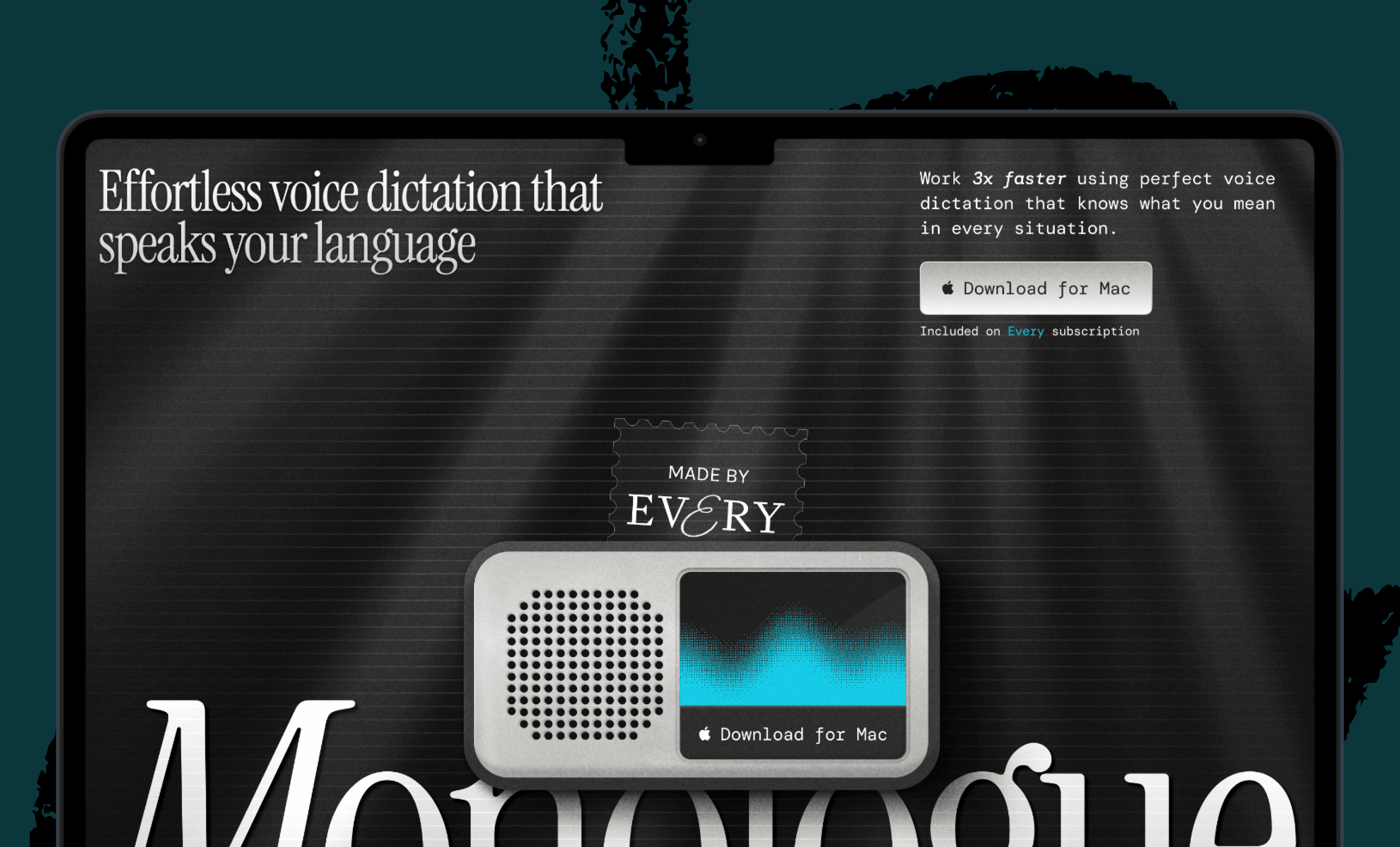
 Monologue
 Every Agent
Join 100,000+ leaders, builders, and innovators

Already have an account? Sign in.
What is included in a subscription?
Daily insights from AI pioneers + early access to powerful AI tools
 Front-row access to the future of AI
 In-depth reviews of new models on release dayPlaybooks and guides for putting AI to workPrompts and use cases for buildersIn-depth reviews of new models on release dayPlaybooks and guides for putting AI to workPrompts and use cases for builders
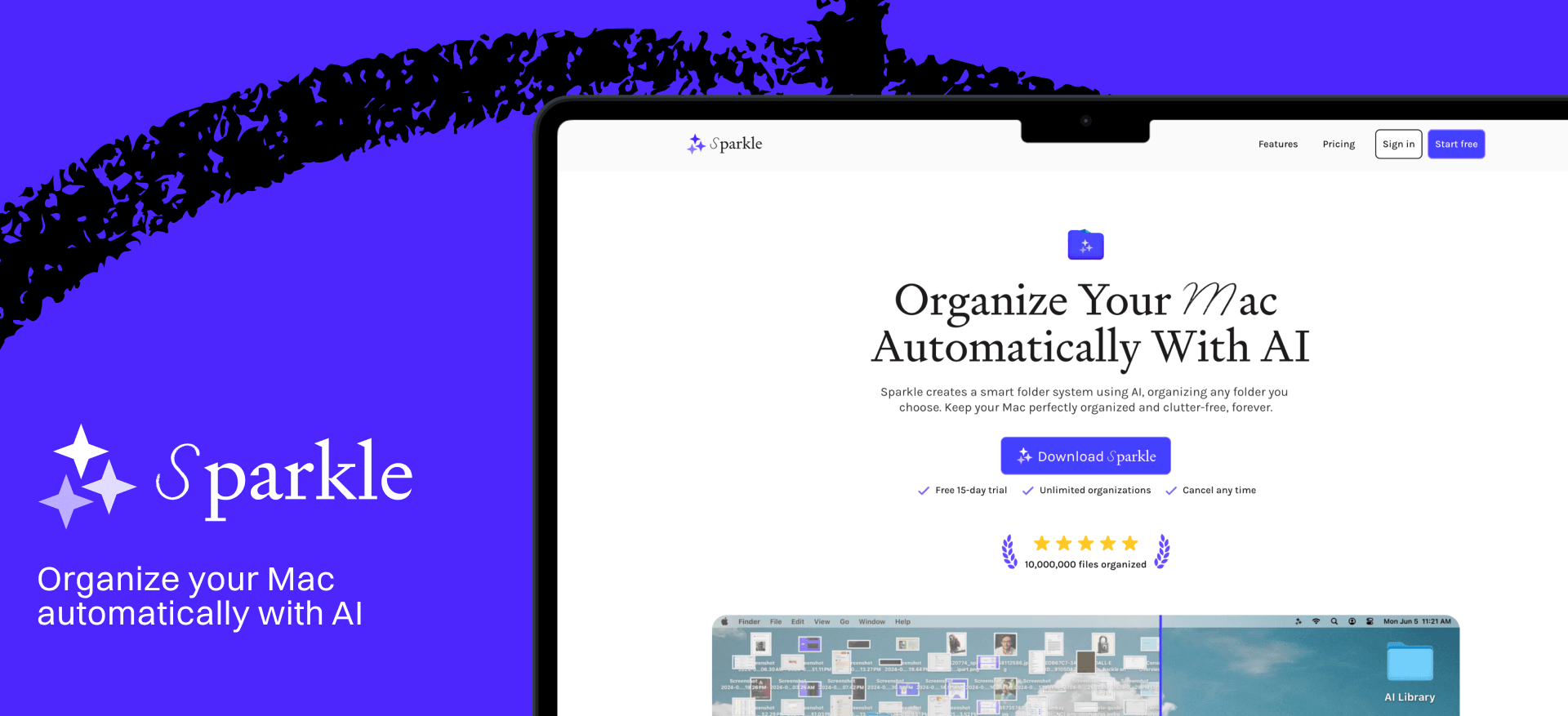
 Bundle of AI software





 Katie Parrott
 Every Staff
 Kieran Klaassen
Comments